How to Improve Prediabetes Without Giving Up All Carbs
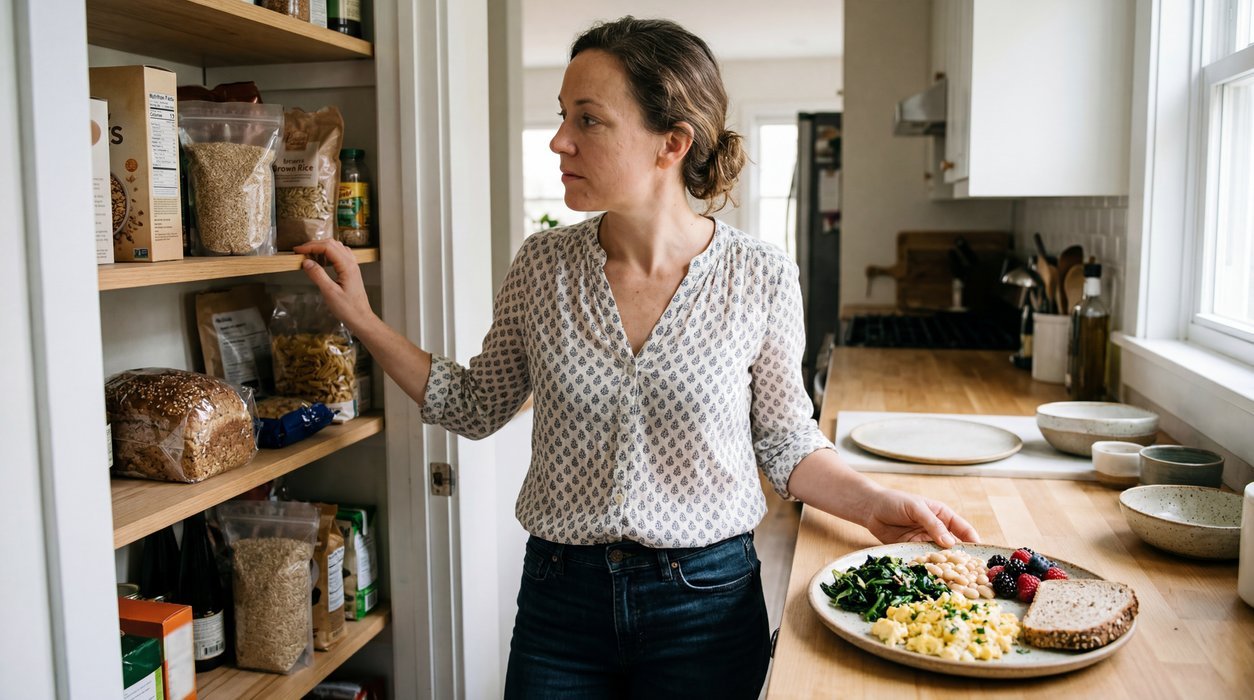
Getting a prediabetes result can make ordinary foods feel suspicious overnight. Bread, rice, oats, fruit, potatoes, and pasta may start to feel like mistakes instead of familiar parts of real life.
This may not be random; it may be your body asking for steadier meals, better timing, and more muscle use after eating. The encouraging news: many people can improve prediabetes without giving up all carbs when carbs are chosen, paired, and timed more strategically.
Quick Win: At your next carb-containing meal, keep the carb you planned, then add protein, a high-fiber plant food, and a 10-minute easy walk afterward.
Can you improve prediabetes without giving up all carbs?
Yes, many people can support healthier blood sugar patterns without cutting out every carbohydrate. The goal is to reduce frequent glucose spikes, improve insulin sensitivity, and build habits that are realistic enough to repeat for months.
To improve prediabetes without giving up all carbs, focus first on carb quality, portion size, protein, fiber, food order, and after-meal movement. Some people notice steadier energy within days or weeks, while A1C changes usually need several months to show clearly.
Prediabetes means blood glucose is higher than the healthy range but not high enough for a type 2 diabetes diagnosis. Lifestyle intervention, including nutrition changes and physical activity, is central to diabetes prevention guidance.[1]
Key takeaways
- Carbs are not automatically “bad,” but refined carbs eaten alone often raise glucose more quickly.
- Protein, fiber, and healthy fats can make a carb-containing meal more blood-sugar-friendly.
- Food order may matter: vegetables and protein before carbs can soften the post-meal rise for some people.
- Walking after meals helps working muscles use glucose from the bloodstream.
- Prediabetes is not a personal failure. It is useful information you can respond to.
Why carbs and prediabetes feel so confusing
Carbs and prediabetes are often discussed as if the only useful question is “How low can you go?” A better question is: which carbs, in what amount, paired with what, and followed by what habits?
Carbohydrate-containing foods tend to have the most direct effect on post-meal glucose. But a sweet drink, a bowl of lentils, and oats with Greek yogurt do not behave the same way in the body.[2]
Prediabetes is closely linked with insulin resistance. In insulin resistance, muscle, fat, and liver cells do not respond to insulin as well, so glucose can remain higher in the bloodstream after meals.[3]
Four carb factors that shape your glucose response
| Factor | Why it matters | Better starting point |
|---|---|---|
| Carb quality | Less processed carbs usually bring more fiber, minerals, and slower digestion. | Beans, lentils, berries, oats, vegetables, intact whole grains. |
| Carb portion | Even nutrient-dense carbs can raise glucose more when portions are large. | Start with a fist-sized cooked starch portion and adjust from there. |
| Meal pairing | Protein, fiber, and fat can slow digestion and increase fullness. | Pair carbs with protein and non-starchy vegetables. |
| After-meal movement | Muscle contraction helps move glucose out of the bloodstream. | Walk 10–20 minutes after the meal that hits hardest. |
The mechanism is not about carb fear. It is about reducing the speed, size, and frequency of glucose surges while helping muscles clear more glucose after meals.
A 7-day plan to improve prediabetes without giving up all carbs
Start with one week, not a life overhaul. This plan keeps familiar carbs in the picture while changing the structure around them.
Many people first notice steadier energy, fewer cravings, better post-meal fullness, or lower home glucose readings before lab markers change. A1C usually needs several months because it reflects longer-term blood glucose patterns.
In the Diabetes Prevention Program, intensive lifestyle intervention reduced type 2 diabetes incidence in high-risk adults.[8]
Step 1: Stop eating “naked carbs” most of the time
For the next seven days, avoid carbs by themselves when possible. That means no toast alone, crackers alone, cereal alone, or fruit as the whole meal.
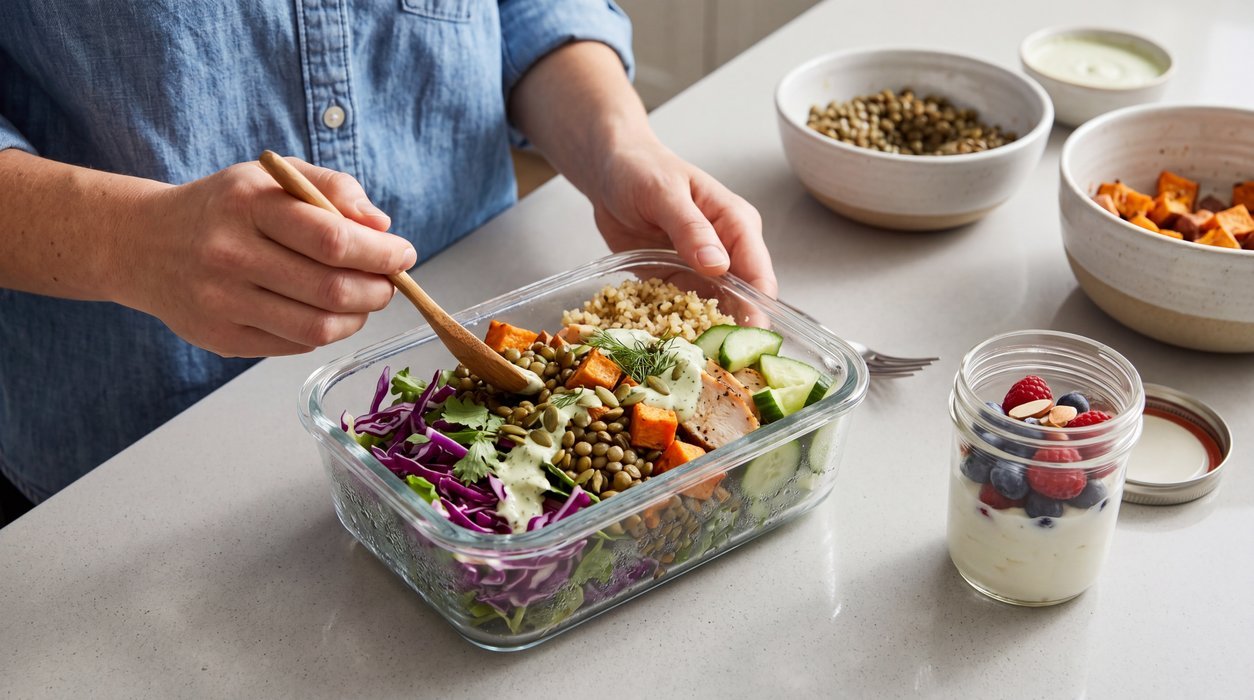
Pair carbs with protein and fiber. Try toast with eggs and tomatoes, an apple with Greek yogurt, rice with tofu and vegetables, or lentils with salad and olive oil.
Step 2: Upgrade one carb per day
- Swap sweet cereal for oats with nuts and berries.
- Swap white bread for seeded whole-grain bread.
- Swap chips at lunch for roasted chickpeas or a bean salad.
- Swap juice for whole fruit and water.
- Swap a large pasta portion for half pasta and half vegetables.
Step 3: Use food order when it feels easy
Start meals with vegetables and protein before the starch or sweet food. This small behavior can be easier than tracking every gram of carbohydrate.
For a practical walkthrough, see how food order affects blood sugar and use it with meals you already eat.

Step 4: Walk after the meal that usually hits hardest
Pick the meal that leaves you sleepy, snacky, or foggy. Walk for 10 minutes after that meal for the next seven days.
This is often easier than adding a full workout. It also connects the habit directly to the glucose rise you are trying to soften.
One thing worth pushing back on here: All carbs are not the same problem. Refined, low-fiber carbs eaten in large portions and without protein are usually the bigger issue, which gives people more options than restriction alone.
Which carbs are better for blood sugar balance?
The best carb choices for prediabetes tend to be less processed, higher in fiber, and easier to pair with protein. They are not “free foods,” but they usually give the body more support than refined carbs eaten alone.
Higher-fiber eating patterns are associated with improvements in glycemic control, blood lipids, body weight, and inflammation markers in diabetes management research.[4]
Carbs to emphasize more often
- Beans, lentils, chickpeas, and split peas.
- Steel-cut or rolled oats with protein added.
- Berries, apples, pears, oranges, and other whole fruits.
- Sweet potatoes, potatoes, squash, and corn in moderate portions.
- Quinoa, barley, farro, brown rice, or other intact grains.
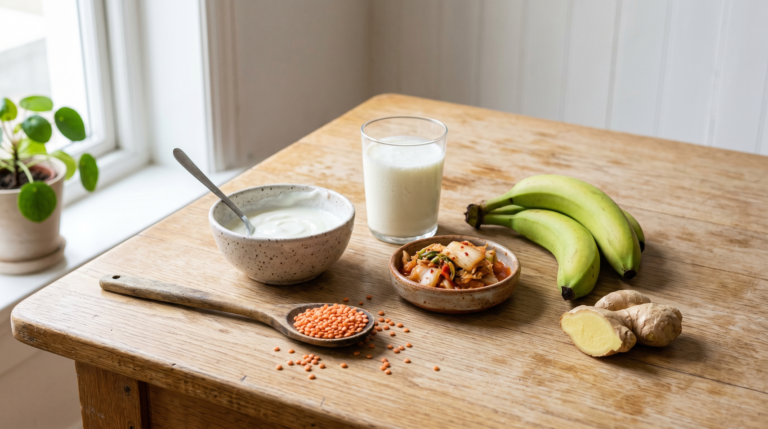
- Plain yogurt or kefir if tolerated, especially with nuts or seeds.
Carbs to reduce or reserve for smaller portions
- Sugary drinks, including soda, sweet tea, and many bottled coffees.
- Candy, pastries, sweet breakfast cereals, and desserts as daily staples.
- Large servings of white bread, white rice, fries, or refined pasta.
- Juice or smoothies made mostly from fruit without protein or fiber structure.
This is not about moralizing food. It is about noticing which foods ask the most from your insulin system and which ones give your body more support in return.
How to build meals that make carbs easier to handle
A blood-sugar-friendly plate does not need to look like diet food. It needs structure.
Start with protein, add volume from non-starchy vegetables, choose a measured carb, and include a satisfying fat. This combination may slow digestion and help prevent the “hungry again in one hour” cycle.
The simple plate formula
| Plate part | Examples | Prediabetes-friendly purpose |
|---|---|---|
| Protein | Eggs, fish, poultry, tofu, tempeh, Greek yogurt, cottage cheese, beans. | Supports fullness and helps reduce a carb-only glucose rise. |
| Fiber-rich plants | Leafy greens, broccoli, peppers, mushrooms, zucchini, cabbage, salad. | Adds volume and slows the meal down. |
| Smart carbs | Lentils, oats, berries, potatoes, quinoa, beans, whole fruit. | Provides energy with more nutrients and fiber. |
| Healthy fats | Avocado, olive oil, nuts, seeds, tahini. | Improves satisfaction and helps meals feel complete. |
For a deeper next step, use a balanced plate for stable blood sugar as the base structure. Then adjust carb portions based on hunger, energy, and glucose readings if you monitor at home.
Food order may also help. Small studies suggest that eating vegetables and protein before carbohydrate can reduce post-meal glucose and insulin excursions in some people with type 2 diabetes.[5]
That does not mean every meal has to be separated into stages. It simply means the first few bites can work for you: vegetables, protein, then the starch or fruit.
How walking, strength training, and timing change the carb response
Food choices matter, but glucose is not only a food story. Muscle is one of the body’s most important glucose storage sites, which is why movement can change how the same meal affects blood sugar.
Post-meal walking is one of the simplest tools. Research suggests walking after eating can improve the glucose response after meals with different carbohydrate content.[6]
This does not need to be intense. A 10-minute walk around the block, gentle stairs, light housework, or a relaxed treadmill session can help you start.
Strength training belongs in the plan, too
Resistance training may support insulin sensitivity by building and maintaining muscle tissue. More muscle does not automatically mean perfect glucose control, but it gives the body more metabolically active tissue to work with.
A systematic review found resistance training improved several cardiometabolic markers in adults at risk for type 2 diabetes.[7]
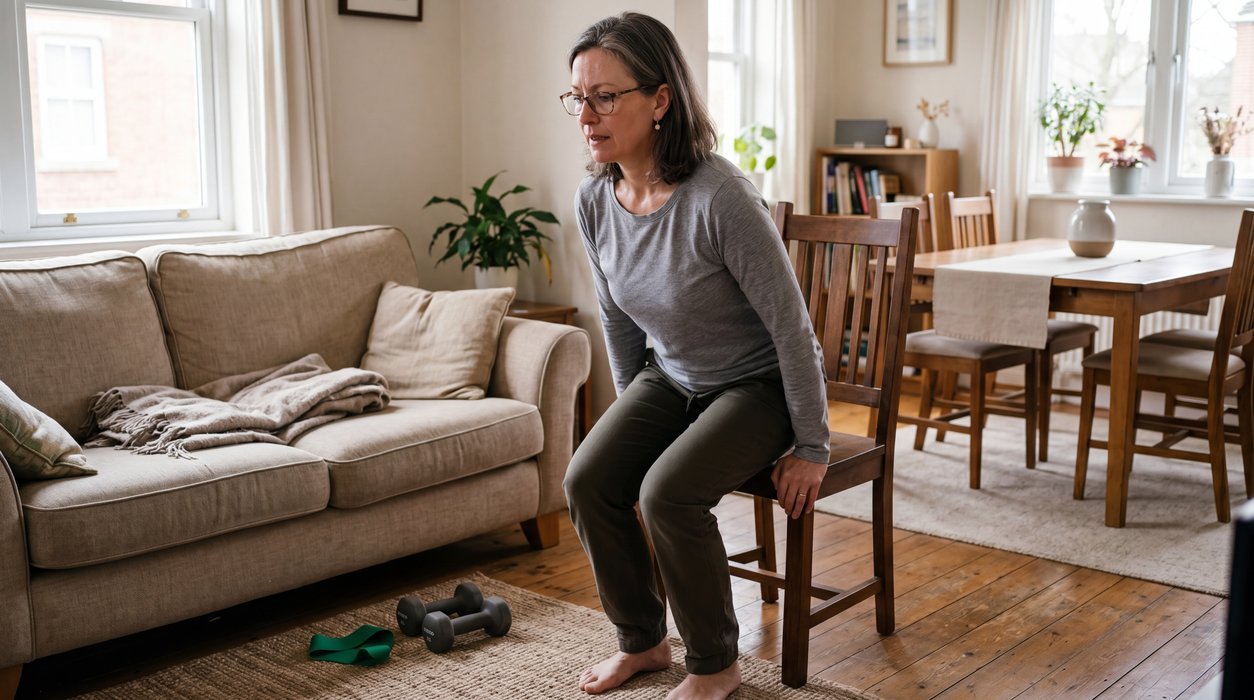
A realistic starting point is two short full-body sessions per week. Squats to a chair, wall push-ups, rows with a band, step-ups, and loaded carries are enough for many beginners.
Meal timing can reduce glucose pressure
Large late-night meals can be harder for some people to manage, especially when sleep is short or stress is high. A balanced dinner earlier in the evening may support steadier appetite and energy.
This is individual. People using glucose-lowering medication or managing other medical conditions should ask a qualified clinician before changing meal timing significantly.
Conclusion
You do not have to give up every carb to take prediabetes seriously. A more sustainable path is to choose better carbs, eat them in steadier portions, pair them with protein and fiber, and move your body after meals.
To improve prediabetes without giving up all carbs, focus on repeatable patterns instead of perfect restriction. Keep the foods that work for your body, adjust the ones that spike your glucose or cravings, and measure progress over months rather than days.
Small, repeatable changes are not dramatic. They are often exactly what makes them easier to keep.
Frequently Asked Questions
Can you improve prediabetes without giving up all carbs?
Yes, many people can improve prediabetes without giving up all carbs by changing carb quality, portions, meal pairing, food order, and after-meal movement. The goal is not to remove every carbohydrate. It is to reduce frequent glucose spikes and support better insulin sensitivity over time. A healthcare provider or registered dietitian can help personalize the plan.
How many carbs should someone with prediabetes eat per day?
There is no single carb target that fits everyone with prediabetes. Activity level, body size, glucose response, sleep, stress, medications, and food preferences all matter. A practical first step is to improve carb quality and portions before chasing a strict number. People using glucose-lowering medication should ask a clinician before making major carb changes.
Are fruit and oats bad for prediabetes?
Whole fruit and oats are not automatically bad for prediabetes. Portion size, preparation, and pairing matter. Berries with Greek yogurt or oats with chia seeds and nuts usually behave differently than sweetened instant oatmeal with juice. Home glucose readings can help show which portions work best for an individual body.
What should you do first after a prediabetes diagnosis?
Start with a calm, measurable plan. Build balanced meals, reduce sugary drinks, walk after your highest-carb meal, and add strength training twice per week if appropriate. Ask your healthcare provider which lab markers to follow and when to repeat them. This is not a personal failure; it is a signal you can respond to.
Medical Disclaimer: The information provided in this article is for educational purposes only and does not constitute medical advice. Always consult a qualified healthcare provider before making changes to your diet, lifestyle, or treatment plan. TheMetabolicHub.com does not replace professional medical guidance.
References
- American Diabetes Association Professional Practice Committee. Prevention or Delay of Diabetes and Associated Comorbidities: Standards of Care in Diabetes—2026. Diabetes Care. 2026;49(Suppl 1):S50-S60. PMID: 41358891
- Evert AB, Dennison M, Gardner CD, et al. Nutrition Therapy for Adults With Diabetes or Prediabetes: A Consensus Report. Diabetes Care. 2019;42(5):731-754. PMID: 31000505
- National Institute of Diabetes and Digestive and Kidney Diseases. Insulin Resistance & Prediabetes. NIDDK
- Reynolds AN, Akerman AP, Mann J. Dietary fibre and whole grains in diabetes management: Systematic review and meta-analyses. PLoS Med. 2020;17(3):e1003053. PMID: 32142510
- Shukla AP, Iliescu RG, Thomas CE, Aronne LJ. Food Order Has a Significant Impact on Postprandial Glucose and Insulin Levels. Diabetes Care. 2015;38(7):e98-e99. PMID: 26106234
- Bellini A, Nicolò A, Bazzucchi I, Sacchetti M. The Effects of Postprandial Walking on the Glucose Response after Meals with Different Characteristics. Nutrients. 2022;14(5):1080. PMID: 35268055
- Qadir R, Sculthorpe NF, Todd T, Brown EC. Effectiveness of Resistance Training and Associated Program Characteristics in Patients at Risk for Type 2 Diabetes: a Systematic Review and Meta-analysis. Sports Med Open. 2021;7(1):38. PMID: 34050828
- Knowler WC, Barrett-Connor E, Fowler SE, et al. Reduction in the Incidence of Type 2 Diabetes with Lifestyle Intervention or Metformin. N Engl J Med. 2002;346(6):393-403. PMID: 11832527