
Prediabetes With Normal Fasting Glucose: 3 Important Reasons Tests Can Disagree

A normal fasting glucose result can make an abnormal A1C feel confusing or easy to dismiss. The two results are not necessarily contradictory because they describe different parts of glucose regulation.
Prediabetes with normal fasting glucose is possible when A1C or a two-hour oral glucose tolerance test falls within the prediabetes range. Understanding that difference can help you seek appropriate follow-up without assuming that one result tells the whole story.
Quick Win: Gather your fasting glucose, A1C, two-hour glucose results, test dates, medications, and recent health changes. Review the complete pattern with a qualified healthcare professional rather than interpreting one number alone.
Can You Have Prediabetes With Normal Fasting Glucose?
Yes. A fasting plasma glucose result can be below 100 mg/dL while an A1C or two-hour oral glucose tolerance result falls within the prediabetes range.
Prediabetes with normal fasting glucose is medically plausible because the three tests measure glucose under different conditions. A1C estimates longer-term exposure, while an oral glucose tolerance test evaluates the response to a controlled glucose load.[1]
This pattern does not prove that a test was wrong, and it should not be used for self-diagnosis. A healthcare professional can assess whether the result should be repeated, compared with another test, or interpreted alongside conditions that may affect A1C.
Important distinction: A normal fasting result describes glucose after an overnight fast. It does not directly measure post-meal glucose or average glucose exposure over the previous several months.
Key Takeaways
- A normal fasting glucose result does not automatically rule out prediabetes.
- Fasting glucose, A1C, and the oral glucose tolerance test measure different glucose patterns.
- Discordant results deserve clinical review rather than being ignored or interpreted in isolation.
- Red-blood-cell conditions and some hemoglobin variants may affect A1C accuracy.
- Lifestyle habits can support metabolic health but do not replace appropriate testing and medical care.
Why Can Glucose Tests Give Different Answers?
Fasting glucose, A1C, and the oral glucose tolerance test answer related but distinct questions. None provides a continuous picture of glucose throughout every day.
Fasting plasma glucose measures one point in time
A fasting plasma glucose test measures blood glucose after at least eight hours without caloric intake. It reflects how glucose is being regulated at that particular fasting measurement.
Acute illness, sleep disruption, medications, stress, alcohol, recent activity, and incomplete fasting can influence the result. Even when the test is performed correctly, it still represents one moment.
A1C estimates longer-term exposure
A1C measures the percentage of hemoglobin with glucose attached. It generally reflects average glucose exposure over approximately the previous two to three months.[2]
Repeated glucose elevations after meals may affect A1C without producing an elevated fasting result on the morning of testing. However, A1C is an indirect estimate and must be interpreted in context.
The oral glucose tolerance test applies a controlled challenge
During a standard oral glucose tolerance test, fasting blood is collected before a person drinks a solution containing 75 grams of glucose. Plasma glucose is measured again two hours later.
This test may identify impaired glucose tolerance, meaning glucose remains higher than expected after the glucose load. That pattern can occur even when fasting glucose is below the prediabetes threshold.[1]
One possible pattern:
- Glucose remains within the expected range during an overnight fast.
- After a carbohydrate-containing meal, the body needs insulin to move glucose into tissues.
- If those tissues respond less efficiently, the pancreas may release more insulin.
- Glucose may then rise higher or remain elevated longer after a meal.
- Those repeated elevations may be more visible on A1C or glucose-tolerance testing than on one fasting result.
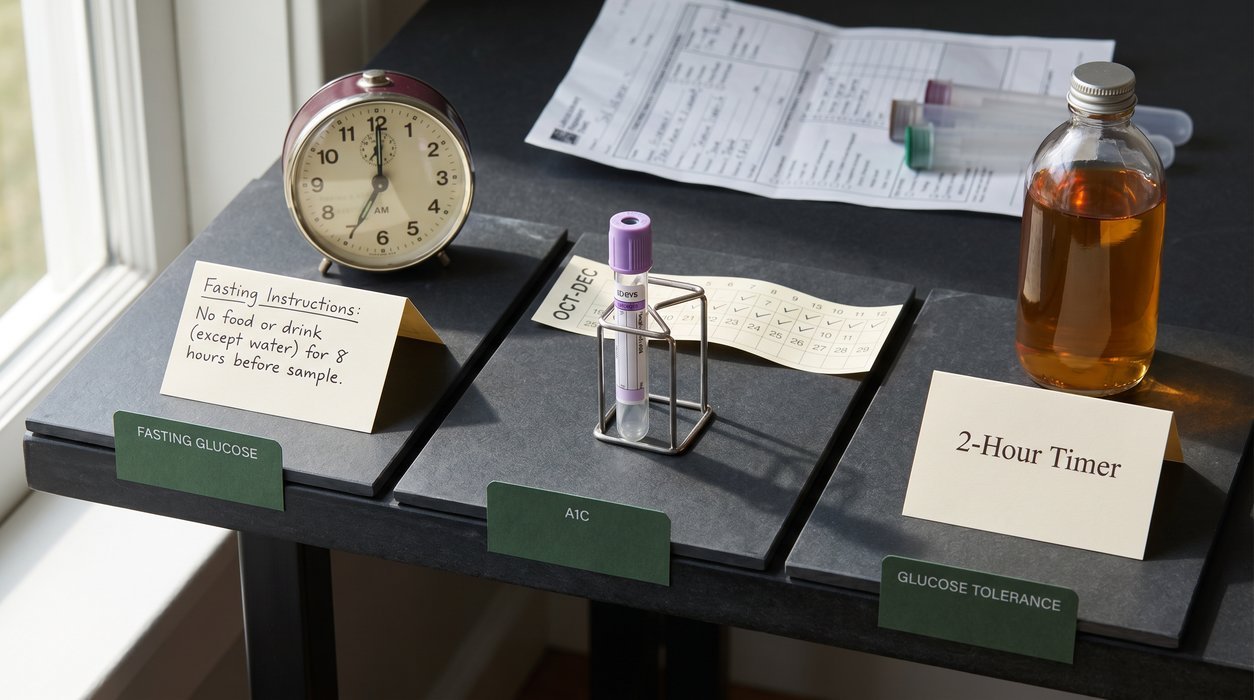
What Blood Test Ranges Are Used for Prediabetes?
The following thresholds apply to laboratory testing in nonpregnant adults. Pregnancy uses different screening methods and criteria.
| Test | Normal | Prediabetes | Diabetes |
|---|---|---|---|
| Fasting plasma glucose | Below 100 mg/dL | 100–125 mg/dL | 126 mg/dL or above |
| A1C | Below 5.7% | 5.7%–6.4% | 6.5% or above |
| Two-hour 75-g OGTT | Below 140 mg/dL | 140–199 mg/dL | 200 mg/dL or above |
A result can therefore be normal on one test and fall within the prediabetes range on another. This is called test discordance and reflects, at least partly, the different biological information each test provides.
When a result meets a diabetes threshold and there is no unequivocal hyperglycemia, diagnosis generally requires confirmation with a second abnormal result. Prediabetes-range results also need professional interpretation and an appropriate follow-up plan.[1]
A home glucose meter or continuous glucose monitor can show useful patterns in selected circumstances. Neither is currently a substitute for accepted laboratory testing when diagnosing prediabetes or diabetes.
How Can Post-Meal Glucose Rise While Fasting Glucose Stays Normal?
Glucose regulation does not necessarily change in every part of the day at the same rate. Some people may show an abnormal response after food before their fasting glucose reaches the prediabetes range.
After eating, insulin helps move glucose into muscle, liver, and other tissues. When insulin sensitivity is reduced, the body may need to release more insulin to manage the same amount of glucose.
This compensation may be enough to maintain fasting glucose for a time. A larger carbohydrate load may still produce a higher or more prolonged post-meal response.
Meal size, carbohydrate type, protein, fiber, fat, recent exercise, sleep, illness, and medication use can all influence post-meal glucose. A single response should therefore be interpreted cautiously.
For more context about expected patterns, see what post-meal blood sugar spikes may mean.
One thing worth pushing back on here: a normal fasting result is sometimes treated as proof that glucose metabolism is entirely normal. It only shows that fasting glucose was below the relevant threshold at that measurement.
That distinction matters because it points toward confirmation and context rather than dismissal. It also prevents a normal fasting value from being used to disregard an abnormal A1C or glucose-tolerance result.

Could Something Besides Glucose Affect an A1C Result?
Yes. A1C depends partly on red-blood-cell lifespan and hemoglobin characteristics, so it may not represent glucose exposure accurately in every situation.
Recent blood loss, blood transfusion, altered red-cell turnover, iron deficiency, kidney disease, pregnancy, and certain treatments can affect A1C interpretation. The direction and size of the effect vary by circumstance.[2]
Some hemoglobin variants can also interfere with particular A1C assay methods. These variants are more common in people with ancestry from certain regions, but ancestry alone cannot determine whether a person has one.[3]
If A1C and plasma glucose repeatedly do not match, a clinician may investigate possible interference or place greater emphasis on an appropriate plasma glucose test.
What Should You Do When the Results Do Not Match?
First, confirm which tests were performed and whether they were laboratory tests. Record the date, value, reference range, fasting duration, recent illness, medication changes, and any known condition that may affect blood cells.
Ask how the finding should be confirmed or monitored
A clinician may repeat the same test, order another accepted glucose test, or investigate a possible limitation of A1C. The appropriate choice depends on the values, medical history, symptoms, and overall risk profile.
Useful questions include:
- Does the abnormal result need to be repeated?
- Would an oral glucose tolerance test provide useful information?
- Could a blood condition or treatment affect my A1C?
- Could any medication be influencing glucose?
- When should the next laboratory test be performed?
Consider the broader risk picture
Family history, prior gestational diabetes, polycystic ovary syndrome, cardiovascular disease, sleep apnea, physical inactivity, age, and excess abdominal fat may affect diabetes risk and follow-up decisions.
These factors do not diagnose prediabetes by themselves. They help a healthcare professional interpret the laboratory pattern and decide how closely it should be monitored.
You are not alone: Conflicting laboratory results can be frustrating, but they are not a personal failure. They are a reason to gather clearer information, not a reason to blame yourself or adopt an extreme diet.
How to Manage Prediabetes With Normal Fasting Glucose
Once appropriate follow-up is arranged, a small number of repeatable habits may support insulin sensitivity and overall metabolic health. The aim is not to produce a perfect glucose response after every meal.
Build more complete meals
Where practical, combine carbohydrate foods with a source of protein and fiber-rich plants. Examples include beans with vegetables and whole grains, Greek yogurt with berries, or eggs with vegetables and whole-grain toast.
There is no single carbohydrate amount that suits everyone. Medication use, activity, food access, culture, digestive conditions, kidney health, and a history of disordered eating all affect what is appropriate.
Use movement strategically
A brief walk after one daily meal is a manageable starting point for many adults. A randomized crossover trial in adults with type 2 diabetes found that walking after meals reduced post-meal glycemia more effectively than one daily walk performed at an unspecified time.[4]
That study does not prove that one schedule is best for everyone with prediabetes. Anyone with chest symptoms, neuropathy, mobility limitations, or balance concerns should seek individualized activity advice.
Include resistance exercise
Skeletal muscle is an important site for glucose uptake. Regular resistance exercise may support insulin sensitivity while helping maintain strength and muscle mass.
Bodyweight movements, resistance bands, machines, and free weights can all be useful. The safest option is one that matches current ability and can be performed consistently.
Protect sleep and address possible sleep apnea
Short or disrupted sleep can affect appetite, glucose regulation, stress responses, and next-day food choices. A consistent sleep opportunity may make other metabolic-health routines easier to maintain.
Loud snoring, gasping during sleep, morning headaches, or severe daytime sleepiness deserve medical evaluation. These symptoms can occur with obstructive sleep apnea.
Consider structured prevention support
In the Diabetes Prevention Program, an intensive lifestyle intervention reduced the incidence of type 2 diabetes by 58% compared with placebo over an average follow-up of 2.8 years.[5]
The intervention involved structured coaching, activity goals, dietary changes, and weight-management support. The result should not be interpreted as a guaranteed outcome from one food, walk, or short-term habit.
For a broader action framework, see what to do after a prediabetes diagnosis.

How Soon Might Glucose Markers Change?
Post-meal glucose can vary from one day to the next because of meals, movement, sleep, illness, stress, and medications. One improved or elevated reading does not establish a trend.
A1C changes more slowly because it reflects glucose exposure over approximately two to three months. A clinician may therefore schedule repeat testing after roughly three months, although the timing should be individualized.
Earlier changes may be practical rather than laboratory-based. A routine may become easier to follow, meals may feel more satisfying, or regular activity may become more manageable.
These changes can be encouraging, but symptoms and subjective improvements cannot confirm that prediabetes has resolved. Follow-up laboratory testing remains important.
A Practical Four-Week Starting Plan
Week 1: Clarify the result
- Collect your fasting glucose, A1C, and any previous glucose results.
- Record medications, recent illness, blood loss, anemia, or transfusion history.
- Arrange clinical follow-up if the results conflict or remain unexplained.
Week 2: Improve one repeatable meal
- Select one meal that is often low in protein or fiber.
- Add one practical protein source and one fiber-rich plant.
- Avoid changing every meal at once.
Week 3: Add brief post-meal movement
- Try 10 minutes of comfortable movement after one meal when medically appropriate.
- Choose walking, household movement, or another accessible option.
- Focus on consistency rather than intensity.
Week 4: Add strength and review
- Complete two short resistance sessions if they are safe for you.
- Identify the two habits that were easiest to repeat.
- Continue those habits until your next clinical assessment.
After four weeks, the most meaningful outcome may be a routine that feels realistic enough to continue. A measurable A1C change generally requires a longer observation period.
Frequently Asked Questions
Can you have prediabetes with normal fasting glucose?
Yes. Prediabetes with normal fasting glucose is possible when A1C is 5.7%–6.4% or two-hour glucose during a 75-gram oral glucose tolerance test is 140–199 mg/dL. A healthcare professional should interpret the result in context and decide whether follow-up testing is needed.
Can normal fasting glucose rule out insulin resistance?
No. A single fasting glucose result cannot rule out insulin resistance. The body may compensate by releasing more insulin, and insulin resistance is not diagnosed from fasting glucose alone. Medical history and the broader laboratory pattern provide more context.
Which test is best for detecting prediabetes?
No single test is best for every person. A1C is convenient, fasting glucose is widely available, and an oral glucose tolerance test may reveal impaired glucose tolerance that fasting testing misses. The most appropriate test depends on medical history and possible sources of measurement error.
Does an A1C of 5.7% automatically confirm prediabetes?
An A1C of 5.7% is at the lower boundary of the commonly used prediabetes range. The result should be interpreted alongside other glucose tests, medical history, and conditions that may affect red blood cells or hemoglobin. A clinician can recommend the appropriate follow-up interval.
Can a continuous glucose monitor diagnose prediabetes?
Continuous glucose monitors can reveal patterns, but they are not standard diagnostic tests for prediabetes. They measure glucose in interstitial fluid rather than directly measuring laboratory plasma glucose. Diagnosis should rely on accepted laboratory criteria and professional interpretation.
The Bottom Line
Prediabetes with normal fasting glucose is possible because fasting glucose, A1C, and oral glucose tolerance testing measure different aspects of glucose regulation. A normal fasting result cannot show every post-meal or longer-term pattern.
The appropriate next step is not panic or severe restriction. Review the results with a healthcare professional, investigate possible test limitations when relevant, and choose a few sustainable habits while the pattern is monitored over time.
Medical Disclaimer: The information provided in this article is for educational purposes only and does not constitute medical advice. Always consult a qualified healthcare provider before making changes to your diet, lifestyle, or treatment plan. TheMetabolicHub.com does not replace professional medical guidance.
References
- American Diabetes Association Professional Practice Committee. Diagnosis and Classification of Diabetes: Standards of Care in Diabetes—2026. Diabetes Care. 2026;49(Suppl 1):S27–S49. View source
- National Institute of Diabetes and Digestive and Kidney Diseases. The A1C Test & Diabetes. NIDDK
- National Institute of Diabetes and Digestive and Kidney Diseases. Sickle Cell Trait and Other Hemoglobinopathies and Diabetes. NIDDK
- Reynolds AN, Mann JI, Williams S, Venn BJ. Advice to walk after meals is more effective for lowering postprandial glycaemia in type 2 diabetes mellitus. Diabetologia. 2016;59(12):2572–2578. PMID: 27747394
- Knowler WC, Barrett-Connor E, Fowler SE, et al. Reduction in the incidence of type 2 diabetes with lifestyle intervention or metformin. N Engl J Med. 2002;346(6):393–403. PMID: 11832527
- Centers for Disease Control and Prevention. National Diabetes Prevention Program. CDC