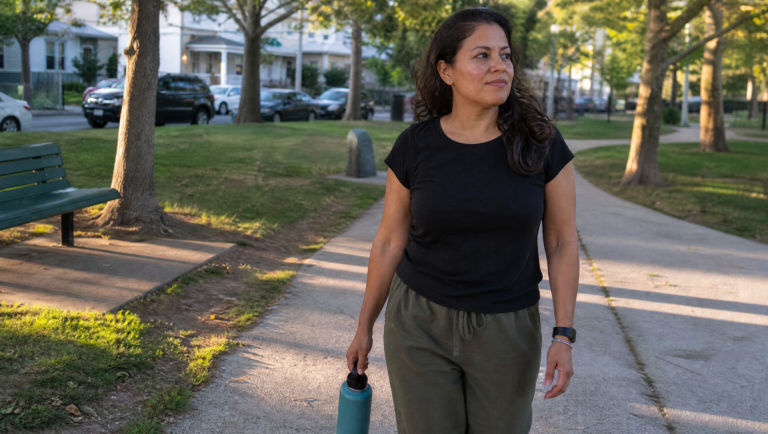
Post-Meal Blood Sugar Spikes: What’s Normal and What’s Not
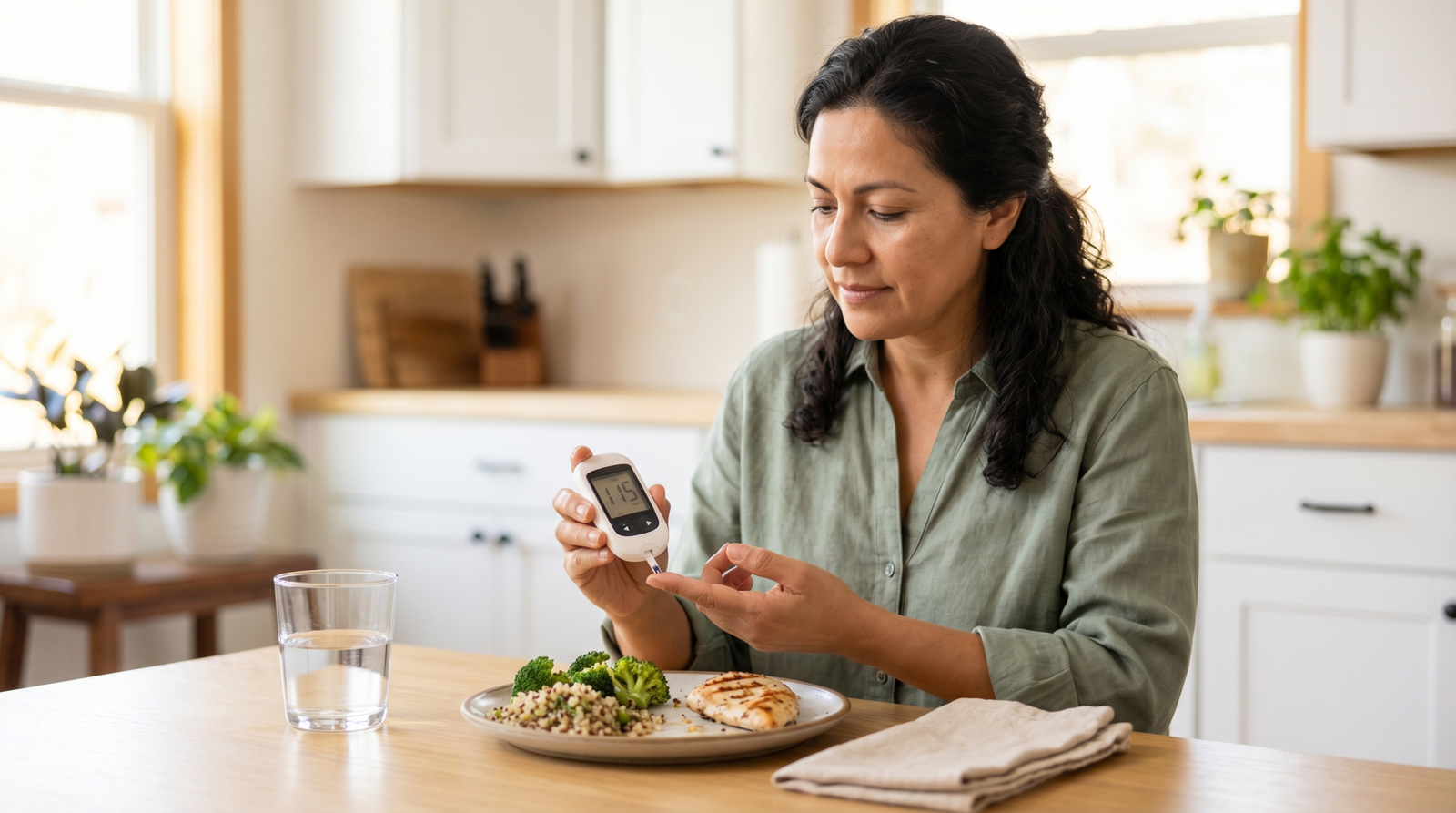
That afternoon slump — the foggy thinking, the sudden heaviness after lunch — often has a precise cause. It’s not a character flaw, and it’s not just “how you are.”
For many adults, those symptoms track closely with how blood glucose rises and falls after eating. The pattern is common, but it rarely gets explained in practical terms.
Understanding post-meal blood sugar spikes is one of the most actionable entry points into metabolic health. The strategies that reduce them are evidence-based, low-cost, and produce noticeable effects faster than most people expect.
⚡ Quick Win
A 10–15 minute walk after your largest meal may reduce post-meal glucose more effectively than a longer walk taken at a different time of day. No equipment needed.
What Are Post-Meal Blood Sugar Spikes?
Every time you eat carbohydrates, your body breaks them down into glucose. That glucose enters your bloodstream, and your pancreas releases insulin to shuttle it into cells for energy.
When this system works well, you get a moderate, temporary rise in blood glucose — followed by a return to baseline. That’s normal physiology.
The problem starts when the rise goes too high, recovers too slowly, or both. Several factors drive this.
How Insulin Resistance Changes the Picture
With insulin resistance, cells don’t respond efficiently to insulin’s signal. Glucose stays in circulation longer than it should, and the pancreas compensates by producing more insulin.
Over time, this cycle contributes to persistently elevated post-meal glucose — and to the familiar mid-afternoon energy crash that many people have simply accepted as normal.
The contrast between a healthy response and an impaired one is worth understanding clearly:
| What Happens | Normal Response | With Insulin Resistance |
|---|---|---|
| Carbohydrate digestion | Glucose enters bloodstream steadily | Glucose enters rapidly, in a surge |
| Insulin release | Pancreas responds promptly and proportionally | Response delayed, insufficient, or blunted |
| Cellular uptake | Cells accept glucose efficiently | Cells resist insulin; glucose lingers in blood |
| How you feel | Steady energy after eating | Energy spike followed by a crash; brain fog |

Other Factors That Amplify the Spike
Food composition is a major driver — but digestive physiology matters just as much. Gastroparesis, a condition involving slowed gastric emptying due to nerve dysfunction, can produce unpredictable glucose patterns where spikes appear hours after a meal rather than shortly after.[3]
At the other extreme, accelerated digestion can cause glucose to flood the bloodstream rapidly, driving a sharp early peak. Both patterns highlight why the same food can produce very different responses in different people.
Normal vs. Concerning Glucose Ranges After Eating
For adults without diabetes, post-meal blood sugar spikes are considered within normal range when glucose remains below 140 mg/dL (7.8 mmol/L) two hours after the start of a meal — the threshold used in the oral glucose tolerance test (OGTT) and consistent with ADA guidance.[1]
In practice, glucose typically peaks around 60–75 minutes after starting a meal, then returns toward fasting levels within 2–3 hours. A rise is expected and physiologically normal — what matters is how high it goes and how quickly it resolves.
| Marker | Without Diabetes | Prediabetes Range |
|---|---|---|
| 2-hour post-meal glucose | Below 140 mg/dL (7.8 mmol/L) | 140–199 mg/dL (7.8–11.0 mmol/L) |
| Typical peak timing | ~60–75 minutes after eating | Often higher and delayed |
| Recovery to baseline | Within 2–3 hours | May take significantly longer |
Symptoms Worth Paying Attention To
Recurrent post-meal symptoms — fatigue within 1–2 hours of eating, difficulty concentrating, increased thirst, or blurred vision — can indicate that glucose levels are running higher than the body manages efficiently.
These aren’t diagnostic, but they are signals. If they occur consistently, basic glucose testing or a conversation with a healthcare provider is a reasonable next step — not something to defer.
What Actually Helps — And How Fast
The research here is more encouraging than most general health advice conveys.
Dietary adjustments, post-meal movement, and sleep quality each affect post-meal blood sugar spikes through distinct mechanisms — and several produce measurable changes faster than people expect.
Evidence-based starting points:
- A 10–15 minute walk after your largest meal — this single habit has been shown to meaningfully reduce post-meal glucose in controlled research
- Start meals with vegetables or protein before carbohydrates — eating sequence has a documented effect on the post-meal glucose curve
- Pair any carbohydrate source with protein or fat — an apple alone raises glucose faster than an apple with almond butter
- Prioritize 7–8 hours of sleep — even short-term sleep restriction is associated with measurably impaired glucose tolerance[4]
Many people notice changes within 2–4 weeks of applying two or three of these consistently.
Early signs that something is shifting: the post-lunch crash becomes less pronounced. Afternoon energy stabilizes. The urge to reach for something sweet a few hours after eating tends to lessen.
These changes often appear before any lab values shift — which is worth knowing if you’re looking for early feedback that the approach is working.
Dietary Strategies That Make a Difference
What you eat matters. How you build that meal matters nearly as much.
Low-GI Foods and Smart Pairing
The Glycemic Index (GI) measures how quickly a carbohydrate raises blood glucose relative to pure glucose. Lower-GI foods produce a slower, more gradual rise.
Practical examples: steel-cut oats (GI ~55) versus instant oats (GI ~83). Lentils versus white rice. An apple (GI ~28) versus pretzels (GI ~83). The differences are real and consistent across studies.
What often gets skipped in standard dietary advice: pairing matters as much as food choice. Combining carbohydrates with protein — eggs, Greek yogurt, cottage cheese, fish — or with fat slows gastric emptying and flattens the glucose curve.[2]
This is one of the most replicated findings in postprandial nutrition research, and it costs nothing to apply.
Fiber, Portions, and Meal Sequence
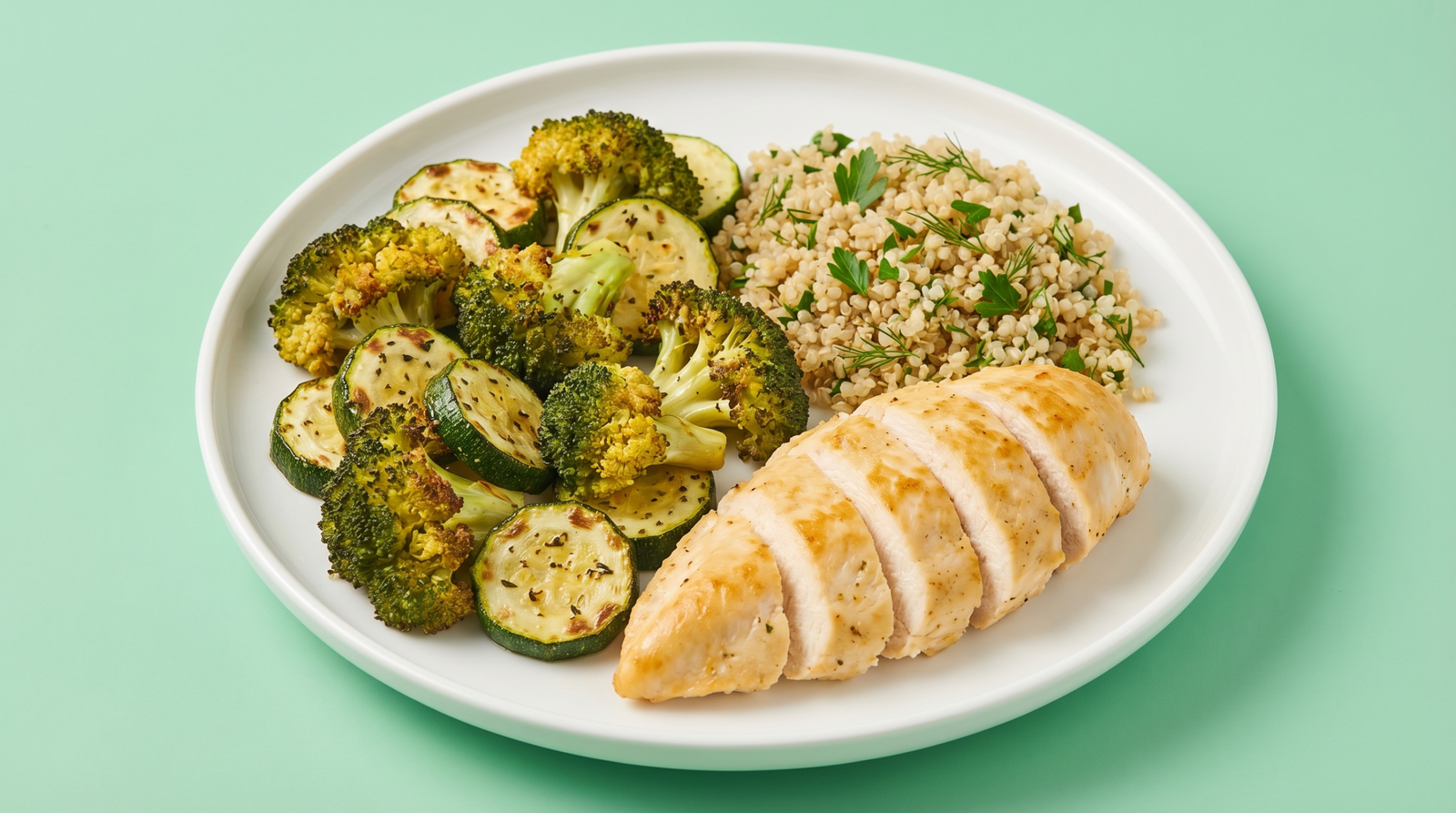
Fiber adds physical bulk that mechanically slows digestion and blunts the glucose response. The most practical sources: leafy greens, broccoli, zucchini, peppers, legumes — foods that can anchor the vegetable portion of almost any meal.
Portion size is a lever that gets underused. Even high-quality, low-GI carbohydrates can produce a significant spike in large quantities — the glycemic load matters, not just the glycemic index.
One pattern consistently supported by research: eating vegetables or protein before carbohydrates at the same meal reduces the post-meal glucose peak compared to eating carbohydrates first. The full breakdown is in the food order and blood sugar guide.
Post-Meal Movement: Timing Matters More Than You Think
Moving after eating activates skeletal muscle glucose uptake through a pathway that operates partially independent of insulin. This makes post-meal movement one of the most immediate and effective tools for managing post-meal blood sugar spikes — particularly relevant for anyone with impaired insulin sensitivity.
A 2022 meta-analysis found that multiple short walks after meals reduced three-hour postprandial glucose more effectively than a single continuous walk of equivalent duration taken at a different time of day.[5]
One thing worth pushing back on here: the common assumption that exercise timing is irrelevant — that “a walk is a walk, whenever you take it.” The data suggests otherwise.
The same total movement performed post-meal versus pre-meal produces a meaningfully different glycemic outcome. Post-meal muscle activity draws glucose from circulation during the precise window when levels are peaking. Pre-meal exercise doesn’t replicate this effect. Timing, in this context, is part of the mechanism.
Stress, Sleep, and Routine Stability
Chronic stress elevates cortisol, which signals the liver to release stored glucose — raising blood sugar independently of food intake. This is a frequently overlooked driver of elevated fasting and post-meal glucose in people who otherwise eat well.
Consistent daily routines support more stable cortisol patterns. Irregular meal timing, extended gaps between eating, and poor sleep each introduce variability that makes glucose harder to regulate.
Alcohol introduces the same cortisol response — and an additional layer through liver glucose suppression. Understanding how alcohol affects blood sugar is particularly relevant if post-meal spikes are already a pattern, since the two effects compound each other.
Avoiding prolonged sitting after meals is a low-effort structural change with a meaningful effect. Even light household movement in the 30–60 minutes after eating supports a more gradual glucose curve. For a broader framework, the guide to stabilizing blood sugar levels covers morning routines, meal timing, and daily movement in practical detail.
How to Monitor Your Levels at Home
Post-meal glucose is invisible without measurement — and for many people, the first time they actually check, the results are informative in ways that dietary advice alone never achieves.
Continuous Glucose Monitors (CGMs)
A CGM is a small sensor worn on the upper arm or abdomen that tracks interstitial glucose every few minutes, around the clock. The value isn’t just individual numbers — it’s the pattern: which meals produce the largest spikes, how long recovery takes, whether overnight levels are stable.
Devices such as the Dexcom G7 and FreeStyle Libre 3 are available in the US for non-diabetic use, though cost and insurance coverage vary. A two-week CGM trial can provide more useful personal data than months of general dietary advice.
Finger-Prick Testing
Traditional glucometers remain accurate and affordable. Testing two hours after the start of a meal gives a clinically meaningful reference point.
Context for interpreting results: below 140 mg/dL at the two-hour mark is the standard target for adults without diabetes. Consistent readings above that level are worth discussing with a healthcare provider — not necessarily alarming, but worth investigating.
The goal isn’t to generate anxiety around every number. It’s to build a clear, personalized picture of how your body responds to specific foods and habits — then use that information to adjust.
Long-Term Health: Why Consistent Management Matters
Occasional post-meal spikes are a normal part of eating. It’s the chronic, repeated pattern of elevated post-meal glucose that is associated with increased health risk over time.
Sustained postprandial hyperglycemia is associated with accelerated retinopathy, increased cardiovascular risk, cognitive decline, and kidney stress — though the strength of these associations varies and individual risk depends on many factors beyond glucose alone.[1]
| Health Area | Associated Risk from Chronic Elevation | Protective Strategy |
|---|---|---|
| Eyes | Associated with accelerated retinopathy progression | Consistent post-meal management; fiber-rich meals |
| Heart | Linked to increased cardiovascular risk markers | Regular post-meal movement; balanced plates |
| Brain | Associated with cognitive decline in longitudinal studies | Stable glucose supports sustained attention and mood |
| Kidneys | Chronic hyperglycemia associated with kidney stress | Personalized targets with a healthcare provider |
What’s worth noting: the habits that reduce post-meal blood sugar spikes — consistent meals, balanced plates, post-meal movement — address multiple systems simultaneously. There’s no separate protocol for each.
Metabolic adaptation is cumulative. Small daily adjustments, applied consistently over weeks and months, produce compounding effects that no single intervention replicates.
Conclusion
Post-meal blood sugar spikes are common — and for most people, manageable with a handful of consistent habits.
Balanced meals with protein, fiber, and lower-GI carbohydrates; a short walk after eating; adequate sleep — none of this is complicated. The challenge is consistency, not complexity.
This isn’t about optimizing every meal. It’s about building a pattern your body can work with over time. And that’s something anyone can start building today.
Frequently Asked Questions
What causes post-meal blood sugar spikes?
Post-meal blood sugar spikes occur when carbohydrates from a meal are digested faster than the body can process the resulting glucose. In people with insulin resistance, cells don’t respond efficiently to insulin’s signal, so glucose remains in circulation longer and rises higher than in a normal metabolic response. Meal composition, portion size, eating speed, and individual digestive function all influence how pronounced the spike is — which is why the same food can produce different responses in different people.
What is a normal glucose level after eating?
For adults without diabetes, blood glucose is generally considered normal when it stays below 140 mg/dL (7.8 mmol/L) two hours after the start of a meal — the threshold used in standard glucose tolerance testing. A temporary rise is expected and physiologically normal. What matters is that levels return toward fasting baseline within 2–3 hours. Consistently higher readings are worth discussing with a healthcare provider.
Does walking after eating actually reduce blood sugar?
Yes — and the timing is part of what makes it effective. Research shows that a 10–15 minute walk taken shortly after eating reduces post-meal glucose more effectively than a single longer walk at a different time of day. Working muscles take up glucose through a pathway that is partially independent of insulin, which is particularly relevant for anyone with impaired insulin sensitivity. The effect is most pronounced when movement happens during the post-meal glucose peak window.
What foods help prevent large glucose spikes after eating?
Pairing carbohydrates with protein, healthy fat, or fiber is one of the most consistently supported strategies. Practical examples: eggs or Greek yogurt with toast rather than toast alone; lentils or legumes instead of refined grains; vegetables eaten at the start of a meal before carbohydrates. Choosing lower-GI carbohydrate sources and managing portion size both matter as well — glycemic load (the combination of GI and quantity) is a more complete predictor of glucose response than GI alone.
What are warning signs that a blood sugar spike is too high?
Common signs include unusual fatigue within 1–2 hours of eating, difficulty concentrating, increased thirst, blurred vision, or a strong craving for sweets shortly after a meal. These symptoms are not diagnostic on their own, but a consistent pattern of post-meal symptoms is worth investigating. Basic glucose testing or a conversation with a healthcare provider can clarify whether the underlying response is within a normal range or warrants further evaluation.
Medical Disclaimer: The information provided in this article is for educational purposes only and does not constitute medical advice. Always consult a qualified healthcare provider before making changes to your diet, lifestyle, or treatment plan. TheMetabolicHub.com does not replace professional medical guidance.
References
- American Diabetes Association. Standards of Medical Care in Diabetes. Diabetes Care. 2024. diabetes.org
- Jakubowicz D et al. Meal sequence and postprandial glucose response. Diabetes Care. 2015. PMID: 25542310
- Camilleri M et al. Gastroparesis: clinical and metabolic consequences. Curr Gastroenterol Rep. 2020. PMID: 32994956
- Spiegel K et al. Sleep curtailment in healthy young men is associated with decreased leptin levels, elevated ghrelin levels, and increased hunger and appetite. Ann Intern Med. 2004. PMID: 16227462
- Buffey AJ et al. The Acute Effects of Interrupting Prolonged Sitting with Short Bouts of Moderate-Intensity Walking. Sports Medicine. 2022. PMID: 35115009
- Mayo Clinic. Prediabetes — Diagnosis. mayoclinic.org