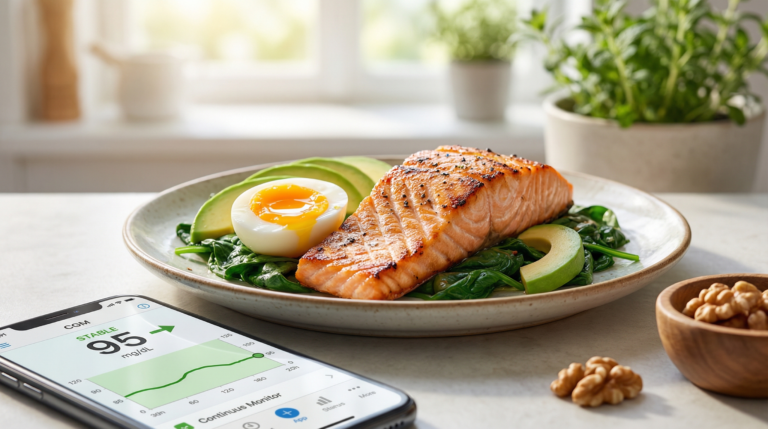
Stabilizing Blood Sugar: What “Stable” Really Means and How to Stop Cravings

You eat a reasonable lunch — and by 3 PM you’re exhausted, irritable, and reaching for something sweet. That crash is not a willpower problem.
It’s often a signal that your body’s glucose is swinging too wide — rising fast after meals and dropping hard an hour or two later. This cycle can go on for years without a clear explanation from a routine blood panel.
The encouraging news: stabilizing blood sugar is one of the most effective things you can do to reclaim steady energy, reduce cravings, and protect your metabolic health long-term — and most of the tools to do it are already within reach.
What Does Stabilizing Blood Sugar Actually Mean?
Stable glucose doesn’t mean a perfectly flat line. It means your levels stay within a healthy range throughout the day — without the sharp spikes and crashes that drain energy and drive cravings.
For most adults, a healthy fasting target is 80–100 mg/dL, and post-meal readings (two hours after eating) should ideally stay below 140 mg/dL. The goal of stabilizing blood sugar is keeping that post-meal rise gradual — not eliminating it.
| Check Time | Target Range | Primary Goal |
|---|---|---|
| Before a Meal | 80–130 mg/dL | Establish a healthy baseline |
| 2 Hours After a Meal | Below 180 mg/dL | Assess meal impact on glucose |
| Fasting (optimal) | 80–100 mg/dL | Baseline metabolic health indicator |
Key Takeaways
- Stable glucose means avoiding sharp spikes and crashes — not a perfectly flat line
- Food pairing (protein + fiber + fat with carbs) is one of the most effective daily tools
- Short walks after meals can meaningfully reduce post-meal glucose spikes
- Chronic stress and poor sleep raise cortisol — which directly disrupts glucose control
- You don’t need a continuous glucose monitor to start making a difference
Why Blood Sugar Swings Fuel Cravings — and Fatigue
When glucose spikes sharply after a meal, your pancreas releases a large pulse of insulin to bring it back down. That rapid correction often overshoots — leaving levels lower than before you ate.
That dip is what your brain interprets as urgent hunger. It sends a loud signal: find fast fuel, now. The result is the 3 PM cookie craving — not a character flaw, but a physiological response.
| Timeframe | Physical Impact | Mental Impact |
|---|---|---|
| Short-Term (Hours) | Energy crash, intense hunger | Brain fog, irritability |
| Long-Term (Months/Years) | Increased insulin resistance risk | Memory and focus decline |
This cycle can develop quietly over years — which is why so many people are caught off guard when a doctor first mentions insulin resistance. It is not a personal failure. It’s a pattern that can shift with the right approach. If the crash-and-craving cycle sounds familiar, reactive hypoglycemia may be worth reading about — it describes exactly this pattern in more detail.
Practical Strategies for Stabilizing Blood Sugar Every Day
None of the strategies below require a special diet or expensive supplements. They’re adjustments to how you eat, move, and recover — and they compound over time.
1. Pair Every Carbohydrate With Protein, Fat, or Fiber
Carbohydrates digest fastest when eaten alone. Adding protein, fat, or fiber to the same meal slows gastric emptying — which smooths out how quickly glucose enters the bloodstream.
In practice: an apple with almond butter. Whole-grain toast with eggs and avocado. Greek yogurt with berries and a handful of walnuts. These aren’t complicated combinations — they’re just more complete meals.[1]
For a deeper look at how protein specifically affects glucose response, the evidence points to some surprisingly practical takeaways.
2. Think in Small Carbohydrate Portions
The total amount of carbohydrate eaten at one sitting has a larger impact on glucose than the type of carb alone. Spreading carbs across the day — rather than loading them into one or two meals — helps the body process fuel more steadily.
A useful target for many adults: 30–45g of carbohydrate per meal, adjusted to your activity level and metabolic state. Your doctor or dietitian can help you find the range that works for you.
3. Add a Short Walk After Meals
Muscle tissue is responsible for roughly 80% of insulin-mediated glucose uptake.[2] When you move after eating, those muscles actively pull glucose from the bloodstream — without requiring extra insulin to do it.
Research published in Sports Medicine found that short post-meal walks (10–15 minutes) reduced postprandial glucose more effectively than a single longer walk taken at a different time of day.[3] Even a brief walk around the block after lunch makes a measurable difference.
The same principle extends to resistance training — strength training improves insulin sensitivity through a related but distinct mechanism, and the benefits compound with consistent practice.
4. Prioritize Fiber-Rich Whole Foods
Fiber slows the absorption of sugar from the digestive tract. Vegetables — leafy greens, broccoli, zucchini, bell peppers — legumes like lentils and black beans, and whole intact grains all contribute meaningfully to this effect.[4]
Processed foods, by contrast, are often stripped of fiber. Many also contain hidden added sugars that can cause a rapid glucose rise — even when the product doesn’t taste particularly sweet. Reading ingredient labels matters more than trusting front-of-package claims.
5. Manage Stress — It Directly Affects Glucose
Cortisol is a stress hormone that signals the liver to release stored glucose into the bloodstream. This is useful in a genuine emergency. Chronically elevated, it keeps glucose levels higher than they should be — even when your diet is otherwise solid.[5]
Simple stress-reduction strategies — a 10-minute walk in the evening, diaphragmatic breathing before meals, limiting screen time before bed — have documented downstream effects on glucose control. They don’t need to be elaborate to be effective.
Alcohol is worth mentioning in this context: it triggers the same cortisol and counterregulatory hormone response — and adds a separate layer of risk through liver glucose suppression. If you drink occasionally, how alcohol affects blood sugar explains both mechanisms and what actually reduces the impact.
6. Protect Your Sleep
Sleep deprivation impairs insulin sensitivity rapidly. Research suggests that even one week of restricted sleep (under 6 hours per night) can reduce glucose tolerance and insulin response by 30–40%.[6]
Seven to nine hours of quality sleep per night isn’t a luxury — it’s one of the foundational inputs for metabolic stability. If sleep is consistently disrupted, addressing that may matter more than any dietary adjustment. The guide on morning habits for blood sugar covers how sleep quality connects to what happens in the first hours of your day.
Foods That Support Stable Glucose — and What to Reduce
There’s no single “blood sugar diet.” But some consistent patterns in the research point to food choices that help, and some that reliably undermine glucose control.
Foods That Support Stability
- Non-starchy vegetables: leafy greens, broccoli, cauliflower, zucchini, peppers
- Legumes: lentils, black beans, chickpeas — high in fiber and slow-digesting protein
- Quality proteins: eggs, fish, chicken, tofu, Greek yogurt
- Healthy fats: avocado, olive oil, nuts, seeds
- Whole intact grains: oats, quinoa, barley (not flour-based products)
- Low-glycemic fruit: berries, apples, pears — paired with protein for best effect
Foods and Patterns to Reduce
- Refined carbohydrates eaten alone: white bread, crackers, pastries, sugary cereals
- Sugar-sweetened beverages: sodas, fruit juices, sweetened coffees and teas
- Dried fruit in large portions (concentrated natural sugar without much fiber buffer)
- Ultra-processed snacks with hidden added sugars (sauces, flavored yogurts, granola bars)
Monitoring Your Levels: What to Track and When
You don’t need a continuous glucose monitor to start learning how your body responds to food. A standard glucometer — available at most pharmacies for under $30 — gives you the same core data.
Check before eating, and again two hours after your first bite. The gap between those two numbers tells you how your meal affected your glucose. Over time, patterns become clear.
If fasting readings are consistently above 100 mg/dL, or post-meal readings regularly exceed 140 mg/dL, bring that data to your doctor. Catching metabolic imbalance early — before it progresses to prediabetes — is one of the most important windows for intervention. Understanding the difference between fasting insulin vs. fasting glucose can help you ask for the right tests at your next appointment.
Conclusion
Stabilizing blood sugar doesn’t require perfection. It requires consistency — and an understanding that small, daily decisions add up faster than most people expect.
Pairing your carbs. Moving after meals. Sleeping enough. Managing stress. These aren’t dramatic interventions. They’re the inputs your metabolic system actually runs on — and when they’re in place, steady energy tends to follow.
If you’ve been riding the fatigue-craving cycle for years without explanation, that pattern is not permanent. The biology behind it is well understood, and the strategies to shift it are accessible. You can start with one change this week.
Frequently Asked Questions
What does stabilizing blood sugar actually involve day-to-day?
Stabilizing blood sugar day-to-day comes down to a few consistent habits: pairing carbohydrates with protein, fat, or fiber at every meal; eating smaller portions of carbs spread across the day rather than in large amounts at once; moving briefly after meals to help muscles clear glucose; and protecting sleep quality. None of these require a special diet — they’re adjustments to existing patterns. Most people notice a difference in energy and craving intensity within two to three weeks of consistent effort.
Why do I get such strong cravings in the afternoon even after a full lunch?
Afternoon cravings are often triggered by a glucose crash — a rapid drop that follows a sharp post-meal spike. When a meal is high in refined carbohydrates and low in protein or fiber, glucose rises quickly and insulin responds in force, sometimes overcorrecting. That dip sends an urgent hunger signal to the brain. It’s a physiological response, not a lack of discipline. Meals built around protein, healthy fats, and fiber tend to produce a slower, steadier glucose curve — which eliminates the crash and the craving that follows it.
Does stress really affect blood sugar, even if I’m eating well?
Yes — and this is one of the most overlooked factors in glucose management. Cortisol, the primary stress hormone, signals the liver to release stored glucose into the bloodstream. This response is useful in acute situations but becomes disruptive when stress is chronic. Elevated cortisol can keep fasting glucose higher than expected, reduce insulin sensitivity, and contribute to energy instability even when diet is otherwise clean. Addressing sleep, stress, and recovery isn’t secondary to nutrition — it’s parallel to it.
Can fruit cause blood sugar spikes?
Whole fruit contains natural sugars, but also fiber, water, and micronutrients that slow absorption — making the glucose response much more gradual than fruit juice or dried fruit. Berries, apples, pears, and citrus tend to have a more moderate effect. Juice and dried fruit, by contrast, are concentrated sources of sugar without much fiber buffer and can cause a more noticeable spike. Pairing any fruit with a protein source — Greek yogurt, a handful of nuts, or cottage cheese — further smooths out the glucose response.
Medical Disclaimer: The information provided in this article is for educational purposes only and does not constitute medical advice. Always consult a qualified healthcare provider before making changes to your diet, lifestyle, or treatment plan. TheMetabolicHub.com does not replace professional medical guidance.
References
- Leidy HJ, et al. The role of protein in weight loss and maintenance. Am J Clin Nutr. 2015. PMID: 25926512
- American Diabetes Association. Standards of Medical Care in Diabetes. Diabetes Care. 2024. diabetes.org
- Buffey AJ, et al. The acute effects of interrupting prolonged sitting time in adults with standing and light-intensity walking on biomarkers of cardiometabolic health. Sports Med. 2022. PMID: 35115009
- Harvard T.H. Chan School of Public Health. Fiber. The Nutrition Source. hsph.harvard.edu
- Endocrine Society. Cortisol and glucose metabolism. endocrine.org
- Spiegel K, et al. Sleep curtailment in healthy young men is associated with decreased leptin levels, elevated ghrelin levels, and increased hunger and appetite. Ann Intern Med. 2004. PMID: 16227462