Strength Training for Insulin Resistance: 7 Key Benefits

There’s a particular kind of tired that doesn’t go away after a good night’s sleep. Energy that used to be there simply isn’t.
And despite eating reasonably well, the scale keeps creeping in the wrong direction — often around the midsection. If any of that sounds familiar, this may not be random.
It may reflect how your body is handling blood sugar — and a process called insulin resistance could be at the root of it. The encouraging news: strength training for insulin resistance is one of the most effective tools available. Not a drug. Not a supplement. Just the right kind of physical effort, applied consistently.
What Strength Training for Insulin Resistance Actually Does
Strength training — also called resistance training — improves insulin sensitivity by building skeletal muscle, which accounts for roughly 80% of insulin-mediated glucose uptake in the body.[2]
More muscle means more places for blood sugar to go. Research suggests that strength training for insulin resistance, done two or more times per week, can produce measurable improvements in fasting glucose and insulin levels — often within 8 to 12 weeks.
Key Takeaways
- Skeletal muscle is the primary site where the body clears blood glucose — building it is a direct metabolic strategy
- Resistance training 2–3 times per week is supported by the ADA and AHA as a first-line lifestyle intervention for insulin resistance
- Short post-meal walks — even 10 minutes — may meaningfully reduce postprandial glucose spikes
- Combining strength work with aerobic activity appears to produce stronger results than either alone
- Sleep quality and stress management directly affect how well exercise translates into metabolic improvement
Why Insulin Resistance Develops — and Why Muscle Is the Answer
Insulin’s job is straightforward: shuttle glucose from the bloodstream into cells so the body can use it for energy. Insulin resistance happens when cells — particularly in muscle, liver, and fat tissue — become less responsive to that signal.
Glucose backs up in the blood. The pancreas compensates by producing more insulin. Over time, that cycle strains the system.
What makes this condition difficult to catch early is that it can develop silently over years — often a decade or more before a type 2 diabetes diagnosis. Many people first hear about it at a routine physical, with no obvious symptoms beforehand.
This is not a personal failure. Insulin resistance develops through a combination of genetics, chronic stress, disrupted sleep, dietary patterns, and prolonged inactivity — not a lack of effort or willpower. Recognizing what’s driving it is the first step toward changing the trajectory.[3]
How Strength Training Improves Insulin Sensitivity at the Cellular Level
Muscle tissue is metabolically active in a way fat tissue simply isn’t. When you do resistance work, muscle fibers contract and pull glucose out of the bloodstream — a process that happens independently of insulin.
Over weeks and months, something more lasting happens: the muscle cells themselves become more efficient at responding to insulin. GLUT-4 transporters — the proteins that physically move glucose into cells — increase in number and activity.[3]
The result is a body that handles blood sugar more effectively around the clock, not just during the workout itself. Research also shows that strength training for insulin resistance reduces inflammatory markers in both muscle and liver tissue — two key sites where insulin signaling breaks down.
Understanding what actually changes in the body when insulin sensitivity improves can help make sense of why resistance training works so well — here’s a closer look at those changes.
Aerobic Exercise, HIIT, and Strength Training: How They Compare
Each modality contributes to better blood sugar regulation — but they work through different mechanisms. Understanding the differences helps in building a routine that does more than one thing well.
| Exercise Type | Primary Mechanism | Best For | Time Per Week |
|---|---|---|---|
| Aerobic (walking, swimming, cycling) | Burns glucose during activity; improves cardiovascular function | Daily blood sugar management, heart health | 150–300 min moderate |
| HIIT | Short bursts deplete muscle glycogen rapidly; stimulates GLUT-4 expression | Time-efficient glucose lowering, HbA1c improvement | 75–150 min vigorous |
| Resistance / Strength Training | Builds muscle mass; increases long-term glucose uptake capacity | Sustained metabolic improvement, body composition | 2–3 sessions |
A meta-analysis of 50 studies found that HIIT reduced HbA1c by an average of 0.19% and body weight by roughly 1.3 lbs — meaningful improvements for anyone managing blood sugar.[5]
A separate study found that swimming four times weekly for three months measurably lowered HOMA-IR — a calculated score from fasting glucose and fasting insulin, worth requesting specifically if it’s not on your standard panel — in people with metabolic syndrome.[4]
Combining aerobic and resistance work consistently produces stronger results than either modality alone. Cardio clears glucose acutely; strength training builds the infrastructure to handle it better long-term.
The Case for Post-Meal Walks
One of the most accessible metabolic tools is also one of the least discussed: a short walk immediately after eating.
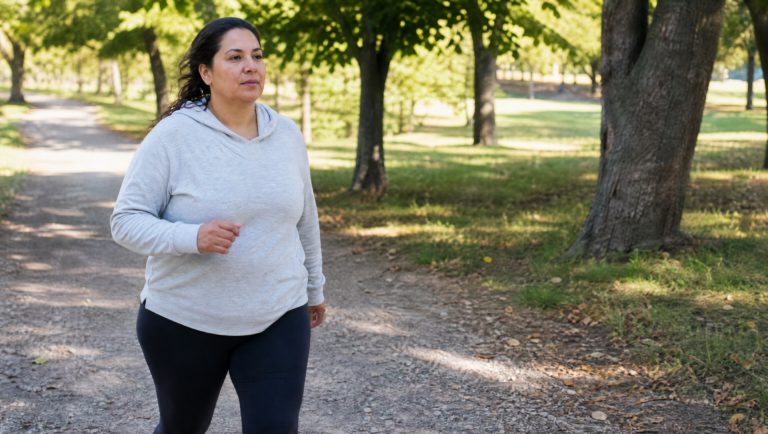
Research published in Sports Medicine found that brief post-meal walks — as short as 10 minutes — reduced postprandial glucose more effectively than a single longer walk taken earlier in the day.[6]
Muscles activated during a walk pull glucose from the bloodstream at exactly the moment it’s peaking — roughly 30 to 60 minutes after a meal. Even gentle movement in that window can flatten the spike.
Best Practices: Building a Strength Training Routine for Insulin Resistance
Starting with bodyweight is more than enough. Eight to ten squats, two sets of push-ups, a set of hip hinges — these engage the large muscle groups (quadriceps, hamstrings, glutes, upper back) that have the greatest impact on glucose uptake.
Technique matters more than load, especially early on. Poor form under weight leads to injury, which leads to stopping — the one outcome to avoid.
Progress gradually. Once bodyweight movements feel stable, add resistance: dumbbells, a resistance band, a weighted backpack. Aim to reach mild fatigue by the final few reps of each set — that’s the stimulus that drives adaptation.
A Sample Weekly Structure
| Day | Activity | Duration | Focus |
|---|---|---|---|
| Monday | Brisk walking | 30 min | Aerobic base, post-meal timing ideal |
| Tuesday | Lower body strength (squats, deadlifts, lunges) | 30 min | Largest muscle groups → highest glucose uptake |
| Wednesday | HIIT intervals or brisk walk | 20–30 min | Cardiovascular challenge |
| Thursday | Upper body strength (rows, presses, carries) | 30 min | Muscle balance, upper-back posture |
| Friday | Yoga or gentle mobility work | 30 min | Active recovery, stress regulation |
| Saturday | Swim, cycle, or longer walk | 30–60 min | Aerobic endurance |
| Sunday | Rest or gentle stretching | Optional | Recovery |
This totals well over 150 minutes of moderate movement per week — roughly 20–25 minutes daily on active days — which aligns with ADA and AHA guidelines for people managing insulin resistance.[7]
The specific days matter less than hitting the weekly totals consistently.
Adapting the Routine to Your Situation
Joint pain, limited time, shift work, a history of injury — these are real factors, not excuses, and they should shape how any exercise plan is structured.
Someone managing knee discomfort may do better with seated resistance work, swimming, or cycling than with squats and lunges. Someone with limited windows might consolidate into three 20-minute sessions rather than five longer ones.
Research suggests that afternoon HIIT sessions may lower blood glucose more effectively than morning sessions for some people. Whether that matters in practice depends entirely on when it’s actually possible to train — the best workout is the one that gets done.
A working partnership with a doctor or certified trainer can help adapt movements safely, particularly with existing conditions like osteoarthritis or cardiovascular disease.
Use a continuous glucose monitor (CGM) if access allows — watching how different workouts affect blood sugar in real time can be genuinely clarifying. A temporary glucose spike after intense exercise is normal; it reflects the liver releasing fuel to support the muscles and resolves within the hour.
The Role of Sleep, Stress, and Nutrition
Strength training creates the stimulus for metabolic improvement. Sleep is where much of that improvement is consolidated.
Research from the Endocrine Society shows that sleeping fewer than seven hours per night impairs glucose tolerance and disrupts the hormonal signals that regulate appetite and energy storage — essentially working against the progress made in the gym.[8]
Chronic stress has a similar effect. Elevated cortisol signals the liver to release stored glucose — useful in genuine emergencies, but metabolically disruptive when it runs chronically.
Even modest stress-management practices — consistent sleep timing, 10 minutes of breathwork, reducing decision fatigue — can meaningfully support glucose regulation.
On the nutrition side, what matters most isn’t a perfect diet — it’s consistent habits. Prioritize fiber-rich vegetables — leafy greens, broccoli, zucchini, bell peppers — alongside quality proteins like eggs, fish, chicken, and Greek yogurt.
Reduce ultra-processed foods and sugar-sweetened beverages, which drive visceral fat accumulation and worsen insulin signaling. Eating in a consistent pattern — rather than skipping meals and compensating later — helps keep blood sugar stable across the day.
Dietary fat quality is worth considering here too. Research suggests that omega-3s may support insulin sensitivity by reducing the chronic inflammation associated with impaired insulin signaling — another reason oily fish fits well into a metabolic-focused eating pattern.
What to Track and When to Adjust
Progress in this context isn’t always visible on the scale. Improved energy, better sleep, lower fasting glucose at your next lab draw — these are meaningful markers.
Keep a simple log of workouts and how you feel afterward. If sessions feel consistently easy, it’s time to add weight, increase reps, or shorten rest periods.
At medical checkups, it’s worth asking specifically about fasting insulin alongside fasting glucose. HOMA-IR — calculated from both numbers — gives a more complete picture of insulin sensitivity than glucose alone, and it’s often not included in standard panels unless requested.
Conclusion
Insulin resistance is common, largely addressable through lifestyle, and directly targeted by consistent strength training. Building muscle, improving glucose uptake, reducing inflammation — these are the mechanisms, and strength training for insulin resistance addresses all three simultaneously.
Add consistent aerobic activity, a post-meal walk habit, adequate sleep, and reasonable nutrition, and the picture shifts considerably.
None of this requires perfection or a gym membership. Start where you are, add load gradually, and give it eight to twelve weeks before expecting to see results in lab numbers. The biology is working in your direction.
Frequently Asked Questions
Does strength training help with insulin resistance?
Research consistently supports strength training for insulin resistance as one of the most effective lifestyle interventions available. Skeletal muscle accounts for roughly 80% of insulin-mediated glucose uptake in the body — building it increases the body’s capacity to clear blood sugar efficiently. Evidence suggests that 2–3 resistance sessions per week can produce measurable improvements in fasting glucose, insulin levels, and HOMA-IR within 8 to 12 weeks, particularly when combined with aerobic activity.
How many times per week should someone with insulin resistance strength train?
The American Diabetes Association and American Heart Association both recommend at least two resistance training sessions per week targeting all major muscle groups — legs, hips, back, abdomen, chest, shoulders, and arms. Three sessions per week appears to produce somewhat stronger metabolic results. Sessions don’t need to be long; 30 minutes of focused work is sufficient, provided intensity is adequate (reaching mild fatigue by the last few reps of each set).
Is cardio or strength training better for insulin resistance?
Both contribute, and combining them appears to produce the strongest results. Aerobic exercise (walking, swimming, cycling) burns glucose acutely and improves cardiovascular function. Resistance training builds the muscle mass that handles glucose long-term. A routine that includes both modalities — even at modest volumes — targets insulin resistance from multiple directions simultaneously.
Can sleep and stress affect how well exercise improves insulin sensitivity?
Yes — meaningfully so. Research from the Endocrine Society links sleep under seven hours per night to measurably impaired glucose tolerance and disrupted insulin signaling. Chronic stress elevates cortisol, which prompts the liver to release stored glucose and can partially offset the metabolic benefits of exercise. Prioritizing consistent sleep and even modest stress-reduction practices supports the results that training creates.
Medical Disclaimer: The information provided in this article is for educational purposes only and does not constitute medical advice. Always consult a qualified healthcare provider before making changes to your diet, lifestyle, or treatment plan. TheMetabolicHub.com does not replace professional medical guidance.
References
- American Diabetes Association. Standards of Medical Care in Diabetes. diabetes.org
- Borghouts LB, Keizer HA. Exercise and insulin sensitivity: a review. Int J Sports Med. 2000;21(1):1–12. PMID: 10694653
- Codella R, et al. Exercise in metabolic syndrome: mechanistic and clinical aspects. World J Diabetes. 2018;9(6):72–80. PMID: 29912701
- Jelleyman C, et al. The effects of high-intensity interval training on glucose regulation and insulin resistance: a meta-analysis. Obes Rev. 2015;16(11):942–961. PMID: 26481101
- Reynolds AN, et al. Acute post-meal walks reduce postprandial glucose. Sports Med. 2022;52(6):1469–1481. PMID: 35115009
- American Heart Association. Physical Activity Recommendations for Adults. heart.org
- Endocrine Society. Sleep and Metabolic Health. endocrine.org