
Insulin Resistance — The Root Cause
Insulin resistance drives obesity, type 2 diabetes, PCOS, and fatty liver. Learn how to measure it, reverse it, and why your doctor may not have told you about it.
Insulin Resistance Guides: Where to Start
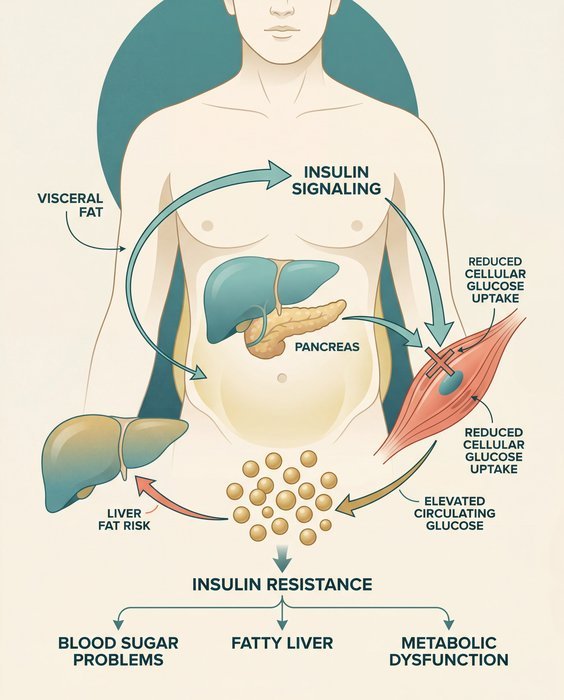
Insulin resistance can affect energy, hunger, cravings, weight regulation, PCOS symptoms, blood sugar patterns, and how the body responds to meals, sleep, stress, and movement. It is not a willpower problem — it is a metabolic signal that often improves when the right levers are addressed consistently.
This section explains how insulin resistance develops, why fasting glucose alone can miss part of the picture, how strength training and sleep influence insulin sensitivity, and which nutrition patterns may help support steadier post-meal blood sugar and better metabolic flexibility.
Start with the guides below if you want a structured path through the most important insulin resistance topics on The Metabolic Hub.
Start with These Insulin Resistance Guides
A practical reading path for insulin sensitivity, weight loss resistance, lab testing, sleep, strength training, and food strategy.
- Low-Glycemic Diet for Insulin Resistance
- What Happens When You Improve Insulin Sensitivity
- Fasting Insulin vs. Fasting Glucose
- Strength Training for Insulin Resistance
- Sleep and Insulin Resistance
- Insulin Resistance and Weight Loss
References For general background, see the NIDDK guide to insulin resistance and prediabetes and the CDC overview of blood sugar management.
The latest articles
Why Your Insulin May Be High Even When Glucose Is Normal
Seeing a normal glucose result beside a flagged insulin result can feel contradictory. The numbers are measuring different parts of the same system, and the mismatch deserves context rather than a rushed conclusion. High insulin with normal glucose can occur when the pancreas is releasing extra insulin to keep glucose within range. That pattern may…
What Your HOMA-IR Result Really Means—and What It Does Not
A lab portal can turn two ordinary fasting numbers into a HOMA-IR score that looks precise enough to settle the question of insulin resistance. The result may be useful, but the decimal places can create more certainty than the test deserves. With HOMA-IR results explained in context, the number is best understood as a fasting…
Why Normal-Weight Women Can Still Have Insulin Resistance
Your clothes fit as usual, your weight has barely changed, and no one has ever suggested that your metabolism needs attention. That can make an unexpected glucose result, persistent energy slump, or PCOS diagnosis feel especially confusing. Insulin resistance in thin women is possible because body size is only one part of metabolic health. Genetics,…
Insulin Resistance During Perimenopause: Why Your Body Feels Different
Your meals may look the same, your workouts may be just as consistent, and your sleep may only feel slightly worse. Yet your body suddenly responds differently: energy dips hit harder, cravings feel louder, waist changes appear faster, and glucose patterns can feel less predictable. This may not be random, and it is not a…
5 Supplements for Insulin Resistance: What the Evidence Shows
Doing “everything right” and still seeing stubborn fasting glucose, afternoon crashes, or intense cravings can feel discouraging. This may not be random, and it is not a personal failure. The encouraging news: supplements for insulin resistance may help in specific situations, but they work best as targeted support, not as a replacement for the basics….
PCOS Insulin Resistance: Signs, Tests, and What Helps
Cravings, energy crashes, stubborn waist changes, acne flares, and unpredictable cycles can make PCOS feel confusing and unfair. This may not be random; it may reflect how reproductive hormones and metabolic signals are communicating. The encouraging news: PCOS insulin resistance is not a personal failure, and it is not a dead end. Once the cycle…