
The Low-Glycemic Diet for Insulin Resistance: A Practical Guide
You’re eating what feels like a reasonable diet — and yet the energy crashes keep coming. The brain fog after lunch. The cravings that show up out of nowhere at 3pm. The scale that won’t budge no matter what you try.
These aren’t random frustrations. For many people in this situation, the underlying issue is insulin resistance — and the way blood sugar rises and falls throughout the day is often the missing piece.
The encouraging news: a low-glycemic diet for insulin resistance is one of the most practical and well-researched tools for addressing exactly this. Not a restrictive plan, and not a list of foods to fear — a clear framework for eating in a way that works with your body instead of against it.
In This Article
What a Low-Glycemic Diet for Insulin Resistance Actually Does
Insulin resistance means the body’s cells have stopped responding well to insulin — the hormone that moves glucose out of the bloodstream and into cells for energy.
The pancreas compensates by producing more insulin. Over time, this leads to elevated fasting glucose, persistent fatigue, and weight gain that seems to concentrate around the midsection.
A low-glycemic diet for insulin resistance works by slowing the rate at which glucose enters the bloodstream after meals. Slower glucose entry means a smaller insulin demand — and less strain on a system that’s already working overtime.
Research consistently supports dietary approaches that prioritize low-glycemic foods as a foundation for metabolic improvement.[1] Many people notice meaningful changes — in energy stability, cravings, and fasting glucose — within 4–8 weeks of consistent dietary changes.
How the Glycemic Index Works
The glycemic index (GI) rates carbohydrates on a scale of 0–100 based on how quickly they raise blood sugar after eating. Foods with a high GI cause a rapid spike; lower-GI foods produce a slower, more gradual rise.
But GI alone only tells part of the story. Glycemic load — which accounts for portion size — is often more useful in practice. A food can have a moderate GI but a low glycemic load when eaten in reasonable quantities.
| Food | GI Score | Effect on Blood Sugar |
|---|---|---|
| Lentils | ~30 | Slow, steady rise |
| Steel-cut oats | ~55 | Moderate, gradual rise |
| Whole wheat bread | ~69 | Faster increase |
| White rice | ~82 | Rapid spike |
Context also matters. The same food eaten alone versus paired with protein or fat will produce a different glucose response. This is where practical strategy starts to matter more than memorizing numbers.
Foods That Support Stable Blood Sugar
The core of a low-glycemic approach isn’t a restricted food list — it’s a shift in emphasis. The foods below consistently appear in research on blood sugar stability and insulin sensitivity.[2]
Non-Starchy Vegetables
Leafy greens, broccoli, zucchini, cauliflower, peppers, and asparagus are the backbone of this approach. They provide fiber and volume without significant glucose impact.
Aim to fill roughly half the plate with these at most meals. It’s one of the most reliable levers available for flattening the post-meal glucose curve.
Quality Protein Sources
Protein slows gastric emptying, which reduces how quickly carbohydrates are absorbed. Eggs, Greek yogurt, cottage cheese, fish, legumes, and poultry all serve this function well.
The ADA identifies skeletal muscle as responsible for roughly 80% of insulin-mediated glucose uptake. Eating enough protein — and building the muscle to use it — matters more than most dietary advice acknowledges.
Fiber-Rich Carbohydrates
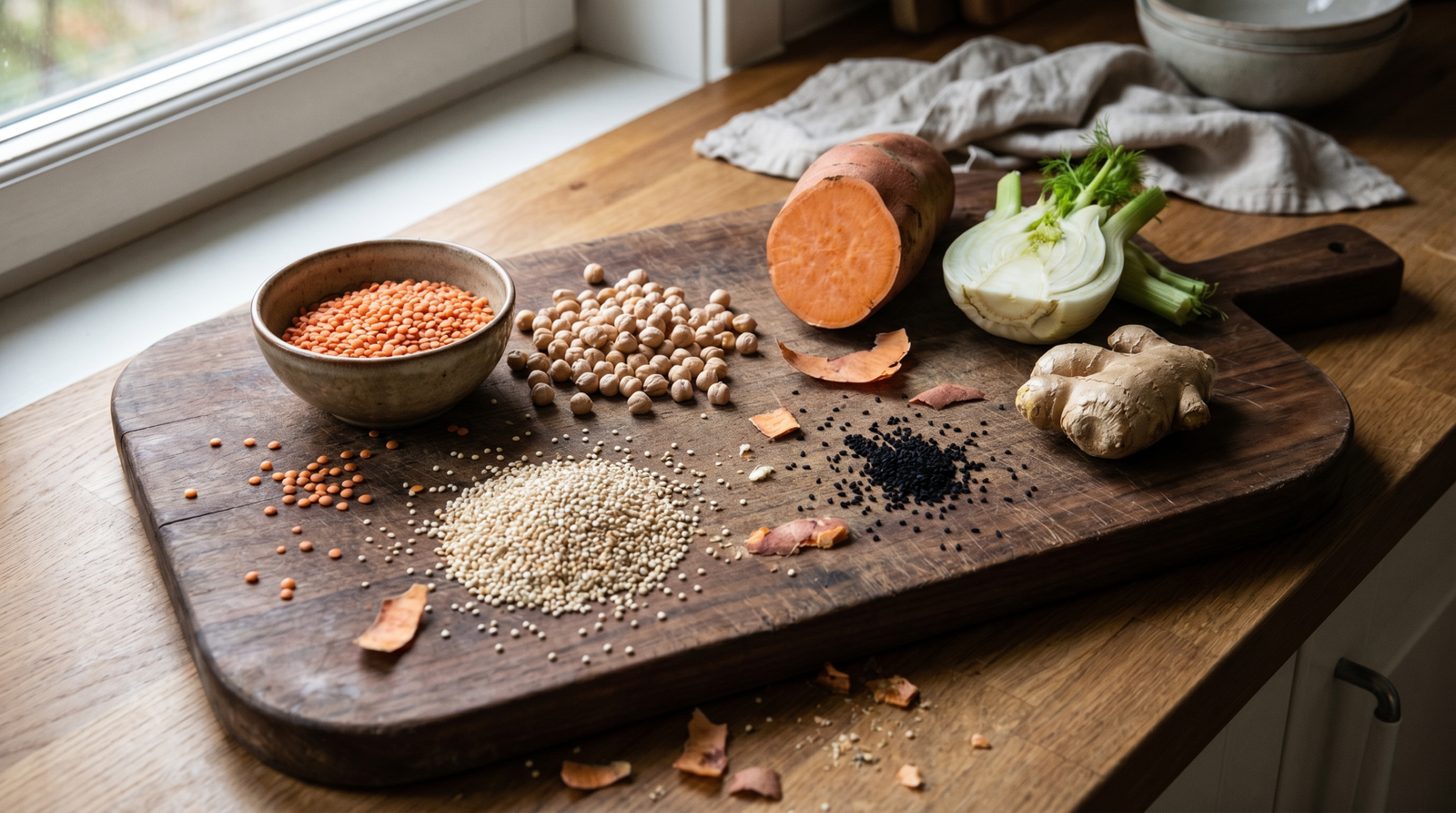
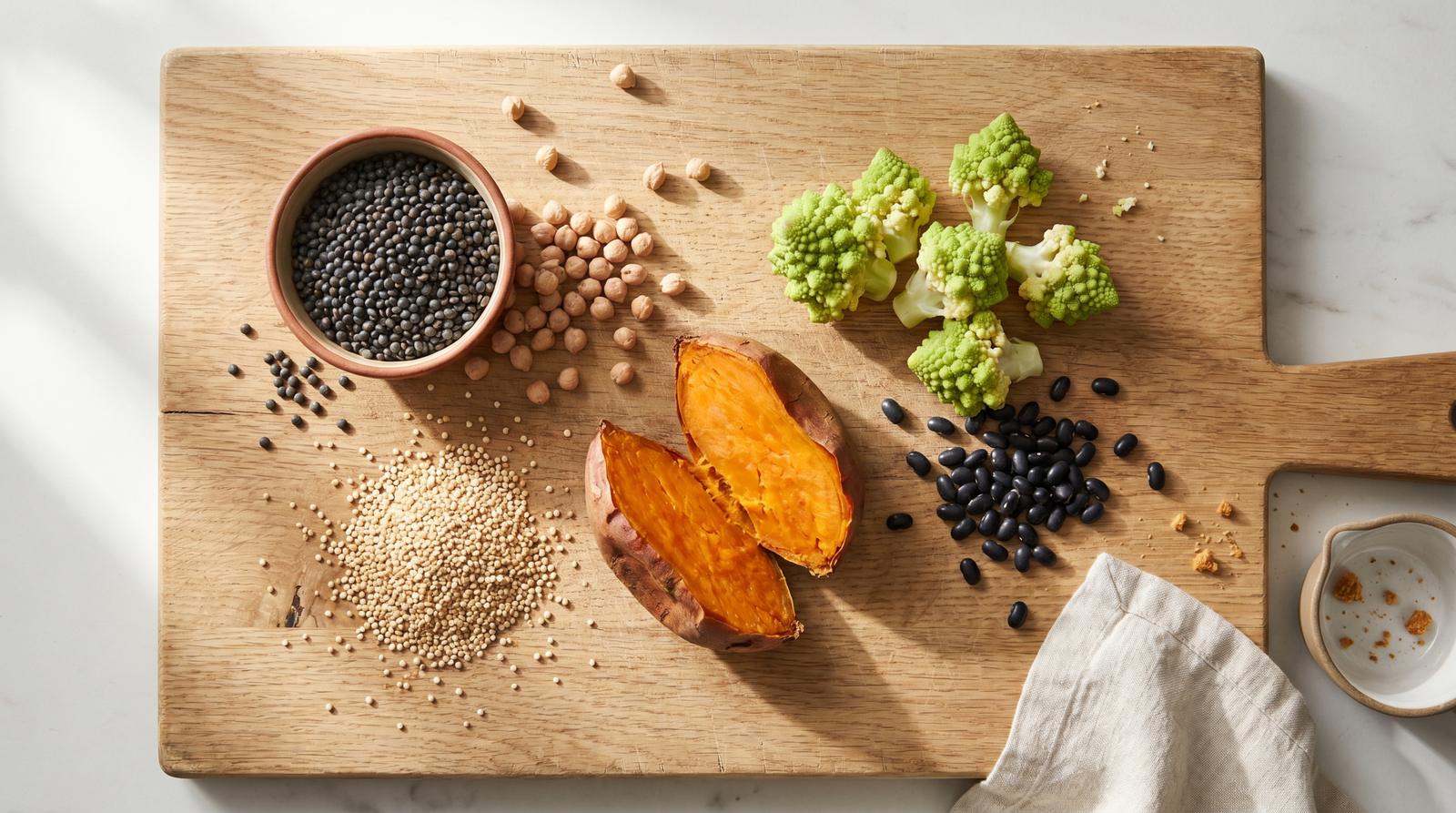
Not all carbohydrates behave the same way. Lentils, black beans, chickpeas, steel-cut oats, quinoa, and sweet potatoes all have meaningful fiber content that moderates their glucose impact.
One pattern that shows up repeatedly in clinical practice: people who swap refined grains for intact whole grains and legumes often notice energy stability improvements before any lab markers shift — usually within 1–2 weeks.
Healthy Fats
Avocado, olive oil, nuts, seeds, and fatty fish do not raise blood sugar directly. They slow digestion when paired with carbohydrates and support the hormonal signaling that affects appetite and satiety.
Practical Strategies That Actually Move the Needle
Understanding the glycemic index is useful. But what consistently drives results in a low-glycemic diet for insulin resistance is a set of practical habits that most guides skip over.
1. Always Pair Carbohydrates
Eating carbohydrates alone — even low-GI ones — produces a larger blood sugar response than eating them with protein, fat, or fiber. A piece of fruit with Greek yogurt behaves very differently in the body than the same fruit eaten on its own.
This single habit — always pairing — has an outsized effect on post-meal glucose patterns without requiring calorie restriction or complex tracking.
2. Eat in a Consistent Order
Research suggests that eating vegetables and protein before carbohydrates at the same meal can reduce the post-meal glucose spike by a meaningful margin. The fiber and protein act as a buffer.[3]
It doesn’t require a completely new meal structure — just a shift in sequence. Vegetables and protein first. Carbohydrates after.
3. Don’t Skip Meals
Skipping meals — especially breakfast — tends to amplify the glucose spike at the next eating occasion. Consistent meal timing helps regulate the body’s hormonal rhythm and prevents the overcorrection that often follows prolonged fasting.
4. Add a Short Walk After Meals
A 10–15 minute walk after eating has been shown to reduce post-meal blood sugar spikes more effectively than a single longer walk at another time of day.[4]
It doesn’t need to be vigorous. A gentle walk around the block is enough to engage the muscle glucose uptake mechanism and flatten the post-meal curve.
What to Expect in the Early Weeks
The research here is more encouraging than most people expect. Many report noticeably more stable afternoon energy within 1–2 weeks of consistent pairing and meal timing. Post-meal crashes tend to lessen first — before fasting glucose shifts.
For more measurable markers like fasting glucose or HOMA-IR (a calculated score using fasting glucose and fasting insulin — worth requesting specifically if it’s not included in your standard panel), research points to timelines of 8–12 weeks of consistent dietary changes before significant improvements appear.
The trajectory matters more than the speed. Small, consistent changes in the right direction compound over time in a way that crash approaches rarely do.
What to Limit — and Why It Matters
This is where the standard advice tends to oversimplify. Most guides say “cut sugar” — but added sugar is only part of the picture. Refined carbohydrates without fiber behave nearly identically to sugar in the bloodstream.
White bread, white rice, instant oats, fruit juice, and most packaged snacks all cause rapid glucose spikes regardless of whether they taste sweet. The label “whole grain” can be misleading if the grain has been finely milled — intact grain structure is what slows digestion, not just the color of the bread.
Sugar-sweetened beverages deserve particular attention. Fructose from liquid sources — sodas, fruit juices, sweetened coffee drinks — bypasses some of the body’s normal satiety signaling and drives hepatic fat production more directly than solid food sources of the same calories.[5]
| Common Choice | Better Swap | Why It Helps |
|---|---|---|
| White bread | 100% whole grain or sourdough | Intact fiber slows glucose release |
| White rice | Brown rice, quinoa, or farro | Higher fiber, lower glycemic load |
| Fruit juice | Whole fruit | Fiber intact, slower absorption |
| Packaged snacks | Nuts + apple or cottage cheese + berries | Protein + fiber combination buffers glucose |
Reading labels helps — but the most reliable shortcut is choosing foods that still look like their original form. A whole oat, a whole bean, a piece of fruit. The less processing, the more the fiber structure stays intact.
How Exercise Fits Into a Low-Glycemic Approach
Diet and movement work differently on insulin resistance — and they’re more effective together than either alone.
Cardiovascular activity — brisk walking, cycling, swimming — allows muscle cells to take up glucose directly without requiring insulin signaling. This is sometimes called insulin-independent glucose uptake, and it’s one reason a 20–30 minute walk can visibly reduce post-meal blood sugar readings.
Resistance training adds a different dimension. Building muscle mass increases the body’s capacity for glucose storage, which improves baseline insulin sensitivity over time. The ADA recommends resistance training at least 2–3 times per week for people managing insulin resistance.[2]
150 minutes of moderate movement per week — roughly 20–25 minutes daily — is a reasonable starting target. Short sessions after meals count, and research suggests they may be the most effective use of those minutes for blood sugar control specifically.[4]

Making This a Long-Term Habit
Short-term dietary changes can produce meaningful short-term results. But insulin resistance develops over years — and sustainable improvement requires habits that hold up over months, not days.
A few things tend to matter most for long-term adherence. Meal planning doesn’t have to be elaborate — even a basic pattern (protein + vegetable + intact grain at most meals) removes most of the daily decision-making that derails progress. For practical meal structure guidance, building a balanced plate for stable blood sugar covers the plate method in detail.
Weight management is a meaningful target where relevant. Research shows that modest weight loss — in the range of 5–10% of body weight — can significantly improve insulin sensitivity markers.[6] But this is an outcome of the dietary and movement changes, not a separate goal that requires separate effort.
If insulin resistance has been confirmed by a doctor, tracking a few simple markers over time — fasting glucose, fasting insulin, and waist circumference — gives more actionable feedback than the scale alone. For a deeper understanding of which tests give the clearest picture, fasting insulin vs. fasting glucose explains what each measure actually captures.
This is not a plan built on restriction or willpower. It’s a set of consistent signals — through food, movement, and sleep — that gradually shift how the body responds to insulin. If you’re also managing related symptoms, how to improve insulin sensitivity naturally expands on the full range of lifestyle interventions with evidence behind them.
The Bottom Line
A low-glycemic diet for insulin resistance doesn’t require perfection or an overhaul of everything you eat. It requires consistency in a few key areas: pairing carbohydrates well, choosing fiber-intact whole foods, and moving after meals when possible.
Most people notice early changes — in energy, in cravings, in how they feel after eating — well before any lab numbers shift. That early feedback is real, and it’s worth paying attention to.
If you’ve been managing these symptoms without a clear strategy, this is a practical and well-evidenced place to start. The biology is working in your favor when you give it the right inputs.
Frequently Asked Questions
What does a low-glycemic diet for insulin resistance actually involve?
A low-glycemic diet for insulin resistance focuses on choosing carbohydrates that raise blood sugar slowly — like lentils, oats, and vegetables — while consistently pairing them with protein and healthy fat. The goal is to reduce the size of post-meal glucose spikes, which lowers the insulin demand placed on the pancreas. This approach doesn’t eliminate carbohydrates; it changes how and when they’re eaten. Research supports meaningful improvements in fasting glucose and energy stability within 4–12 weeks of consistent dietary changes.
How quickly will I notice changes on this eating plan?
Many people notice improved afternoon energy and fewer post-meal crashes within 1–2 weeks of consistent pairing and meal timing. More measurable markers — like fasting glucose or fasting insulin — typically take 8–12 weeks of sustained dietary changes to shift noticeably. Early improvements in how you feel are a reliable sign the approach is working, even before lab numbers change.
Can I still eat fruit on a low-glycemic eating plan?
Yes. Whole fruit — especially berries, apples, pears, and citrus — is a good choice because the fiber intact in the fruit moderates its glucose impact. Pairing fruit with a protein source like Greek yogurt or a small handful of nuts slows absorption further. What to avoid is fruit juice, where the fiber has been removed and the sugar is absorbed much more quickly.
Is a low-glycemic diet the same as a low-carb diet?
No — and the distinction matters. A low-carb diet restricts the total amount of carbohydrates. A low-glycemic approach doesn’t eliminate carbohydrates; it prioritizes ones with slower glucose impact and emphasizes how they’re paired at meals. Both can improve insulin sensitivity, but the low-glycemic framework is generally easier to maintain long-term because it doesn’t require cutting entire food groups. For a direct comparison of dietary approaches, the article on metabolic eating vs. intermittent fasting covers some of the tradeoffs in more detail.
Medical Disclaimer: The information provided in this article is for educational purposes only and does not constitute medical advice. Always consult a qualified healthcare provider before making changes to your diet, lifestyle, or treatment plan. TheMetabolicHub.com does not replace professional medical guidance.
References
- Reynolds AN et al. Dietary fibre and whole grains in diabetes management. PLOS Medicine. 2020. PMC: PMC11519289
- American Diabetes Association. Standards of Medical Care in Diabetes. diabetes.org
- Shukla AP et al. Food order has a significant impact on postprandial glucose and insulin levels. Diabetes Care. 2015. PMID: 26106234
- Buffey AJ et al. The Acute Effects of Interrupting Prolonged Sitting Time. Sports Medicine. 2022. PMID: 35115009
- Harvard T.H. Chan School of Public Health. The Nutrition Source: Sugary Drinks. hsph.harvard.edu
- Magkos F et al. Effects of Moderate and Subsequent Progressive Weight Loss on Metabolic Function and Adipose Tissue Biology. Cell Metabolism. 2016. PMC: PMC2980961