
Hormonal Acne & Insulin Resistance: The Hidden Link
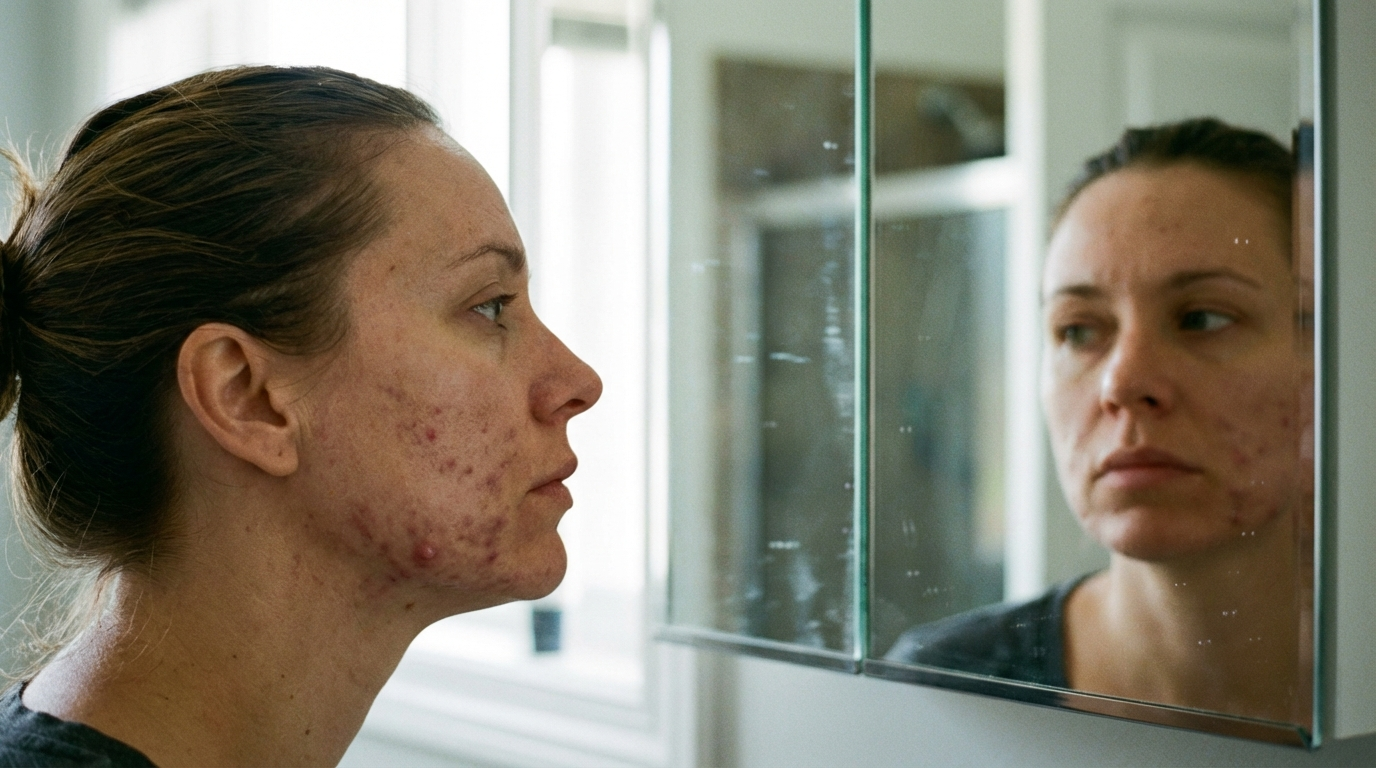
You wash your face twice a day. You’ve tried the serums, the spot treatments, the prescription creams. And still — the same deep, tender breakouts return along your jaw, right on schedule.
That kind of frustration is exhausting, and it’s more common than most doctors mention. What’s happening along your jawline may not be a skincare problem at all. It may be a signal from your metabolic system — specifically, how your body is handling insulin.
The encouraging news: once that internal driver is identified, it opens up a whole new set of strategies that go well beyond what any topical product can do.
The Short Answer: Yes, Insulin Resistance Can Directly Trigger Hormonal Acne
When insulin levels run persistently high — a state called insulin resistance — your body produces more androgen hormones. Androgens tell your skin to make more oil.
More oil, combined with faster skin cell turnover driven by a growth factor called IGF-1, creates the conditions for deep, cystic breakouts — particularly along the lower face.[1]
This isn’t a theory on the fringe. The link between metabolic health and skin clarity has been supported by multiple clinical studies over the past decade.
| Acne Type | Primary Driver | Typical Location | Standard Treatment Often Misses |
|---|---|---|---|
| Teen / surface acne | Puberty hormones, excess oil | Forehead, nose, cheeks | Usually resolves with topicals |
| Hormonal / adult acne | Androgen excess, insulin signaling | Jawline, chin, lower cheeks | Internal metabolic root cause |
| PCOS-related acne | Elevated androgens + insulin resistance | Jaw, neck, back | Blood sugar and androgen management |
Key Takeaways
- Persistent jawline breakouts in adults are often driven by internal hormonal and metabolic imbalances — not just skincare habits.
- Insulin resistance raises androgen levels, which increases oil production and may worsen acne severity.
- Conditions like PCOS are closely tied to both insulin resistance and stubborn hormonal acne.
- Standard blood glucose tests may miss early insulin dysregulation — fasting insulin is worth requesting specifically.
- Dietary changes, movement, and stress management can meaningfully support clearer skin alongside any medical treatment.
What Insulin Resistance Actually Does to Your Skin
Insulin is the hormone that signals your cells to absorb glucose from the bloodstream. When cells stop responding efficiently to that signal, your pancreas compensates by producing more insulin.
Over time, those chronically elevated insulin levels set off a chain of events that reach well beyond blood sugar.
One of the most significant effects involves androgens — the group of hormones that includes testosterone. Elevated insulin stimulates the ovaries and adrenal glands to produce more androgens, even in women. Those androgens then bind to receptors in your skin’s sebaceous glands and send a clear message: make more oil.[4]
At the same time, high insulin triggers the release of IGF-1 (insulin-like growth factor 1) — a compound that accelerates skin cell turnover inside hair follicles. When those cells shed faster than normal inside a pore, while excess oil is also present, the pore clogs. Bacteria proliferate. An inflamed, cystic lesion forms deep in the skin.
This cycle can develop quietly over years, which is why so many people are caught off guard when a doctor mentions it. It is not a personal failure. It’s a metabolic pattern that research is only now connecting clearly to skin health.
Recognizing the Signs: Is Your Acne Hormonally Driven?
Not every breakout is hormonal. But several patterns suggest the root cause may lie in your metabolic or hormonal system rather than your skincare routine.
Location matters most. Hormonal acne tends to concentrate along the jawline, chin, and lower cheeks — areas dense with androgen receptors. Breakouts on the forehead or nose are more likely tied to other factors.
Other signals worth noticing:
- Breakouts that flare predictably in the week before your period
- Deep, painful cysts rather than surface-level whiteheads
- Acne that persists or worsens in your 30s and 40s
- Skin that stays oily despite gentle, non-comedogenic products
- Concurrent symptoms like irregular cycles, fatigue after meals, or difficulty losing weight
That last cluster is particularly telling. Fatigue after eating, carbohydrate cravings, and mid-afternoon energy crashes are common early signs of insulin dysregulation — and they often show up on skin before a lab test flags anything unusual.
The PCOS Connection: When Insulin and Androgens Reinforce Each Other
Polycystic ovary syndrome (PCOS) is estimated to affect roughly 1 in 10 women of reproductive age — and insulin resistance is present in a significant majority of those cases.[5]
The two conditions form a feedback loop: high insulin drives androgen production, and high androgens further disrupt ovulation and metabolic balance.
For women with PCOS, this means acne can be particularly stubborn. Topical treatments help temporarily, but without addressing the underlying androgen excess and insulin signaling, breakouts tend to return.
If your acne is accompanied by irregular periods, excess facial or body hair, or difficulty maintaining weight despite reasonable effort, it’s worth asking your doctor specifically about PCOS screening and fasting insulin levels.
Unmanaged blood sugar from type 2 diabetes or prediabetes can produce a similar effect — chronically elevated insulin keeps pushing androgen production upward, making skin hard to clear through surface treatments alone.
| Condition | Skin Symptoms | Other Key Indicators |
|---|---|---|
| PCOS | Persistent jawline/chin acne, oily skin | Irregular periods, excess hair growth, fatigue |
| Insulin resistance (without PCOS) | Recurring cystic acne, slow healing | Post-meal energy crashes, carb cravings, weight gain |
| Prediabetes / Type 2 diabetes | Frequent breakouts, skin tags, slow-healing blemishes | Increased thirst, frequent urination, elevated fasting glucose |
Which Tests Actually Reveal the Picture
Standard physicals often miss early insulin resistance because the first test ordered — fasting blood glucose — can look completely normal while fasting insulin is already elevated.
That’s a gap worth understanding before your next appointment. A more complete picture includes:
- Fasting blood glucose — taken after an 8-hour overnight fast; below 100 mg/dL is considered normal
- Fasting insulin — not typically included in standard panels, but worth requesting specifically; optimal levels are generally below 10 µIU/mL
- HOMA-IR — a simple score calculated from fasting glucose and fasting insulin; a score above 2.0 may suggest early insulin resistance[6]
- HbA1c — reflects average blood sugar over roughly 3 months; below 5.5% is considered optimal
- Lipid panel — HDL below 60 mg/dL and triglycerides above 100 mg/dL are associated with metabolic imbalance
If your doctor isn’t familiar with ordering fasting insulin, that’s a reasonable conversation to initiate. You can frame it simply: “I’m having persistent hormonal acne and want to rule out underlying insulin dysregulation.”
| Test | What It Measures | Optimal Range |
|---|---|---|
| Fasting Blood Glucose | Blood sugar after overnight fast | < 100 mg/dL |
| Fasting Insulin | Insulin level when fasted | < 10 µIU/mL (often not ordered automatically — request it) |
| HOMA-IR | Calculated insulin resistance score | < 2.0 |
| HbA1c | 3-month average blood sugar | < 5.5% |
| Triglycerides | Blood fat levels | < 100 mg/dL |
Dietary Strategies That Support Clearer Skin
What you eat has a direct and measurable impact on insulin levels — and by extension, on oil production and inflammation in your skin. A 2022 systematic review found that high-glycemic diets are associated with increased acne severity across multiple populations.[2]
The practical shift isn’t about eliminating entire food groups. It’s about prioritizing foods that blunt the blood sugar spike.
At every meal, lead with fiber-rich vegetables — leafy greens, broccoli, zucchini, bell peppers — alongside quality proteins like eggs, salmon, sardines, chicken, or Greek yogurt, and healthy fats from olive oil, avocado, or nuts. Starting with vegetables and protein before carbohydrates can meaningfully reduce the post-meal insulin response.
Foods associated with worsening hormonal acne include high-sugar drinks, white bread, pastries, sweetened dairy, and heavily processed snacks. Reducing these — especially refined carbohydrates — is one of the more direct dietary levers available.
Movement, Sleep, and Stress: The Other Half of the Equation
Exercise improves insulin sensitivity at the cellular level. Around 20–25 minutes of moderate activity daily — walking, resistance training, cycling — is associated with meaningful improvement over time.[3]
Short walks after meals are particularly effective for blunting post-meal blood sugar spikes.
Sleep and stress matter more than most acne conversations acknowledge. Poor sleep elevates cortisol, which disrupts both insulin signaling and androgen balance — and chronic stress runs through that same cortisol pathway.
Consistent sleep and regular stress recovery aren’t optional add-ons. For someone managing hormonal acne, they’re part of the strategy.
Medical and Integrative Treatment Options
Lifestyle changes can move the needle significantly, but they’re not always sufficient on their own — especially when PCOS or significant insulin resistance is involved.
Anti-androgen medications (such as spironolactone) work by blocking androgen receptors in sebaceous glands, reducing oil production at the source. They’re commonly prescribed for adult women with hormonal acne, particularly when PCOS is present.
Topical retinoids like tretinoin address the skin-cell turnover piece — they help keep pores clear by regulating how quickly cells shed. Used together, these two approaches target the main pathways driving the breakout cycle.
In some cases, when insulin resistance is a confirmed driver, a doctor may discuss medications that improve insulin sensitivity — addressing the hormonal cascade closer to its origin. For women with confirmed metabolic dysfunction alongside persistent acne, this can be part of a comprehensive approach.
Whatever combination is right for you, working with a doctor who understands both the dermatological and metabolic dimensions makes a real difference. A functional medicine doctor or an endocrinologist familiar with PCOS is often better positioned than a general dermatologist to look at the full picture.
Conclusion
Persistent hormonal acne — especially when it concentrates along the jawline in your 30s, 40s, or beyond — is often the skin’s way of signaling something happening deeper in the body.
The link between insulin resistance, androgen excess, and breakouts is well-supported by research, and it changes what an effective approach looks like. Skincare still matters, but it works far better when the internal drivers are being addressed at the same time.
Asking for a fasting insulin test, shifting toward lower-glycemic meals, and building consistent movement into your routine are genuinely actionable starting points. Small, consistent changes in these areas can translate into visible improvements in skin clarity, often within weeks to months. You’re not stuck with the skin you have right now.
Frequently Asked Questions
What is the link between insulin resistance and hormonal acne?
When insulin levels remain chronically elevated — a condition known as insulin resistance — the body responds by producing more androgen hormones. Androgens stimulate the skin’s oil glands to increase sebum production. At the same time, high insulin triggers IGF-1, a growth factor that speeds up skin cell turnover inside hair follicles. The combination of excess oil and accelerated cell shedding creates ideal conditions for clogged pores, inflammation, and the deep, cystic breakouts characteristic of hormonal acne. Research suggests this metabolic-skin connection may be a key driver of adult acne in women that topical treatments alone cannot fully address.
How do I know if my acne is hormonal or metabolic in origin?
Location is one of the clearest indicators. Hormonal acne tends to appear along the jawline, chin, and lower cheeks — areas with high concentrations of androgen receptors. If breakouts consistently worsen in the week before your period, are deep and cystic rather than surface-level, and haven’t responded well to standard topical treatments, a hormonal or metabolic root cause is worth investigating. Accompanying symptoms like post-meal fatigue, carbohydrate cravings, irregular cycles, or unexplained weight changes are additional signals. A doctor can run a fasting glucose, fasting insulin, and HbA1c panel to assess what’s happening internally.
Can changing my diet actually improve hormonal acne?
Research suggests yes — particularly for women whose acne is linked to elevated insulin or androgen activity. A 2022 systematic review found that high-glycemic diets are associated with increased acne severity. Shifting toward lower-glycemic meals — prioritizing vegetables, protein, and healthy fats, and reducing refined carbohydrates and sugary drinks — may support lower insulin levels and, over time, reduced oil production. Results typically take several weeks to become visible. Diet alone may not be sufficient when significant hormonal imbalance or PCOS is present, but it can meaningfully complement other treatments.
Does PCOS always cause acne?
Not always, but acne is one of the most common skin symptoms associated with PCOS. The condition is characterized by elevated androgen levels and, in most cases, underlying insulin resistance — both of which can directly drive persistent hormonal breakouts. Some women with PCOS experience severe cystic acne; others have minimal skin involvement. The presence of other symptoms — irregular or absent periods, excess facial or body hair, difficulty losing weight — alongside recurring jawline acne may suggest PCOS is worth screening for, even if acne is the most visible concern.
What tests should I ask my doctor about if I suspect insulin resistance is affecting my skin?
The most informative starting point is a fasting insulin test — often not included in standard panels but worth requesting specifically. Pair that with fasting blood glucose (ideally below 100 mg/dL) and HbA1c (ideally below 5.5%). From those two values, your doctor can calculate HOMA-IR, a score that estimates insulin resistance directly. A lipid panel checking triglycerides and HDL rounds out the picture. If PCOS is suspected, a hormonal panel including free and total testosterone and DHEA-S may also be relevant. Framing the conversation around persistent hormonal acne gives your doctor useful context for ordering the right workup.
Medical Disclaimer: The information provided in this article is for educational purposes only and does not constitute medical advice. Always consult a qualified healthcare provider before making changes to your diet, lifestyle, or treatment plan. TheMetabolicHub.com does not replace professional medical guidance.
References
- Cappel M, et al. Correlation between serum levels of insulin-like growth factor 1, dehydroepiandrosterone sulfate, and dihydrotestosterone and acne lesion counts in adult women. Arch Dermatol. 2005. PMID: 22253996
- Dall’Oglio F, et al. Diet and acne: review of the evidence from 2009 to 2020. Int J Dermatol. 2022. PMID: 35178659
- Barrea L, et al. Acne, insulin resistance, and metabolic syndrome. J Transl Med. 2022. PMID: 36136130
- Melnik BC, Schmitz G. Role of insulin, insulin-like growth factor-1, hyperglycaemic food and milk consumption in the pathogenesis of acne vulgaris. Exp Dermatol. 2009. PMID: 37201122
- Escobar-Morreale HF. Polycystic ovary syndrome: definition, aetiology, diagnosis and treatment. Nat Rev Endocrinol. 2018. PMID: 29890697
- Gayoso-Diz P, et al. Insulin resistance (HOMA-IR) cut-off values and the metabolic syndrome in a general adult population. Eur J Nutr. 2013. PMID: 33918282