PCOS and Insulin Resistance: The Connection Most Doctors Miss

Irregular cycles. Persistent fatigue no matter how much you sleep. Weight that seems to shift without clear reason. For many people living with polycystic ovary syndrome, these experiences build up quietly over years — without anyone connecting the dots.
Most clinical conversations about PCOS focus on fertility. That’s understandable, but it leaves a critical piece of the picture unaddressed. The missing piece is often metabolic — specifically, how your cells respond to insulin.
The link between PCOS and insulin resistance is one of the most clinically significant connections in women’s health, yet it rarely gets the attention it deserves. Understanding it doesn’t just explain symptoms — it points toward the most effective strategies for managing them.
| What You’ll Learn | Why It Matters |
|---|---|
| How insulin resistance develops in PCOS | Explains the root cause behind many common symptoms |
| Which biomarkers to ask your doctor about | Standard panels often miss key metabolic markers |
| Dietary and lifestyle levers with the most evidence | Small, consistent changes can shift insulin sensitivity measurably |
| When medications make sense — and what they do | Helps you have a more informed conversation with your provider |
What Is the Connection Between PCOS and Insulin Resistance?
Polycystic ovary syndrome and insulin resistance share a deeply intertwined biology. Approximately 70–75% of people with PCOS show evidence of impaired insulin signaling — even those who are not overweight.[1]
The mechanism works like this: when cells don’t respond efficiently to insulin, the pancreas compensates by producing more of it. These elevated insulin levels then act on the ovaries, signaling them to produce excess androgens — particularly testosterone. The result is a self-reinforcing cycle where PCOS and insulin resistance each make the other worse.
At the molecular level, research points to a specific disruption: impaired serine phosphorylation of insulin receptor substrate proteins. This same cellular defect appears to be active in both metabolic tissue and ovarian tissue — which helps explain why the reproductive and metabolic symptoms of PCOS tend to travel together.[2]
Improving insulin sensitivity is one of the most consistent levers available for managing PCOS symptoms — this article covers what that improvement actually looks like in the body.
Why Standard Care Often Misses This
The Rotterdam Criteria — the most widely used diagnostic framework — requires two of three features: irregular ovulation, elevated androgens, and polycystic ovarian morphology on ultrasound. Insulin resistance isn’t on that checklist.
That means someone can receive a full PCOS workup and leave without a single metabolic test ordered. HOMA-IR — a simple score calculated from fasting glucose and fasting insulin — is often not included in standard panels. It’s worth requesting it specifically.
| Diagnostic Criteria | Year | Key Features | Metabolic Testing Included? |
|---|---|---|---|
| NIH Criteria | 1990 | Menstrual irregularities + clinical hyperandrogenism | No |
| Rotterdam Criteria | 2003 | 2 of 3: hyperandrogenism, ovulatory dysfunction, polycystic morphology | No |
| AE-PCOS Criteria | 2006 | Hyperandrogenism required + one other feature | Notes insulin role — still not required |
| Endocrine Society Guidelines | 2018 | Comprehensive management including metabolic risk | Recommended for all |

Recognizing PCOS Symptoms That Signal a Metabolic Root
PCOS symptoms span a wide range — but several of the most common ones trace directly back to elevated insulin and androgen levels. Recognizing this overlap changes how you approach management.
Hormonal and Reproductive Signs
Irregular or absent periods are one of the most consistent markers. When insulin drives excess androgen production, ovulation becomes disrupted — sometimes stopping entirely for months at a time.
Unwanted hair growth on the face, chin, or chest (a condition called hirsutism) is driven by elevated free testosterone. So is persistent acne in adults, particularly along the jawline. These aren’t cosmetic inconveniences — they’re signaling hormonal imbalance at the metabolic level.
Metabolic and Energy Symptoms
Fatigue that doesn’t resolve with rest is common. When cells can’t efficiently take up glucose, energy production is disrupted — especially in skeletal muscle, which accounts for roughly 80% of insulin-mediated glucose uptake under normal conditions.[6]
Dark velvety patches on the skin — particularly along the neck, underarms, or groin — are called acanthosis nigricans. This is a direct skin manifestation of chronically elevated insulin levels and a strong clinical signal worth mentioning to your doctor.
Weight gain concentrated in the abdomen, difficulty losing weight despite dietary changes, and strong cravings for carbohydrates are also common. These experiences are not about willpower. They reflect a genuine metabolic disruption in how the body processes and stores energy.
This cycle can develop quietly over years — which is why so many people are caught off guard when a doctor finally mentions it. It is not a personal failure. It is a biological pattern with identifiable mechanisms and addressable levers.
PCOS Symptom Checklist
| Symptom | Metabolic Connection | Worth Mentioning to Your Doctor |
|---|---|---|
| Irregular or missed periods | Androgen excess disrupts ovulation | Yes — document frequency and cycle length |
| Adult acne (especially jawline) | Elevated free testosterone | Yes — note when it worsened |
| Unwanted facial/body hair | Elevated free testosterone + low SHBG | Yes |
| Persistent fatigue | Impaired glucose uptake in muscle | Yes — include sleep quality context |
| Abdominal weight gain | Elevated insulin promotes visceral fat storage | Yes — especially if recent and unexplained |
| Dark skin patches (acanthosis nigricans) | Direct skin marker of hyperinsulinemia | Yes — high clinical relevance |
| Strong carbohydrate cravings | Dysregulated blood sugar signaling | Yes — note timing relative to meals |
How Insulin Resistance Disrupts Hormone Balance in PCOS
The hormonal cascade that drives PCOS symptoms is more connected to metabolic function than most clinical conversations suggest. Understanding the mechanism helps clarify why addressing PCOS and insulin resistance together — rather than separately — tends to produce better outcomes.
Women with PCOS are at significantly higher risk — and the hormonal overlap with prediabetes in women over 40 is one of the most underrecognized connections in metabolic health.
The Hyperinsulinemia → Androgen Loop
When insulin levels remain chronically elevated, the liver reduces its production of sex hormone-binding globulin (SHBG) — the protein that normally binds testosterone and keeps it inactive.
With less SHBG available, more free testosterone circulates in the bloodstream. This free testosterone is what drives the visible symptoms: acne, hair growth, irregular cycles. Meanwhile, elevated insulin also stimulates the pituitary gland to release more luteinizing hormone (LH), which further pushes the ovaries to produce androgens.
It’s a compounding loop — and it explains why treatments that only target androgen symptoms (like hormonal contraceptives) without addressing the underlying insulin dysfunction often provide partial relief at best.
Hyperandrogenism and Inflammation
Excess androgens contribute to a state of chronic low-grade inflammation — a pattern that’s consistently observed in PCOS. Enlarged fat cells release pro-inflammatory cytokines including TNF-alpha and IL-6, both of which directly interfere with insulin receptor signaling. This creates a secondary layer of insulin resistance driven not by diet alone, but by the inflammatory environment itself.[1]
Adiponectin — an anti-inflammatory protein produced by fat cells — tends to be lower in people with PCOS, reducing the body’s natural buffer against these inflammatory signals.[2]
Diagnosing Insulin Resistance in PCOS: Biomarkers Worth Requesting
Standard blood panels ordered at a typical PCOS appointment often miss the most clinically useful metabolic markers. Here’s what the evidence supports — and how to advocate for a more complete picture.
HOMA-IR: The Most Accessible Starting Point
HOMA-IR (Homeostatic Model Assessment of Insulin Resistance) is calculated from two values: fasting blood glucose and fasting insulin. Your doctor can order both in a single morning blood draw.
A score above 2.1 is generally considered indicative of insulin resistance in research settings, though clinical thresholds vary. In one study of 200 women with PCOS, 57.5% showed evidence of insulin resistance by HOMA-IR — making it a clinically meaningful screening tool even when fasting glucose appears normal.[3]
Important: fasting glucose alone is insufficient. Many people with significant insulin resistance maintain normal fasting glucose for years, because the pancreas compensates by producing more insulin. Fasting insulin is the missing piece.
Additional Markers Worth Discussing
| Marker | What It Reveals | Typical Use |
|---|---|---|
| Fasting Insulin | Compensatory insulin production before glucose rises | Routine — request explicitly |
| HOMA-IR | Calculated insulin sensitivity score | Routine — calculated from glucose + insulin |
| HbA1c | 3-month average blood sugar regulation | Routine — often included in standard panel |
| Fasting Triglycerides | Liver’s response to insulin signaling | Routine lipid panel — often overlooked in PCOS context |
| Adiponectin | Anti-inflammatory metabolic signaling from fat tissue | Emerging — not always available but worth asking about |
The Endocrine Society recommends metabolic screening for all individuals diagnosed with PCOS — including glucose tolerance testing and a lipid panel — regardless of body weight or BMI.[7]
One thing worth pushing back on here: the common assumption that insulin resistance is primarily a weight problem — and therefore only relevant in people who are overweight. Research consistently shows that lean individuals with PCOS can have significant insulin resistance. The mechanisms differ somewhat from obesity-driven resistance, but the clinical implications are similar. Requesting a HOMA-IR is relevant regardless of body weight.
Managing PCOS and Insulin Resistance Through Diet and Lifestyle
Lifestyle interventions are first-line management for PCOS according to both the Endocrine Society and the ADA — and the evidence for their effectiveness on insulin sensitivity specifically is strong.[7]
What the Evidence Says About Diet
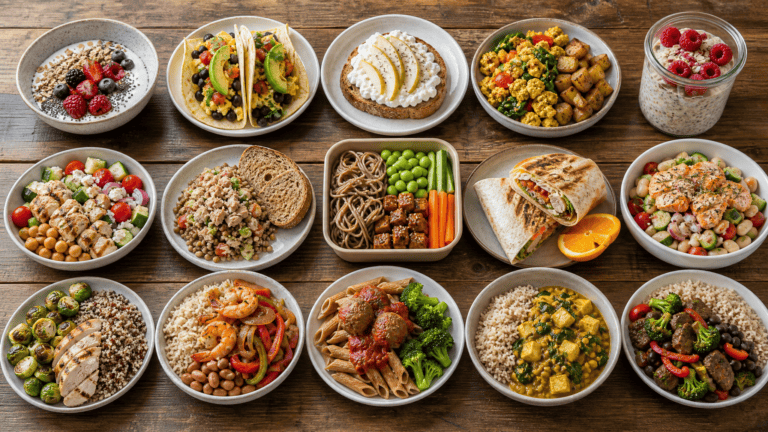
Reducing refined carbohydrates — white bread, white rice, sweetened beverages, fried starches — has a direct impact on postprandial insulin spikes. The goal isn’t carbohydrate elimination; it’s replacing high-glycemic options with whole-food alternatives.
Practical swaps: leafy greens, broccoli, zucchini, and legumes as carbohydrate sources alongside quality proteins like eggs, fatty fish, and Greek yogurt. This combination slows glucose absorption and moderates the insulin response after meals.
Reducing saturated fat intake also matters — particularly for long-term cardiovascular risk, which is meaningfully elevated in PCOS populations. The Harvard T.H. Chan School of Public Health highlights that added sugars and fructose, in particular, drive hepatic de novo lipogenesis — increasing visceral fat and triglycerides even in the absence of caloric excess.
Exercise: Timing and Type Matter More Than Most Guides Suggest
Aerobic exercise three times weekly — roughly 30 minutes at moderate intensity — directly supports cardiometabolic and reproductive health in PCOS. This is consistent with ADA recommendations for improving insulin sensitivity through movement.[6]
High-intensity interval training (HIIT) has shown particular promise in improving metabolic markers efficiently — 20-minute sessions one to two times per week can produce meaningful changes in insulin sensitivity scores.
Resistance training is often underemphasized in PCOS guides. Building skeletal muscle increases the body’s insulin-sensitive tissue — creating more surface area, so to speak, for glucose to be cleared from the bloodstream.
There’s also a timing effect worth knowing about. A short walk after meals — 10 to 15 minutes — may reduce postprandial glucose spikes more effectively than a single longer exercise session done at another time of day. This isn’t about replacing structured workouts; it’s an additive tool that’s accessible and requires no equipment.

Sleep: The Underappreciated Variable in PCOS Management
This is where the standard PCOS management advice tends to oversimplify: most guides cover diet and exercise in depth, but sleep receives a mention at best. Yet research suggests that even one week of sleep restriction to under 7 hours per night can reduce glucose tolerance and insulin sensitivity by 30–40%.[8]
For people managing PCOS and insulin resistance simultaneously, consistently poor sleep may be counteracting dietary and exercise efforts in ways that never get identified. Cortisol dysregulation from poor sleep also amplifies androgen output — directly worsening the hormonal picture.
Prioritizing 7–9 hours of sleep isn’t a lifestyle luxury in this context. It’s a metabolic intervention.
Therapeutic Options: When Lifestyle Isn’t Enough
For many people, lifestyle changes produce meaningful improvement but don’t fully normalize insulin or androgen levels. Pharmacological options can play an important supporting role — particularly when fertility, cycle regulation, or significant androgen symptoms are the priority.
Insulin-Sensitizing Medications
Metformin is the most commonly prescribed insulin sensitizer for PCOS. It works primarily by reducing hepatic glucose output — lowering the liver’s contribution to fasting blood sugar — which in turn reduces the insulin demand placed on the pancreas. Evidence supports its use for improving cycle regularity, reducing androgen levels, and lowering long-term diabetes risk in PCOS populations.[5] Metformin compared with berberine has become a topic of interest in recent studies. Both compounds show promise in managing insulin resistance, although their mechanisms may differ. Researchers are examining the comparative effectiveness of these treatments to provide better options for patients with PCOS.
Myo-inositol — a vitamin-like compound — has accumulated a meaningful evidence base in recent years. It appears to improve insulin receptor signaling at the cellular level and supports ovarian function. Multiple reviews show improvements in cycle regularity, androgen levels, and metabolic markers.[4] It’s available over the counter, but as with any supplement, discussing it with a healthcare provider first is advisable.
| Intervention | Primary Mechanism | Key Evidence-Based Benefit |
|---|---|---|
| Metformin | Reduces hepatic glucose output | Lowers insulin levels; may support cycle regularity and reduce androgen production |
| Myo-Inositol | Enhances cellular insulin signaling | May support ovarian function and improve metabolic markers |
| Hormonal Contraceptives | Suppresses ovarian androgen production | Regulates cycles; reduces acne and hirsutism symptoms |
| Spironolactone | Blocks androgen receptors | May reduce hirsutism and acne; does not address insulin resistance directly |
Hormonal contraceptives remain a common first-line treatment for cycle regulation and androgen symptoms. They are effective for symptom management, but they do not address the underlying insulin resistance — which is an important distinction when planning long-term care.
Mental Health and the PCOS-Metabolic Connection
Anxiety and depression are significantly more common in people with PCOS than in the general population — with some estimates placing anxiety rates as high as 40%.[8]
The relationship runs in both directions. Chronic stress elevates cortisol, which interferes with insulin signaling and further disrupts androgen balance. Poor mental health can also reduce motivation for the dietary and lifestyle changes that would otherwise support metabolic improvement.
Stress management practices — including yoga, structured relaxation, and adequate sleep — are not peripheral to PCOS management. They sit squarely within the metabolic picture. Supporting your mental health is, in a concrete physiological sense, supporting your insulin sensitivity.

Conclusion
The link between PCOS and insulin resistance isn’t a niche finding buried in research journals. It’s a central mechanism that drives many of the most frustrating symptoms — irregular cycles, persistent fatigue, weight changes, and skin issues — and it’s one that responds well to targeted intervention.
The most effective approaches tend to address multiple levers at once: dietary changes that reduce the insulin burden after meals, exercise that builds insulin-sensitive muscle, sleep that protects glucose tolerance overnight, and — when appropriate — medications that support what lifestyle alone can’t fully achieve.
The fact that this connection is still routinely missed in clinical practice doesn’t mean it can’t be addressed. Asking your doctor for fasting insulin alongside fasting glucose, requesting a HOMA-IR calculation, and understanding which symptoms signal metabolic involvement — these are concrete starting points. You have more influence over this than most standard appointments suggest.
Frequently Asked Questions
What is the connection between PCOS and insulin resistance?
PCOS and insulin resistance are closely linked through a shared metabolic mechanism. When cells don’t respond efficiently to insulin, the body compensates by producing more of it. These elevated insulin levels stimulate the ovaries to produce excess androgens — particularly testosterone — which disrupts ovulation and drives many of the most visible PCOS symptoms. Research estimates that 70–75% of people with PCOS have measurable insulin resistance, even those at a healthy weight. Addressing this metabolic root — rather than only the hormonal symptoms — tends to produce more comprehensive improvement across reproductive and metabolic health markers.
What are the early signs of insulin resistance in PCOS?
Early signs can include persistent fatigue, difficulty losing weight despite dietary changes, strong cravings for carbohydrates — especially in the afternoon — and dark skin patches called acanthosis nigricans along the neck, underarms, or groin. Worsening acne and irregular cycles are also metabolic signals, not just hormonal ones. Importantly, fasting glucose may appear normal in the early stages of insulin resistance; fasting insulin and HOMA-IR are more sensitive markers worth requesting from your doctor specifically.
Can diet changes actually improve PCOS symptoms?
Evidence consistently supports dietary changes as one of the most effective first-line interventions for PCOS — particularly for improving insulin sensitivity. Replacing refined carbohydrates with whole food alternatives (leafy greens, legumes, whole grains), increasing protein intake, and reducing added sugars and saturated fats can meaningfully lower postprandial insulin levels. Some people see improvements in cycle regularity and androgen-related symptoms within weeks of consistent dietary changes. Working with a registered dietitian familiar with PCOS can help tailor an approach that’s sustainable and realistic for your specific situation.
What tests should I ask for if I suspect insulin resistance with PCOS?
The most useful starting point is a fasting insulin test alongside a standard fasting glucose — from these two values, your doctor can calculate a HOMA-IR score. A score above 2.1 generally suggests meaningful insulin resistance. HbA1c provides a 3-month picture of average blood sugar regulation. A fasting lipid panel (particularly triglycerides) and a testosterone level are also worth requesting. The Endocrine Society recommends metabolic screening for all people diagnosed with PCOS, regardless of BMI — so these tests are clinically justified even without weight-related concerns.
Is PCOS-related insulin resistance reversible?
Research suggests that insulin sensitivity can improve significantly with consistent lifestyle changes — and in some cases, substantially normalize over time. Dietary modification, regular exercise (particularly a combination of aerobic and resistance training), improved sleep quality, and stress reduction have all been shown to positively affect insulin sensitivity markers. Medications like metformin or myo-inositol may also support this process when lifestyle changes alone aren’t sufficient. The term “reversible” implies a permanent threshold that research hasn’t fully established — but measurable improvement is both achievable and well-documented for the majority of people who adopt consistent metabolic health strategies.
Medical Disclaimer: The information provided in this article is for educational purposes only and does not constitute medical advice. Always consult a qualified healthcare provider before making changes to your diet, lifestyle, or treatment plan. TheMetabolicHub.com does not replace professional medical guidance.
References
- Escobar-Morreale HF. Polycystic ovary syndrome: definition, aetiology, diagnosis and treatment. Nat Rev Endocrinol. 2018;14(5):270–284. PMID: 29569621
- Stepto NK, et al. Women with polycystic ovary syndrome have intrinsic insulin resistance on euglycaemic–hyperinsulaemic clamp. Hum Reprod. 2013;28(3):777–784. PMID: 23293218
- Majuri A, et al. HOMA-IR and insulin sensitivity in PCOS populations. Eur J Endocrinol. 2017. PMID: 25313036
- Unfer V, et al. Myo-inositol in women with PCOS: a systematic review of randomized controlled trials. Gynecol Endocrinol. 2022. PMC10065776
- Tang T, et al. Metformin for polycystic ovary syndrome. Cochrane Database Syst Rev. 2012. PMC3180691
- American Diabetes Association. Standards of Medical Care in Diabetes. Insulin-mediated glucose uptake and physical activity recommendations. diabetes.org
- Endocrine Society. Diagnosis and Treatment of Polycystic Ovary Syndrome: An Endocrine Society Clinical Practice Guideline. 2018. endocrine.org
- Mayo Clinic. Polycystic ovary syndrome (PCOS) — Symptoms and causes. mayoclinic.org