How PCOS Insulin Resistance Creates a Weight Loss Trap

When weight barely changes despite careful eating, regular workouts, and genuine effort, it can feel confusing and unfair. This may not be random. The encouraging news: PCOS insulin resistance can often be approached more effectively once the focus shifts from willpower to blood sugar stability, muscle, recovery, and hormone-aware routines.
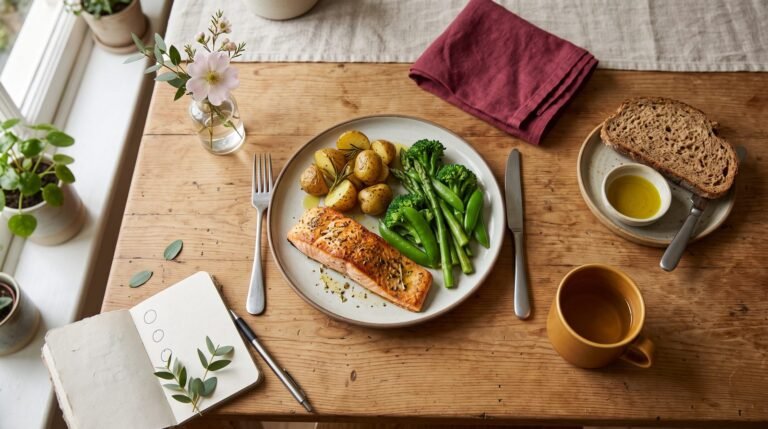
Quick Win: At your next meal, build the plate around protein first, then add fiber-rich carbohydrates and a satisfying fat source. This may help reduce the glucose-and-craving swing that makes consistency harder.
PCOS insulin resistance: how does it create a weight loss trap?
PCOS insulin resistance can create a weight loss trap because the body may need more insulin to manage the same amount of glucose. Higher insulin levels can make hunger, cravings, fat storage signals, and androgen activity harder to regulate.[1]
That does not mean weight loss is impossible. It means PCOS insulin resistance often needs a strategy that stabilizes meals, supports muscle, protects sleep, and lowers the metabolic friction around daily choices.
Many people notice early changes in energy, cravings, and meal-to-meal hunger within a few weeks. Body composition and lab markers often take longer, especially when stress, poor sleep, and irregular cycles are also part of the picture.
Key Takeaways
- PCOS insulin resistance may make weight loss feel harder by affecting insulin demand, appetite signals, and androgen activity.
- Early progress often shows up as steadier energy, fewer cravings, and better meal-to-meal fullness before major scale changes.
- Protein, fiber-rich carbohydrates, strength training, walking, sleep, and medical screening can all support a more sustainable plan.
- This is not a personal failure; it is a metabolic pattern that often responds better to structure than stricter restriction.
Evidence snapshot: The World Health Organization estimates that PCOS affects about 10–13% of women of reproductive age worldwide, and PCOS is associated with higher long-term risk for insulin resistance, type 2 diabetes, and obesity.[5]
What is happening inside the insulin-and-androgen loop?
Insulin helps move glucose from the bloodstream into cells. With insulin resistance, cells respond less efficiently, so the pancreas may release more insulin to keep blood glucose in range.
In PCOS, higher insulin can interact with ovarian and adrenal hormone pathways. It is also linked with lower sex hormone-binding globulin, which can increase the amount of active androgens in circulation.[2]
Mechanism Box: Insulin resistance may raise insulin demand. Higher insulin can support androgen production and reduce sex hormone-binding globulin. Higher active androgens may then worsen symptoms such as irregular cycles, acne, excess facial or body hair, and central weight gain patterns.
This loop can also affect appetite regulation. Some people feel hungry soon after eating, crave refined carbohydrates, or feel unusually tired after meals that are high in starch and low in protein or fiber.
Low sex hormone-binding globulin has been studied as a marker of metabolic dysregulation in PCOS. It is not a standalone diagnosis, but it helps explain why reproductive and metabolic symptoms often overlap.[3]
Why belly weight can feel especially stubborn
Insulin does not only affect blood sugar. It also influences how the body stores and uses energy, especially when sleep, stress, food timing, and activity patterns are not well matched to metabolic needs.
Many people with PCOS report that weight collects around the waist more easily. This can be linked to insulin resistance, androgen patterns, inflammation, genetics, and life stage, not simply effort.
The blood sugar roller coaster
A meal that is high in refined starch or sugar and low in protein, fiber, and fat may cause glucose to rise faster. In someone with insulin resistance, the insulin response may be larger or last longer.
That can be followed by an energy dip, urgent hunger, or cravings. Over time, repeated swings may make a reasonable calorie target feel much harder to maintain.

What does the weight loss trap feel like day to day?
The “trap” is not a formal diagnosis. It is a practical way to describe the pattern where effort feels high, but results feel small, delayed, or unstable.
This is not a personal failure. It is often a sign that appetite, energy, insulin, recovery, and reproductive hormones are pulling in different directions.
| Common Pattern | Why It May Happen |
|---|---|
| Cravings after meals | Meals may not include enough protein, fiber, or fat to slow digestion and support fullness. |
| Afternoon energy crashes | Blood sugar fluctuations, short sleep, under-fueling, or stress load can make energy feel unpredictable. |
| Stubborn waist changes | Insulin resistance and androgen patterns may influence fat storage and body composition. |
| Poor workout recovery | Too much intensity, too little food, and inadequate rest can increase the total stress load. |
| Scale swings | Cycle changes, sodium, digestion, training inflammation, and carbohydrate intake can affect water weight. |
These patterns do not prove insulin resistance on their own. They are signals that may justify a more metabolic-health-focused plan and, when appropriate, medical screening.
Testing may include fasting glucose, A1C, lipids, blood pressure, and sometimes fasting insulin or an oral glucose tolerance test. PCOS guidelines emphasize cardiometabolic risk assessment because PCOS is linked with higher glucose and diabetes risk.[1]
Most guides skip this, but it matters: weight gain is often treated as the main cause of insulin resistance, while insulin resistance can also make weight management harder. That two-way relationship is why blame rarely helps; the practical solution is to lower the friction around repeatable habits.
Which weight loss strategies can backfire with PCOS?
Many standard fat-loss plans assume that hunger, energy, mood, and recovery will stay predictable once calories are reduced. With PCOS insulin resistance, that assumption can be too simple.
Mistake 1: Cutting calories before stabilizing meals
A sharp calorie reduction may work briefly, but it can intensify cravings if meals are low in protein and fiber. The result is often a strict weekday pattern followed by rebound hunger.
A steadier first step is improving meal structure. Many adults do better when breakfast and lunch include a clear protein source, vegetables or high-fiber plants, and slower-digesting carbohydrates.
Mistake 2: Doing only high-intensity cardio
Exercise is helpful, but more intensity is not always better. High-intensity sessions can be useful, yet relying on them while under-sleeping or under-eating may make recovery harder.
Exercise studies in PCOS suggest that training can support insulin resistance and body composition, but the plan has to be recoverable enough to repeat.[7]
Mistake 3: Fearing all carbohydrates
Carbohydrates are not automatically harmful. Type, amount, timing, and food context usually matter more than a simple “good” or “bad” label.
Beans, lentils, oats, berries, potatoes, whole grains, and fruit may fit well when paired with protein and fat. A low-glycemic meal structure can be a practical starting point for steadier energy.
Mistake 4: Ignoring sleep and stress
Short sleep and chronic stress can affect appetite, glucose regulation, and food choices. In PCOS, this can make cravings and fatigue feel much more intense.
Sleep is not a bonus habit. It is often one of the levers that makes nutrition and movement easier to repeat.
How can nutrition support PCOS insulin resistance?
A nutrition approach for PCOS insulin resistance does not need to be extreme. The goal is to reduce glucose spikes, support satiety, and create an eating pattern that does not require constant restraint.
Clinical guidance supports individualized lifestyle strategies for PCOS, including balanced nutrition, physical activity, weight management when appropriate, and person-centered care.[1]
Start with the protein-fiber anchor
Protein helps meals feel more satisfying and supports lean mass. Fiber slows digestion, supports gut health, and may help smooth the blood sugar response to a meal.
A practical plate could include eggs or tofu, sautéed vegetables, avocado, and berries. Another could include chicken, lentils, salad, olive oil, and roasted potatoes.
Choose carbohydrates by response, not fear
Some people feel better with moderate carbohydrates spread across the day. Others notice better hunger control when most carbohydrates are eaten after exercise or later in the day.
There is no single best PCOS insulin resistance diet for everyone. A useful question is: “Does this meal keep energy steady for the next three to four hours?”
Use the order-of-eating method
Eating protein and vegetables before a starch-heavy portion may slow the speed of glucose absorption for some people. It is simple, low-risk, and does not require eliminating foods.
For example, start with Greek yogurt and chia before fruit, or eat salmon and vegetables before rice. This works best as part of an overall meal pattern, not as a standalone rule.
Avoid the perfect-plan problem
Perfection often creates stress, and stress can make consistency harder. A flexible structure usually works better than a rigid list of forbidden foods.
For many adults, the most useful nutrition plan is one that reduces cravings without making life smaller. That matters when PCOS symptoms already feel emotionally draining.
What exercise works with PCOS instead of against it?
Exercise can support insulin sensitivity because active muscles can take up glucose more effectively. The best plan is usually the one that improves fitness without pushing the body into constant exhaustion.
Research on exercise in PCOS suggests that structured activity may improve insulin resistance, waist measures, fitness, and body composition, though responses vary by program and person.[6]
Strength training two to four times per week
Strength training helps build or maintain lean muscle. More muscle tissue may support better glucose handling and a higher daily energy requirement over time.
A beginner routine can include squats, hip hinges, rows, presses, carries, and core work. The goal is controlled progression, not soreness for its own sake.

Walking after meals
A 10- to 20-minute walk after meals may support post-meal glucose control for many people. It is also easier to recover from than intense workouts.
This habit can be especially useful after higher-carbohydrate meals. It turns glucose management into a daily rhythm rather than a punishment.
Keep intense training strategic
Intervals, running, cycling, and classes can all have a place. The question is whether the plan leaves enough energy for sleep, meals, work, relationships, and the next workout.
If intense exercise increases cravings, disrupts sleep, or leads to skipped sessions, reducing frequency may help. Consistency tends to matter more than a heroic week followed by burnout.
How long does progress usually take?
Early progress may show up before major scale changes. Many people notice steadier energy, fewer urgent cravings, improved digestion, or better workout recovery first.
Meaningful body composition changes often require several months. That timeline is not failure; it is biology responding gradually.
Helpful markers include waist measurement, strength, walking consistency, hunger patterns, cycle regularity, and clinical markers such as A1C or fasting glucose when monitored by a provider.
Weight can still matter when a healthcare provider has recommended weight loss for metabolic risk reduction. But using the scale as the only marker can hide progress that is already making the body more responsive.
What may change first
Within the first few weeks, early signs may include fewer afternoon crashes, less nighttime snacking, and better meal-to-meal appetite control. Those changes may make a moderate calorie deficit easier later.
Over several months, improved strength, more stable routines, and better lab markers may become more visible. Some people may also need medication or medical nutrition therapy as part of a broader care plan.
A 7-day reset for steadier blood sugar
This reset is not a crash diet. It is a structured week designed to reveal which habits make PCOS insulin resistance easier to manage.
- Choose one protein anchor for breakfast. Examples include eggs, Greek yogurt, tofu scramble, cottage cheese, tempeh, or a protein smoothie with fiber.
- Add one high-fiber plant to lunch and dinner. Use vegetables, beans, lentils, chia, berries, or whole grains depending on preference and tolerance.
- Walk for 10 minutes after one meal daily. Pick the meal that usually leaves you most tired or snack-prone.
- Lift weights twice this week. Keep sessions simple and repeatable, with enough recovery between them.
- Set a caffeine boundary. Avoid using late caffeine to push through crashes if it disrupts sleep.
- Plan one satisfying snack. Pair protein with fiber or fat, such as yogurt with berries, hummus with vegetables, or an apple with nut butter.
- Track patterns, not perfection. Note hunger, energy, cravings, sleep, and digestion without turning the week into a judgment.
At the end of the week, keep one or two habits that clearly helped. For many people, better sleep and insulin patterns also make food choices feel less urgent.
The goal is not to force the body into submission. The goal is to create a metabolic environment where healthy choices feel less like a fight.

Frequently Asked Questions
How does PCOS insulin resistance make weight loss harder?
PCOS insulin resistance can make weight loss harder by increasing insulin demand, which may affect hunger, cravings, energy storage, and androgen activity. This can make a standard low-calorie plan feel harder to sustain. It does not mean weight loss cannot happen. It often means the plan needs to focus on blood sugar stability, muscle, recovery, and medical support when needed.
Can someone have PCOS and insulin resistance without being overweight?
Yes. Insulin resistance can occur in people with PCOS across different body sizes. Weight can influence metabolic risk, but it is not the only factor. Family history, activity level, sleep, stress, body composition, and hormone patterns can also matter. Anyone with PCOS symptoms or risk factors can ask a healthcare provider about appropriate metabolic screening.
Is a low-carb diet necessary for PCOS weight loss?
A low-carb diet is not required for everyone with PCOS. Some people feel better with fewer refined carbohydrates, while others do well with moderate amounts of high-fiber carbohydrates. The most useful approach is usually one that supports satiety, steady energy, and realistic consistency. A registered dietitian can help personalize carbohydrate intake when glucose markers or symptoms are difficult to manage.
What exercise is best for PCOS and insulin resistance?
A combination of strength training, walking, and moderate cardio is often a practical starting point. Strength training may support muscle and glucose handling, while walking after meals may help with post-meal blood sugar. High-intensity workouts can be useful for some people, but they should not come at the cost of sleep, recovery, or consistency.
When should someone seek medical support for PCOS-related weight struggles?
Medical support is worth considering when cycles are irregular, symptoms are worsening, cravings feel difficult to control, or weight changes happen despite consistent habits. A clinician can assess glucose markers, lipids, blood pressure, thyroid function, medications, and other possible contributors. Some people may benefit from medical nutrition therapy or medication as part of a broader care plan.
Conclusion
The PCOS weight loss trap is not about weakness or poor discipline. It is often a sign that insulin, appetite, energy, and reproductive hormones need a different kind of support.
Working with PCOS insulin resistance means shifting the strategy from harder restriction to better metabolic conditions. Protein-rich meals, fiber, strength training, walking, sleep, and clinical guidance can all reduce the friction that makes consistency difficult.
Progress may be slower than expected, but it can still be meaningful. The most useful plan is one that helps the body feel steadier, safer, and more responsive over time.
Medical Disclaimer: The information provided in this article is for educational purposes only and does not constitute medical advice. Always consult a qualified healthcare provider before making changes to your diet, lifestyle, or treatment plan. TheMetabolicHub.com does not replace professional medical guidance.
References
- Teede HJ, Tay CT, Laven JJE, et al. Recommendations From the 2023 International Evidence-based Guideline for the Assessment and Management of Polycystic Ovary Syndrome. J Clin Endocrinol Metab. 2023. PMID: 37580314
- Legro RS, Arslanian SA, Ehrmann DA, et al. Diagnosis and Treatment of Polycystic Ovary Syndrome: An Endocrine Society Clinical Practice Guideline. J Clin Endocrinol Metab. 2013. PMID: 24151290
- van Bree BE, et al. Sex hormone-binding globulin as a biomarker for metabolic dysregulation in women with polycystic ovary syndrome. Gynecol Endocrinol. 2025. PMID: 40327586
- Centers for Disease Control and Prevention. Diabetes and Polycystic Ovary Syndrome (PCOS). CDC
- World Health Organization. Polycystic ovary syndrome. WHO Fact Sheet
- Patten RK, Boyle RA, Moholdt T, et al. Exercise Interventions in Polycystic Ovary Syndrome: A Systematic Review and Meta-Analysis. Front Physiol. 2020. Full text
- Almenning I, Rieber-Mohn A, Lundgren KM, et al. Effects of High Intensity Interval Training and Strength Training on Metabolic, Cardiovascular and Hormonal Outcomes in Women with Polycystic Ovary Syndrome: A Pilot Study. PLoS One. 2015. PMID: 26406234