How to Build a Balanced Plate for Stable Blood Sugar
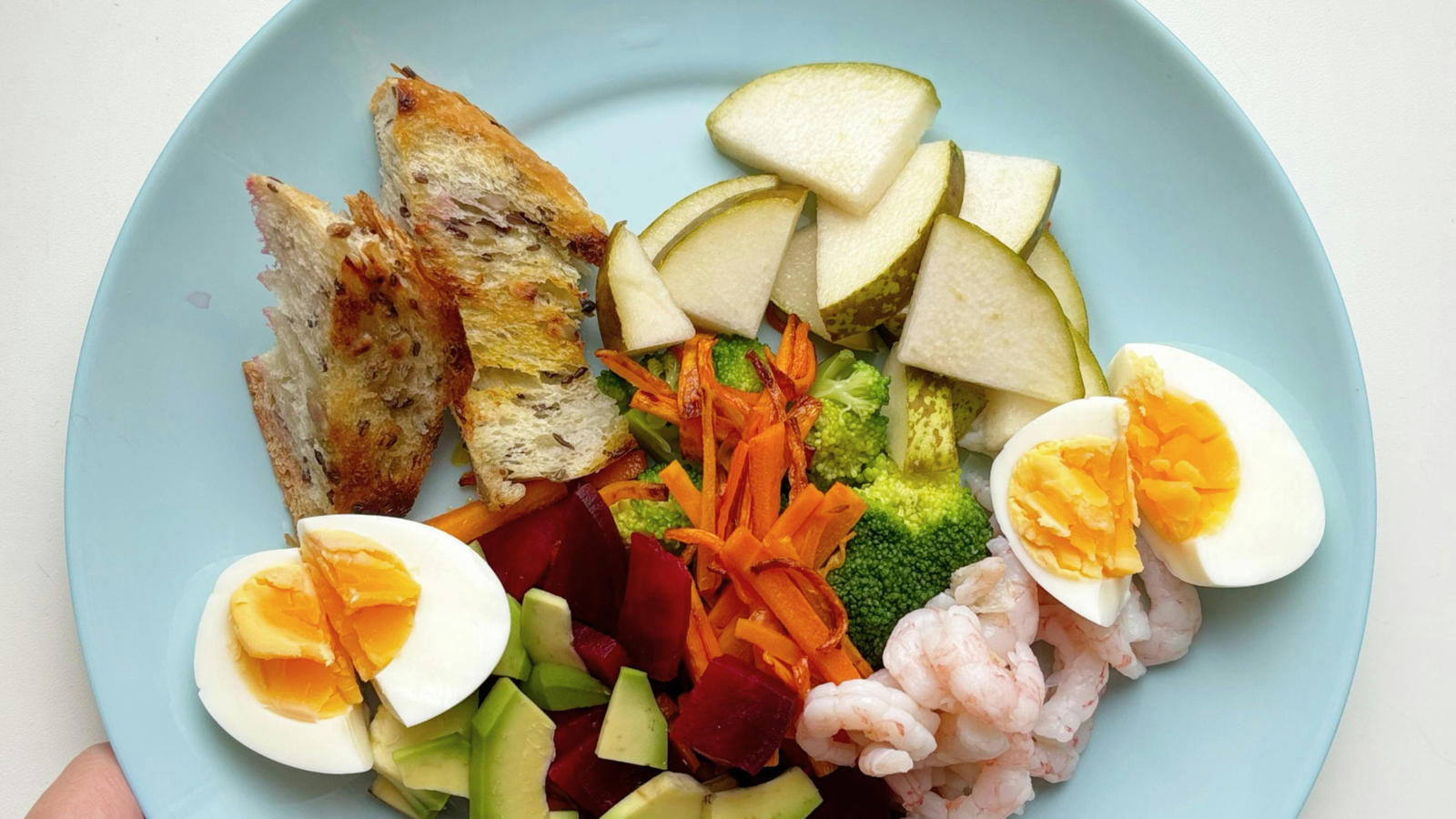
You follow a mostly healthy diet. You try to make good choices. But after meals, you feel tired, foggy, or strangely hungry again — and you’re not sure why. That experience is more common than most people realize, and it often comes down to how a meal is built, not just what’s in it.
For many people dealing with blood sugar fluctuations, unexplained energy crashes, or early-stage insulin resistance, the problem isn’t willpower — it’s plate structure. The encouraging news: a simple visual method, backed by research, makes it possible to build meals that support steadier glucose levels without counting grams or following complicated rules.
How to Build a Balanced Plate for Stable Blood Sugar
Divide a standard 9-inch plate into three sections: fill half with non-starchy vegetables, one quarter with lean protein, and one quarter with whole grains or complex carbohydrates. Pairing carbohydrates with fiber, protein, or healthy fat slows glucose absorption and may help reduce post-meal blood sugar spikes — a pattern supported by multiple nutritional studies.[1]
| Plate Section | Proportion | Best Choices |
|---|---|---|
| Non-Starchy Vegetables | ½ of the plate | Broccoli, spinach, zucchini, peppers, leafy greens, green beans |
| Lean Protein | ¼ of the plate | Eggs, fish, chicken, Greek yogurt, tofu, legumes |
| Complex Carbohydrates | ¼ of the plate | Quinoa, brown rice, lentils, sweet potato, whole-grain bread |
| Beverage | — | Water, unsweetened tea, black coffee |
Key Takeaways
- The plate method is a visual, no-math approach to structuring meals for steadier blood sugar.
- Filling half the plate with non-starchy vegetables provides the fiber foundation that slows glucose absorption.
- Pairing carbohydrates with protein or fat changes how quickly sugar enters the bloodstream.
- Whole grains — quinoa, brown rice, lentils — have a gentler glucose impact than refined alternatives.
- Beverages matter: water, unsweetened tea, and black coffee support hydration without triggering spikes.
- Weekly meal prep reduces friction and makes it easier to consistently apply the method.
Why Plate Structure Affects Blood Sugar
Eating carbohydrates alongside fiber, protein, or fat changes how quickly glucose enters the bloodstream. This isn’t a theory — it’s a well-documented metabolic process. When carbohydrates are consumed in isolation, digestion is fast and glucose absorption is rapid. Add fiber or protein to the same meal, and that rate slows considerably.[1]
For anyone experiencing blood sugar fluctuations — whether diagnosed with prediabetes, managing insulin resistance, or simply noticing afternoon energy crashes — this mechanism is worth understanding. The way a plate is structured before a meal is eaten directly influences how the body responds to it.
Many people who felt stuck for years trying to manage their energy and weight have found that understanding this mechanism — really understanding it, not just being told to “eat less sugar” — was the turning point. It is not about eating less. It is about eating smarter combinations.
How individual meals affect glucose is one piece of the picture — but understanding what happens in the hours after eating matters just as much. The complete guide to post-meal blood sugar spikes breaks down the full physiological response and what actually reduces it.
The Foundation: Non-Starchy Vegetables
Half the plate should be filled with non-starchy vegetables — and this is where most standard Western meals fall short. Vegetables in this category are rich in fiber, vitamins, and minerals while having minimal impact on blood glucose.
Good choices include leafy greens like spinach, arugula, and kale; cruciferous vegetables like broccoli, cauliflower, and Brussels sprouts; and colorful options like bell peppers, zucchini, cucumber, and green beans. These aren’t interchangeable with starchy vegetables — potatoes, corn, and peas behave more like carbohydrates and should be counted in the grain section instead.
The fiber in these vegetables does two important things: it slows digestion and feeds the beneficial bacteria in the gut, which research increasingly links to improved metabolic health.[2] More fiber on the plate means a more gradual glucose response after the meal.
Protein: The Stabilizing Quarter
One quarter of the plate goes to lean protein — and the choice here matters more than many people expect. Protein slows gastric emptying (the rate at which food leaves the stomach), which directly influences how quickly carbohydrates are absorbed.[3]
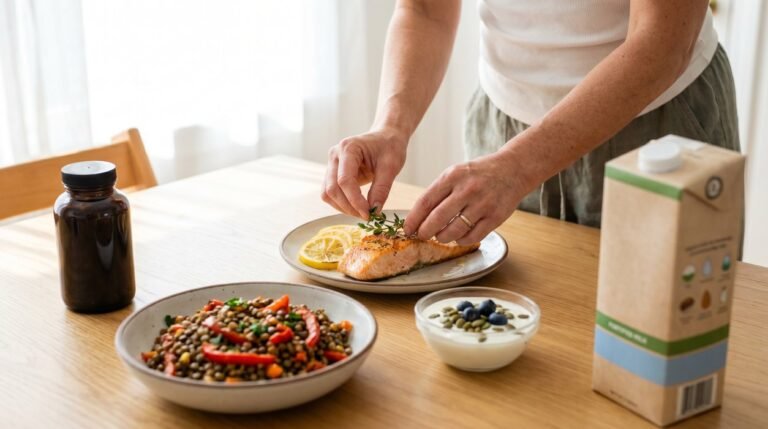
Quality protein sources include eggs, fish like salmon or sardines, chicken or turkey, Greek yogurt, cottage cheese, tofu, tempeh, and legumes like black beans or lentils. Legumes are particularly valuable — they provide both protein and fiber simultaneously, making them effective at supporting blood sugar balance.
For plant-based eaters, combinations like lentils with roasted vegetables, or black beans with quinoa and greens, cover the protein and fiber needs in a single bowl.
Carbohydrates: Choose Quality, Not Zero
Carbohydrates are not the enemy — but the type and context in which they’re consumed makes a significant difference. The final quarter of the plate should contain complex carbohydrates: foods with intact fiber structures that slow their own digestion.
Practical choices include quinoa, brown rice, whole-grain sourdough bread, lentils, sweet potatoes, or oats. Research consistently shows that whole grains produce a more gradual glucose response compared to their refined counterparts — white bread, white rice, and processed pasta — which are rapidly broken down into glucose.[4]
The goal isn’t to eliminate carbohydrates but to ensure they are never consumed alone. A piece of fruit paired with nuts, or rice paired with salmon and vegetables, behaves very differently in the body than the same amount of rice eaten by itself.
Beverages: The Overlooked Variable
What gets consumed alongside a meal affects blood sugar just as much as the food itself. Sugary sodas, fruit juices, and sweetened coffee drinks add significant glucose without any of the fiber, protein, or fat that would slow absorption. The result is a rapid spike that bypasses all the careful plate-building that preceded it.
Water is always the best choice. Unsweetened tea — particularly green tea, which research suggests may support insulin sensitivity — and black coffee are also good options.[5] If plain water feels too plain, sparkling water or water with a slice of lemon or cucumber adds variety without adding glucose.
Practical Portion Awareness Without Counting
One of the most practical aspects of this method is that it doesn’t require a food scale. The hand provides a reliable, always-available portion guide:
- A closed fist ≈ one cup of cooked grains or fruit
- An open palm (fingers excluded) ≈ 3 oz of fish, chicken, or meat
- A cupped hand ≈ one serving of nuts or seeds
- A thumb ≈ one tablespoon of oil, nut butter, or cheese
These aren’t perfect measurements — but consistency matters more than precision. Using the same visual cues at each meal creates a stable pattern that supports blood sugar balance over time.
Making It Work Week to Week
Knowing how to build a plate is one thing. Actually building it consistently — when tired, busy, or hungry — requires a different strategy: preparation.
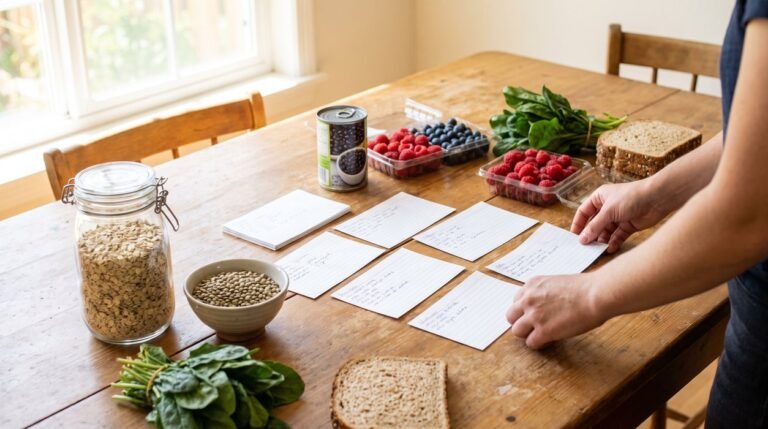
Batch cooking grains and legumes once or twice a week removes most of the friction from weekday meals. A pot of quinoa, a batch of roasted vegetables, and pre-portioned proteins in the refrigerator means a balanced plate can be assembled in under five minutes. Pre-washed greens and frozen vegetables extend convenience further without sacrificing nutritional quality.
Research suggests that people consume larger portions from larger containers, often without noticing.[6] Portioning snacks into small bowls rather than eating from the package is a low-effort habit that supports portion awareness without any active calorie counting.
Conclusion
Building a plate that supports stable blood sugar doesn’t require eliminating food groups, following a rigid meal plan, or becoming an expert in nutrition. It requires understanding one simple structural principle: carbohydrates paired with fiber, protein, and healthy fat produce a fundamentally different metabolic response than carbohydrates eaten alone.
That principle — applied consistently across meals, not perfectly but regularly — is one of the most evidence-backed dietary strategies for supporting insulin sensitivity and metabolic health. Many people who struggled with energy crashes, hunger cycles, or unexplained blood sugar fluctuations have found that changing how their plate was built made a more meaningful difference than changing what they ate.
Understanding this is the starting point. Applying it one meal at a time is how the change actually happens.
Frequently Asked Questions
How do you build a balanced plate for stable blood sugar?
Fill half a 9-inch plate with non-starchy vegetables like leafy greens, broccoli, or peppers. Dedicate one quarter to lean protein — eggs, fish, chicken, or legumes — and one quarter to complex carbohydrates like quinoa, brown rice, or lentils. Pairing carbohydrates with fiber and protein slows glucose absorption and may help reduce post-meal blood sugar spikes. Choose water, unsweetened tea, or black coffee as your beverage to avoid added glucose from drinks.
What foods help stabilize blood sugar after a meal?
Foods high in fiber and protein are most effective at moderating post-meal glucose responses. Non-starchy vegetables like spinach, broccoli, and zucchini provide fiber that slows digestion. Lean proteins such as eggs, fish, and Greek yogurt slow gastric emptying. Whole grains — quinoa, lentils, brown rice — have a gentler impact on blood sugar compared to refined carbohydrates. Healthy fats from olive oil, avocado, or nuts also help slow glucose absorption when consumed alongside carbohydrates.
Does the order in which you eat food affect blood sugar?
Research suggests that eating vegetables and protein before carbohydrates in a meal may reduce the post-meal glucose response compared to eating carbohydrates first. This effect is thought to relate to how fiber and protein slow stomach emptying and influence glucose absorption rates. While meal order is a secondary factor compared to overall plate composition, eating the vegetable and protein portions before the grain portion may offer an additional benefit for blood sugar management.
Are there specific vegetables to avoid when managing blood sugar?
Starchy vegetables — potatoes, corn, peas, and winter squash — behave more like carbohydrates than non-starchy vegetables and should be counted toward the grain quarter of the plate rather than the vegetable half. Non-starchy vegetables like leafy greens, broccoli, cauliflower, peppers, zucchini, and green beans are well-suited to filling the vegetable half of the plate and have minimal impact on blood glucose levels.
How does meal prep support blood sugar stability?
Batch-cooking proteins, grains, and roasted vegetables at the start of the week reduces the decision-making and effort required to build a balanced plate when tired or busy. When components are ready in the refrigerator, a well-structured meal takes minutes to assemble rather than requiring active cooking. Consistent plate-building — even imperfect — is more effective for blood sugar management than occasional perfect meals separated by unstructured eating.
Medical Disclaimer: The information provided in this article is for educational purposes only and does not constitute medical advice. Always consult a qualified healthcare provider before making changes to your diet, lifestyle, or treatment plan. TheMetabolicHub.com does not replace professional medical guidance.
References
- Chandalia M, et al. Beneficial effects of high dietary fiber intake in patients with type 2 diabetes mellitus. N Engl J Med. 2000;342(19):1392–1398. PMID: 10805824
- Sonnenburg JL, Bäckhed F. Diet-induced alterations in gut microflora contribute to lethal pulmonary damage in TLR2/TLR4-deficient mice. Nature. 2016;535:56–64. PMID: 27383981
- Leidy HJ, et al. The role of protein in weight loss and maintenance. Am J Clin Nutr. 2015;101(6):1320S–1329S. PMID: 25926512
- Aune D, et al. Whole grain consumption and risk of cardiovascular disease, cancer, and all cause and cause specific mortality. BMJ. 2016;353:i2716. PMID: 27301975
- Iso H, et al. The relationship between green tea and total caffeine intake and risk for self-reported type 2 diabetes among Japanese adults. Ann Intern Med. 2006;144(8):554–562. PMID: 16618952
- Wansink B, Kim J. Bad popcorn in big buckets: portion size can influence intake as much as taste. J Nutr Educ Behav. 2005;37(5):242–245. PMID: 16242311