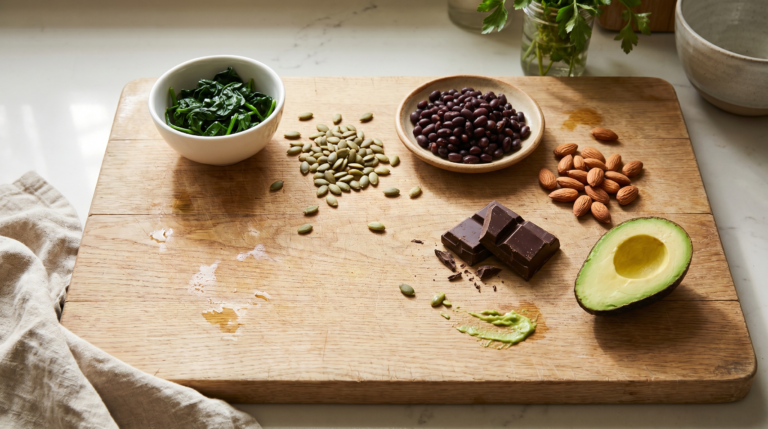
Healthy Fats vs Sugar: Why Fat Isn’t the Real Problem

You’ve spent years choosing low-fat yogurt, skipping olive oil, and reaching for “light” versions of everything. And yet energy crashes still hit mid-afternoon, cravings feel relentless, and the weight around the middle won’t shift.
For many adults — especially women navigating the hormonal shifts of their 30s, 40s, and 50s — this pattern may be partly shaped by decades of oversimplified low-fat advice.
When dietary fat gets replaced with added sugar, refined carbohydrates, and ultra-processed low-fat products, blood sugar becomes less stable, meals become less satisfying, and the metabolic picture often gets worse — not better.
Understanding healthy fats vs sugar isn’t about declaring a winner. It’s about recognizing that whole-food fats and added sugar affect the body in fundamentally different ways — and that knowing the difference is one of the most practical metabolic shifts available.
Quick Wins: Simple Swaps to Start This Week
- Check low-fat yogurt for added sugar — if it’s above 10g per serving, switch to plain Greek yogurt and add berries
- Replace one sweetened drink daily with water, sparkling water, or unsweetened tea
- Add protein + healthy fat to breakfast: eggs with avocado, Greek yogurt with walnuts, or oats with chia seeds
- Cook more often with extra-virgin olive oil or avocado oil instead of low-fat sprays or ultra-processed dressings
- Add one serving of fatty fish this week — sardines, salmon, mackerel, or trout
Where the Fear of Fat Came From
The idea that dietary fat causes body fat accumulation seemed logical for decades. Fat contains 9 calories per gram compared to 4 for carbohydrates, so the math appeared simple: eat less fat, consume fewer calories, lose weight.
Early diet-heart research, especially from the 1950s through the 1980s, helped shape widespread fear of dietary fat. But later debate showed that public nutrition advice often simplified a much more complex picture.
What was underestimated: the role of refined carbohydrates, added sugars, ultra-processed foods, physical activity, smoking, sleep, stress, and overall dietary quality. By the 1980s, low-fat products were everywhere. Many replaced fat with sugar, starches, gums, and refined flour to keep food palatable.
During the same period, obesity and type 2 diabetes rates continued to rise. That does not prove low-fat advice caused the trend — many food-environment and lifestyle factors changed at the same time — but it does show that simply reducing fat intake did not deliver the metabolic improvements many people expected.
This is not a story about anyone being deceived. It is a story about how nutrition science evolves, and why the healthy fats vs sugar question deserves a better answer than “eat less fat.”
Insulin, Fat Storage, and the Sugar Connection
To understand why added sugar and whole-food fats affect metabolism differently, it helps to understand insulin.
Insulin is a hormone released when blood glucose rises. It helps move glucose into muscle, liver, and fat cells for energy or storage. After a carbohydrate-heavy meal, insulin rises, and the body temporarily shifts toward storage and away from burning stored fat.
When insulin stays elevated frequently — as it often does in diets high in sugary drinks, refined carbohydrates, and ultra-processed foods — the body spends more time in storage mode and less time easily accessing stored fat. But insulin is not the whole story. Fat loss is also shaped by total energy intake, food quality, muscle mass, sleep, stress, physical activity, and hormonal context.
What Refined Sugar Does Differently
Refined sugar, especially added fructose, adds another layer. Unlike glucose, fructose is metabolized mostly in the liver. When consumed in excess — especially through sweetened drinks, flavored yogurts, desserts, and ultra-processed foods — the liver can convert some of that excess into fat through de novo lipogenesis, a process that contributes to higher triglycerides and liver fat over time.[1]
In plain terms: liquid sugar arrives quickly, with little fiber and weak satiety. The body processes it fast, insulin responds sharply, and hunger often returns sooner than it would after a meal containing protein, fiber, and healthy fat.
This does not mean all carbohydrates are harmful. Whole fruit is not the same as fruit juice or added sugar because it contains fiber, water, micronutrients, and intact food structure. Beans, lentils, oats, berries, vegetables, sweet potatoes, and intact whole grains can all fit into a metabolically supportive diet.
The issue is added sugar and refined carbohydrates — not carbohydrates as a category. Higher added sugar intake is consistently associated with worse metabolic profiles, including higher triglycerides, lower HDL cholesterol, and higher cardiovascular risk.[2]
How Whole-Food Fats Interact with Insulin
Dietary fat from whole food sources causes minimal insulin response and does not raise blood glucose. Instead, fat supports energy production, cell membranes, hormone production, and absorption of fat-soluble vitamins.
This is why the healthy fats vs sugar comparison matters: whole-food fats tend to support satiety and stable blood sugar, while added sugar — especially in liquid form — is more likely to drive glucose swings, weaker fullness signals, and higher triglycerides over time.
The issue is not fat plus carbohydrates as a combination. It is the quality of the carbohydrate. Olive oil over roasted sweet potato or avocado with lentils behaves very differently than fat eaten alongside refined sugar and white flour. The Mediterranean diet combines fats and carbohydrates extensively and remains one of the most consistently health-supportive dietary patterns in research.

Healthy Fats vs Added Sugar: Key Differences
| Food Type | Blood Sugar Effect | Satiety Effect | Best Examples |
|---|---|---|---|
| Whole-food fats | Minimal — does not raise blood glucose | Strongest when combined with protein and fiber | Olive oil, avocado, walnuts, salmon, sardines, chia seeds |
| Added sugar / liquid sugar | Rapid spike, especially from sweetened drinks | Weak — hunger often returns quickly | Soda, juice, sweetened yogurt, flavored coffee drinks |
| Whole-food carbohydrates | More gradual because fiber slows absorption | Good when paired with protein and healthy fat | Lentils, oats, berries, vegetables, intact whole grains |
| Refined carbohydrates | Fast digestion and larger glucose rise | Poor — low fiber, low protein | White bread, pastries, crackers, low-fat packaged snacks |
Why Whole-Food Fats Support Metabolic Health
Certain fats are not just “not harmful.” They perform biological functions the body depends on. The strongest evidence points to whole-food fat sources such as extra-virgin olive oil, nuts, seeds, avocados, and fatty fish.
Omega-3 Fatty Acids and Inflammation
Omega-3 fatty acids — found in salmon, sardines, mackerel, trout, walnuts, flaxseed, chia seeds, and algae — help form signaling molecules involved in inflammation resolution. Chronic low-grade inflammation is common in metabolic disease, including insulin resistance, type 2 diabetes, and cardiovascular disease.
Omega-3 intake, especially EPA and DHA from fatty fish, is consistently associated with lower triglycerides and healthier inflammatory profiles.[3]
Monounsaturated Fats and Insulin Sensitivity
Extra-virgin olive oil, avocados, and many nuts are rich in monounsaturated fats. These fats appear frequently in dietary patterns linked with better insulin sensitivity and long-term cardiovascular health.
The Mediterranean diet — rich in olive oil, nuts, fish, legumes, vegetables, and minimally processed carbohydrates — is one of the most studied dietary patterns in the world. In a large randomized trial, a Mediterranean diet supplemented with extra-virgin olive oil or nuts reduced cardiovascular risk compared with a low-fat control diet.[4]
A Note on Saturated Fat
Saturated fat is no longer viewed as the single dietary villain it was once made out to be. But that does not mean all fat sources are equal.
Current evidence suggests that what replaces saturated fat matters. Replacing it with unsaturated fats — especially from olive oil, nuts, seeds, and fatty fish — appears beneficial. Replacing it with refined carbohydrates or added sugar does not.[5]
The practical takeaway: prioritize whole-food fats with the strongest metabolic evidence — extra-virgin olive oil, avocado, nuts, seeds, and fatty fish — rather than ultra-processed foods that happen to contain fat.
Fat-Soluble Vitamins Need Dietary Fat
Vitamins A, D, E, and K are fat-soluble, meaning dietary fat helps with absorption. A chronically very-low-fat diet may make it harder to absorb these nutrients well, especially if overall diet quality is already low.

What Can Actually Shift the Pattern
Meaningful metabolic improvements do not require a complete dietary overhaul. They often begin with redirecting what you are already eating, rather than simply eating less of everything.
A Simple Plate Formula
A practical starting point: build meals around protein + a fiber-rich carbohydrate + a whole-food fat + color from vegetables or fruit. This combination supports steadier blood sugar, stronger satiety, and fewer post-meal crashes.
In practice, that looks like:
- Greek yogurt + berries + walnuts
- Eggs + avocado + sautéed vegetables
- Salmon + lentils + an olive-oil-dressed salad
- Oats + chia seeds or ground flax + plain Greek yogurt
The goal is not to add unlimited fat. It is to replace low-quality refined carbohydrates and added sugar with whole-food fats that actually satisfy.
Address Liquid Sugar First
Sweetened beverages — soda, fruit juice, flavored coffees, sweetened teas — deliver sugar quickly, with no fiber and little satiety. Replacing them with water, sparkling water, unsweetened tea, or black coffee is often the highest-leverage first step for reducing added sugar load.
What Changes — and When
Many people notice early shifts within 2–4 weeks: steadier afternoon energy, fewer post-meal crashes, and reduced cravings between meals. More measurable changes in fasting glucose, fasting insulin, triglycerides, or waist circumference typically take longer and depend on consistency, total diet quality, sleep, movement, and individual health status.
The first thing most people notice is not always a number. It is that the 3pm crash becomes less predictable, appetite feels steadier, and the urge to reach for something sweet after every meal starts to fade.
For a broader look at lifestyle changes that support insulin sensitivity, the article on ways to improve insulin sensitivity naturally covers the full picture alongside dietary adjustments.
Common Mistakes That Slow Progress
Assuming “Low Fat” Means Better
Low-fat yogurt with added fruit can contain as much sugar as dessert. Low-fat salad dressings often replace fat with sugar, starch, and gums. The label may reduce fat while adding ingredients that make blood sugar and cravings harder to manage.
Checking added sugar on low-fat products is worth doing. If a serving contains more than 8–10g added sugar, it may not support stable blood sugar — regardless of what the front of the package claims.
Treating All Fats the Same
Industrial trans fats are legitimately harmful and have been largely phased out in many countries, but checking labels for “partially hydrogenated” oils is still worthwhile when buying packaged foods.
Refined seed oils are more nuanced than many online discussions suggest. The stronger concern is not one oil in isolation, but the overall dietary pattern: heavy reliance on ultra-processed foods, low omega-3 intake, and poor food quality. Increasing fatty fish, nuts, seeds, and minimally processed meals is more useful than obsessing over one ingredient.
Adding Fat Without Reducing Sugar
Adding more fat to a diet still high in added sugar and refined carbohydrates is not the solution. Whole-food fats are most helpful when they replace refined carbohydrates and added sugar — not when they are simply added on top.
For a practical framework on carbohydrate quality, a practical low-glycemic framework explains how to support steadier blood sugar without eliminating carbohydrates entirely.
Why Satiety Matters
One underappreciated part of the healthy fats vs sugar conversation is satiety — how long a meal keeps you satisfied.
Dietary fat triggers hormones such as CCK and GLP-1, which help signal fullness and slow how quickly food leaves the stomach. In practical terms, meals that combine protein, fiber, and whole-food fats tend to keep most people satisfied longer than low-fat, refined-carbohydrate-heavy meals.
Fructose, by contrast, does not stimulate satiety hormones as effectively as a balanced whole-food meal. Research suggests that fructose-sweetened beverages can produce weaker fullness signals and greater activity in brain reward regions linked with appetite.[6]
For women in perimenopause and beyond, this matters even more. Hormonal shifts can affect appetite regulation, fat distribution, sleep, and insulin sensitivity. A diet that repeatedly drives blood sugar swings and weak satiety can add another layer of difficulty to an already changing metabolic landscape.
That is why many people who move from low-fat, high-refined-carbohydrate eating toward adequate whole-food fats report fewer cravings, less urgency around meals, and fewer episodes of eating past fullness.
For more on specific foods that support steadier glucose levels, foods that support steadier blood sugar offers a practical companion read.

What This Means in Practice
The science on healthy fats vs sugar has moved far beyond “fat is bad” or “sugar is poison.” The more useful message is this: whole-food fats and added sugar do not affect metabolism the same way.
Whole-food fats from olive oil, avocado, nuts, seeds, and fatty fish support satiety, nutrient absorption, anti-inflammatory pathways, and healthier dietary patterns. Added sugar — especially in liquid form — is more likely to drive blood sugar swings, weaker fullness signals, elevated triglycerides, and cravings.
The practical path is not about adding unlimited fat or eliminating all carbohydrates. It is about choosing whole-food fats over refined substitutes, reducing added sugar, and building meals that satisfy rather than spike. Small, consistent shifts in that direction can change how your energy, appetite, and metabolism feel day to day.
Frequently Asked Questions
What’s the real difference between healthy fats vs sugar for weight and metabolism?
When comparing healthy fats vs sugar, the key difference is how each affects insulin, satiety, and liver metabolism. Whole-food fats from olive oil, nuts, avocado, and fatty fish cause minimal insulin response and help meals feel satisfying. Added sugar, especially from sweetened drinks and ultra-processed foods, can drive sharper glucose swings, weaker fullness signals, and higher triglycerides over time.
Is added sugar worse for metabolic health than dietary fat?
For metabolic health, added sugar has a more direct connection to blood sugar swings, elevated triglycerides, liver fat, and insulin resistance than whole-food dietary fats do. The goal is not to demonize one nutrient, but to understand that replacing whole-food fats with added sugar and refined carbohydrates often backfires metabolically.
What are the best fat sources for metabolic health?
The strongest evidence supports extra-virgin olive oil, fatty fish such as salmon, sardines, mackerel and trout, avocados, walnuts, chia seeds, flaxseeds, and minimally processed nuts. These foods appear consistently in dietary patterns associated with better insulin sensitivity and healthier long-term metabolic outcomes.
How much added sugar is too much per day?
The World Health Organization recommends keeping free sugars below 10% of total daily energy intake, with additional benefit below 5%. For a 2,000-calorie diet, 5% equals about 25 grams, or six teaspoons. The best places to look first are sweetened drinks, flavored yogurts, condiments, and packaged snacks marketed as low fat or diet.[7]
Can I eat fat and carbohydrates together?
Yes. The quality of the carbohydrate matters most. Whole-food fats with fiber-rich carbohydrates — olive oil over vegetables, avocado with legumes, nuts with oats — can fit very well into a metabolically supportive diet. The combination that tends to cause problems is fat paired with refined carbohydrates and added sugar, such as pastries, fried fast food, or ultra-processed snacks.
Medical Disclaimer: The information provided in this article is for educational purposes only and does not constitute medical advice. Always consult a qualified healthcare provider before making changes to your diet, lifestyle, or treatment plan. TheMetabolicHub.com does not replace professional medical guidance.
References
- Stanhope KL et al. Consuming fructose-sweetened, not glucose-sweetened, beverages increases visceral adiposity and lipids and decreases insulin sensitivity in overweight/obese humans. J Clin Invest. 2009. PMID: 19381015
- Yang Q et al. Added sugar intake and cardiovascular diseases mortality among US adults. JAMA Intern Med. 2014. PMID: 24493081
- Calder PC. Omega-3 fatty acids and inflammatory processes: from molecules to man. Biochem Soc Trans. 2017. PMID: 28900017
- Estruch R et al. Primary prevention of cardiovascular disease with a Mediterranean diet supplemented with extra-virgin olive oil or nuts. N Engl J Med. 2018. PMID: 29897866
- Sacks FM et al. Dietary fats and cardiovascular disease: a presidential advisory from the American Heart Association. Circulation. 2017. PMID: 28620111
- Stanhope KL, Havel PJ. Endocrine and metabolic effects of consuming beverages sweetened with fructose, glucose, sucrose, or high-fructose corn syrup. Am J Clin Nutr. 2008. PMID: 18926550
- World Health Organization. Guideline: Sugars intake for adults and children. Geneva: WHO; 2015. who.int