The Low-Glycemic Grocery List: What to Always Have at Home
You eat a solid meal — and an hour later you’re foggy, tired, and already reaching for something sweet. If that cycle sounds familiar, it may have less to do with willpower and more to do with what’s in your kitchen.
A pantry stocked with the wrong staples quietly sets you up for energy crashes, cravings, and blood sugar swings — even when you’re trying to eat well.
The encouraging news: building a low-glycemic grocery list is one of the most practical tools available for stabilizing energy and supporting blood sugar balance long-term.
You don’t need to overhaul your entire diet. Start with three swaps: replace white rice with quinoa or barley, add a can of lentils or black beans to your pantry, and pick up a bag of mixed berries. These three changes alone shift the glycemic load of multiple meals per week.
What Is the Glycemic Index and Why It Matters
Not all carbohydrates affect your body in the same way — and the glycemic index (GI) makes that difference visible.
GI ranks carbohydrate-containing foods from 0 to 100 based on how quickly they raise blood sugar after eating. Low-GI foods score 55 or below. Medium falls between 56 and 69. High-GI foods hit 70 or above.
| GI Category | Score Range | Examples |
|---|---|---|
| Low | 55 or below | Lentils, rolled oats, berries, Greek yogurt |
| Medium | 56–69 | Brown rice, whole-wheat bread, sweet potato |
| High | 70 or above | White bread, instant rice, sugary cereals |
How GI Affects Blood Sugar and Energy
High-GI foods digest quickly, triggering a rapid glucose spike and a large insulin response.
The result — fatigue, cravings, and the urge to eat again soon after — is familiar to anyone who has had a bagel for breakfast and felt hungry by 10am.
Choosing lower-GI options helps your pancreas release insulin more gradually. Harvard Health Publishing notes that some common starches raise blood sugar almost as quickly as table sugar — a detail that surprises most people.
Steadier insulin release translates to more consistent energy across the day.
The Essential Low-Glycemic Grocery List
A solid low-glycemic grocery list isn’t complicated. It’s built on a few reliable food categories that do the heavy lifting — fiber, protein, and healthy fat working together to slow glucose absorption.
Below are the foundational categories worth keeping stocked at all times.
Non-Starchy Vegetables
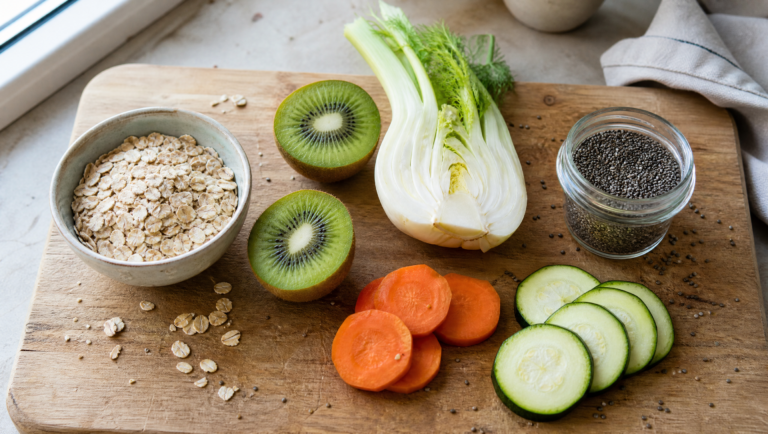
These are the backbone of any low-GI pantry. Spinach, kale, broccoli, zucchini, bell peppers, and cauliflower all score very low on the glycemic scale.
Frozen options work just as well as fresh — and they last. Check labels on frozen bags for added sauces or hidden sugars.
Whole Grains and Legumes
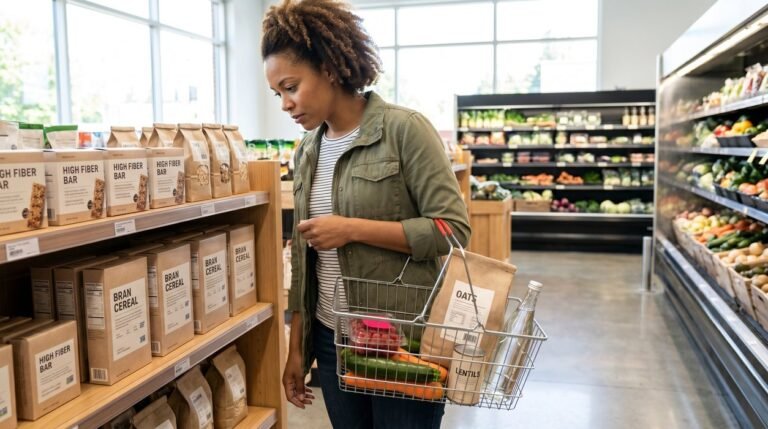
Quinoa, barley, rolled oats, and brown rice are solid whole-grain staples. Aim for products with at least 3 grams of fiber per serving.
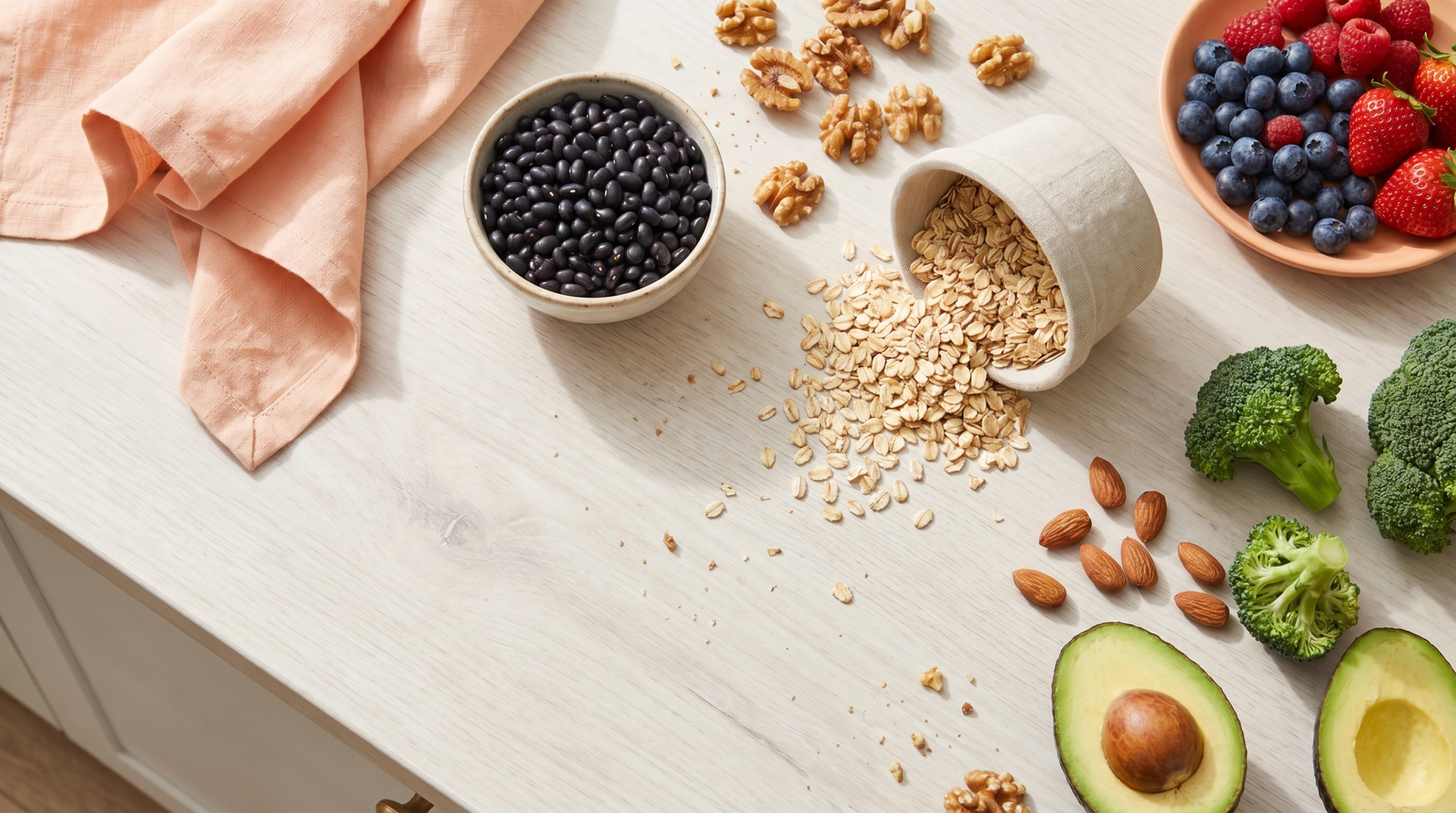
Legumes — black beans, lentils, chickpeas, kidney beans — are particularly valuable. They deliver protein, fiber, and a slow, gentle glucose response all in one.
Fiber is the mechanism behind much of this: higher dietary fiber intake is consistently associated with improved glycemic control and reduced metabolic risk.[1]
For bread, look for “whole grain” or “whole wheat” as the first listed ingredient — not “enriched wheat flour,” which signals a refined product regardless of front-label claims.
These staples are a practical foundation for stabilizing blood sugar across the day.
Fruits, Vegetables, and What to Prioritize
Fruits get a complicated reputation in metabolic health conversations — and it’s mostly undeserved.
Most whole fruits are excellent choices. Knowing which ones to lean on helps you get the nutritional benefits without unintended glucose spikes.
Low-GI Fruits Worth Keeping on Hand
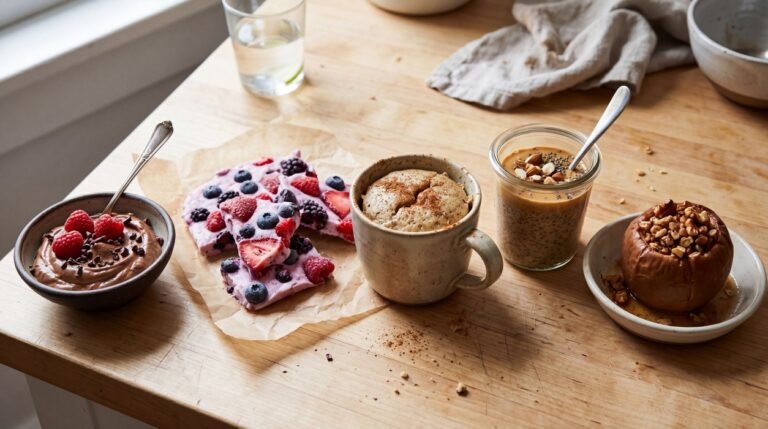
Berries are the standout option. Strawberries, blueberries, raspberries, and blackberries all score low on the glycemic scale and deliver meaningful antioxidant and fiber content.
Apples and pears are reliable year-round staples — eat the skin, since that’s where most of the fiber sits and what moderates glucose release.
Oranges, grapefruit, kiwis, and cherries round out a solid rotation. All offer natural sweetness alongside vitamins without the concentrated sugar load of dried fruit or juice.
One thing worth pushing back on here: “fruit has too much sugar” is one of the most common oversimplifications in metabolic health advice. The glycemic response to a whole apple is fundamentally different from the response to apple juice — even when the sugar content looks similar on a label.
Whole fruit comes packaged with fiber, water, and polyphenols that significantly slow glucose absorption. Large prospective studies support treating whole fruit as a blood-sugar-friendly food, not a problem ingredient.[2]
What does deserve caution: fruit juice and dried fruit. Both concentrate sugar while stripping out the fiber that makes whole fruit metabolically manageable.
Proteins, Nuts, and Healthy Fats for Blood Sugar Stability
Protein and healthy fats are the natural buffers in any meal. They slow the digestion of carbohydrates — which directly lowers the glucose peak after eating.
How you combine foods matters as much as which foods you choose.
Lean and Plant-Based Protein Options
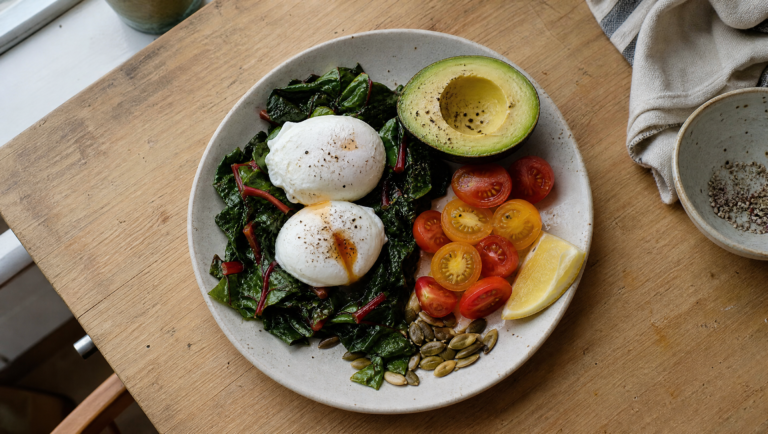
Skinless chicken, turkey, salmon, and canned tuna are practical lean protein staples. Eggs are worth a regular spot too — versatile, affordable, and with minimal impact on blood sugar.
Plant-based options often add fiber as a bonus. Tofu, tempeh, edamame, and legumes pull double duty as both protein and fiber sources.
Understanding how protein affects blood sugar helps you build meals that sustain energy rather than spike it.
Nuts, Seeds, and Healthy Fats
Almonds, walnuts, pecans, and pistachios all have negligible GI scores and provide satiety between meals.
Chia seeds and flaxseeds are small additions with a meaningful fiber payoff — stir them into yogurt, oatmeal, or a smoothie. Avocados and extra-virgin olive oil round out the fat category.
The American Diabetes Association highlights nuts, seeds, legumes, and fatty fish as supportive choices for blood sugar management.
For an occasional treat, dark chocolate with at least 70% cocoa can satisfy a craving without a significant glucose spike.
How Quickly Can You See a Difference?
The research here is more encouraging than most people expect.
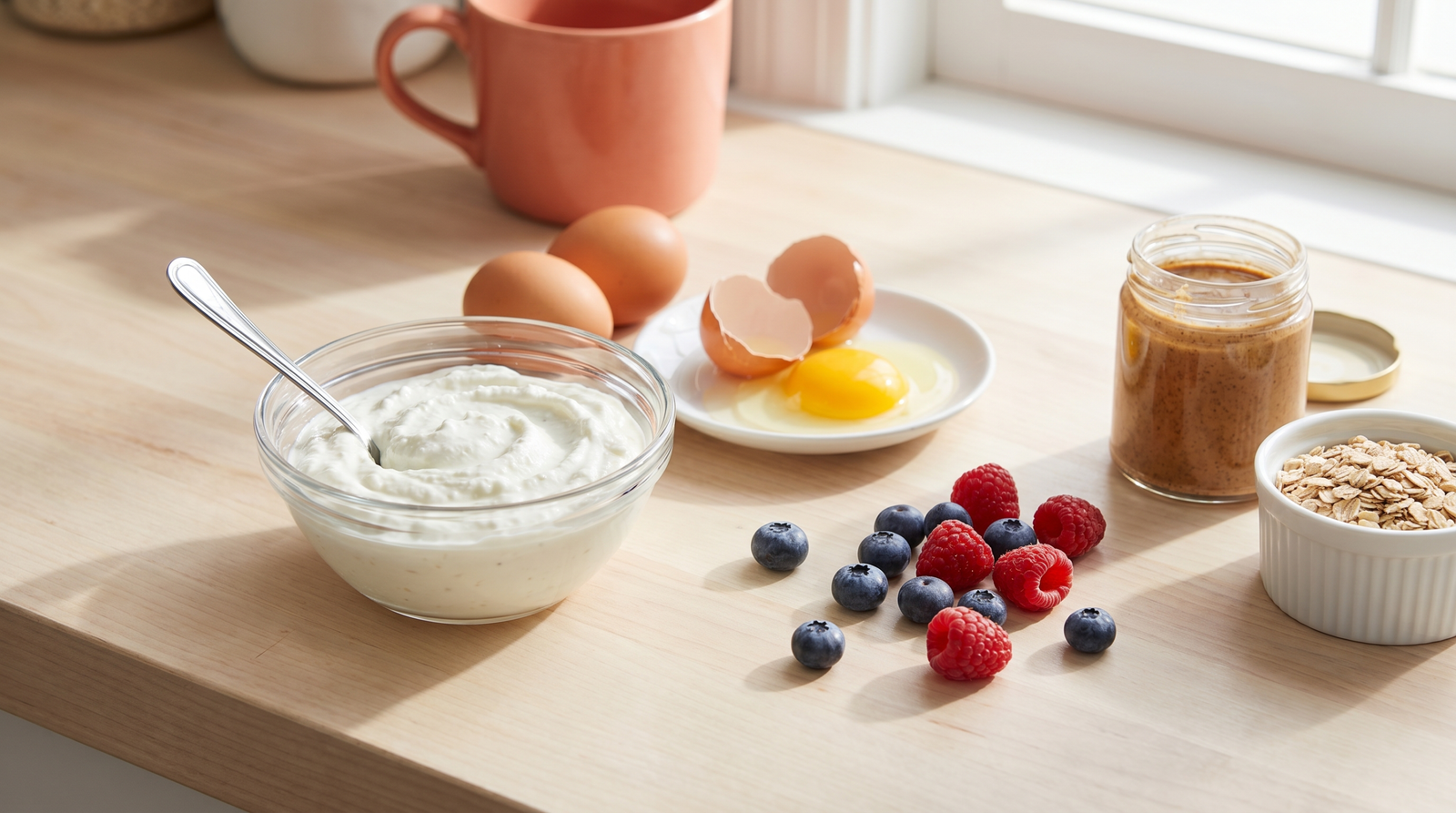
Shifting toward low-GI foods doesn’t require weeks of perfect execution before anything changes. Early signs often appear within the first one to two weeks — particularly in afternoon energy levels and the intensity of post-meal crashes.
Research suggests more measurable changes in fasting glucose and insulin response typically emerge within 4–8 weeks of consistent dietary adjustment, though individual timelines vary based on starting point, sleep, and activity level.
Here’s what tends to shift first: the 3pm energy slump becomes less pronounced. The urgency to snack an hour after lunch fades. Some people notice that sleep quality improves as blood sugar stays more stable overnight.
These aren’t dramatic transformations — they’re quiet, cumulative shifts that make it easier to keep going.
This pattern often develops over years before anyone flags it — which is part of why so many people are surprised when a doctor first mentions blood sugar concerns. It is not a personal failure. The right pantry setup reduces the friction significantly.
Smart Grocery Shopping Strategies
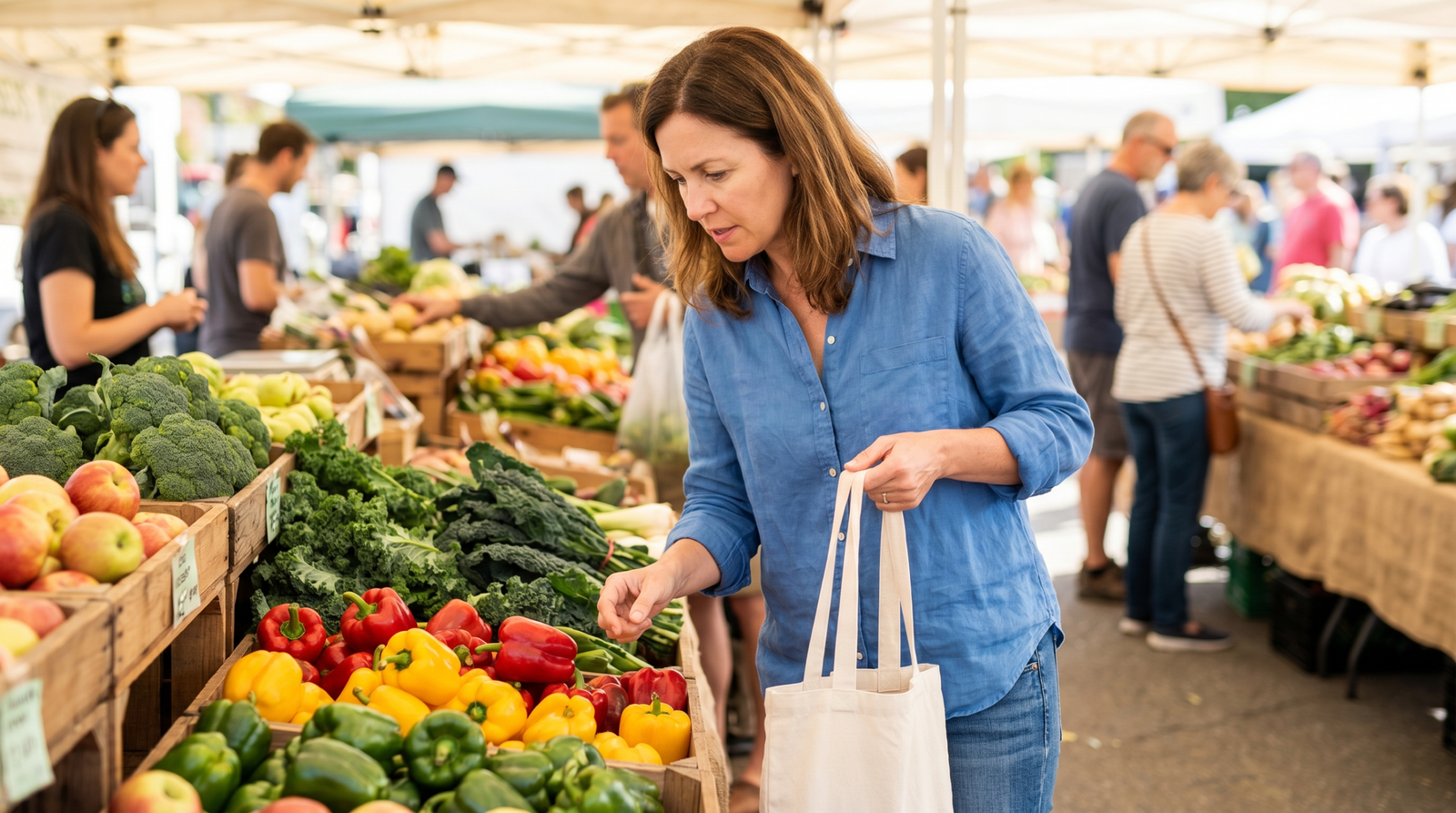
Knowing which foods to buy is one thing. Getting them into your cart consistently is where most people get stuck.
Reading Labels and Avoiding Hidden Sugars
Many products marketed as “fat-free” or “diet-friendly” are loaded with added sugars to compensate for flavor.
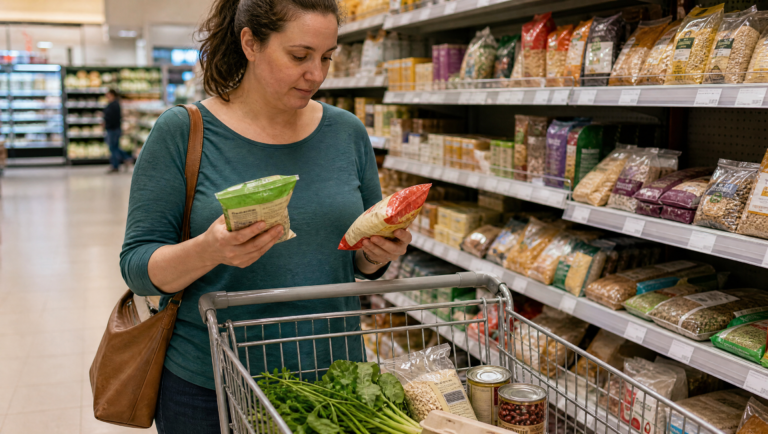
Check the nutrition facts panel for added sugars — listed separately under total carbohydrates. Ingredients like corn syrup, dextrose, maltose, and fruit juice concentrate are common culprits hiding in products that appear healthy.
When buying bread or crackers: “whole grain oats” or “whole wheat” as the first listed ingredient is the target. “Enriched wheat flour” as the first ingredient means you’re looking at a refined grain product regardless of what the front label says.
Meal Planning and Portion Control
Planning meals in advance solves the biggest threat to a low-GI approach: being hungry with nothing prepared and reaching for whatever is fastest.
Portion size still matters even with low-GI foods. A large serving of brown rice or rolled oats raises blood sugar more than a moderate one — GI reflects food quality, not unlimited quantity.
A simple plate model helps: half non-starchy vegetables, a quarter lean protein, a quarter whole grain or legume. This structure keeps the glycemic load reasonable without requiring exact measuring.
Low-Glycemic Snacks for Sustained Energy
The right snack prevents the energy dip between meals — and avoids the blood sugar spike that comes from grabbing something convenient but fast-digesting.
The formula is simple: fiber + protein, or fiber + fat. That combination slows glucose absorption and extends satiety. It’s also what separates a useful snack from one that just delays the next crash.
Snack Ideas That Hold Blood Sugar Steady
- Greek yogurt (plain, unsweetened) with a handful of blueberries or raspberries
- A small portion of mixed almonds and walnuts
- Sliced vegetables — cucumber, bell pepper, celery — with hummus
- Roasted chickpeas (check sodium on packaged versions)
- Whole-grain crackers with a slice of cheese or nut butter
- A medium apple with almond butter
For more ideas and the reasoning behind these pairing principles, the guide on blood sugar stabilizing snacks goes deeper into what works and why.
Snacks as Bridges, Not Substitutes
A snack works best when it supports the meals around it — not when it tries to replace them.
Pairing a piece of fruit with a protein source shifts it from a potential spike to a sustained energy window. Keep portions moderate: the goal is to arrive at the next meal calm and not ravenous, not to feel full.
Conclusion
A low-glycemic grocery list is less about restriction and more about building a kitchen that works in your favor — steadier energy, fewer cravings, and meals that actually hold you.
The changes don’t need to be dramatic. Swapping a few staples, reading one more label, adding legumes to two dinners a week — these small shifts compound faster than most people expect.
You already have the information. The next step is just a shopping trip.
Frequently Asked Questions
What should always be on a low-glycemic grocery list?
A solid low-glycemic grocery list centers on non-starchy vegetables (spinach, broccoli, zucchini, peppers), whole grains (rolled oats, quinoa, barley), and legumes (black beans, lentils, chickpeas). Add low-GI fruits like berries, apples, and pears, lean proteins such as eggs, fish, and Greek yogurt, and healthy fats from nuts, seeds, and olive oil. These categories work together to slow glucose absorption and support steady energy throughout the day.
Are fruits allowed on a low-glycemic diet?
Most whole fruits are excellent choices and fit well into a low-GI approach. Berries, apples, pears, citrus, and cherries all score favorably and provide fiber, vitamins, and antioxidants. The key distinction is whole fruit versus juice or dried fruit — the fiber in whole fruit significantly moderates the glucose response. Juice and dried fruit concentrate sugar while removing the fiber that makes whole fruit metabolically manageable.
How do proteins and fats help with blood sugar control?
Protein and fat slow the digestion of carbohydrates eaten in the same meal — which directly reduces the glucose peak after eating. Including a source of lean protein (chicken, fish, eggs, legumes) and healthy fat (olive oil, nuts, avocado) lowers the overall glycemic load of that meal. This is why a bowl of plain oatmeal produces a different glucose response than the same oatmeal with Greek yogurt and almond butter added.
How soon can dietary changes affect blood sugar and energy levels?
Many people notice early changes within the first one to two weeks — particularly reduced afternoon energy dips and less urgency to snack between meals. Research suggests more measurable shifts in fasting glucose and insulin response within 4–8 weeks of consistent low-GI eating. Individual results vary based on starting point, overall diet, and other lifestyle factors like sleep and physical activity.
Medical Disclaimer: The information provided in this article is for educational purposes only and does not constitute medical advice. Always consult a qualified healthcare provider before making changes to your diet, lifestyle, or treatment plan. TheMetabolicHub.com does not replace professional medical guidance.
References
- Reynolds A, et al. Carbohydrate quality and human health: a series of systematic reviews and meta-analyses. Lancet. 2019;393(10170):434-445.
PMID: 30638909 - Muraki I, et al. Fruit consumption and risk of type 2 diabetes: results from three prospective longitudinal cohort studies. BMJ. 2013;347:f5001.
PMID: 23990623 - American Diabetes Association. Diabetes Superstar Foods. diabetes.org
- Harvard T.H. Chan School of Public Health. The Healthy Eating Plate. hsph.harvard.edu
- Harvard Health Publishing. A good guide to good carbs: the glycemic index. health.harvard.edu