Magnesium-Rich Foods for Blood Sugar: What to Eat and Why It Works

If your energy crashes in the afternoon or your focus goes flat after meals, the research on magnesium-rich foods blood sugar control offers a practical explanation — and a straightforward fix.
For many adults managing blood sugar, one overlooked factor keeps showing up in the research: magnesium. Most people have never been told their levels are low. But research suggests that nearly 60% of US adults fall short of the daily target — and that gap quietly affects how well the body handles glucose.
The encouraging news: focusing on magnesium-rich foods is one of the most practical, food-first strategies available for supporting blood sugar balance.
Quick Win
Add one handful of pumpkin seeds or a cup of cooked spinach to your next meal. Both are among the highest dietary magnesium sources available — and take zero prep time.
What Magnesium-Rich Foods Actually Do for Blood Sugar
Magnesium is involved in over 300 biochemical reactions in the body — including the production of ATP (cellular energy), muscle contraction, nerve signaling, and the regulation of insulin.[1]
When magnesium levels are adequate, insulin signaling pathways function more smoothly. Cells remain responsive to insulin, glucose gets taken up efficiently, and blood sugar stays more stable between meals.
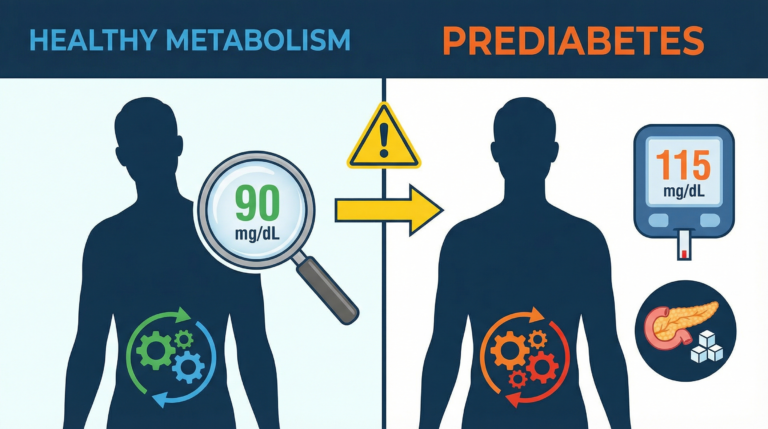
When levels are low — which, based on dietary intake data, is most of the time for most adults — that signaling breaks down. The pancreas compensates by producing more insulin. Over time, this contributes to insulin resistance.[2]
The daily target sits between 310–420 mg depending on age and sex. Most Americans fall short — not by a small margin, but consistently, across years.
| Population Group | Daily RDA (mg) | Source |
|---|---|---|
| Adult Women 19–30 | 310 mg | NIH ODS |
| Adult Women 31+ | 320 mg | NIH ODS |
| Adult Men 19–30 | 400 mg | NIH ODS |
| Adult Men 31+ | 420 mg | NIH ODS |

How Magnesium Supports Insulin Sensitivity
Insulin works like a key that unlocks cells so glucose can enter. Magnesium acts as a co-factor in that unlocking process — supporting the receptor signaling that tells cells to respond.
When dietary intake is consistently low, that signaling becomes sluggish. Cells don’t respond as readily. The pancreas compensates. And fasting glucose starts to drift upward — often without any obvious symptoms.
This is one reason magnesium is sometimes described as a “background mineral” for metabolic health. It rarely causes dramatic symptoms on its own, but its absence quietly undermines glucose control over months and years.
| Factor | Effect on Insulin Sensitivity | Practical Step |
|---|---|---|
| Adequate Magnesium Intake | Supports cell signaling and glucose uptake | Include pumpkin seeds, spinach, black beans daily |
| Regular Physical Activity | Enhances muscle cell responsiveness | Aim for 20–30 minutes of movement most days |
| High Added Sugar Diet | Impairs signaling over time; also increases urinary magnesium loss | Limit processed carbs and sugar-sweetened beverages |
| Chronic Stress | Reduces metabolic efficiency; cortisol depletes magnesium | Brief breathwork or a short walk after meals may help |
The Link Between Low Magnesium and Diabetes Risk
Studies consistently find that people with type 2 diabetes tend to have lower circulating magnesium levels than those without the condition.[2]
Part of this is a cycle: elevated blood glucose causes the kidneys to excrete more magnesium in urine. That loss then worsens insulin signaling — which further impairs glucose control. For anyone already managing prediabetes or metabolic syndrome, this feedback loop is worth understanding.
One thing worth pushing back on here: the standard advice is often framed as “eat more leafy greens.” That’s not wrong — but it understates the specificity of the mechanism. Magnesium isn’t just a general health mineral. It’s directly involved in the enzymatic steps that allow insulin receptors to activate. The connection to glucose regulation is biochemical, not vague.
Magnesium also supports blood pressure regulation — relevant because hypertension and insulin resistance frequently occur together. Maintaining adequate levels helps blood vessels function more flexibly, reducing cardiovascular strain over time.
This is especially important for anyone managing multiple metabolic markers simultaneously. It’s not uncommon to feel like the problem is everywhere at once — energy, weight, blood pressure, mood. That’s not a personal failure. These systems are deeply interconnected, and one foundational gap can affect several things at once.
Top Magnesium-Rich Foods for Blood Sugar Control
The foods that top the magnesium-rich foods blood sugar research list tend to share certain characteristics: they’re whole, minimally processed, and high in fiber.
Below is a practical breakdown by food, with real amounts per serving.
| Food | Serving Size | Magnesium (mg) | Additional Benefit |
|---|---|---|---|
| Pumpkin seeds | 1 oz (28g) | ~150 mg | High zinc, plant protein |
| Cooked spinach | 1 cup | ~158 mg | Vitamins A, C, K; low carb |
| Black beans (cooked) | 1 cup | ~120 mg | High fiber, plant protein |
| Almonds | 1 oz (23 nuts) | ~77 mg | Healthy fats, vitamin E |
| Cashews | 1 oz | ~83 mg | Copper, plant protein |
| Buckwheat (cooked) | 1 cup | ~86 mg | Complete protein, gluten-free |
| Dark chocolate (70%+) | 1 oz (28g) | ~64 mg | Flavonoids, antioxidants |
| Avocado | 1 medium | ~58 mg | Monounsaturated fats, potassium |
Leafy Greens, Whole Grains, and Legumes
These three food groups form the backbone of a magnesium-sufficient diet — and they’re worth looking at in detail, because most people dramatically underuse them.
Dark leafy greens are the easiest high-volume source. One cup of cooked spinach delivers ~158 mg — roughly half the daily target for most adults in a single serving. Swiss chard, kale, collard greens, and mustard greens all fall into the same range.
One pattern that shows up consistently: people who add a cup of cooked greens to dinner — not as the main component, just as a side — often reach their magnesium target without any other dietary changes. That’s not because greens are magical. It’s because the baseline deficit is smaller than people assume, and a single dense source closes much of the gap.
Whole grains are different from their refined counterparts in a way that matters here. The magnesium in grains is concentrated in the bran and germ — the parts removed during refining. Buckwheat, farro, quinoa, and steel-cut oats retain those components. White rice and white bread don’t.
This is where the standard advice tends to oversimplify. “Choose whole grains” often gets presented as a general health tip. But for magnesium specifically, the difference is structural — switching from refined to whole grain is the only way to meaningfully increase grain-derived magnesium intake. There’s no way to add it back in processing.
Legumes are arguably the most underrated source. Black beans (~120 mg/cup), chickpeas (~79 mg/cup), and lentils (~71 mg/cup cooked) are all high in magnesium and come with a secondary benefit: their fiber content directly supports slower glucose absorption. You get the mineral and the glycemic buffering effect in the same food.
A practical approach to hitting daily targets through these three groups:
- One serving of dark leafy greens at dinner — spinach, Swiss chard, or kale
- Buckwheat, farro, or steel-cut oats as a grain base two to three times per week
- A half-cup of black beans or lentils as a side or stirred into soups several times per week
Most people eating this way will land between 300–350 mg daily from food alone, often without tracking anything.
Fruits, Seeds, and Dark Chocolate
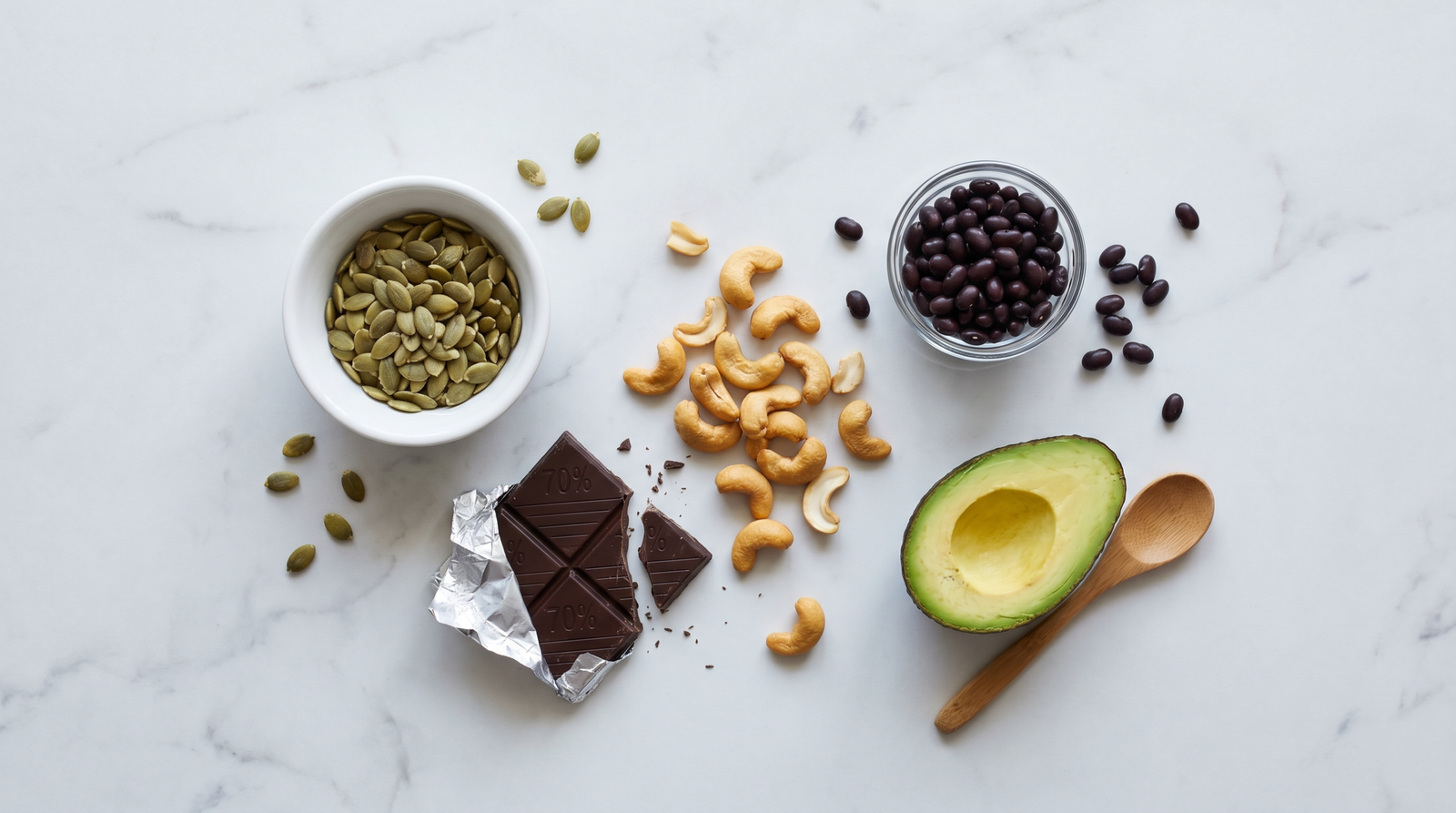
Pumpkin seeds deserve special mention. At ~150 mg per ounce, they’re among the single most concentrated magnesium sources available — easy to add to yogurt, salads, or eaten as a snack. Hemp seeds and sunflower seeds are solid alternatives if pumpkin seeds aren’t accessible.
Avocados (about 58 mg each) and bananas (about 37 mg) contribute meaningfully when eaten regularly. Neither is a primary source, but both add up as part of a broader pattern.
Dark chocolate at 70% cocoa or higher provides around 64 mg per ounce — plus flavonoids associated with improved endothelial function. The caveat: the benefit disappears quickly with lower cocoa content, so the percentage matters.
What a Difference Consistent Intake Makes
The research here is more encouraging than most people expect. Studies suggest that addressing magnesium insufficiency through diet — not necessarily a clinical deficiency, just consistently falling short — can support improvements in fasting glucose and insulin sensitivity over weeks to months.[3]
A reasonable timeline based on dietary intervention data: many people notice changes in energy stability and afternoon fatigue within 2–4 weeks of consistently hitting their magnesium target. Fasting glucose tends to respond more slowly — more like 8–12 weeks of sustained adequate intake before meaningful movement shows up in bloodwork.[4]
What does it feel like when intake improves? The first thing most people notice is that the afternoon energy crash becomes less pronounced. Post-meal fatigue — the tired, foggy feeling that settles in an hour after eating — often lessens. Better insulin signaling means glucose gets into cells more efficiently, so less of it sits in the bloodstream driving reactive responses.
A simple starting point: pumpkin seeds as a daily snack, one cup of cooked spinach or Swiss chard at dinner, and replacing refined grains with buckwheat or farro two to three times per week. That combination alone moves most people into the adequate range without supplements or tracking.
Getting More From What You Eat: Absorption Tips
Eating magnesium-rich foods is the starting point — but absorption depends on a few modifiable factors.
Soaking grains and legumes before cooking reduces phytate content. Phytates are naturally occurring compounds that bind minerals and limit absorption. A 12-hour soak followed by draining and rinsing makes a measurable difference for legumes especially.
Vitamin D is a genuine co-factor for magnesium metabolism. Adequate vitamin D levels support absorption in the gut — which is why the two are often discussed together. Food sources include eggs, fatty fish (salmon, sardines, mackerel), and fortified dairy.
High sugar intake has a direct effect on magnesium retention. Elevated blood glucose increases urinary excretion of magnesium — which is part of why people with poorly controlled blood sugar often become more depleted over time. Limiting added sugars isn’t just about glycemic control; it’s also about retaining the magnesium that’s already in the diet.
Spreading intake across two to three meals per day, rather than consuming all sources in a single sitting, tends to support better absorption efficiency. The gut has a limited capacity to absorb magnesium at once.
Food First: Why Supplements Are a Last Resort
Whole food sources of magnesium come packaged with fiber, co-factors, and other minerals that support absorption. That synergy doesn’t exist in supplement form — and it’s not a small difference.
Supplements can also cause gastrointestinal side effects at higher doses, particularly magnesium oxide, which is poorly absorbed. Magnesium glycinate or citrate are better tolerated, but they’re still working in isolation from the food matrix that normally accompanies dietary magnesium.
For people with kidney disease or impaired renal function, supplemental magnesium carries real risk. The kidneys regulate magnesium excretion, and impaired clearance can lead to accumulation. This applies to a meaningful portion of the population managing metabolic conditions, since chronic kidney disease and type 2 diabetes frequently co-occur.
A simple blood test — serum magnesium — can confirm whether a clinical deficiency is present. For most people who are simply falling short, dietary adjustment is sufficient, safer, and comes with additional metabolic benefits that supplements can’t replicate.
If supplementation seems warranted, that’s a conversation for a healthcare provider, not a starting point.
For a broader view of the strategies that support insulin sensitivity, the article on how to improve insulin sensitivity naturally covers the full picture — including where magnesium fits alongside sleep, fiber, and movement.

Conclusion
Magnesium doesn’t get the attention it deserves in most conversations about blood sugar. It’s not a trending supplement or a dramatic intervention — it’s a foundational mineral that a large share of adults consistently fall short on, often without knowing it.
The practical path forward is straightforward: add pumpkin seeds, cooked leafy greens, black beans, and whole grains like buckwheat or farro into regular rotation. Small, consistent changes to what’s already on the plate are enough to close the gap for most people.
Using magnesium-rich foods as a daily anchor isn’t complicated. It’s one of the most evidence-backed, accessible things available for supporting blood sugar balance — and the benefits extend well beyond glucose to energy, sleep quality, and cardiovascular health.
Frequently Asked Questions
Why are magnesium-rich foods important for blood sugar control?
Magnesium-rich foods support the insulin signaling pathways that allow cells to take up glucose from the bloodstream. When magnesium intake is consistently low, those pathways become less efficient — a process linked in research to insulin resistance and impaired fasting glucose. Because most US adults fall short of the daily target, dietary sources like pumpkin seeds, spinach, black beans, and whole grains are a practical, evidence-based starting point for metabolic support.
Which foods are the highest in magnesium?
Pumpkin seeds are among the most concentrated sources at approximately 150 mg per ounce. Cooked spinach delivers around 158 mg per cup. Black beans provide about 120 mg per cooked cup, and cashews roughly 83 mg per ounce. Buckwheat, Swiss chard, almonds, and dark chocolate (70%+ cocoa) are all strong contributors. Rotating among several of these sources throughout the week is the most reliable way to consistently meet the daily target.
How long does it take for dietary magnesium changes to affect blood sugar?
Research on dietary intervention suggests energy levels and post-meal fatigue may begin to improve within 2–4 weeks of consistently hitting the daily target. Fasting glucose tends to respond more gradually — studies generally point to 8–12 weeks of sustained adequate intake before meaningful changes appear in bloodwork. Individual response varies depending on baseline magnesium status and overall diet quality.
Should I take a magnesium supplement instead of relying on food?
Food sources are generally preferred because they deliver magnesium alongside fiber, co-factors, and other minerals that support absorption and overall metabolic function. Supplements, particularly magnesium oxide, are poorly absorbed and can cause gastrointestinal side effects. For people with kidney disease, supplemental magnesium carries additional risk. A serum magnesium test can confirm whether a clinical deficiency is present — if supplementation seems warranted, it’s best discussed with a healthcare provider rather than started independently.
Medical Disclaimer: The information provided in this article is for educational purposes only and does not constitute medical advice. Always consult a qualified healthcare provider before making changes to your diet, lifestyle, or treatment plan. TheMetabolicHub.com does not replace professional medical guidance.
References
- National Institutes of Health, Office of Dietary Supplements. Magnesium: Fact Sheet for Health Professionals. https://ods.od.nih.gov/factsheets/Magnesium-HealthProfessional/
- Barbagallo M, Dominguez LJ. Magnesium and type 2 diabetes. World J Diabetes. 2015;6(10):1152–1157. PMID: 26322160
- Simental-Mendía LE, Sahebkar A, Rodríguez-Morán M, Guerrero-Romero F. A systematic review and meta-analysis on the effect of magnesium supplementation on insulin sensitivity and glucose control. Pharmacol Res. 2016;111:272–282. PMID: 27329332
- Veronese N, et al. Effect of magnesium supplementation on glucose metabolism in people with or at risk of diabetes: a systematic review and meta-analysis. Eur J Clin Nutr. 2016;70:1354–1359. PMID: 27530471
- U.S. National Library of Medicine. Magnesium in diet. MedlinePlus. https://medlineplus.gov/ency/article/002423.htm