
Creatine for Women: Benefits, Dosage, and What to Expect

Energy crashes in the afternoon. Workouts that feel harder than they used to. A brain that won’t quite cooperate when it’s needed most. These aren’t just signs of a busy life — for many adults, they signal something deeper happening at the cellular level.
This isn’t a personal failure. The body’s energy systems are quietly under-fueled — and that’s something that can be addressed.
Creatine for women is one of the most researched and increasingly recognized tools for supporting energy, strength, and even cognitive function. Yet it’s still widely overlooked outside athletic circles — which means a lot of people are missing out on real, documented benefits.
- Creatine monohydrate at 3–5g daily is one of the most studied supplements available — and the evidence for women specifically is growing fast.
- Adults with lower dietary intake of animal protein (including vegetarians) tend to have the most to gain.
- Benefits extend well beyond the gym: brain energy, mood support, and bone health are all active research areas.
- No loading phase required — consistent daily use is enough.
- What Creatine for Women Actually Does
- Comprehensive Benefits: Strength, Energy, and More
- How It Improves Workout Performance
- Dosage, Timing, and How to Start
- Muscle Tone and Lean Mass Over Time
- Brain Energy, Focus, and Mood
- Hormonal Health and Aging
- Safety, Side Effects, and Common Myths
- Frequently Asked Questions
What Creatine for Women Actually Does
Creatine is a naturally occurring compound found in muscle and brain tissue. Its primary role is supporting the production of ATP — the body’s main energy currency at the cellular level.
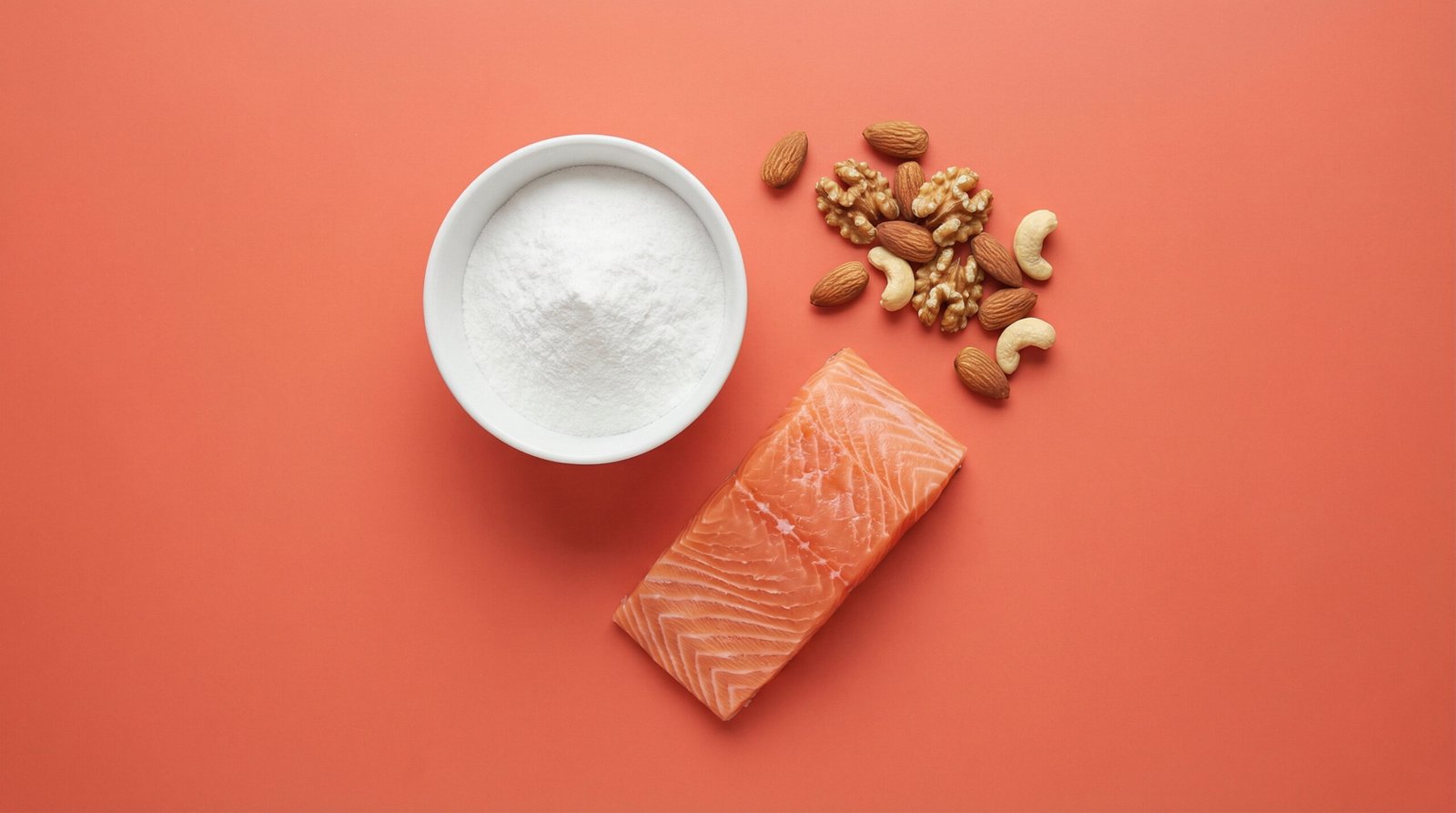
The body synthesizes about one gram daily. The rest typically comes from dietary sources like red meat and seafood. For many people — especially those eating less animal protein — this isn’t enough to keep stores fully topped up.
Research suggests that adults assigned female at birth may carry significantly lower creatine stores than their male counterparts. That gap helps explain why supplementation can produce such noticeable effects.
| Source | How You Get It | Key Contribution |
|---|---|---|
| Body Synthesis | Produced by the liver, kidneys, and pancreas daily | Baseline amount for fundamental metabolic processes |
| Food Sources | Red meat, salmon, herring, and other animal proteins | Adds to natural stores; lower in plant-based diets |
| Supplementation | Creatine monohydrate powder or capsules, taken daily | Saturates tissue stores for optimized performance and recovery |
Understanding how this compound works — and why stores are often lower than ideal — is the foundation for making an informed decision about supplementation.
For a broader look at how fueling muscles supports metabolic health, the guide on strength training for insulin resistance covers the connection in depth.
Comprehensive Benefits: Strength, Energy, and More
The case for creatine for women isn’t built on a single benefit — it’s a convergence of several well-documented effects that happen to address real daily challenges.
Physical Energy and Stamina
Replenishing cellular energy reserves has a direct impact on daily output. Not just during workouts — but throughout the entire day.
Many people report a noticeable shift in afternoon energy within the first few weeks. That post-lunch crash that feels inevitable? It’s partly an energy-availability problem at the cellular level.
Muscle Tone and Recovery
Creatine supports muscle protein synthesis and helps the body maintain lean tissue. This becomes especially relevant as hormonal shifts — during perimenopause and menopause — accelerate natural muscle loss.
A lot of people navigating this life stage are told that fatigue and muscle softening are just part of aging. That framing undersells how much of it is driven by modifiable factors — including chronically low energy availability in muscle cells. It’s not inevitable.
Recovery also improves with consistent supplementation. Muscles bounce back faster after training, reducing soreness and time needed between sessions.
| Benefit Area | How It Works | Key Outcome |
|---|---|---|
| Strength and Power | Boosts phosphocreatine stores for rapid ATP regeneration | Improved force output during high-intensity effort |
| Daily Energy | Supports cellular energy turnover across muscles and brain | Sustained mental and physical stamina throughout the day |
| Muscle Support | Aids protein synthesis and replenishes energy post-exercise | Better lean mass retention and faster fatigue recovery |
How It Improves Workout Performance
High-intensity exercise depletes ATP stores quickly. Creatine acts as a rapid-recharge system — converting phosphocreatine back into usable ATP during those critical seconds between bursts of effort.
Research indicates meaningful improvements in high-intensity exercise performance for people with optimized creatine stores.[1] More reps. Better form. More consistent output across a full session.
The effect is most pronounced during short, explosive efforts — weightlifting, sprints, circuit training. It’s less relevant for steady-state cardio, which draws primarily on aerobic pathways.
One pattern that shows up consistently in the research: people who start with lower baseline creatine stores tend to see the largest performance gains. That includes vegetarians, vegans, and anyone eating fewer than two servings of red meat per week.

Dosage, Timing, and How to Start
The most effective protocol is also the simplest: 3–5 grams of creatine monohydrate daily, taken consistently — including on rest days.
Timing matters less than consistency. Whether it’s mixed into a morning smoothie, taken with lunch, or stirred into a post-workout shake, what counts is showing up every day.
Do You Need a Loading Phase?
A loading phase — typically 20g per day split into four doses for 5–7 days — saturates muscle stores faster. But it isn’t necessary for long-term results.
Starting with 3–5g daily and maintaining it over several weeks produces the same endpoint. The loading approach just gets there a couple of weeks sooner.
What to Mix It With
Creatine monohydrate is nearly tasteless and dissolves easily in water, juice, or a protein shake.
Pairing it with a small amount of carbohydrates and protein may slightly improve muscle uptake. The effect is modest — consistency matters far more than perfect conditions.
| Integration Method | How to Do It | Primary Benefit |
|---|---|---|
| Morning Routine | Add to coffee, tea, or a breakfast smoothie | Sets a consistent daily habit, easy to remember |
| With Meals | Mix into a protein shake or post-lunch water | Ties supplementation to an existing habit; may improve uptake |
| Post-Workout | Add to a recovery shake alongside protein | Convenient timing; supports muscle recovery |
What to Expect and When
This is where the research is more encouraging than most people expect.
Early changes — particularly in energy levels and training output — often appear within the first 2–4 weeks of consistent daily use. Intramuscular stores typically saturate over roughly 3–4 weeks on a maintenance dose.
What tends to shift first: workouts feel less effortful, afternoon energy is more stable, and recovery between sessions improves. Cognitive benefits — sharper focus, reduced mental fatigue — tend to build gradually over the same window.
Visible changes in muscle tone are slower to appear. Research suggests meaningful improvements in lean mass and strength over 8–12 weeks of supplementation combined with resistance training.
Muscle Tone and Lean Mass Over Time
Combining creatine with regular resistance training is one of the more evidence-backed strategies for improving body composition without dramatic dietary overhauls.
Research suggests lean mass improvements of roughly 1–2 kg over time — primarily reflecting better muscle quality rather than a size increase. Adults without high testosterone levels don’t have the hormonal profile needed for significant bulk. What shows up instead is improved tone, definition, and functional strength.
The mechanism is indirect but meaningful: more cellular energy during training leads to higher quality sessions, which creates a greater stimulus for muscle adaptation. The supplement doesn’t build muscle on its own — it creates better conditions for the training to work.
One thing worth pushing back on here: the idea that creatine is primarily an athlete’s tool. The research increasingly shows that benefits for general health, cognitive function, and bone metabolism are just as relevant — if not more so — for sedentary or lightly active adults. The performance angle gets the headlines, but it’s far from the whole story.
Brain Energy, Focus, and Mood
The brain is one of the most energy-demanding organs in the body. Neurons depend on rapid ATP availability for everything from memory formation to emotional regulation — and when cellular energy is low, cognitive performance suffers first.
Memory and Mental Sharpness
A systematic review found that creatine supplementation was associated with improvements in short-term memory and reasoning ability across multiple study populations.[2]
The effect appears strongest during periods of cognitive stress — sleep deprivation, high workload, or sustained mental effort. These happen to be exactly the conditions where many adults feel most depleted.
Mood and Stress Resilience
Brain energy availability influences neurotransmitter function directly. When cellular energy is chronically low, mood regulation becomes harder to sustain.
Research suggests creatine supplementation may positively influence key neurotransmitter systems, contributing to better stress resilience and more stable mood. This area is particularly relevant during perimenopause, when hormonal shifts compound cognitive and emotional load.
| Benefit Area | Biological Mechanism | Everyday Impact |
|---|---|---|
| Memory and Reasoning | Phosphocreatine supports faster ATP production in neurons | Sharper recall; better problem-solving under pressure |
| Mental Focus | Sustained energy turnover supports prefrontal cortex activity | Reduced distraction; improved attention during demanding tasks |
| Emotional Balance | Modulation of neurotransmitter systems under cellular energy stress | Enhanced stress resilience; more stable daily mood |
Hormonal Health, Bone Density, and Aging
Estrogen and progesterone don’t just regulate the monthly cycle — they also influence cellular energy production directly. This is one reason why creatine stores can fluctuate across different phases of the menstrual cycle.
A reasonable concern: does supplementation disrupt this balance? The evidence says no. Creatine does not negatively affect sex hormone levels. It provides a consistent energy substrate that supports performance and well-being even as hormonal levels naturally shift.
Bone Health
Research suggests that creatine supplementation combined with resistance training may support bone health by enhancing the cellular energy available for bone remodeling processes.[3] This matters most during and after menopause, when bone loss accelerates significantly.
It’s not a replacement for calcium and vitamin D — but it may be a meaningful complement within a broader bone health strategy. The combination of resistance training and creatine appears to produce effects neither achieves alone.
| Support Factor | Role in Bone Health | Key Benefit |
|---|---|---|
| Resistance Training | Creates mechanical load that stimulates bone remodeling | Maintains and may improve bone density over time |
| Targeted Nutrition | Calcium, vitamin D, and protein provide structural raw materials | Supports the repair and maintenance process |
| Creatine Supplementation | Boosts cellular energy availability for bone remodeling | May enhance the bone-building response to training |
Safety, Side Effects, and Common Myths
Creatine monohydrate is one of the most extensively studied supplements in existence. The ISSN (International Society of Sports Nutrition) has reviewed decades of research and concluded that creatine supplementation is safe for healthy adults in both the short and long term.[4]
The recommended 3–5g daily dose is well-tolerated. Studies have evaluated doses up to 30g daily over multi-year periods without adverse effects on kidney function in people without pre-existing renal conditions.
| Common Myth | What the Research Says | Practical Takeaway |
|---|---|---|
| “It causes bloating.” | No consistent evidence supports this at standard doses. Any fluid shifts are intracellular — not the visible puffiness people fear. | Slight muscle fullness is possible initially as stores fill; true bloating is not a documented effect. |
| “It makes women bulky.” | Significant muscle bulk requires testosterone levels that most adults don’t have. Creatine supports lean mass and strength — not size. | Expect improved tone and definition. Bulk is not a documented outcome at physiological doses. |
| “It’s hard on kidneys.” | Long-term studies in healthy adults show no adverse effects on renal function at standard doses. | For anyone with pre-existing kidney conditions, consult a doctor first. Otherwise, long-term safety is well-supported. |
One practical note: creatine supplementation during pregnancy or breastfeeding hasn’t been studied sufficiently to establish safety. Consult a healthcare provider in those circumstances.
Choosing a third-party tested product — look for NSF Certified for Sport or Informed Sport certification — ensures accurate labeling and purity. For a broader look at evidence-based supplements in metabolic health, the guide on natural supplements for prediabetes covers how different compounds compare.
What to Take Away from This
The evidence behind creatine for women has become difficult to ignore — and it extends well beyond the gym. Strength, lean mass, bone health, brain energy, mood stability: these are connected systems, and this one small daily habit touches all of them.
Three to five grams of creatine monohydrate daily is a low-effort, well-studied addition to any wellness routine. No loading phase required. No perfect timing window. No training program needed to start seeing benefits — though combining it with resistance training amplifies the results considerably.
The hardest part is usually just starting. Once the habit is in place, it tends to take care of itself.
Frequently Asked Questions
Is creatine for women actually worth taking?
Yes — creatine for women is supported by a substantial and growing body of research. Benefits include improved strength and workout performance, better muscle tone and recovery, enhanced cognitive function, and potential support for bone density during and after menopause. Adults who eat less red meat or follow a plant-based diet tend to have lower baseline stores and may see particularly noticeable effects. The standard dose of 3–5g daily is well-tolerated and doesn’t require a loading phase to be effective.
Will taking creatine make me look bulky?
This is one of the most persistent myths — and it’s not supported by the evidence. Significant muscle bulk requires high testosterone levels that most adults simply don’t have. What creatine supports is improved lean mass, better muscle tone, and a firmer appearance — not size gain. Some people notice a slight sense of muscle fullness early on as stores saturate, which typically levels off within a few weeks.
When will I actually notice a difference?
Early changes in energy levels and workout output often appear within 2–4 weeks of consistent daily use. Intramuscular stores typically saturate over about 3–4 weeks on a maintenance dose. Cognitive effects — sharper focus, reduced mental fatigue — tend to build over the same window. Visible changes in muscle tone generally require 8–12 weeks of consistent supplementation combined with resistance training.
Does creatine affect hormones or the menstrual cycle?
Research does not show any negative effect of creatine supplementation on sex hormone levels. Because estrogen and progesterone influence the body’s natural creatine synthesis, stores can fluctuate across the cycle — supplementation helps maintain a more consistent baseline throughout the month. If you have specific hormonal health concerns, or are pregnant or breastfeeding, discussing supplementation with a healthcare provider is the right first step.
Medical Disclaimer: The information provided in this article is for educational purposes only and does not constitute medical advice. Always consult a qualified healthcare provider before making changes to your diet, lifestyle, or treatment plan. TheMetabolicHub.com does not replace professional medical guidance.
References
- Rawson ES, Volek JS. Effects of creatine supplementation and resistance training on muscle strength and weightlifting performance. J Strength Cond Res. 2003. PMID: 12701815
- Avgerinos KI et al. Effects of creatine supplementation on cognitive function of healthy individuals. Exp Gerontol. 2018. PMID: 29704637
- Candow DG et al. Creatine supplementation and aging musculoskeletal health. Endocrine. 2021. PMID: 33588605
- Kreider RB et al. International Society of Sports Nutrition position stand: safety and efficacy of creatine supplementation. J Int Soc Sports Nutr. 2017. PMID: 28615996
- Houston Methodist Health. Creatine: How Does It Work, Is It Safe? houstonmethodist.org