
How Gut Bacteria Influence Metabolic Syndrome

Persistent fatigue that doesn’t improve with sleep. Blood sugar swings that seem random. Weight that settles around the midsection despite real effort to change it. These patterns are frustrating — and for many adults, they go unexplained for years.
What most people don’t realize is that the trillions of microorganisms living in the digestive tract play a direct role in how the body manages insulin, fat storage, and inflammation.
Research into gut bacteria metabolic syndrome connections has accelerated dramatically over the past decade — and the findings are more actionable than most people expect. The gut microbiome is remarkably responsive to change, and dietary choices are one of the most powerful levers available.
Quick Wins — What the Research Supports
- Increasing fiber diversity promotes short-chain fatty acid production within weeks
- Fermented foods (yogurt, kefir, kimchi) may help reduce inflammatory markers in 4–8 weeks
- A 10–15 minute walk after meals may meaningfully lower post-meal glucose spikes
- Reducing ultra-processed foods can begin to shift microbiome composition within days
- Fasting insulin and CRP are trackable biomarkers that often respond to microbiome-targeted lifestyle changes
Gut Bacteria and Metabolic Syndrome: The Core Connection
Gut bacteria and metabolic syndrome are linked through several overlapping biological pathways — inflammation, insulin signaling, fat storage, and intestinal barrier integrity.
When the microbial community in the digestive tract loses diversity or becomes imbalanced, it can trigger a cascade of metabolic disruptions. These include elevated triglycerides, impaired glucose regulation, increased visceral fat, and higher blood pressure — the core markers doctors use to diagnose metabolic syndrome.
Research from the last two decades has made this connection increasingly difficult to dismiss.
In a pivotal 2004 study, scientists found that germ-free mice — raised without any gut bacteria — gained significantly more body fat when colonized with microbiota from conventionally raised animals. The microbes themselves were driving energy storage, not just assisting digestion.[1]
A 2012 metagenome-wide analysis strengthened this picture in humans. People with type 2 diabetes consistently showed fewer butyrate-producing bacteria — a pattern that points to a functional deficit, not just compositional variation.[2]
How the Research Evolved
Detailed mapping of the gut microbiome only began in earnest in the early 2000s, when scientists started cataloging the collective genomes of microbial communities at scale.
| Year | Research Milestone | Key Insight |
|---|---|---|
| Early 2000s | Human Microbiome Project initiated | First large-scale mapping of microbial genomes in the digestive tract |
| 2004 | Bäckhed et al. germ-free mouse study | Microbiota directly regulate fat storage — not just digestion |
| 2012 | Qin et al. metagenome-wide analysis | Specific microbiome features linked directly to type 2 diabetes risk in humans |
| 2010s–present | Multi-omics integration | Connects microbial function to insulin signaling, lipid metabolism, and inflammation simultaneously |
What shifted over time wasn’t just the data — it was the conceptual frame.
Early researchers saw gut microbes as passive digestive assistants. The current understanding positions them as active regulators of host metabolism. That reframing has opened an entirely different set of research and treatment questions.
Short-Chain Fatty Acids and Why They Matter
When fiber is fermented in the colon, the byproducts aren’t waste — they’re signaling molecules. Short-chain fatty acids (SCFAs) are among the most important compounds the gut microbiome produces.
The three most abundant are acetate, propionate, and butyrate, present in roughly a 60:20:20 ratio.
What Each SCFA Does
Butyrate is the primary fuel source for the cells lining the intestines. It also strengthens the intestinal barrier — the layer that keeps bacterial toxins from leaking into the bloodstream.
Propionate travels to the liver and stimulates GLP-1 production. GLP-1 is a hormone that signals fullness and slows gastric emptying — directly relevant to appetite control and post-meal glucose management.
Acetate, the most abundant of the three, enters systemic circulation and influences energy metabolism in muscle, liver, and fat tissue.
The Insulin Sensitivity Connection
SCFAs don’t just support digestion. They act as signaling molecules, binding to receptors (GPR41, GPR43) in gut tissue and fat cells.
This binding improves insulin sensitivity and supports glucose homeostasis — two of the central targets in managing metabolic syndrome. Higher SCFA production is consistently associated with better metabolic outcomes across multiple study populations.
One pattern that shows up repeatedly in research: adults with low microbial gene richness in the gut tend to produce fewer SCFAs — and show measurably worse insulin sensitivity as a result.[4]
Gut Dysbiosis and Metabolic Health
When the balance of the microbial community shifts — fewer beneficial species, an overgrowth of harmful ones — the condition is called dysbiosis. It’s a common finding in people with metabolic syndrome, and the causal pathways are becoming clearer.
| Factor | Description | Metabolic Impact |
|---|---|---|
| Antibiotic use | Especially in early childhood, reduces microbial diversity | Linked to higher risk of weight gain and immune dysregulation |
| Low-fiber diet | Deprives beneficial microbes of their primary fuel | Weakens intestinal barrier, reduces SCFA production, promotes inflammation |
| Chronic stress | Alters gut motility and secretion patterns | May contribute to systemic inflammation and metabolic dysregulation |
| Environmental toxins | Pollutants and chemicals in food and water | Can directly harm beneficial microbial strains |
A study of Danish schoolchildren found that early antibiotic exposure was associated with increased childhood obesity risk — suggesting that environmental disruption of the microbiome, more than genetics alone, shapes long-term metabolic risk.
When dysbiosis takes hold, the intestinal barrier often weakens. Bacterial components — particularly lipopolysaccharide (LPS) — can pass into systemic circulation, triggering a persistent low-grade immune response.
That chronic inflammatory state is one of the key mechanisms linking gut bacteria to metabolic syndrome at a clinical level.[3]
What Can Actually Help
The research here is genuinely more encouraging than most people expect.
Gut microbiome composition is not fixed. It responds to dietary changes faster than almost any other biological system — some shifts in microbial populations are measurable within days of consistent dietary change. Meaningful clinical improvements take longer, but the entry point is lower than most guides suggest.
Where to Start
The highest-impact first step is increasing fiber variety — not just quantity.
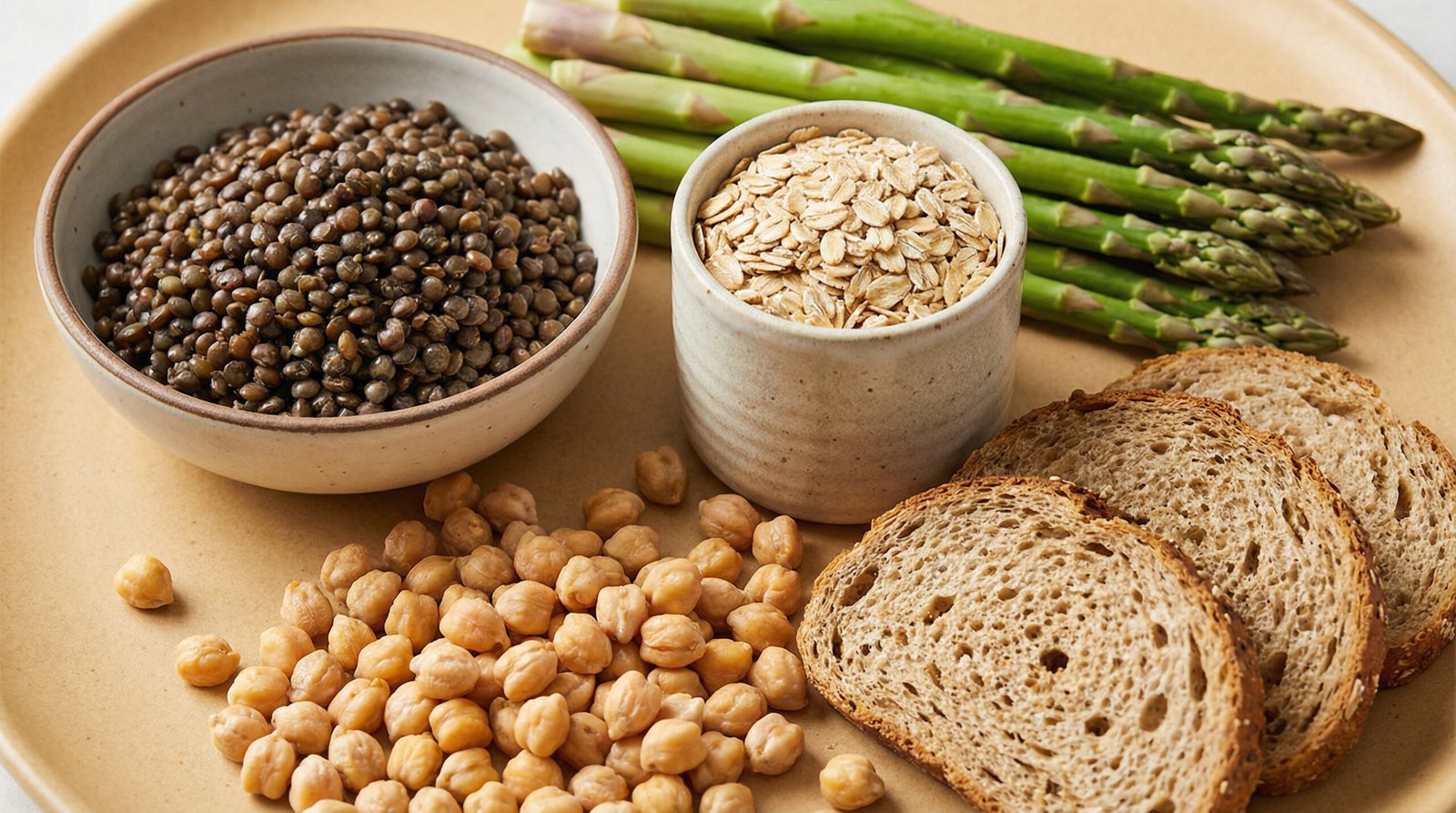
Aim for fiber from at least 5–6 different plant sources daily: leafy greens, legumes (lentils, chickpeas), whole oats, garlic, asparagus, and berries all feed different microbial populations, supporting diversity rather than just volume.
Adding fermented foods alongside fiber shows additional benefit. Yogurt with live cultures, kefir, sauerkraut, and kimchi contribute living organisms that may help restore microbial balance — and the food matrix they arrive in appears to improve their gut survival compared to capsule-form supplements.
What Changes — and When
Many people notice that afternoon energy becomes more stable within the first 2–4 weeks of consistent dietary adjustment.
Research suggests measurable changes in fasting insulin and inflammatory markers — particularly CRP — often appear within 8–12 weeks of sustained dietary change that supports microbial diversity.[5]
Post-meal glucose spikes are another early signal. A short walk — 10 to 15 minutes — after the largest meal of the day may reduce glucose elevation more effectively than a longer walk at another time of day.
The post-meal energy crash many adults experience — that 2–3 pm slump — tends to lessen as gut-driven insulin dysregulation improves. It’s often the first sign that something is shifting metabolically.
LPS, Inflammation, and Blood Sugar
One of the most direct pathways between gut bacteria and metabolic syndrome runs through a molecule called lipopolysaccharide (LPS).
LPS is a structural component of gram-negative bacteria in the gut. When the intestinal barrier is compromised, LPS enters the bloodstream and the immune system responds — triggering a state of low-grade, chronic inflammation sometimes called metabolic endotoxemia.
This is not the acute inflammation of an infection. It’s a quiet, persistent immune activation that never fully resolves. In the Finnish Diabetic Neuropathy cohort — 587 individuals — higher serum LPS levels correlated with elevated blood pressure, one of the core diagnostic markers of metabolic syndrome.
One thing worth pushing back on here: the standard framing of “gut health” focuses on digestion and bloating. But the LPS pathway shows that gut permeability is fundamentally a cardiovascular and metabolic risk factor. Many adults with metabolic syndrome show elevated LPS without any obvious digestive symptoms at all.
TMAO, Bile Acids, and Lipid Metabolism
A molecule called TMAO (trimethylamine N-oxide) has emerged as a measurable marker of cardiovascular risk — and its production is entirely dependent on gut microbial activity.
How TMAO Forms
When choline-rich foods — eggs, red meat, fish — are consumed, certain gut bacteria convert choline into trimethylamine (TMA). The liver then oxidizes TMA into TMAO.
High circulating TMAO levels are consistently associated with increased atherosclerosis risk. The molecule promotes arterial plaque formation through several mechanisms, including foam cell accumulation in arterial walls.
This also explains why two people eating identical diets can have very different cardiovascular risk profiles — their microbiome composition determines how much TMAO is produced from the same foods.
Bile Acids as Metabolic Regulators
Bile acids add another layer. Produced by the liver to aid fat digestion, they are also chemically modified by gut bacteria — and those modified forms act as signaling molecules.
Modified bile acids bind to the farnesoid X receptor (FXR), a nuclear receptor that regulates lipid metabolism, glucose homeostasis, and inflammation. Disruption of this signaling pathway is increasingly recognized as a contributor to metabolic syndrome pathology.
| Compound | Source | Primary Role | Metabolic Impact |
|---|---|---|---|
| TMAO | Liver oxidation of microbial TMA | Promotes atherosclerosis | Increases cardiovascular risk independent of LDL |
| Bile Acids | Liver synthesis, gut modification | Fat digestion, FXR signaling | Regulates lipid levels, glucose, and inflammation |
| Choline | Dietary (eggs, meat, fish) | Precursor for TMA production | Microbial conversion determines TMAO burden |
Insulin Sensitivity and Inflammatory Markers
Tracking the right biomarkers makes the gut-metabolism connection measurable — not just theoretical. And for most people, these numbers are within reach of a standard lab visit.
Research by Le Chatelier et al. found that adults with low bacterial gene richness consistently showed insulin resistance alongside pro-inflammatory dyslipidemia — a combination that maps directly onto the diagnostic criteria for metabolic syndrome.[4]

| Biomarker | What It Measures | Healthy Range | Clinical Relevance |
|---|---|---|---|
| Fasting Insulin | Baseline insulin level | Under 10 µIU/mL | Elevated levels suggest the pancreas is compensating for impaired cell response |
| HOMA-IR | Calculated insulin resistance score | Below 2.0 generally favorable | Derived from fasting glucose + fasting insulin — often not included in standard panels, worth requesting specifically |
| hs-CRP | Systemic inflammation | Under 1.0 mg/L ideal | Elevated hs-CRP may reflect compromised intestinal barrier and LPS translocation |
| Bacterial Gene Richness | Genetic diversity of the microbiome | Higher = better outcomes | Low richness correlates with insulin resistance and inflammation in population studies |
This cycle can develop quietly over years — elevated LPS, rising CRP, worsening insulin sensitivity — which is why so many people are caught off guard when a doctor first mentions metabolic syndrome. It’s not a personal failure. It’s a biological process that standard checkups often miss until it’s well established.
These markers aren’t just diagnostic tools. They’re response metrics — useful for tracking whether dietary and lifestyle interventions targeting the gut microbiome are producing real metabolic change over time.
Therapeutic Strategies: FMT and Metformin
Two very different interventions — one procedural, one pharmaceutical — both point to the microbiome as a key therapeutic target.
Fecal Microbiota Transplantation (FMT)
FMT transfers a screened microbial community from a healthy donor directly into a recipient’s digestive system.
It is already a standard, highly effective treatment for recurrent Clostridioides difficile infections — with success rates above 90% in recurring cases. For metabolic conditions, the evidence is earlier-stage but consistently encouraging.
A key study found that FMT from lean donors into recipients with metabolic syndrome significantly improved insulin sensitivity after six weeks — suggesting that microbial composition can drive metabolic function independently of diet or body weight.[6]
| Aspect | FMT for C. diff | FMT for Metabolic Health |
|---|---|---|
| Primary Goal | Restore disrupted microbiota to fight infection | Improve insulin sensitivity and metabolic markers |
| Key Finding | Over 90% efficacy in recurrent cases | Lean-donor FMT improved insulin response in recipients with metabolic syndrome |
| Current Stage | Standard clinical treatment | Promising approach under active investigation in clinical trials |
Metformin’s Secondary Microbiome Effect
Metformin — the most commonly prescribed first-line medication for type 2 diabetes — appears to work partly through the gut microbiome, not only through direct cellular mechanisms.
Research shows metformin increases the abundance of Akkermansia muciniphila, a bacterium that strengthens the intestinal lining. That action reduces LPS translocation — and by extension, lowers the chronic inflammatory load that drives metabolic endotoxemia.
This dual mechanism matters clinically: it suggests the therapeutic impact of metformin may be at least partially microbiome-mediated. It also opens the question of whether microbiome-targeted dietary interventions could replicate or amplify these effects without pharmaceutical support.
Diet, Prebiotics, and Probiotics
Food is the most immediate way to shift gut microbiome composition — and its effects are faster and more reliable than most people expect.
Fiber as Microbial Fuel
Dietary fiber is the primary substrate for beneficial bacteria. When fermented in the colon, it generates SCFAs — the signaling molecules that improve insulin sensitivity and support barrier integrity.
Specific prebiotic fibers — including inulin, found in garlic, onions, leeks, and asparagus — selectively promote Bifidobacterium growth. That species is consistently associated with reduced inflammation and better metabolic markers across study populations.
Good prebiotic sources include:
- Garlic, onions, and leeks
- Asparagus and slightly underripe bananas
- Whole oats and barley
- Lentils and chickpeas
- Jerusalem artichokes
For a broader look at how dietary patterns affect metabolic markers, see metabolic syndrome lifestyle changes.
The Honest Picture on Probiotics
This is where the standard advice tends to oversimplify.
Probiotic supplements are marketed aggressively — but the evidence for isolated strains in capsule form is considerably weaker than for whole-food fermented sources. Yogurt with live cultures, kefir, kimchi, and sauerkraut provide not just organisms but a food matrix that supports their survival in the gut.
More importantly, no single probiotic strain compensates for low fiber diversity. Fiber variety drives microbial diversity — which is the actual predictor of better metabolic outcomes in research. Adding a probiotic supplement to a low-fiber diet produces minimal benefit in most studies.
The sequence that tends to work: fiber first, fermented foods second, targeted probiotic supplements third — if at all. For more on how gut health and liver function interact in metabolic disease, see gut-liver axis and fatty liver.
Conclusion
Gut bacteria and metabolic syndrome are connected through mechanisms that are increasingly well understood — LPS-driven inflammation, disrupted SCFA production, impaired insulin signaling, and weakened barrier function.
What makes this clinically meaningful is that the gut microbiome is one of the most modifiable systems in the body. Fiber diversity, fermented foods, and consistent movement after meals are the highest-leverage starting points — and their effects on fasting insulin, CRP, and energy levels are measurable within weeks.
None of this requires a perfect diet or a dramatic overhaul. Small, consistent shifts in what gets eaten — and what doesn’t — can meaningfully alter the microbial landscape over time. That’s not a minor adjustment. That’s addressing one of the root drivers of metabolic syndrome itself.
Frequently Asked Questions
How do gut bacteria influence metabolic syndrome?
Gut bacteria and metabolic syndrome are linked through several overlapping pathways. Microbial imbalance (dysbiosis) can weaken the intestinal barrier, allowing bacterial toxins like LPS to enter the bloodstream and trigger chronic inflammation. Reduced production of short-chain fatty acids impairs insulin sensitivity and glucose regulation. Altered bile acid metabolism affects lipid handling. Together, these mechanisms drive the elevated triglycerides, impaired glucose control, visceral fat accumulation, and elevated blood pressure that define metabolic syndrome.
What is gut dysbiosis and how does it affect metabolism?
Dysbiosis refers to an imbalance in the gut microbial community — fewer beneficial species, more harmful ones, and reduced overall diversity. This disruption weakens the intestinal lining, reduces short-chain fatty acid output, and allows bacterial fragments to enter systemic circulation. The result is chronic low-grade inflammation and impaired insulin signaling — two central drivers of metabolic syndrome. Diet, antibiotic exposure, chronic stress, and environmental toxins are among the main factors that push the microbiome toward dysbiosis.
Can changing my diet actually improve gut bacteria and metabolic health?
Yes — and the microbiome responds to dietary changes faster than most biological systems. Increasing fiber diversity from at least 5–6 different plant sources daily is the most evidence-backed strategy. Fermented foods like yogurt, kefir, and kimchi provide additional benefit. Research suggests measurable improvements in fasting insulin and inflammatory markers often appear within 8–12 weeks of consistent dietary change. Reducing ultra-processed foods has shown compositional microbiome shifts within days in some studies.
What is TMAO and why does it matter for metabolic syndrome?
TMAO (trimethylamine N-oxide) is a compound produced when gut bacteria convert choline — found in eggs, meat, and fish — into trimethylamine, which the liver then oxidizes into TMAO. High circulating TMAO levels are associated with increased cardiovascular risk and arterial plaque formation. Its relevance to metabolic syndrome is that TMAO levels vary dramatically between individuals eating identical diets, because microbiome composition determines how much TMA is produced from dietary choline.
Which biomarkers are most useful for tracking gut-related metabolic health?
Fasting insulin and HOMA-IR (a calculated score from fasting glucose and fasting insulin) are among the most useful — and both are often absent from standard lab panels, so it’s worth requesting them specifically from a doctor. High-sensitivity CRP reflects systemic inflammation linked to intestinal barrier dysfunction. These markers serve as response metrics: if dietary changes targeting the microbiome are working, fasting insulin and CRP will typically shift within 8–12 weeks. Bacterial gene richness, while not a standard clinical test, is consistently associated with better metabolic outcomes in research.
Medical Disclaimer: The information provided in this article is for educational purposes only and does not constitute medical advice. Always consult a qualified healthcare provider before making changes to your diet, lifestyle, or treatment plan. TheMetabolicHub.com does not replace professional medical guidance.
References
- Bäckhed F et al. The gut microbiota as an environmental factor that regulates fat storage. Proc Natl Acad Sci USA. 2004;101(44):15718–15723. PMID: 15505215
- Qin J et al. A metagenome-wide association study of gut microbiota in type 2 diabetes. Nature. 2012;490(7418):55–60. PMID: 22456790
- Cani PD et al. Metabolic endotoxemia initiates obesity and insulin resistance. Diabetes. 2007;56(7):1761–1772. PMID: 17456850
- Le Chatelier E et al. Richness of human gut microbiome correlates with metabolic markers. Nature. 2013;500(7464):541–546. PMID: 23985870
- Lynch SV, Pedersen O. The Human Intestinal Microbiome in Health and Disease. N Engl J Med. 2016;375(24):2369–2379. PMID: 27974041
- Vrieze A et al. Transfer of intestinal microbiota from lean donors increases insulin sensitivity in individuals with metabolic syndrome. Gastroenterology. 2012;143(4):913–916. PMID: 22728514
- American Diabetes Association. Standards of Medical Care in Diabetes. diabetes.org
- Harvard T.H. Chan School of Public Health. The Nutrition Source — Fiber. hsph.harvard.edu