7 High-Fiber Foods Less Likely to Cause Bloating
You try to do the healthy thing: add more fiber. Oats, beans, whole grains, maybe even a fiber supplement. Then your stomach feels tight, gassy, and uncomfortable by the afternoon.
That does not mean fiber is wrong for you. It usually means your gut needs a different type of fiber, a slower pace, or a lower-fermentation starting point.
The key is not simply eating more fiber. It is choosing high-fiber foods less likely to cause bloating because they ferment slowly, stay low in FODMAPs at normal serving sizes, or form a gentle gel in the gut. If you are looking for fiber without bloating, the more realistic goal is to choose gentle fiber foods your digestion can actually tolerate and build from there.
Quick Win: Add only one new fiber source this week. Start with either 1/2 cup cooked oats, 1 tablespoon soaked chia seeds, or 1 teaspoon psyllium husk in a full glass of water. Give your gut several days to adjust before adding another fiber-rich food.
In This Article
What Are High Fiber Low Bloat Foods?
High-fiber foods less likely to cause bloating are fiber-containing foods that are less likely to produce uncomfortable gas when eaten in realistic portions. They usually share at least one of three traits: they ferment slowly, they are low in FODMAPs at standard serving sizes, or they form a viscous gel that helps regulate stool movement without rapidly feeding gas-producing bacteria.
This distinction matters because two foods can both be “high fiber” but behave very differently in the gut. Inulin, chicory root fiber, wheat bran, onions, beans, and some large servings of legumes can be very healthy for many people, but they may ferment quickly or contain FODMAPs that trigger bloating in sensitive digestive systems.
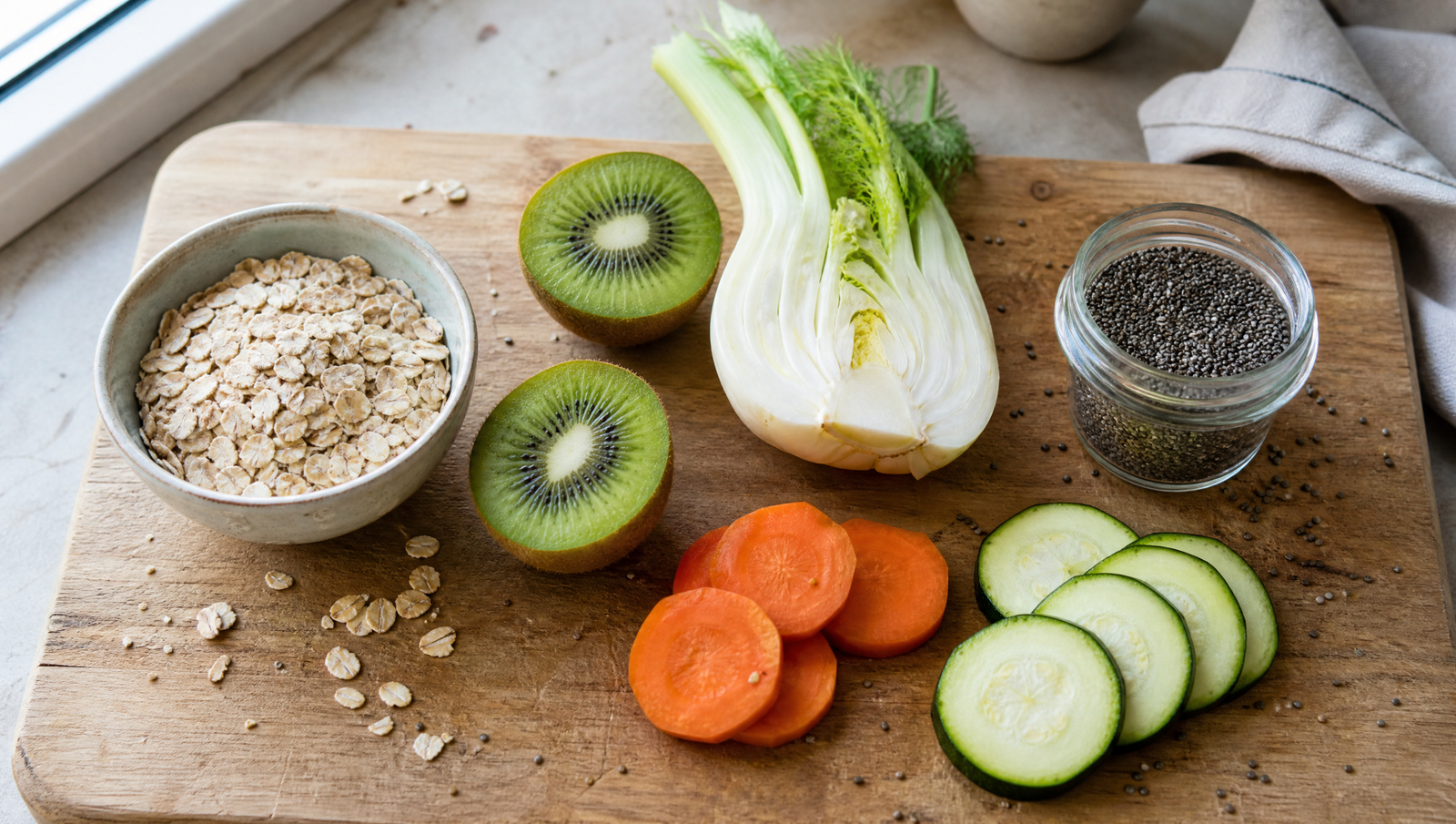
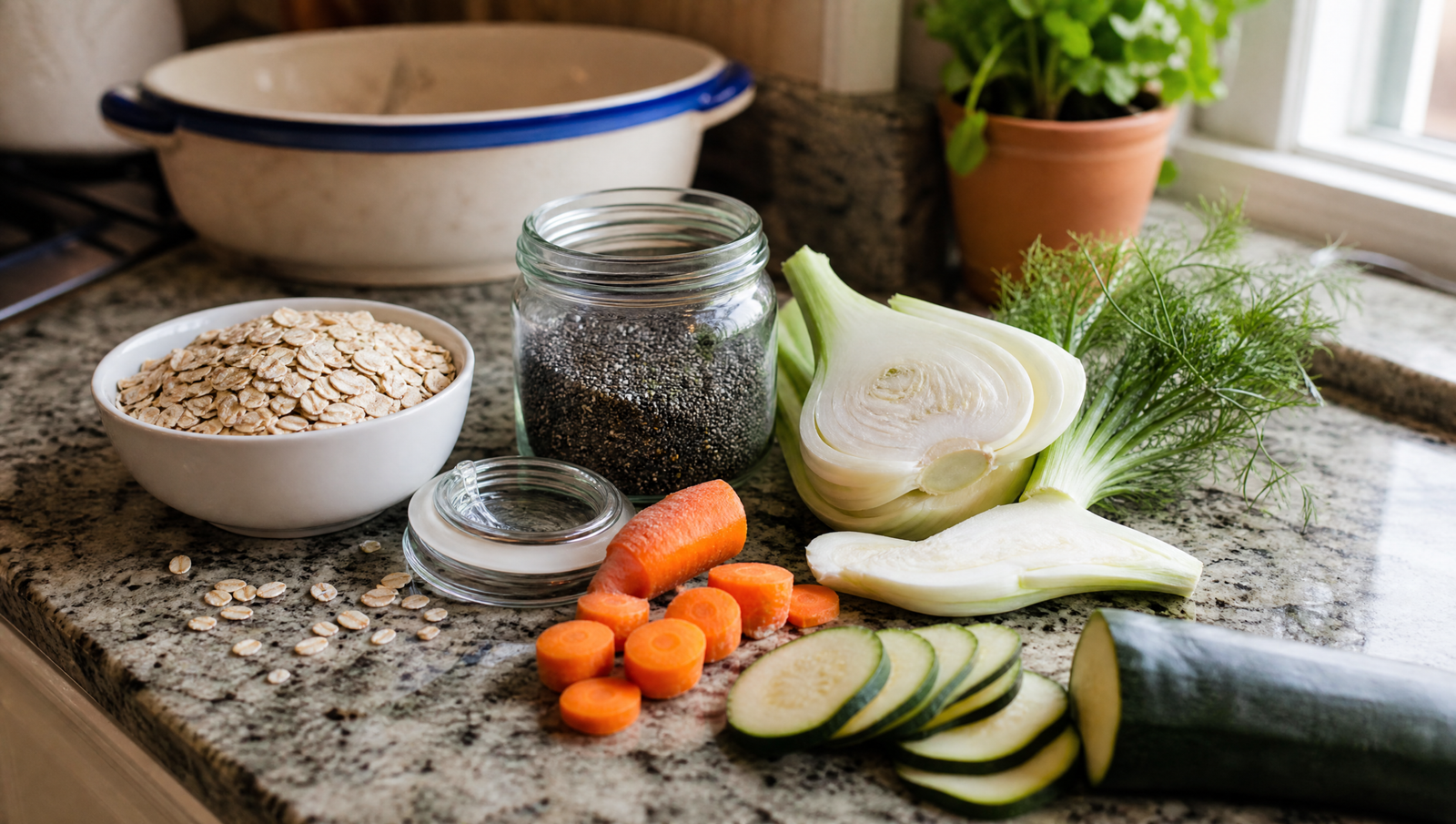
The foods below are different. Some are truly fiber-dense, such as chia seeds, oats, and psyllium husk. Others, such as cooked carrots and zucchini, are not extremely high in fiber per bite, but they help you increase plant fiber gently without adding a heavy fermentation load.
| Food | Main Fiber Advantage | Why It May Cause Less Bloat | Best Starting Portion |
|---|---|---|---|
| Oats | Beta-glucan | Slow-fermenting soluble fiber | 1/2 cup cooked |
| Cooked carrots | Pectin | Gentle, low-FODMAP vegetable fiber | 1 medium carrot |
| Zucchini | Low-fermentation plant bulk | Very gentle at normal portions | 1/2–1 cup cooked |
| Chia seeds | Gel-forming soluble fiber | Better tolerated when soaked | 1 tbsp soaked |
| Fennel | Gentle vegetable fiber | May support digestive comfort | 1/2 cup cooked |
| Psyllium husk | Viscous soluble fiber | Minimally fermented compared with many fibers | 1 tsp with water |
| Kiwifruit | Pectin plus actinidin | Supports stool frequency and protein digestion | 1 kiwi |
Why Fiber Can Cause Bloating
Fiber-related bloating usually comes from three overlapping mechanisms: fermentation, water shifts, and a sudden increase in stool bulk.
Fermentation is the main reason some fibers produce more gas than others. When certain fibers reach the large intestine undigested, gut bacteria break them down. That process can create beneficial short-chain fatty acids, but it also produces gas. The faster a fiber ferments, and the more of it arrives at once, the more bloating some people feel.
The Role of FODMAPs
Many nutritious high-fiber foods are also high in FODMAPs — fermentable short-chain carbohydrates that pull water into the intestine and ferment quickly. For people with IBS or sensitive digestion, foods such as onions, garlic, apples, wheat products, and large servings of legumes can trigger bloating even though they are healthy foods.
Gut health and digestive function are also closely connected to how well the liver processes nutrients — a link explored in more depth in this overview of the gut-liver axis and metabolic health.
The goal is not to fear fiber. The goal is to match the fiber source to your current tolerance, then increase gradually as your gut adapts.
When to get checked: New, persistent, painful, or worsening bloating should be discussed with a healthcare provider, especially if it comes with unexplained weight loss, vomiting, blood in stool, anemia, fever, or a major change in bowel habits.
7 High-Fiber Foods Less Likely to Cause Bloating
1. Oats
Oats are one of the best starting points for people who want more fiber but less digestive drama. Dry rolled oats contain roughly 10 grams of fiber per 100 grams, including beta-glucan, a soluble fiber known for forming a thick gel in the gut.
That gel slows digestion, supports steadier post-meal blood sugar, and feeds gut bacteria more gradually than fast-fermenting fibers such as inulin. This slower pattern is one reason many people tolerate oats better than wheat bran or large servings of legumes.[1]
Best way to start: Try 1/2 cup cooked rolled oats. Overnight oats may be even easier for some people because soaking softens the texture and improves digestibility.
2. Cooked Carrots
Cooked carrots are not the highest-fiber food on this list, but they are one of the gentlest ways to increase vegetable fiber. A medium carrot provides about 2 grams of fiber, including pectin, a soluble fiber that tends to ferment more slowly.
Cooking matters. Heat softens plant cell walls, making carrots easier to chew and digest. For people who bloat from raw salads, cooked carrots can be a practical bridge back toward higher plant intake.
Best way to start: Steam or roast one medium carrot and pair it with protein and a small amount of fat, such as olive oil, to make the meal more satisfying.
3. Zucchini
Zucchini is not a fiber powerhouse. Its value is tolerability. It lets sensitive digestive systems add more plant bulk without adding a large fermentation load.
That makes zucchini useful for people who feel worse after jumping straight to beans, lentils, raw cruciferous vegetables, or fiber-enriched products. Cooked zucchini is soft, low in fermentable carbohydrates at normal portions, and easy to pair with meals.
Best way to start: Use 1/2 to 1 cup cooked zucchini as a side dish or add it to eggs, soups, or grain bowls.
4. Chia Seeds
Chia seeds are fiber-dense, with much of that fiber forming a gel when soaked. This gel-forming quality is the reason chia can be useful for stool regularity, but it is also why preparation matters.
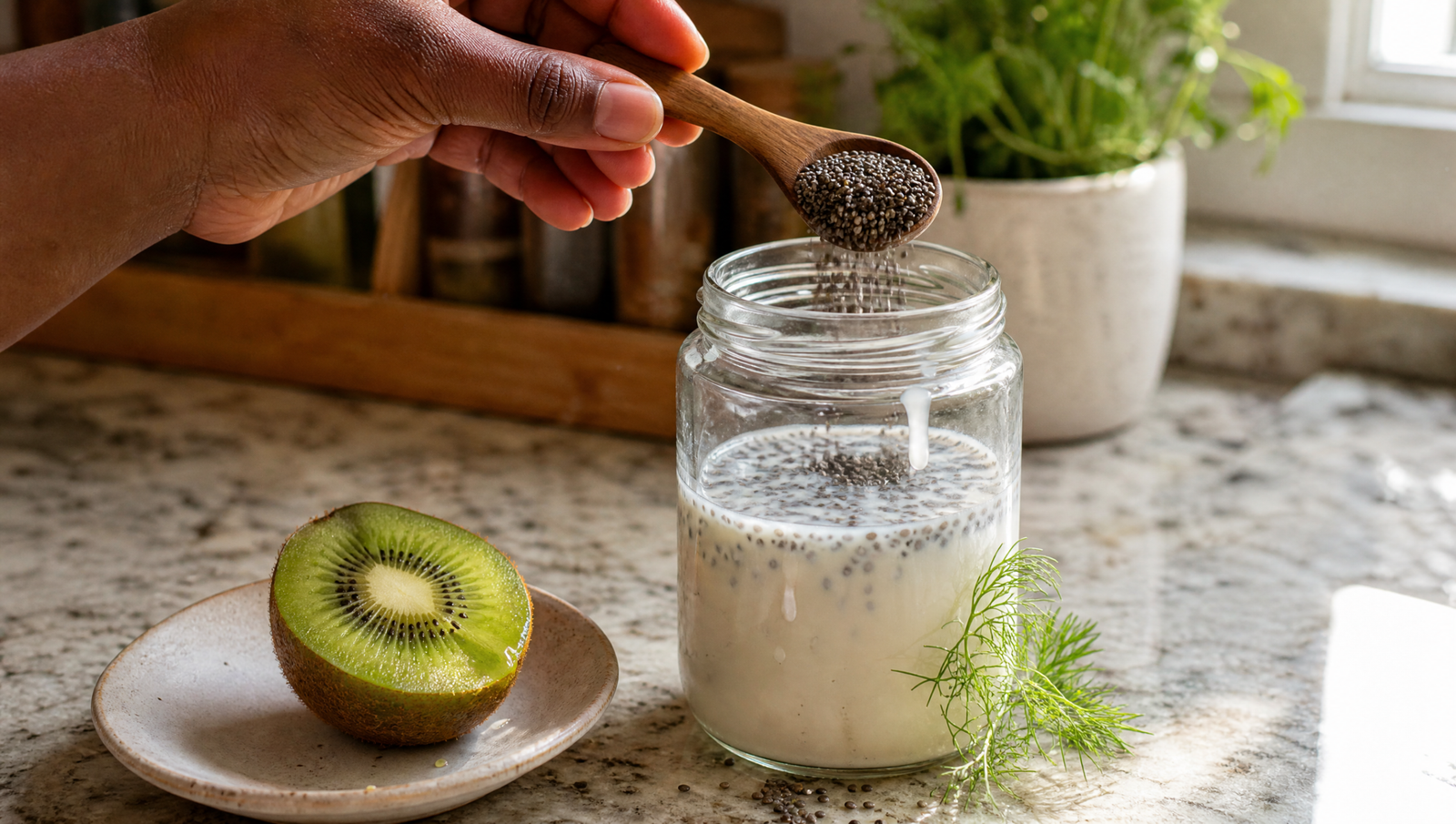
Dry chia seeds absorb a lot of water. If you eat too much dry chia too quickly, they can worsen constipation or create stomach discomfort. Soaked chia is usually gentler because the gel forms before it reaches your digestive tract.
Best way to start: Soak 1 tablespoon chia seeds in yogurt, kefir, almond milk, or water for at least 20 minutes. Increase only if tolerated.
Because chia is very fiber-dense, more is not always better. For sensitive digestion, a small soaked portion is usually more useful than a large serving added suddenly.
5. Fennel
Fennel is helpful because it combines gentle vegetable fiber with a long history of use for digestive comfort. Its aromatic compounds, including anethole, have been studied for possible antispasmodic effects, meaning they may help relax smooth muscle in the digestive tract.[2]
That does not make fennel a treatment for ongoing bloating, IBS, or digestive disease. But as a food, it can be a useful option for people who want fiber-rich vegetables that feel lighter than beans, cabbage, or raw onion-heavy meals.
Best way to start: Try 1/2 cup cooked fennel with dinner, or slice it thinly and roast it until soft and slightly sweet.
6. Psyllium Husk
Psyllium husk is one of the most useful fiber options for people who have been burned by fiber supplements before. Unlike inulin, fructo-oligosaccharides, or some bran fibers, psyllium is viscous and only minimally fermented. Its main action is mechanical: it holds water, improves stool form, and supports more regular transit.[3]
For many people, psyllium husk is one of the best fiber options for bloating because it is water-holding, gel-forming, and less gas-producing than many prebiotic fibers.
This makes psyllium especially valuable for people who want better regularity but do not tolerate highly fermentable fibers well. It has also been linked to improvements in LDL cholesterol and post-meal glucose response — making it relevant for anyone working on broader blood sugar management through diet.[4]
Best way to start: Mix 1 teaspoon into a full glass of water and drink it promptly. Follow with more fluid. Do not take psyllium dry.
Medication note: If you take prescription medication, ask your healthcare provider or pharmacist whether psyllium should be taken separately, since fiber supplements can affect absorption when taken at the same time.
7. Kiwifruit
Kiwifruit is a smart option because it provides fiber, fluid, and actinidin, a natural enzyme that helps break down protein. This may reduce the amount of poorly digested material reaching the large intestine, where fermentation can contribute to gas.
Clinical research has also found that regular green kiwifruit intake can improve bowel movement frequency and gastrointestinal comfort in adults with constipation-related symptoms.[5]
Best way to start: Try one green kiwi per day. If tolerated, some people do well with two per day, but there is no need to rush the dose.
How to Add Fiber Without Triggering Discomfort
The most common mistake is treating fiber like a switch instead of a progression. Your gut microbiome adapts to fiber, but it needs time. A sudden jump from low fiber to several high-fiber meals per day can cause bloating even if the foods are healthy.
Use this simple starter plan:
- Days 1–3: Add 1/2 cup cooked oats or one cooked carrot.
- Days 4–7: Keep the first food and add 1/2 cup cooked zucchini or fennel.
- Week 2: Add either 1 tablespoon soaked chia seeds or 1 teaspoon psyllium with water.
- Week 3: Add one kiwi per day if your digestion feels stable.
If symptoms increase, do not abandon fiber entirely. Step back to the last amount you tolerated, stay there for several days, and increase more slowly.
Hydration is non-negotiable. Soluble fibers such as oats, chia, and psyllium need water to form their gel structure. Too little fluid can slow transit and make bloating or constipation worse.
Common Mistakes When Adding Fiber
Adding too much too fast is the biggest problem. Increase fiber by small amounts, ideally no more than about 5 grams per week if you are sensitive.
Stacking multiple high-fermentation foods can also backfire. Beans, onions, wheat bran, apples, and inulin-fortified bars may be healthy, but combining several in one meal can overwhelm a sensitive gut.
Choosing fiber supplements with inulin or chicory root is another common issue. These ingredients are often marketed as prebiotic, but they can be highly gas-producing for people prone to bloating.
Ignoring meal context matters too. Fiber is often better tolerated when eaten as part of a balanced meal with protein, fat, and cooked foods instead of as a large isolated dose. If blood sugar stability is also a goal, combine these gentle fiber sources with whole-food meals rather than relying only on supplements.
Frequently Asked Questions
What are the best high-fiber foods that don’t cause bloating?
No high-fiber food is guaranteed to cause zero bloating for everyone, but some are less likely to trigger gas when introduced gradually. Oats, psyllium husk, soaked chia seeds, cooked carrots, zucchini, fennel, and kiwifruit are good starting options because they are either slow-fermenting, low in FODMAPs at normal servings, gel-forming, or gentle on sensitive digestion.
What fiber is least likely to cause bloating?
Psyllium husk is one of the fibers least likely to cause bloating for many people because it is viscous, water-holding, and only minimally fermented compared with many prebiotic fibers. Oats, soaked chia seeds, and low-FODMAP vegetables such as cooked carrots and zucchini may also be well tolerated when added slowly.
Are oats good for bloating?
Oats are often well tolerated because they contain beta-glucan, a soluble fiber that forms a gel and ferments more gradually than some other fibers. Start with 1/2 cup cooked oats. If you are sensitive to larger servings or certain oat products, reduce the portion and increase slowly.
Is psyllium husk low bloat?
Psyllium husk is one of the better-tolerated fiber supplements for many people because it is viscous and only minimally fermented. It helps hold water and improve stool form without rapidly producing gas. Start with 1 teaspoon in a full glass of water and increase only if tolerated.
How long does fiber bloating take to improve?
Fiber-related bloating often improves over two to four weeks as the gut adapts, but the timeline varies. If symptoms worsen, reduce the dose, choose lower-fermentation foods, drink more fluid, and increase more gradually. Persistent or painful bloating should be discussed with a healthcare provider.
The Bottom Line
Fiber does not have to mean bloating. The difference is often the type of fiber, the portion size, and the speed of introduction.
Oats, cooked carrots, zucchini, soaked chia seeds, fennel, psyllium husk, and kiwifruit each offer a gentler path toward higher fiber intake. Some are fiber-dense. Others are simply easier on sensitive digestion. Together, they help you build consistency without forcing your gut to handle a sudden fermentation overload.
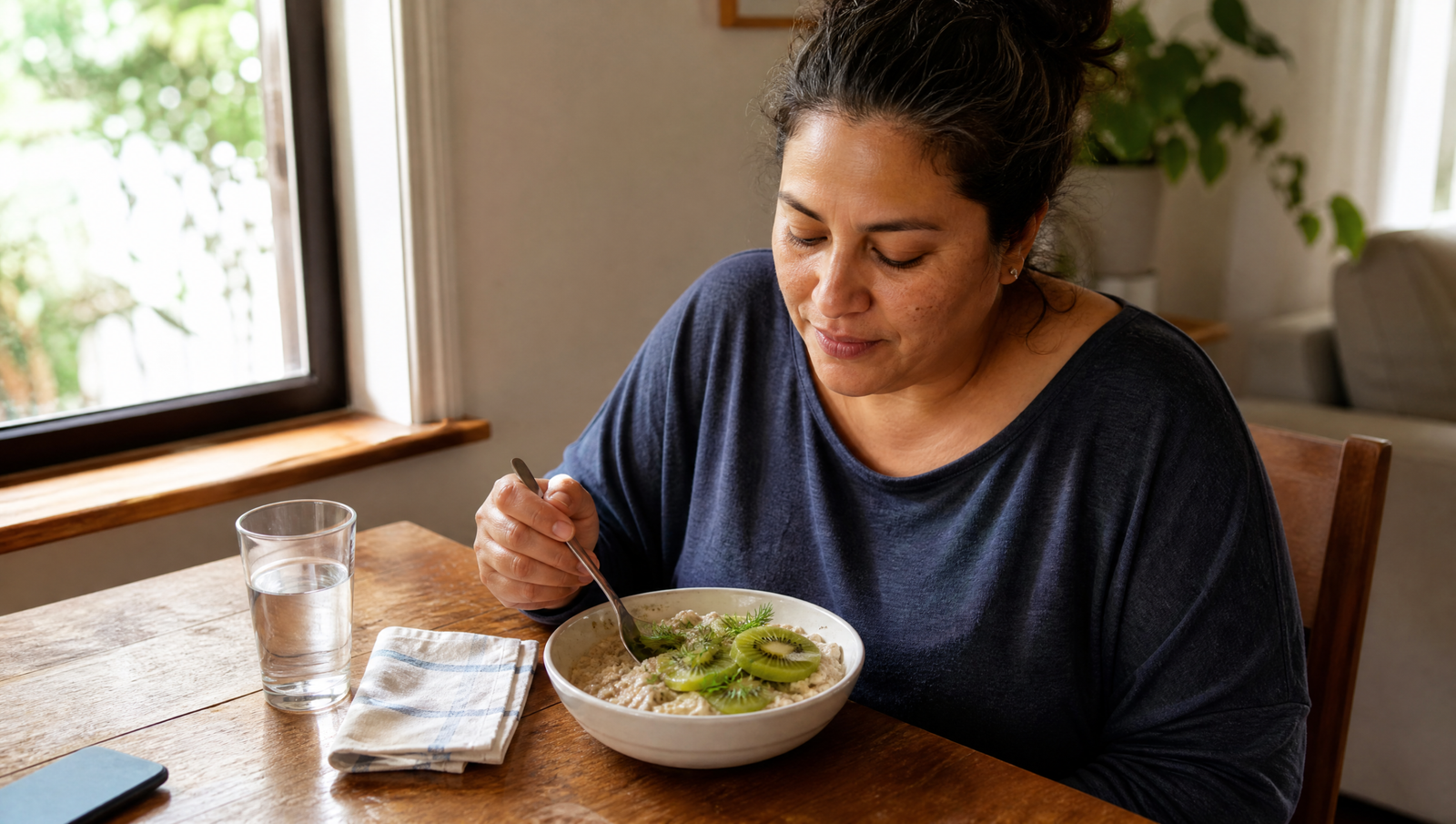
Start small, hydrate well, and give your digestive system time to adapt. For many people, that slower approach is the difference between giving up on fiber and finally making it feel sustainable.
Medical Disclaimer: The information provided in this article is for educational purposes only and does not constitute medical advice. Always consult a qualified healthcare provider before making changes to your diet, lifestyle, supplement routine, or treatment plan. TheMetabolicHub.com does not replace professional medical guidance.
References
- Tosh SM. Review of human studies investigating the post-prandial blood-glucose lowering ability of oat and barley food products. European Journal of Clinical Nutrition. 2013;67(4):310–317. PMID: 23422921
- Rahimi R, Ardekani MR. Medicinal properties of Foeniculum vulgare Mill. in traditional Iranian medicine and modern phytotherapy. Chinese Journal of Integrative Medicine. 2013;19(1):73–79. PMID: 23065526
- Quadram Institute. How eating plant fibre affects your gut. Available at: quadram.ac.uk
- Anderson JW, et al. Cholesterol-lowering effects of psyllium intake adjunctive to diet therapy in men and women with hypercholesterolemia. American Journal of Clinical Nutrition. 2000;71(2):472–479. PMID: 10648260
- Gearry RB, et al. Consumption of two green kiwifruits daily improves constipation and abdominal comfort. American Journal of Gastroenterology. 2023. PMID: 36537785
- Monash University FODMAP Diet. Low FODMAP shopping list and serving guidance. Available at: monashfodmap.com
- Harvard T.H. Chan School of Public Health. Fiber. The Nutrition Source. Available at: hsph.harvard.edu