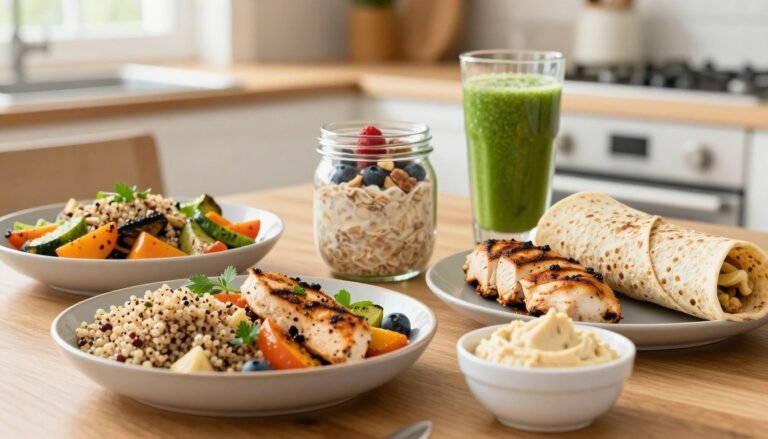
The Anti-Inflammatory Diet: A Practical Guide for Metabolic Health
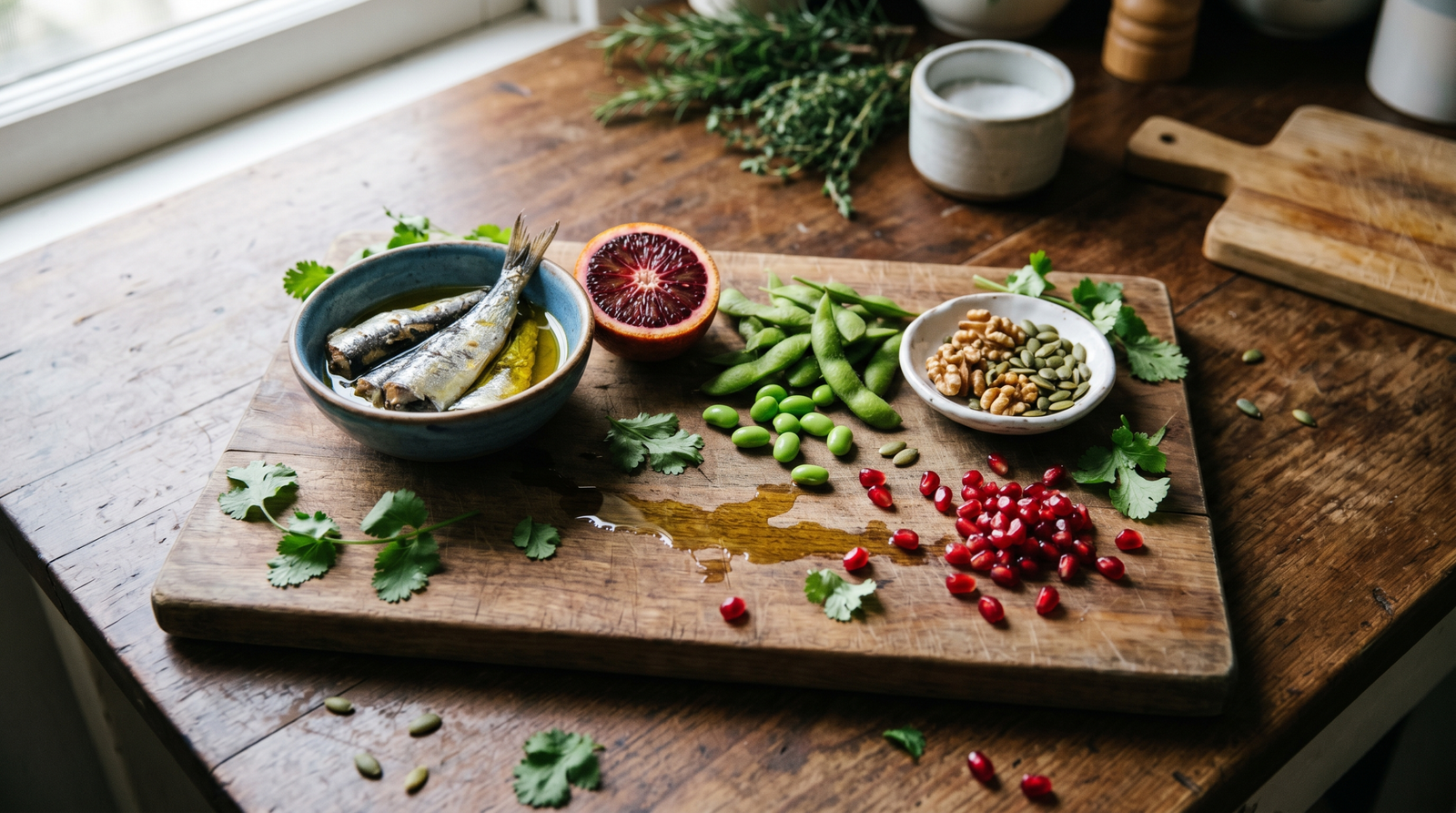
You eat reasonably well. You move your body at least some of the time. But the fatigue is still there — stubborn weight around the middle, energy that collapses after meals, cravings that arrive out of nowhere, and a kind of low-level brain fog that is hard to explain to a doctor.
For many adults in this situation, chronic low-grade inflammation is a major piece of the puzzle. It does not show up on a standard blood panel. It does not cause sharp pain. It quietly disrupts the systems that regulate blood sugar, fat storage, and energy — often for years before the connection becomes visible.
The encouraging news: an anti-inflammatory diet is one of the most direct, evidence-supported tools for shifting this pattern. This guide covers the mechanisms in plain language, what the research actually shows, practical strategies for getting started, and the most common mistakes that undermine results.
In This Article
- What an Anti-Inflammatory Diet Actually Does
- How Chronic Inflammation Disrupts Metabolism
- Core Principles
- Anti-Inflammatory Foods: What to Eat
- The Anti-Inflammatory Plate Formula
- What to Reduce
- Simple Swaps That Make a Difference
- Where to Start: Practical First Steps
- A Day of Anti-Inflammatory Eating
- Common Mistakes
- What the Research Shows
- Frequently Asked Questions
What an Anti-Inflammatory Diet Actually Does for Metabolic Health
An anti-inflammatory diet is not a branded protocol or a rigid elimination plan. It is a dietary pattern built around foods that demonstrably reduce inflammatory markers — proteins in the blood like C-reactive protein (CRP), interleukin-6 (IL-6), and TNF-α — while supporting insulin sensitivity and gut barrier integrity.
Research suggests that postprandial blood sugar and triglyceride levels may begin to shift within a few weeks of consistent dietary change. Chronic inflammatory markers like CRP and fasting insulin often require several weeks to months to show measurable reductions. Individual timelines vary based on baseline inflammation, sleep quality, stress, and overall dietary adherence.
An anti-inflammatory diet is not a cure for metabolic disease. What the evidence consistently supports is a foundational role: it is one of the highest-leverage dietary changes available for improving metabolic biomarkers, particularly before pharmacological intervention becomes necessary.
Quick Wins: Start Here
- Replace refined cooking oils with extra-virgin olive oil as your primary fat
- Add one serving of fatty fish (salmon, sardines, mackerel) twice per week
- Include a handful of mixed berries daily — at breakfast or as a snack
- Build each meal around a protein source, a fiber-rich vegetable, and a healthy fat
- Reduce ultra-processed food intake first — this single pattern shift tends to move the needle more than adding any one “superfood”
How Chronic Inflammation Disrupts Metabolism
Inflammation is the immune system’s response to damage or threat. In the short term, it is a survival mechanism — it heals injuries, fights infections, and clears cellular debris. The problem begins when that response never fully switches off.
Chronic low-grade inflammation is different from the redness and swelling around a sprained ankle. It operates at a systemic level, often without obvious symptoms, through persistently elevated signaling proteins called cytokines.
Two of the most studied are TNF-α (tumor necrosis factor-alpha) and IL-6 (interleukin-6). In a healthy acute event, these proteins spike and return to baseline. In chronic low-grade inflammation, they remain elevated — and this matters for metabolic health because they directly interfere with how cells respond to insulin.
TNF-α activates a cellular process that effectively jams insulin receptor signaling at a key junction point (IRS-1), making it harder for glucose to enter cells. The result: the pancreas compensates by secreting more and more insulin just to maintain blood sugar control — the hallmark of insulin resistance.
Over time, this cycle promotes visceral fat accumulation, dysregulated blood lipids, and elevated blood pressure — the cluster of risk factors known as metabolic syndrome and inflammation.
How Visceral Fat Amplifies the Cycle
Visceral fat — stored around internal organs rather than beneath the skin — is not metabolically inert. It actively secretes adipokines, including leptin and resistin, that promote further inflammatory signaling.
This creates a reinforcing loop: inflammation encourages visceral fat storage, and visceral fat amplifies inflammation. Breaking this cycle is one of the central goals of a consistently anti-inflammatory dietary pattern.
It is also worth noting that body weight alone is a poor proxy for metabolic risk. Two people with the same BMI can have very different visceral fat distributions — and very different inflammatory profiles. Many people managing this process are not significantly overweight. This is not a personal failure; it reflects the complexity of how metabolism and immune function interact.
Core Principles of an Anti-Inflammatory Diet for Metabolic Health
No single dietary protocol has a monopoly on anti-inflammatory effects. The Mediterranean diet, the DASH diet, and whole-food plant-based approaches all demonstrably reduce inflammatory biomarkers in clinical research — and they share a consistent set of features.
The common ground comes down to four principles:
- Whole, minimally processed foods first. Processing strips fiber, phytonutrients, and micronutrients while introducing refined starches, added sugars, and additives that can disrupt gut microbiome balance and amplify inflammatory load.
- Plant diversity over plant volume. Different plant foods contain different polyphenols, flavonoids, and carotenoids — each with distinct mechanisms of action. A narrow diet means narrow phytonutrient exposure, regardless of how much of it you eat.
- Improving the omega-3 to omega-6 balance. The typical Western dietary pattern delivers a substantially higher ratio of omega-6 to omega-3 fatty acids than ancestral diets, largely because ultra-processed foods dominate caloric intake. The priority is increasing omega-3-rich foods (fatty fish, walnuts, flaxseeds) rather than eliminating specific oils.
- Gut microbiome support. A large proportion of immune activity is concentrated around the gut barrier and the lymphoid tissue lining the digestive tract. A microbiome disrupted by low fiber intake, high sugar, and heavily processed foods can compromise gut barrier integrity, allowing bacterial byproducts like lipopolysaccharide (LPS) into the bloodstream — a process called metabolic endotoxemia that drives systemic inflammation. Research on gut bacteria and metabolic syndrome explores this connection in more depth.
Anti-Inflammatory Foods: What to Eat
Fatty Fish and Omega-3 Sources
Fatty fish — salmon, sardines, mackerel, herring, anchovies — are among the most evidence-backed anti-inflammatory foods available. They are rich in EPA (eicosapentaenoic acid) and DHA (docosahexaenoic acid), long-chain omega-3 fatty acids.
EPA and DHA are direct precursors to a class of compounds called specialized pro-resolving mediators (SPMs): lipoxins, resolvins, and protectins that actively help resolve inflammation rather than simply preventing it. Research in this area, including reviews by Calder and colleagues, supports EPA and DHA as having meaningful effects on CRP, IL-6, and TNF-α in human trials.[7]
Aim for two to three servings of fatty fish per week. For those who do not eat fish, algae-based DHA/EPA supplements provide the same long-chain omega-3s at the source level — since fish accumulate them from algae anyway.
Extra-Virgin Olive Oil
Extra-virgin olive oil (EVOO) contains a phenolic compound called oleocanthal, which inhibits both COX-1 and COX-2 enzymes — the same enzymes targeted by ibuprofen and other NSAIDs. A 2005 paper in Nature by Beauchamp and colleagues estimated that a roughly 50 ml daily dose of EVOO carries a COX-inhibitory potency in a similar biochemical range to about 10% of an adult ibuprofen dose.[1]
This does not mean olive oil works like a painkiller or should replace medication. The relevance here is chronic, low-level modulation of the same inflammatory pathway — at the dietary pattern level, not as acute pain treatment. EVOO is also rich in oleic acid, a monounsaturated fat associated with improved lipid profiles and reduced LDL oxidation.
Use it as a primary cooking fat for low-to-medium heat and as a finishing oil on salads and vegetables.
Berries and Deeply Colored Fruits
Blueberries, strawberries, raspberries, cherries, and pomegranate are dense in anthocyanins — plant pigments that inhibit NF-κB, a master switch in immune cells that controls the expression of dozens of pro-inflammatory genes.
Regular berry consumption is associated with reduced CRP, improved endothelial function, and more favorable postprandial blood glucose responses. Berries are also relatively low in sugar and high in soluble fiber, making them metabolically well-suited compared to most other fruits.
Cruciferous Vegetables and Leafy Greens
Broccoli, cauliflower, Brussels sprouts, and kale contain sulforaphane — a compound that activates the Nrf2 pathway, a cellular defense system that upregulates antioxidant enzymes and suppresses inflammatory gene expression.
Spinach, arugula, Swiss chard, and other leafy greens are rich in magnesium, a mineral that acts as a co-factor in hundreds of enzymatic reactions including those governing insulin sensitivity. A significant proportion of adults in Western populations fall below recommended magnesium intakes.
Legumes, Nuts, and Seeds
Legumes — lentils, chickpeas, black beans, cannellini — provide resistant starch and soluble fiber that selectively feed beneficial gut bacteria associated with reduced intestinal permeability and lower systemic inflammatory tone.
Walnuts provide ALA (alpha-linolenic acid, a plant-based omega-3) alongside ellagitannins with anti-inflammatory activity. Flaxseeds and chia seeds contribute ALA, lignans, and soluble fiber. A small daily handful of mixed nuts has been associated with reduced cardiovascular and inflammatory risk in prospective cohort data.
The Anti-Inflammatory Plate Formula
Rather than tracking specific foods, a simpler framework covers most of the evidence-based principles at once:
The Anti-Inflammatory Plate
| Plate Section | What to Fill It With | Why It Matters |
|---|---|---|
| ½ plate — Colorful vegetables | Leafy greens, broccoli, peppers, zucchini, beets, red cabbage, sweet potato | Polyphenols, fiber, magnesium, sulforaphane — diverse phytonutrient exposure |
| ¼ plate — Quality protein | Fatty fish, eggs, Greek yogurt, legumes, tofu, tempeh, poultry | Slows gastric emptying, stabilizes postprandial glucose, supports satiety signaling |
| ¼ plate — Fiber-rich carbs | Lentils, quinoa, oats, sweet potato, whole grain, black rice | Resistant starch and soluble fiber feed microbiome, reduce glycemic load |
| Add — Anti-inflammatory fat | Extra-virgin olive oil, avocado, walnuts, flaxseed, chia | Oleocanthal, ALA, monounsaturated fats — directly modulate inflammatory pathways |
| Add — Herbs and spices | Turmeric, ginger, cinnamon, garlic, rosemary, thyme | Concentrated polyphenols and bioactive compounds at low caloric cost |
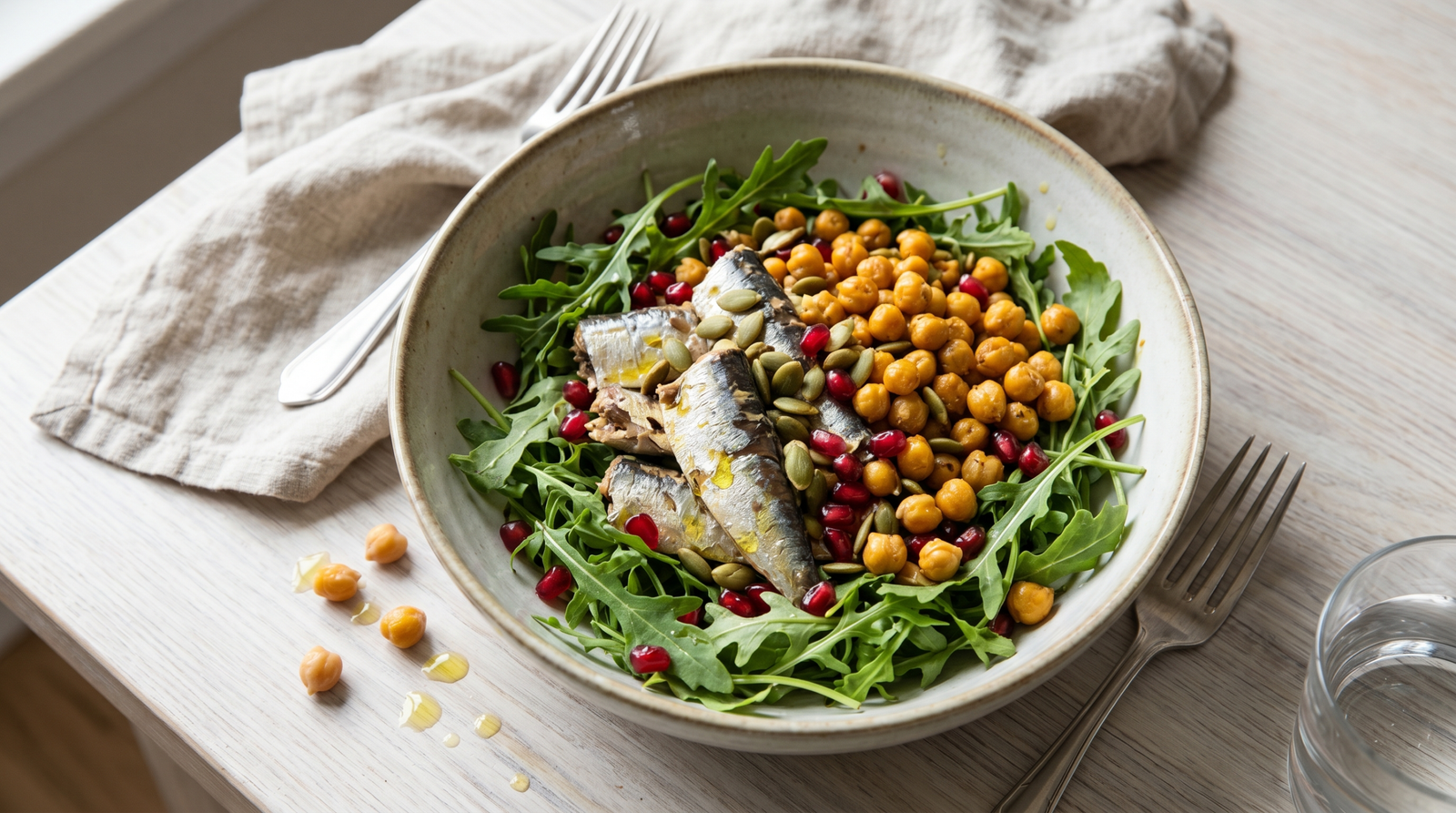
What to Reduce: Foods That Drive Inflammation
Understanding what to limit is as important as knowing what to add. The following dietary patterns — not individual foods — carry the strongest evidence linking them to elevated inflammatory markers and impaired metabolic function.
Ultra-processed foods represent the most significant driver of dietary inflammation in Western populations. They are typically engineered from refined carbohydrates, added sugars, and industrial fats, while removing fiber and phytonutrients. A landmark randomized controlled trial by Hall et al. (2019) found that participants assigned to an ultra-processed diet consumed an average of 508 extra calories per day compared to those on an unprocessed diet — without reporting greater hunger.[2]
Refined carbohydrates and added sugars promote rapid glycemic spikes and the formation of advanced glycation end products (AGEs) — compounds formed when sugars bond to proteins or fats at high temperatures or persistently elevated blood glucose. AGEs accumulate in tissues over time and activate inflammatory receptor pathways.
Dietary patterns high in omega-6 and low in omega-3 are associated with a pro-inflammatory fatty acid balance. The issue is not any single ingredient — cooking oils used in moderate amounts at home are generally not the primary driver. The problem is the cumulative pattern across ultra-processed foods, fast food, and packaged snacks where refined vegetable oils are used in large quantities alongside refined flour and sugar. The most practical lever: increase omega-3-rich foods rather than obsessing over eliminating specific oils.
Alcohol at more than moderate intake increases intestinal permeability, raises the translocation of bacterial byproducts like LPS, and elevates CRP. The metabolic cost of chronic alcohol use also includes hepatic inflammation and disrupted glucose regulation.
Simple Swaps That Make a Difference
| Instead of | Try This | Why It Helps |
|---|---|---|
| Vegetable oil or margarine for cooking | Extra-virgin olive oil | Oleocanthal, oleic acid — directly modulates COX inflammatory pathway |
| Flavored yogurt with added sugar | Plain Greek yogurt + fresh or frozen berries | Removes added sugar; adds probiotics + anthocyanins; improves postprandial glucose response |
| White bread or refined crackers | Whole grain, oatcakes, or legume-based options | Higher fiber slows glycemic response, feeds beneficial gut bacteria |
| Chips or packaged snack foods | Handful of walnuts or almonds + piece of whole fruit | ALA omega-3, fiber, polyphenols — replaces ultra-processed fat/starch combination |
| Processed deli meat | Canned sardines, mackerel, or smoked salmon | EPA/DHA direct precursors to pro-resolving mediators; reduces nitrate/preservative load |
| Sweetened beverages or juice | Water, herbal tea, or sparkling water with lemon | Eliminates fructose load and AGE-promoting glycemic spikes without reducing food volume |
Where to Start: Practical First Steps
The research here is more encouraging than most people expect. A complete dietary overhaul is not required to see early movement in inflammatory markers — and attempting a full overhaul at once is one of the most reliable ways to abandon the effort within two weeks.
Start with one replacing change, not a restricting one. Swap the cooking fat you use most often for extra-virgin olive oil. This single shift adjusts the fatty acid profile at every meal without requiring new recipes or planning time.
In the first week, add a daily portion of berries — a handful mixed into yogurt, blended into a smoothie, or alongside breakfast. Before the end of week two, add one serving of fatty fish.
Some people notice early changes within the first couple of weeks: afternoon energy may stabilize, post-meal crashes can become less pronounced, and cravings for refined carbohydrates sometimes reduce as blood sugar patterns begin to even out. These are not dramatic transformations — they are early directional signals that the pattern is shifting.
Over several weeks to a few months of consistent change, fasting insulin may fall measurably, and CRP — a reliable marker of systemic inflammatory load — often shows meaningful reductions in research populations. For a broader look at lifestyle strategies, the guide on how to improve insulin sensitivity naturally covers complementary approaches.
Sleep quality and stress management matter too: cortisol, the primary stress hormone, upregulates the same NF-κB inflammatory pathway that an anti-inflammatory diet works to suppress. Both levers matter, and dietary change alone has a ceiling when sleep is chronically short.
A Day of Anti-Inflammatory Eating
An anti-inflammatory dietary pattern does not require eliminating food groups or counting calories. The goal is pattern-level change — shifting the overall composition toward foods that reduce inflammatory load at every meal.
Breakfast: Full-fat plain Greek yogurt with mixed berries, a tablespoon of ground flaxseed, and a handful of walnuts. Probiotics, anthocyanins, omega-3 ALA, and protein — all working to blunt postprandial glucose rise.
Lunch: Large salad with leafy greens, roasted chickpeas, cucumber, cherry tomatoes, avocado, and sardines, dressed with extra-virgin olive oil and lemon. Many of these ingredients also appear on the evidence-based list of foods that lower blood sugar.
Dinner: Baked salmon with roasted broccoli and sweet potato. EPA/DHA, sulforaphane, and slow-digesting complex carbohydrate — practical and consistent.
Snack: A small handful of almonds, or a piece of whole fruit with nut butter.
The consistent structural feature across all three meals: protein and fiber together. Both slow gastric emptying, blunt glucose spikes, and support satiety hormones — without requiring caloric restriction as the primary mechanism.

Common Mistakes That Undermine Results
Treating “Anti-Inflammatory” as a Label, Not a Pattern
“Anti-inflammatory” has become a marketing term. Packaged snack bars, flavored kombucha, and coconut sugar-sweetened granola often carry the designation while delivering refined carbohydrates, added sugars, and minimal phytonutrients.
Reading ingredient lists matters more than front-of-package claims. If refined flour or added sugar appears in the first three ingredients, the labeling is irrelevant to the goal.
Assuming Supplements Replace Food
This is where the standard advice tends to oversimplify — and it matters more than most supplement guides acknowledge.
Supplements deliver isolated compounds. Whole foods deliver phytonutrient matrices — combinations that work synergistically in ways that isolated extraction does not replicate. A walnut is not just ALA and ellagitannins; it is a specific ratio of those compounds alongside fiber, vitamin E, and dozens of minor polyphenols that modify each other’s absorption and biological activity.
Research on isolated curcumin, for example, shows highly variable bioavailability and inconsistent clinical effects. Turmeric consumed as part of a mixed meal — alongside fat and piperine from black pepper — produces a different bioavailability and activity profile entirely. Supplements can be useful adjuncts in documented deficiency or limited food access. They do not replicate the metabolic effect of a consistently anti-inflammatory dietary pattern.
Ignoring Cooking Methods
Grilling and frying at very high temperatures generates heterocyclic amines and promotes AGE formation — partially negating the anti-inflammatory benefit of otherwise high-quality ingredients.
Lower-temperature cooking methods — steaming, poaching, baking, slow-cooking — preserve phytonutrients and reduce AGE formation. A baked salmon filet and a heavily charred one are not the same food from an inflammatory standpoint.
Overlooking Sleep and Stress
Dietary changes alone will not normalize inflammatory markers if sleep is chronically short or psychological stress is unmanaged. Both are direct upstream drivers of the same inflammatory pathways that dietary change addresses. An anti-inflammatory diet works best as part of a broader lifestyle pattern, not in isolation.
What the Research Actually Shows
Key Evidence Snapshot
- A meta-analysis in BMJ Open found Mediterranean diet adherence associated with approximately 19% lower risk of type 2 diabetes across studies[4]
- The PREDIMED trial (7,000+ participants): Mediterranean diet reduced major cardiovascular events by approximately 30% compared to a low-fat control[3]
- The Dietary Inflammatory Index (DII) — a validated scoring tool — consistently associates pro-inflammatory dietary patterns with elevated fasting insulin, higher HbA1c, increased visceral adiposity, and greater metabolic syndrome risk[5][6]
- Research on EPA and DHA suggests meaningful reductions in CRP, IL-6, and TNF-α with consistent intake over weeks to months[7]
The evidence base for anti-inflammatory dietary patterns and metabolic outcomes holds across different populations, study designs, and geographic contexts. It is not limited to one diet or one mechanism.
The Dietary Inflammatory Index, developed at the University of South Carolina, assigns inflammation scores to dietary components based on their effects on six inflammatory biomarkers. Consistently, higher pro-inflammatory DII scores predict worse metabolic outcomes across populations — including higher fasting insulin, elevated HbA1c, and greater risk of metabolic syndrome.[6]
An anti-inflammatory diet is not a cure. What the data supports is a foundational role — one of the highest-leverage dietary interventions for improving metabolic biomarkers in the absence of pharmacological treatment.
Many people spend years managing symptoms without ever addressing the underlying inflammatory load. That is not a personal failure — the connection between dietary patterns, chronic inflammation, and metabolic health is simply not a standard part of most clinical conversations. It is, however, one of the better-studied and more modifiable aspects of long-term metabolic risk.
Conclusion
Chronic inflammation does not announce itself. It accumulates quietly — in disrupted insulin signaling, in visceral fat, in energy that never fully recovers. An anti-inflammatory diet addresses these mechanisms directly, not through restriction, but through consistent pattern-level change.
The foundation is practical: fatty fish, extra-virgin olive oil, diverse plant foods, legumes, and minimally processed whole foods. Research consistently links this pattern to reduced inflammatory markers, improved insulin sensitivity, and lower long-term metabolic risk.
You do not need to do this perfectly for it to work. You need to do it consistently. Small, compounding dietary shifts over weeks and months — that is what the evidence supports. Start with one swap, build from there, and give the pattern the time it needs to take effect.
Frequently Asked Questions
What is an anti-inflammatory diet and how does it support metabolic health?
An anti-inflammatory diet is a dietary pattern built around foods that reduce chronic inflammatory markers — including CRP, IL-6, and TNF-α — while supporting insulin sensitivity and gut barrier function. It emphasizes fatty fish, extra-virgin olive oil, diverse plant foods, legumes, and minimally processed whole foods. Research links consistent adherence to this pattern with improved fasting insulin, reduced visceral fat accumulation, and lower risk of metabolic syndrome and type 2 diabetes. Results are most consistent when dietary change is sustained over several weeks to months and supported by adequate sleep and stress management.
How quickly can an anti-inflammatory diet improve metabolic markers?
Some markers — particularly postprandial glucose and triglycerides — may begin to shift within a few weeks of consistent dietary change in some people. Chronic inflammatory markers like CRP and fasting insulin typically require several weeks to a few months to show measurable reductions. The timeline depends on baseline inflammatory load, overall adherence, sleep quality, and whether stress is also being managed. Early signals some people notice include more stable energy in the afternoon and reduced post-meal crashes.
Is the anti-inflammatory diet the same as the Mediterranean diet?
They overlap significantly. The Mediterranean diet is the most extensively researched dietary pattern with documented anti-inflammatory effects, sharing most core features of an anti-inflammatory approach — emphasis on extra-virgin olive oil, fatty fish, legumes, vegetables, and whole grains. The anti-inflammatory diet is a broader category defined by its effects on inflammatory biomarkers; Mediterranean is a specific, geographically rooted pattern within that category. Either framework produces similar metabolic outcomes when followed consistently.
Are there foods that are both anti-inflammatory and problematic for blood sugar?
Some dried fruits and higher-sugar tropical fruits contain anti-inflammatory polyphenols but also carry significant glycemic load when eaten alone. Context shapes metabolic impact: a date eaten alongside nuts and fiber produces a substantially smaller glucose response than the same date eaten in isolation. The overall dietary matrix — what a food is consumed alongside — matters as much as the individual food. For anyone actively managing blood sugar, pairing higher-glycemic foods with protein and fat is a practical, evidence-supported strategy.
Do I need strict adherence for an anti-inflammatory diet to work?
No. The evidence consistently points to dietary patterns over time, not perfect individual food choices. Research suggests that even modest improvements in overall diet quality are associated with meaningful reductions in inflammatory biomarkers. Strict short-term adherence followed by reversion to prior habits produces less sustained benefit than moderate, consistent change maintained over months. Sustainability matters more than perfection — building in flexibility from the start tends to produce better long-term outcomes than a rigid all-or-nothing approach.
Medical Disclaimer: The information provided in this article is for educational purposes only and does not constitute medical advice. Always consult a qualified healthcare provider before making changes to your diet, lifestyle, or treatment plan. TheMetabolicHub.com does not replace professional medical guidance.
References
- Beauchamp GK, Keast RSJ, Morel D, et al. Ibuprofen-like activity in extra-virgin olive oil. Nature. 2005;437(7055):45–46. PMID: 16136122
- Hall KD, Ayuketah A, Brychta R, et al. Ultra-processed diets cause excess calorie intake and weight gain: an inpatient randomized controlled trial of ad libitum food intake. Cell Metabolism. 2019;30(1):67–77.e3. PMID: 31105044
- Estruch R, Ros E, Salas-Salvadó J, et al. Primary prevention of cardiovascular disease with a Mediterranean diet supplemented with extra-virgin olive oil or nuts (PREDIMED). N Engl J Med. 2018;378(25):e34. PMID: 29897866
- Esposito K, Maiorino MI, Bellastella G, et al. A journey into a Mediterranean diet and type 2 diabetes: a systematic review with meta-analyses. BMJ Open. 2015;5(8):e008222. PMID: 26260349
- Shivappa N, Steck SE, Hurley TG, et al. Designing and developing a literature-derived, population-based dietary inflammatory index. Public Health Nutrition. 2014;17(8):1689–1696. PMID: 24244369
- Ramallal R, Toledo E, Martínez-González MÁ, et al. Dietary inflammatory index and incidence of cardiovascular disease and metabolic syndrome: The SUN cohort. J Acad Nutr Diet. 2017;117(3):434–443. PMID: 28155895
- Calder PC. Omega-3 fatty acids and inflammatory processes: from molecules to man. Biochemical Society Transactions. 2017;45(5):1105–1115. PMID: 28802598
- American Diabetes Association. Standards of Medical Care in Diabetes — 2024. Diabetes Care. 2024;47(Suppl 1). Available at: diabetesjournals.org/care
- Harvard T.H. Chan School of Public Health. The Nutrition Source: Healthy Eating Plate. Available at: hsph.harvard.edu/nutritionsource
- Mayo Clinic. Nutrition and healthy eating: Anti-inflammatory diet. Available at: mayoclinic.org