Fermented Foods Benefits: 5 Foods for the Gut-Liver Axis

Feeling bloated after meals, tired in the afternoon, or unsure whether “gut health” advice is actually useful can make nutrition feel more confusing than supportive. This may not be random: the gut and liver communicate constantly through digestion, immune signals, bile acids, and microbial compounds.
The encouraging news: fermented foods benefits can fit into everyday meals without turning your diet into a complicated protocol.
What fermented foods benefits support the gut-liver axis?
Fermented foods may support the gut-liver axis by helping build microbial diversity, contributing fermentation-made compounds, and supporting a healthier intestinal environment. These changes may influence how gut-derived signals, bile acids, and inflammatory compounds travel from the digestive tract to the liver.[1][4]
Fermented foods benefits are strongest when the foods are tolerated, eaten consistently, and paired with fiber-rich plants. A realistic timeline is usually several weeks, not a few days, because the microbiome and digestive tolerance respond gradually.
| Fermented Food | Main Gut-Liver Axis Benefit | Best Starting Portion |
|---|---|---|
| Kefir | Diverse fermented dairy matrix with bacteria and yeasts | ¼ cup |
| Live-culture yogurt | Protein, calcium, and live cultures when labeled accordingly | ⅓–½ cup |
| Kimchi | Fermented vegetables, spices, and plant compounds | 1 tablespoon |
| Raw sauerkraut | Fermented cabbage compounds and tangy meal flavor | 1 tablespoon |
| Tempeh or miso | Fermented soy compounds and plant-forward meal support | 2–3 ounces tempeh or 1 teaspoon miso |
Key takeaways
- Fermented foods are not a treatment for liver disease, but they may support a gut environment linked with metabolic resilience.
- Live-culture options matter when the goal is live microbes, because heating and pasteurization can reduce or remove them.[7]
- Small servings are often better tolerated than large “gut reset” portions.
- Fermented foods work best alongside fiber, protein, regular movement, sleep, and medical follow-up when needed.
Quick Win: Add 1 tablespoon of live-culture sauerkraut or kimchi to one meal this week. Increase slowly only if digestion feels comfortable.
Why does the gut-liver axis matter for metabolic health?
The gut and liver are connected through the portal vein, which carries nutrients and gut-derived compounds directly to the liver. This is one reason digestive health, intestinal barrier function, and microbiome balance can matter for metabolic health.[4]
The liver helps process nutrients, package fats, regulate glucose storage, and handle many compounds absorbed from the digestive tract. When the gut barrier is stressed, more microbial fragments may reach the liver and contribute to inflammatory signaling.[5]
This is not a personal failure. Bloating, cravings, afternoon fatigue, or unpredictable digestion often reflect many overlapping inputs, including meal composition, stress, sleep, medications, hormones, and gut tolerance.
For a deeper look at this digestive-liver connection, see this guide to the gut-liver axis in fatty liver.
Fermented foods benefits: which 5 foods are most useful?
The best fermented foods are the ones you can tolerate, enjoy, and use regularly. Variety matters because different foods bring different microbes, acids, fibers, proteins, and plant compounds.
Fermentation is a traditional process where microorganisms transform food components. Depending on the food and processing method, the final product may contain live microbes, organic acids, peptides, vitamins, or other bioactive compounds.[2][3]
Kefir
Kefir is a fermented dairy drink with a tart flavor and a thinner texture than yogurt. It can be useful when breakfast needs to be quick but still include protein, fluid, and live cultures.

Plain kefir is usually the better everyday choice because flavored versions can contain added sugar. Start with ¼ cup if dairy or fermented foods usually cause bloating.
Live-culture yogurt
Yogurt can be one of the easiest fermented foods to use consistently. Look for plain options with live and active cultures, then add berries, seeds, or nuts for fiber and texture.
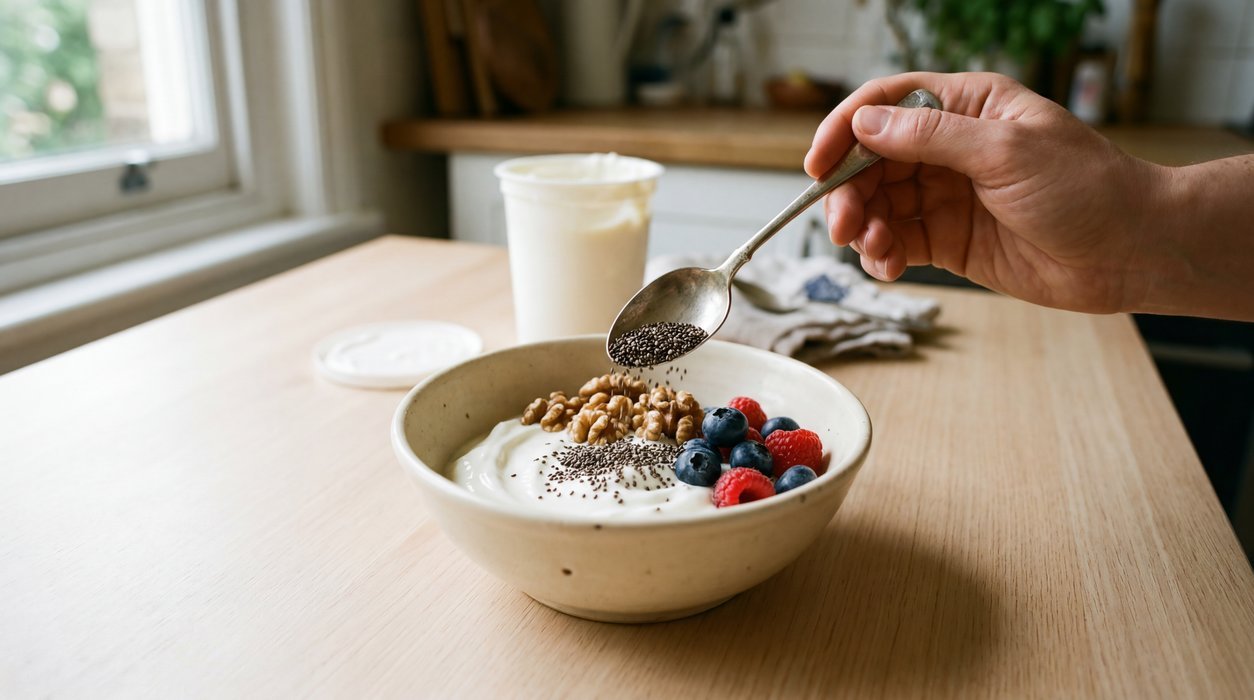
For anyone managing blood sugar balance, pairing yogurt with fiber-rich toppings may support a steadier meal. Sweetened yogurts can still fit occasionally, but they are not the strongest everyday option.
Kimchi
Kimchi brings fermented vegetables, spice, and a sharp flavor that can make simple meals more satisfying. It may support microbial diversity while also helping people eat more vegetables.

Because kimchi is often salty and spicy, the right portion matters. People with sodium-sensitive blood pressure, reflux, or histamine sensitivity may need smaller servings or a different fermented food.[8]
Raw sauerkraut
Raw sauerkraut is fermented cabbage that can be added after cooking, so heat does not reduce live cultures. Choose refrigerated options that mention raw, unpasteurized, or live cultures.
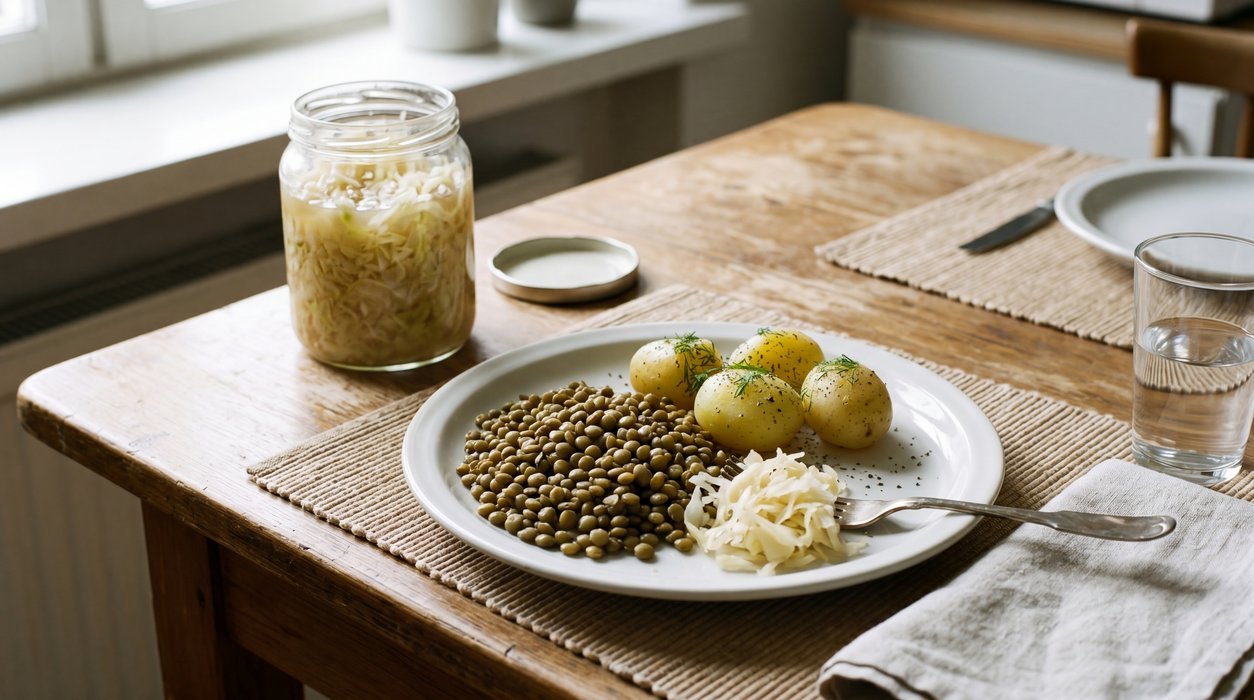
A tablespoon or two can brighten a meal and may help replace heavier sauces. This makes it practical for blood sugar-friendly meals built around protein, fiber, and plants.
Tempeh or miso
Tempeh is fermented soybeans pressed into a firm cake, making it useful as a protein-rich plant food. Miso is fermented soybean paste that adds savory depth to soups, dressings, and marinades.

Tempeh is usually cooked, so its value is more about the fermented soy matrix and nutrient profile than live microbes. Miso may retain more delicate compounds when stirred into warm food after cooking instead of boiled aggressively.
Meal Ideas: Try kefir with berries, plain yogurt with walnuts and cinnamon, kimchi with eggs or tofu, sauerkraut beside lentils or potatoes, and tempeh in a vegetable stir-fry. Keep portions small at first.
How do you choose fermented foods that still contain live cultures?
Not every fermented food contains live microbes by the time it reaches your plate. Baking, pasteurization, canning, filtering, and high heat can change the final product.[7]
One thing worth pushing back on here: fermented foods are not automatically probiotics. A probiotic refers to specific live microorganisms that have been studied for a health benefit, while many fermented foods contain mixed or variable microbes.[6]
This matters because “fermented” on a label does not always mean the food provides live cultures. It also means a food can still be valuable for flavor or nutrition even if it is not a probiotic product.
- Look for “live cultures,” “active cultures,” “raw,” or “unpasteurized” when live microbes are the goal.
- Choose plain or low-sugar dairy options most of the time.
- Choose refrigerated fermented vegetables more often than shelf-stable heat-treated jars.
- Remember that vinegar-pickled vegetables are not the same as naturally fermented vegetables.
How should you pair fermented foods with meals?
Fermented foods benefits are more useful when they sit inside a balanced meal. A small spoonful of sauerkraut cannot compensate for a consistently low-fiber diet.
Pair fermented foods with protein and fiber when possible. Examples include yogurt with berries and seeds, kimchi with tofu and rice, sauerkraut with lentils, or tempeh with vegetables and whole grains.
This pairing matters because gut microbes also transform fibers, polyphenols, and bile acids into metabolites that may influence immune tone and energy metabolism.[4]
For broader context, it may help to understand how gut bacteria influence metabolic syndrome.
What should you avoid when starting fermented foods?
The practical fermented foods benefits come from consistency, not from pushing your gut too hard. Large portions can cause gas, bloating, reflux, or loose stools, especially when your usual diet has been low in fermented foods.
- Avoid starting with several fermented foods on the same day.
- Avoid sugary kefir drinks, dessert-style yogurts, and sweetened kombucha as daily staples.
- Avoid cooking raw sauerkraut or kimchi if your goal is live cultures.
- Avoid high-sodium portions if you are managing blood pressure or have been told to reduce sodium.[8]
People with histamine intolerance, severe IBS symptoms, immune compromise, active liver disease, or complex medical conditions should ask a qualified clinician before making major changes.
How can you start without upsetting digestion?
Start smaller than you think. The goal is to help the gut adapt, not to overwhelm it with large portions of acidic, salty, or microbe-rich foods.
- Days 1–3: Add 1 tablespoon of sauerkraut or kimchi to one meal, or use ¼ cup kefir.
- Days 4–7: Increase to one small serving daily if digestion feels comfortable.
- Week 2: Rotate two options, such as yogurt at breakfast and kimchi with dinner.
- Week 3: Pair fermented foods with fiber-rich plants, such as beans, oats, greens, lentils, or berries.
- Ongoing: Keep the foods you enjoy and reduce any option that repeatedly triggers symptoms.
Many people notice digestive changes first, such as better meal satisfaction or more regular bowel habits. Temporary gas or bloating can happen when portions increase too quickly.
Measurable changes, such as fasting glucose, lipids, or liver enzymes, require medical testing and can be influenced by many factors. Fermented foods may support the wider pattern, but they are only one part of metabolic health.
Conclusion
Fermented foods can be a simple, flavorful way to support the gut-liver axis without turning meals into a strict protocol. The strongest approach is small servings, steady consistency, and a mix of fermented dairy, vegetables, and soy foods when tolerated.
Fermented foods benefits become more meaningful when paired with fiber-rich plants, enough protein, regular movement, and good sleep. Start with one food, keep the portion modest, and let your body’s response guide the next step.
Frequently Asked Questions
What are the main fermented foods benefits for the gut-liver axis?
The main fermented foods benefits for the gut-liver axis may include support for microbial diversity, gut barrier function, and healthier inflammatory signaling. These effects matter because the gut sends nutrients and microbial compounds to the liver through portal circulation. Fermented foods are not a treatment for liver disease, but they can be part of a metabolic health-supportive eating pattern.
Do all fermented foods contain probiotics?
No. Some fermented foods contain live microbes, while others are heated, baked, pasteurized, or filtered after fermentation. A probiotic also refers to specific live microorganisms that have been studied for a health benefit. Look for live or active cultures when that is the goal.
How much fermented food should you eat per day?
There is no single ideal amount for everyone. A practical starting point is 1 tablespoon of fermented vegetables or ¼–½ cup of yogurt or kefir once daily. Increase slowly based on comfort, sodium needs, and digestive tolerance. More is not always better if it causes bloating, reflux, or loose stools.
Who should be cautious with fermented foods?
People with histamine sensitivity, significant reflux, sodium-sensitive hypertension, severe digestive symptoms, immune compromise, or medically managed liver disease should be cautious. Some fermented foods are high in salt, acidity, or biogenic amines. Starting with small portions helps identify tolerance. Professional guidance is best when symptoms are persistent or medical conditions are complex.
Medical Disclaimer: The information provided in this article is for educational purposes only and does not constitute medical advice. Always consult a qualified healthcare provider before making changes to your diet, lifestyle, or treatment plan. TheMetabolicHub.com does not replace professional medical guidance.
References
- Wastyk HC, Fragiadakis GK, Perelman D, et al. Gut-microbiota-targeted diets modulate human immune status. Cell. 2021;184(16):4137-4153.e14. PMID: 34256014
- Leeuwendaal NK, Stanton C, O’Toole PW, Beresford TP. Fermented Foods, Health and the Gut Microbiome. Nutrients. 2022;14(7):1527. PMID: 35406140
- Dimidi E, Cox SR, Rossi M, Whelan K. Fermented Foods: Definitions and Characteristics, Impact on the Gut Microbiota and Effects on Gastrointestinal Health and Disease. Nutrients. 2019;11(8):1806. PMID: 31387262
- Milosevic I, Vujovic A, Barac A, et al. Gut-Liver Axis, Gut Microbiota, and Its Modulation in the Management of Liver Diseases: A Review of the Literature. International Journal of Molecular Sciences. 2019;20(2):395. PMID: 30658519
- Pezzino S, Sofia M, Faletra G, Mazzone C, Litrico G, La Greca G, Latteri S. Gut-Liver Axis and Non-Alcoholic Fatty Liver Disease: A Vicious Circle of Dysfunctions Orchestrated by the Gut Microbiome. Biology (Basel). 2022;11(11):1622. PMID: 36358323
- National Institutes of Health Office of Dietary Supplements. Probiotics: Health Professional Fact Sheet. NIH Office of Dietary Supplements
- Harvard T.H. Chan School of Public Health. The Microbiome. The Nutrition Source
- American Heart Association. How Much Sodium Should I Eat Per Day? American Heart Association