15 Easy Ways to Add More Fiber Without Bloating

Trying to eat more fiber can feel frustrating when the “healthy” choice leaves the stomach tight, gassy, or uncomfortable by afternoon. This may not be random; it often reflects how quickly fiber was added, which fiber sources were chosen, and how the meal was balanced. The encouraging news: you can add more fiber without bloating when your gut gets a slower, more practical path.
Quick Win: Add just 2–3 grams of fiber today, such as 1 tablespoon of chia seeds soaked into yogurt or half a cup of berries with breakfast. Keep that change steady for several days before adding another fiber upgrade.
How can you add more fiber without bloating?
You can add more fiber without bloating by increasing intake gradually, spreading fiber across meals, choosing gentler high-fiber foods, drinking enough fluids, and adjusting based on personal tolerance. For many adults, the goal is not to reach a high-fiber target overnight, but to help digestion adapt.
Fiber is linked to digestive regularity, steadier appetite, heart health, and better blood sugar control. Adults are often encouraged to eat about 25–35 grams of fiber daily, but a sudden jump can overwhelm digestion and increase gas, pressure, or cramping.[1]
A realistic timeline is usually days to weeks, not one perfect high-fiber day. Many people first notice easier bowel movements, steadier fullness after meals, or fewer snack cravings before bloating fully settles.
Key takeaways
- Start small: Add one fiber source at a time, then repeat it for several days.
- Choose gentler foods first: Oats, berries, cooked vegetables, soaked chia, and small portions of lentils are often easier starting points.
- Spread fiber out: Three smaller fiber servings usually feel better than one large fiber-heavy meal.
- Hydration matters: Fiber works more comfortably when fluid intake is adequate.
- Symptoms are information: Bloating often means the dose, timing, or fiber type needs adjusting, not that fiber is “bad.”
Why does fiber cause bloating for some people?
Fiber is not fully digested in the small intestine. Some carbohydrates, including certain fibers, reach the colon, where gut bacteria break them down and can produce gas.[3]
That process is not automatically harmful. It can also produce short-chain fatty acids, compounds involved in gut microbiome activity and digestive health research.[6]
Bloating often appears when fiber rises faster than the gut can adapt. A person who rarely eats beans, bran, seeds, or raw vegetables may feel very different after a sudden large serving than after a slow build.
Some people also react more strongly to fermentable carbohydrates called FODMAPs. This matters most for adults with IBS or very sensitive digestion, where onions, garlic, wheat-based foods, certain legumes, and some fruits can trigger symptoms.[7]
Which fiber types are usually gentler?
Fiber is often described as soluble or insoluble, although most plant foods contain a mix. Soluble fiber dissolves in water and forms a gel-like texture, while insoluble fiber adds bulk and supports movement through the digestive tract.[1]
For adults prone to bloating, soluble fiber sources may feel gentler than large amounts of wheat bran, raw cruciferous vegetables, or big servings of beans. NIDDK also notes that soluble fiber may be more helpful than insoluble fiber for some people with IBS symptoms.[5]
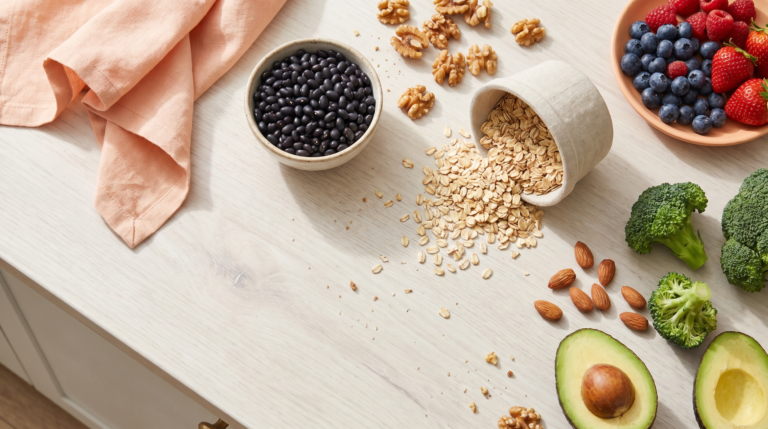
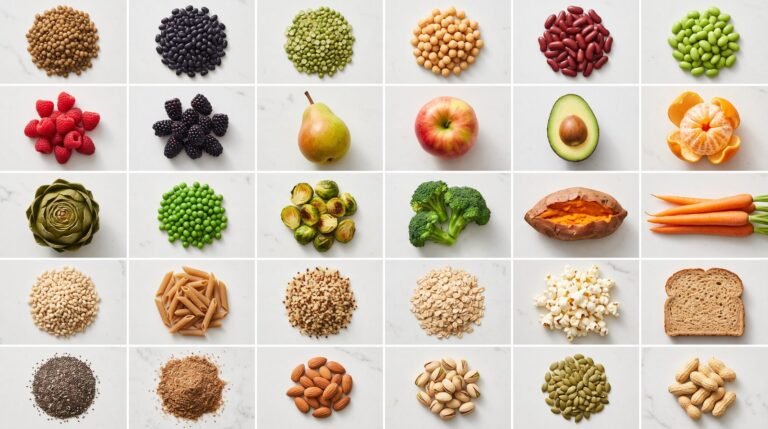
Oats, chia seeds, ground flaxseed, berries, avocado, and small portions of lentils are practical starting points. For more food-specific options, this guide to gentler high-fiber foods can help you choose fiber sources that may be easier to test first.

| Fiber choice | Gentler way to start |
|---|---|
| Oats | Use 1/3 to 1/2 cup cooked oats instead of a very large bowl. |
| Chia seeds | Start with 1 teaspoon to 1 tablespoon soaked in yogurt, milk, or a dairy-free alternative. |
| Beans or lentils | Begin with 2–3 tablespoons, rinsed well, added to a familiar meal. |
| Vegetables | Choose cooked vegetables before large raw salads. |
That does not mean insoluble fiber should be avoided. It means the gut often does better when fiber variety increases slowly instead of arriving as one sudden plate of raw vegetables, bran cereal, and legumes.
15 easy ways to add more fiber without bloating
1. Increase fiber by small steps, not big jumps
The most reliable strategy is also the least dramatic: add about 2–3 grams of fiber per day or every few days. NIDDK notes that adding fiber slowly by 2–3 grams per day may help prevent gas and bloating, especially for people with IBS symptoms.[5]
This might look like adding berries to breakfast, a spoon of ground flaxseed to oatmeal, or a small side of lentils at lunch. Keep the change steady before adding the next one.
2. Spread fiber across the day
A common bloating trigger is saving most fiber for one huge salad, bean bowl, or “healthy” dinner. The gut often handles fiber better when smaller portions show up at breakfast, lunch, and dinner.
Try berries in the morning, cooked vegetables at lunch, and a small serving of beans or whole grains at dinner. This gives digestion more time and less pressure per meal.
3. Start with cooked vegetables
Raw vegetables can be nutritious, but large raw salads may be harder to tolerate for people with bloating. Cooking softens plant structure and can make vegetables easier to chew and digest.
Try zucchini, carrots, spinach, green beans, bell peppers, or peeled eggplant cooked in olive oil or broth. Increase portion size slowly before adding tougher options like cabbage or large amounts of broccoli.
4. Rinse canned beans and use tiny portions
Beans are rich in fiber, but they are also highly fermentable for many people. Instead of starting with a full bowl of chili, add 2–3 tablespoons of rinsed canned lentils, chickpeas, or black beans to a familiar meal.
Smaller servings help the gut learn to tolerate legumes without turning the meal into a digestive stress test. If beans are still difficult, lentils are often a more practical first step than larger beans.
5. Choose oats before bran cereals
Oats provide soluble fiber and are often easier to build into a routine than high-bran cereals. Harvard lists oatmeal among soluble fiber sources that may help support glucose and cholesterol levels.[1]
A balanced bowl might include cooked oats, Greek-style yogurt or milk, cinnamon, and berries. Keep added sugar modest if blood sugar control is also a goal.
6. Add berries instead of dried fruit
Berries offer fiber, fluid, color, and natural sweetness in a relatively gentle package. Dried fruit can be helpful for some people, but it is more concentrated and easier to overeat.
Try half a cup of raspberries, blueberries, or strawberries with breakfast or as a snack. Pairing fruit with protein can also make the meal feel steadier and more satisfying.
7. Use ground flaxseed carefully
Ground flaxseed can add fiber in a small volume, which makes it useful for oatmeal, yogurt, smoothies, and soups. Start with 1 teaspoon and increase gradually toward 1 tablespoon if it feels comfortable.
Drink fluid with it and avoid suddenly adding multiple tablespoons. Concentrated fiber additions can still cause bloating when the dose is too high.
8. Soak chia seeds before eating them
Chia seeds absorb fluid and form a gel. For many people, soaked chia feels gentler than dry chia sprinkled heavily over food.
Try mixing 1 teaspoon to 1 tablespoon of chia seeds into yogurt, kefir, milk, or a dairy-free alternative. Let it sit for at least 10–15 minutes before eating.
9. Swap refined grains gradually
Going from white bread and white rice to only dense whole grains can create a sudden fiber increase. A slower swap may feel better.
Try half white rice and half brown rice, one slice of whole-grain bread instead of two, or a small scoop of quinoa alongside a familiar meal. The aim is consistency, not perfection.
10. Drink fluids with fiber-rich meals
Fiber works more comfortably when fluid intake is adequate. CDC recommends drinking plenty of water when adding more fiber to help food move through the digestive system.[2]
This does not require forcing huge amounts of water. It does mean noticing whether higher-fiber meals are paired with enough fluid across the day.
11. Chew more than feels necessary
Chewing is not a trendy answer, but it matters. Better-chewed food reaches the stomach in smaller particles, which may reduce the sense of heaviness after high-fiber meals.
This is especially useful with raw produce, nuts, seeds, beans, and grain bowls. Slowing down also reduces swallowed air, which can contribute to gas symptoms.
12. Pair fiber with protein and fat
Fiber alone can help meals feel more filling, but it often works better when combined with protein and healthy fats. This pairing may support steadier appetite and more balanced post-meal energy.
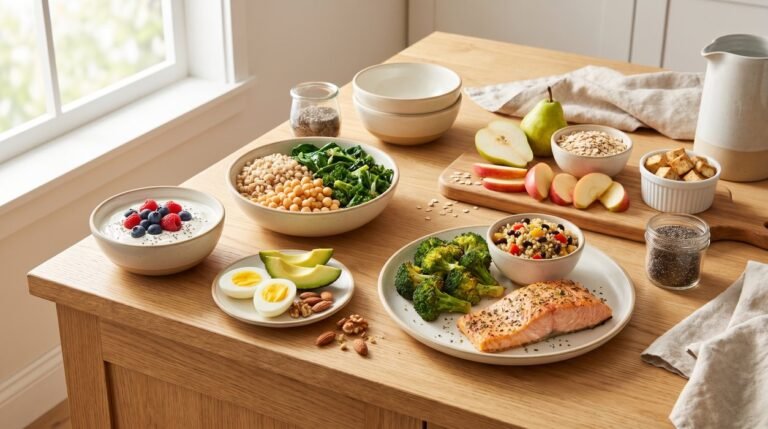
Examples include oats with yogurt, berries with nuts, lentil soup with olive oil, or vegetables with eggs, tofu, fish, poultry, or beans. For more structure, use a balanced plate for stable blood sugar instead of stacking fiber onto an already stressful meal.
13. Watch sugar alcohols and “high-fiber” packaged foods
Some bars, cereals, and low-sugar snacks contain added fibers or sugar alcohols that can trigger gas and bloating in sensitive people. A product may look gut-friendly on the label but feel very different in the body.
Check ingredients for inulin, chicory root fiber, large amounts of added fiber, sorbitol, maltitol, xylitol, or erythritol. Monash lists sugar polyols such as sorbitol, xylitol, and erythritol as FODMAP-related sweeteners that can matter for sensitive digestion.[7]
14. Walk after higher-fiber meals
A gentle 10-minute walk after meals may help some people feel more comfortable after a larger meal. This is not about burning calories or turning every meal into a workout.
It is a low-pressure habit that can pair well with blood sugar control goals. For anyone with mobility limits, light movement that feels safe may be enough.
15. Keep a simple fiber and symptom note
If bloating keeps showing up, track meals, fiber changes, stress, bowel habits, and symptoms for one to two weeks. NIDDK notes that a food diary can help identify foods and amounts linked to gas symptoms.[4]
The goal is not obsessive tracking. It is to spot whether the issue is beans, raw vegetables, large portions, rushed eating, carbonated drinks, constipation, or a supplement that is too aggressive.
One thing worth pushing back on here: many people assume bloating means they should avoid fiber completely. The more useful correction is that the gut may need a slower ramp, different fiber types, or smaller portions, because removing too many plant foods can make long-term variety harder.
What progress should you expect?
Early progress may be subtle. Many people first notice more regular bowel movements, steadier fullness after meals, or fewer cravings when fiber is increased gradually and paired with enough protein and fluids.
Digestive comfort may take a few days to several weeks, depending on starting fiber intake, gut sensitivity, constipation, stress, and food choices. This is not a personal failure; it is useful feedback from a digestive system that needs pacing.
For metabolic health, fiber-rich foods may support better blood sugar patterns by slowing digestion and improving meal quality. Soluble fiber in foods like oats, beans, apples, and avocados is especially relevant for blood sugar and cholesterol support.[2]
If bloating becomes painful, persistent, or is paired with weight loss, blood in stool, ongoing diarrhea, vomiting, fever, or major bowel habit changes, medical evaluation is important. Fiber strategies should not be used to ignore concerning symptoms.
A simple 7-day fiber plan
This plan is intentionally modest. It is designed for people who want to add more fiber without bloating, not for people trying to reach a high-fiber target in one week.

| Day | Small fiber move |
|---|---|
| Day 1 | Add half a cup of berries to breakfast. |
| Day 2 | Repeat Day 1 and drink an extra glass of water with a fiber-rich meal. |
| Day 3 | Add 1 teaspoon of ground flaxseed to yogurt, oats, or a smoothie. |
| Day 4 | Choose cooked vegetables at lunch or dinner. |
| Day 5 | Add 2 tablespoons of rinsed beans or lentils to a familiar meal. |
| Day 6 | Take a 10-minute gentle walk after one meal. |
| Day 7 | Review symptoms and repeat the most comfortable additions next week. |
If the week feels easy, add one more small fiber source the following week. If bloating increases, hold steady, reduce the most recent addition, or switch to a gentler option like oats, berries, or cooked vegetables.
People with IBS, inflammatory bowel disease, celiac disease, gastroparesis, recent digestive surgery, or unexplained symptoms may need personalized guidance. A low FODMAP approach can help some people with IBS symptoms, but it is best used with careful reintroduction and professional support when symptoms are significant.[8]
Frequently Asked Questions
How can I add more fiber without bloating?
The simplest way to add more fiber without bloating is to increase fiber slowly, usually by one small serving at a time. Start with gentler foods such as oats, berries, cooked vegetables, soaked chia seeds, or ground flaxseed. Drink enough fluids and avoid adding several new high-fiber foods on the same day. If symptoms appear, hold steady or reduce the most recent change before trying again.
What is the easiest high-fiber food for a sensitive stomach?
Many people find cooked oats, berries, peeled cooked vegetables, chia pudding, or small amounts of ground flaxseed easier than large raw salads or big servings of beans. Tolerance is individual, so the best choice is the one that feels comfortable and can be repeated consistently. Start with a small portion and increase only after digestion feels settled.
Why do beans make me bloated?
Beans contain fiber and fermentable carbohydrates that gut bacteria can break down, producing gas. This is normal, but it can feel uncomfortable when the portion is large or the gut is not used to legumes. Rinsing canned beans and starting with 2–3 tablespoons may improve tolerance. If beans repeatedly cause strong symptoms, a dietitian can help identify better options.
Should I take a fiber supplement?
Fiber supplements may be useful for some people, but they can also cause gas or bloating when started too quickly. Food-first strategies are often easier to personalize because they add nutrients, texture, and variety along with fiber. Anyone taking medications, managing diabetes, or dealing with digestive conditions should ask a healthcare provider before starting a supplement.
Conclusion
You do not need to force a high-fiber diet overnight to support digestion, fullness, or metabolic health. A slower, steadier approach is usually more useful than a dramatic overhaul.
Start with one small fiber addition, repeat it for several days, drink enough fluids, and notice how your body responds. That is often the most reliable way to add more fiber without bloating while still building a more varied, fiber-rich routine.
Medical Disclaimer: The information provided in this article is for educational purposes only and does not constitute medical advice. Always consult a qualified healthcare provider before making changes to your diet, lifestyle, or treatment plan. TheMetabolicHub.com does not replace professional medical guidance.
References
- Harvard T.H. Chan School of Public Health. Fiber. The Nutrition Source. Harvard T.H. Chan
- Centers for Disease Control and Prevention. Fiber: The Carb That Helps You Manage Diabetes. 2024. CDC
- National Institute of Diabetes and Digestive and Kidney Diseases. Symptoms & Causes of Gas in the Digestive Tract. NIDDK
- National Institute of Diabetes and Digestive and Kidney Diseases. Eating, Diet, & Nutrition for Gas in the Digestive Tract. NIDDK
- National Institute of Diabetes and Digestive and Kidney Diseases. Eating, Diet, & Nutrition for Irritable Bowel Syndrome. NIDDK
- Vinelli V, Biscotti P, Martini D, et al. Effects of Dietary Fibers on Short-Chain Fatty Acids and Gut Microbiota Composition in Healthy Adults: A Systematic Review. Nutrients. 2022. PMID: 35807739
- Monash University. High and Low FODMAP Foods. Monash FODMAP
- Black CJ, Staudacher HM, Ford AC. Efficacy of a low FODMAP diet in irritable bowel syndrome: systematic review and network meta-analysis. Gut. 2022. PMID: 34376515