12 High-Protein Lunches That May Help Prevent the 3 PM Energy Crash

Your morning felt focused, but a few hours after lunch your concentration disappears, cravings arrive, and another coffee starts to feel essential. This may not be random or a lack of discipline. The encouraging news: a high protein lunch for energy can make the afternoon feel more manageable when the whole meal is balanced.
A useful lunch pairs a satisfying protein source with vegetables, fiber-rich carbohydrates, healthy fat, and enough fluid. Many people notice better fullness within the first few meals, although sleep, stress, hydration, medication, and medical conditions can still affect afternoon energy.
Quick Win: Build tomorrow’s lunch around one palm-sized protein, one to two cups of vegetables, a fist-sized fiber-rich carbohydrate, and a small serving of healthy fat.
Can a High Protein Lunch for Energy Reduce the Afternoon Slump?
A balanced high-protein lunch may help you stay satisfied and reduce the urge to seek quick energy from sweets or repeated caffeine. Protein is not a stimulant, but it can make lunch feel more substantial and support steadier appetite between meals.[1]
The best results come from the complete meal rather than protein alone. A high protein lunch for energy should also provide fiber, minimally processed carbohydrates, produce, and a portion that feels comfortable rather than excessively large.
Key Takeaways
- Aim for a meaningful protein source rather than trying to maximize protein at every meal.
- Pair protein with fiber-rich carbohydrates instead of removing carbohydrates automatically.
- Use vegetables and healthy fats to add volume, flavor, and nutritional variety.
- Judge the pattern over several workdays, not after one unusually energetic or tiring afternoon.
- Persistent or worsening fatigue deserves medical attention rather than repeated dietary experimentation.
Why Does the 3 PM Energy Crash Happen?
Afternoon alertness is influenced by the body’s circadian rhythm as well as sleep quality, hydration, stress, caffeine timing, activity, medications, and overall food intake. Lunch is one part of the picture, not the sole explanation.
A meal dominated by rapidly digested carbohydrates may provide energy without enough protein or fiber to remain satisfying. That can leave some people hungry again sooner, although individual glucose and appetite responses vary.
Carbohydrates are not inherently the problem. Whole grains, beans, fruit, and starchy vegetables provide usable energy, fiber, vitamins, and minerals.
Pairing these foods with protein, vegetables, and fat generally creates a more complete meal. Dietary fiber may also support fullness, although its effects differ by fiber type, food structure, and serving size.[2]
Lunch size matters too. A very rich or oversized meal may leave you feeling heavy, particularly when the afternoon involves desk work, driving, studying, or other low-movement tasks.
This is not a personal failure. Feeling tired after lunch does not automatically mean you chose the wrong food or lack willpower.
What Should an Energizing Lunch Include?
You do not need perfect macro tracking. A repeatable visual formula is usually more useful than calculating every gram during a busy week.
| Component | Practical starting portion | Examples |
|---|---|---|
| Protein | One palm-sized serving | Chicken, fish, eggs, tofu, tempeh, Greek yogurt, cottage cheese, beans, or lentils |
| Vegetables | One to two cups | Leafy greens, peppers, tomatoes, broccoli, cabbage, cucumber, or carrots |
| Fiber-rich carbohydrates | One fist-sized serving | Quinoa, brown rice, beans, fruit, sweet potato, farro, or whole-grain bread |
| Healthy fat | One to two thumb-sized servings | Olive oil, avocado, tahini, nuts, seeds, or olives |

A palm-sized protein serving is a practical visual starting point, but it is not a universal prescription. Individual needs vary with body size, age, activity, appetite, total daily intake, and health history.
Current dietary guidance emphasizes varied, nutrient-dense foods rather than maximizing one nutrient. Rotating seafood, poultry, eggs, dairy, legumes, nuts, seeds, and soy foods can help create a broader nutritional pattern.[5]
Anyone with chronic kidney disease or another condition that requires protein management should follow individualized advice. Current diabetes nutrition guidance also emphasizes personalization instead of one ideal macronutrient distribution for everyone.[3]
Protein can influence short-term appetite signals, including ghrelin, cholecystokinin, and GLP-1. However, longer-term appetite findings are less consistent, and the rest of the meal still shapes the response.[4]
Not sure whether your other meals provide enough? These signs you may not be eating enough protein offer useful context without requiring obsessive tracking.
12 High-Protein Lunches for Steady Energy
1. Lemon Chicken Quinoa Bowl
Combine sliced chicken breast, quinoa, cucumber, tomatoes, parsley, and mixed greens. Finish with lemon juice, olive oil, black pepper, and a spoonful of hummus.
Chicken supplies concentrated protein, while quinoa and vegetables provide carbohydrates and fiber. Store the dressing separately when preparing the bowl in advance.
2. Salmon, Lentil, and Arugula Salad
Top green or brown lentils with salmon, arugula, chopped peppers, and red onion. Add a mustard-lemon vinaigrette and pumpkin seeds.
Salmon contributes protein and omega-3 fats, while lentils add fiber and plant protein. Lower-sodium canned products may be helpful for people managing sodium intake.
3. Turkey and Avocado Whole-Grain Wrap
Fill a whole-grain wrap with roasted turkey, avocado, lettuce, tomato, carrots, and mustard. Add an apple or berries on the side.
This portable option works when reheating is not possible. Home-roasted turkey provides greater control over sodium, although a suitable packaged option can still offer practical convenience.
4. Tofu Edamame Crunch Bowl
Layer baked tofu, shelled edamame, cabbage, carrots, cucumber, and brown rice. Dress it with lime, ginger, sesame oil, and reduced-sodium tamari.
Tofu and edamame create a substantial plant-based combination. Crunchy vegetables add volume without making the meal excessively rich.
5. Greek Yogurt Chickpea Pita
Mash chickpeas with thick plain Greek yogurt, celery, herbs, lemon juice, and black pepper. Spoon the mixture into a whole-grain pita with lettuce and tomato.
Chickpeas provide fiber, while yogurt raises the protein content and creates a creamy texture. Use an unsweetened yogurt without strong added flavors.
6. Egg and Cottage Cheese Lunch Box
Pack two hard-boiled eggs, cottage cheese, sliced vegetables, whole-grain crackers, and fruit. Add herbs or smoked paprika for extra flavor.
This lunch requires little cooking and is easy to adjust. It can help when travel or meetings make a traditional sit-down meal unrealistic.
One thing worth pushing back on here: a higher protein number does not automatically create a better lunch. A very large meat serving with little fiber or produce may still feel heavy and leave the overall meal nutritionally narrow.
The practical goal is enough protein to support fullness, not the highest possible intake. Balanced meals are usually easier to repeat than extreme food rules.
7. Tuna and White Bean Mediterranean Bowl
Mix tuna with rinsed white beans, tomatoes, cucumber, olives, parsley, and red wine vinegar. Serve over greens with a small drizzle of olive oil.
The beans stretch the tuna while adding fiber. Rotate tuna with salmon, sardines, chicken, eggs, or chickpeas to keep seafood and protein choices varied.
8. Tempeh Peanut Soba Noodles
Toss sautéed tempeh with soba noodles, broccoli, peppers, and snap peas. Use a light sauce made with peanut butter, lime, ginger, and water.
Tempeh holds up well in packed lunches. Keep the noodles proportional to your appetite and let the tempeh and vegetables remain prominent.
9. Lean Beef and Sweet Potato Bowl
Combine lean ground beef with roasted sweet potato, spinach, tomatoes, and black beans. Season with cumin, garlic, paprika, and plain Greek yogurt.
This lunch provides protein, iron-rich foods, fiber, and colorful produce. Varying protein sources across the week supports a broader nutrient pattern.
10. Shrimp and Black Bean Taco Salad
Arrange shrimp, black beans, romaine, cabbage, tomatoes, corn, and avocado in a bowl. Add salsa, lime, cilantro, and crushed baked tortilla for texture.
Shrimp cooks quickly, which makes this useful for short preparation windows. Keep the components separate until lunch when preparing it the night before.
11. Cottage Cheese Harvest Bowl
Start with cottage cheese and add roasted chickpeas, pear slices, spinach, walnuts, and a small serving of farro. Finish with balsamic vinegar.
This high protein lunch for energy offers a break from meat-centered meals. Adjust the cottage cheese serving according to appetite and sodium needs.
12. Chicken and White Bean Vegetable Soup
Simmer shredded chicken with white beans, carrots, celery, leafy greens, herbs, and lower-sodium broth. Serve with dense whole-grain bread.
Soup can feel satisfying without being overly rich when it contains both protein and fiber. Freeze individual portions for days when fresh lunch ingredients are limited.
What Changes Might You Notice?
Early signs may include feeling satisfied for longer, thinking less about sweets, or reaching the end of the workday without urgent hunger. Some people notice these differences after several lunches, while others need more experimentation.
Use five working days as a simple test period. Two or three hours after lunch, rate hunger, alertness, cravings, and digestive comfort from one to five.
Test one lunch adjustment at a time. For example, add a more substantial protein source for several days before also changing meal size, caffeine intake, carbohydrate portions, and lunch timing.
If you still need a snack, that does not mean the lunch failed. Planned blood sugar-friendly snacks for busy days can be appropriate when the gap before dinner is long or activity needs are higher.
Persistent fatigue may be associated with inadequate sleep, anemia, thyroid conditions, sleep disorders, medication effects, or glucose-regulation problems. Seek medical guidance when tiredness is severe, new, worsening, or accompanied by other symptoms.
How Can You Prepare These Lunches Efficiently?
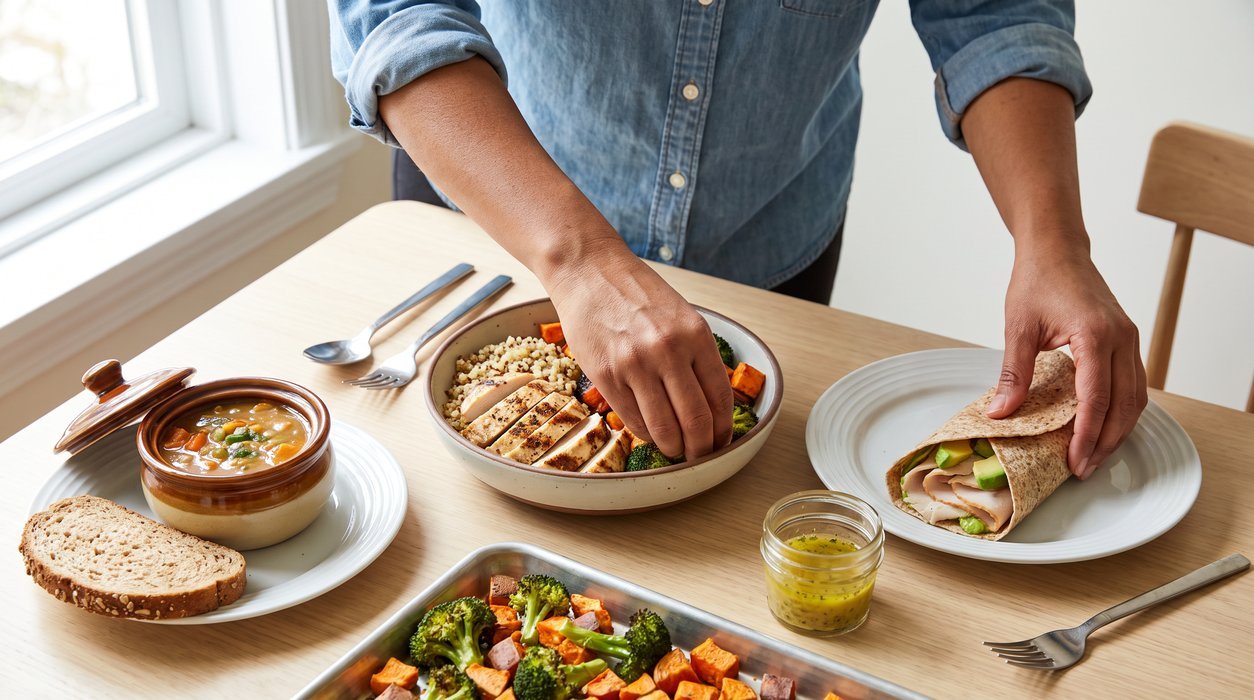
The easiest routine uses interchangeable components instead of preparing twelve separate recipes. Start with two proteins, one carbohydrate base, sturdy vegetables, and one versatile sauce.
- Choose two proteins: Roast chicken and bake tofu, or cook lentils while boiling eggs.
- Prepare one carbohydrate: Cook quinoa, brown rice, farro, or roasted sweet potatoes.
- Wash sturdy vegetables: Prepare cabbage, carrots, peppers, cucumbers, or broccoli for several meals.
- Mix one sauce: Make lemon-tahini dressing, yogurt-herb sauce, or mustard vinaigrette.
- Build three lunches: Refrigerate only what you expect to eat safely over the next few days.
Canned beans, frozen edamame, precooked lentils, canned fish, bagged greens, microwaveable whole grains, and plain yogurt can reduce preparation. Convenience and nutritional quality do not have to be opposites.
Keep water accessible during the morning and try to eat before intense hunger sets in. Late-day caffeine may temporarily mask fatigue but can interfere with sleep in some people, continuing the next day’s cycle.
Frequently Asked Questions
What is the best high protein lunch for energy?
The best high protein lunch for energy combines a protein you enjoy with vegetables, fiber-rich carbohydrates, and healthy fat. Chicken quinoa bowls, salmon lentil salads, and tofu edamame bowls all fit this structure. The best option is one you can prepare, digest, and repeat comfortably.
How much protein should lunch contain?
There is no single lunch target that suits every adult. A palm-sized protein serving is a practical place to begin, then adjust it according to appetite, body size, activity, total daily intake, and health needs. A registered dietitian can provide individualized guidance when precise targets are needed.
Can a high-protein lunch prevent a blood sugar spike?
Protein may change the digestion and glucose response of a mixed meal, but it cannot guarantee a particular result. Carbohydrate amount, fiber, fat, activity, medication, and individual physiology also matter. People managing diabetes should use personal glucose data and professional guidance.
Are plant-based lunches high enough in protein?
They can be. Tofu, tempeh, edamame, lentils, beans, soy foods, nuts, and seeds can contribute meaningful protein. Using two complementary sources often improves variety and makes the meal more satisfying.
Conclusion
A reliable afternoon requires more than adding extra chicken to a plate. A balanced high protein lunch for energy combines sufficient protein with produce, fiber-rich carbohydrates, healthy fat, hydration, and a portion that suits your day.
Choose two lunches from this list and test them over five working days. Small improvements in meal structure may make afternoon energy feel less dependent on sweets, vending-machine snacks, or another late coffee.
Medical Disclaimer: The information provided in this article is for educational purposes only and does not constitute medical advice. Always consult a qualified healthcare provider before making changes to your diet, lifestyle, or treatment plan. TheMetabolicHub.com does not replace professional medical guidance.
References
- Paddon-Jones D, et al. Protein, weight management, and satiety. American Journal of Clinical Nutrition. 2008. PMID: 18469287
- Clark MJ, Slavin JL. The effect of fiber on satiety and food intake: a systematic review. Journal of the American College of Nutrition. 2013. PMID: 23885994
- Evert AB, et al. Nutrition Therapy for Adults With Diabetes or Prediabetes: A Consensus Report. Diabetes Care. 2019. PMID: 31000505
- Kohanmoo A, et al. Effect of short- and long-term protein consumption on appetite and appetite-regulating gastrointestinal hormones. Physiology & Behavior. 2020. PMID: 32768415
- U.S. Departments of Health and Human Services and Agriculture. Dietary Guidelines for Americans, 2025–2030. Current Dietary Guidelines