5 Low-Carb Pasta Alternatives That Actually Taste Good
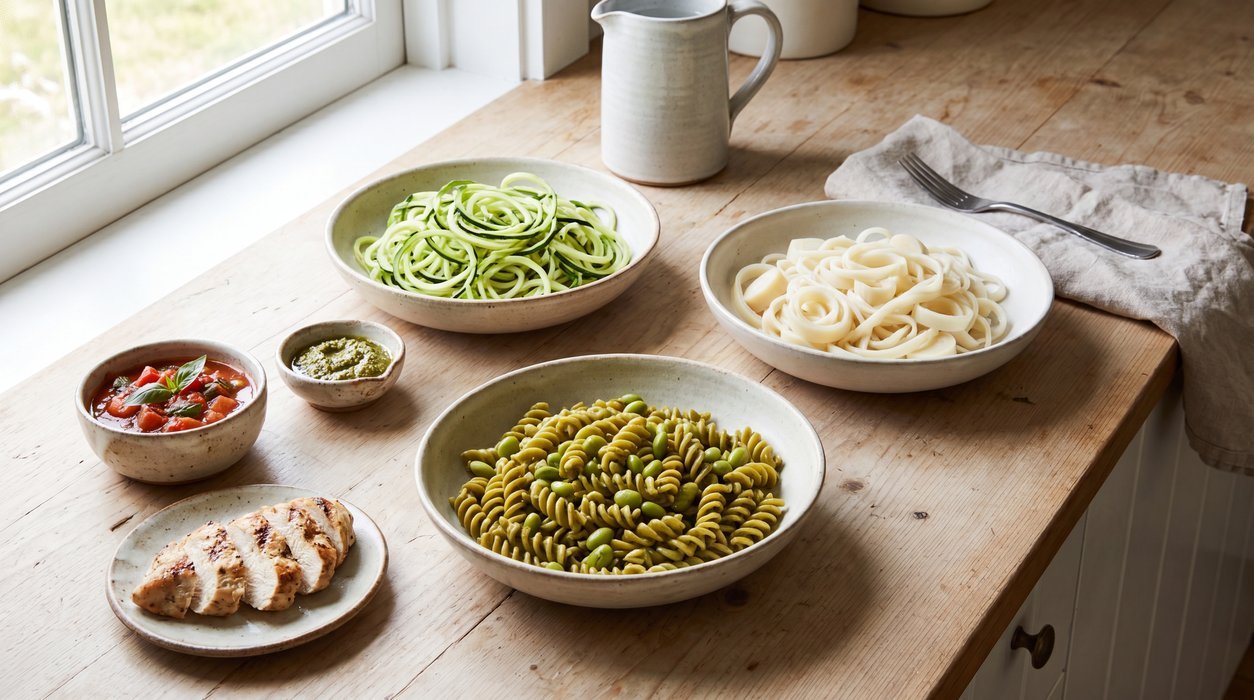
Pasta night can feel surprisingly hard to change when noodles are the easiest comfort food on the plate. This may not be random: texture, sauce, and fullness all shape whether a meal feels satisfying. The encouraging news: low-carb pasta alternatives can keep the ritual while making the bowl more blood sugar-conscious.
Quick Win: This week, choose one pasta swap, pair it with a sauce you already like, and add a protein source before deciding whether the meal needs more noodles.
What Are the Best Low-Carb Pasta Alternatives?
The best low-carb pasta alternatives are zucchini noodles, spaghetti squash, shirataki noodles, hearts of palm pasta, and edamame pasta. Each works best with different sauces, textures, and nutrition goals.
Low-carb pasta alternatives may help reduce the carbohydrate load of a pasta-style meal while keeping dinner familiar. A realistic first step is to test two options over one week and repeat the one that tastes good, digests well, and keeps you satisfied.
Key Takeaways
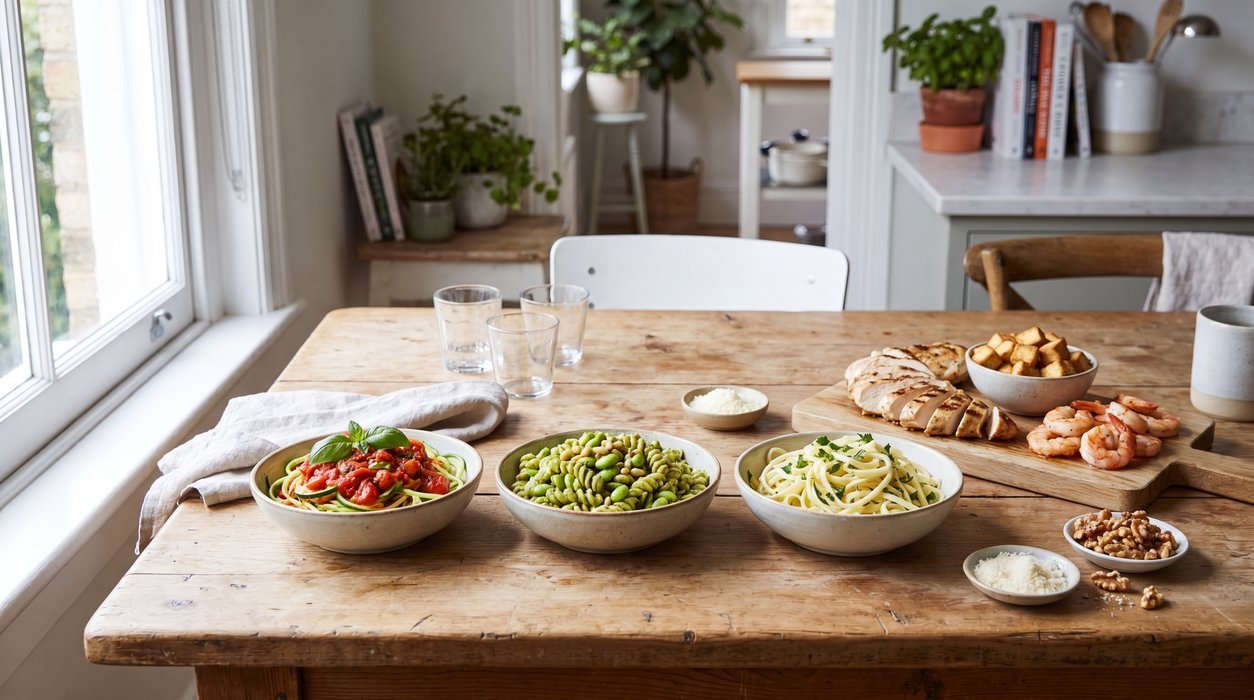
- Low-carb pasta swaps taste better when matched to the right sauce and cooking method.
- Vegetable noodles can be light and high-volume, but they usually need protein to feel filling.
- Shirataki noodles are very low in digestible carbohydrates, but texture and preparation matter.
- Edamame pasta often feels more substantial because it provides more protein and fiber than many vegetable swaps.
- The whole bowl matters more than the noodle alone.
What Makes a Low-Carb Pasta Swap Taste Good?
A good pasta alternative does not need to taste exactly like wheat pasta. It needs to carry sauce, offer some bite, and make the meal feel complete.
Most disappointing bowls fail for three simple reasons: too much water, not enough seasoning, or too little protein. This is not a personal failure; it is usually a food-prep mismatch.
| What to Check | Why It Matters | Best Fix |
|---|---|---|
| Texture | A firmer bite feels more pasta-like. | Cook briefly and taste early. |
| Water content | Excess moisture can thin the sauce. | Salt, drain, roast, or dry-sauté. |
| Flavor | Mild swaps need more seasoning than wheat pasta. | Use garlic, herbs, chili flakes, parmesan, lemon, or toasted nuts. |
| Meal balance | Low-carb noodles alone may not keep you full. | Add protein, fiber-rich vegetables, and a small amount of fat. |
5 Low-Carb Pasta Alternatives Worth Trying
These five low-carb pasta alternatives are practical, widely available, and flexible enough for weeknight meals. The best choice depends on whether you want comfort, convenience, protein, volume, or a very low-carb base.
1. Zucchini Noodles for Light, Fresh Bowls
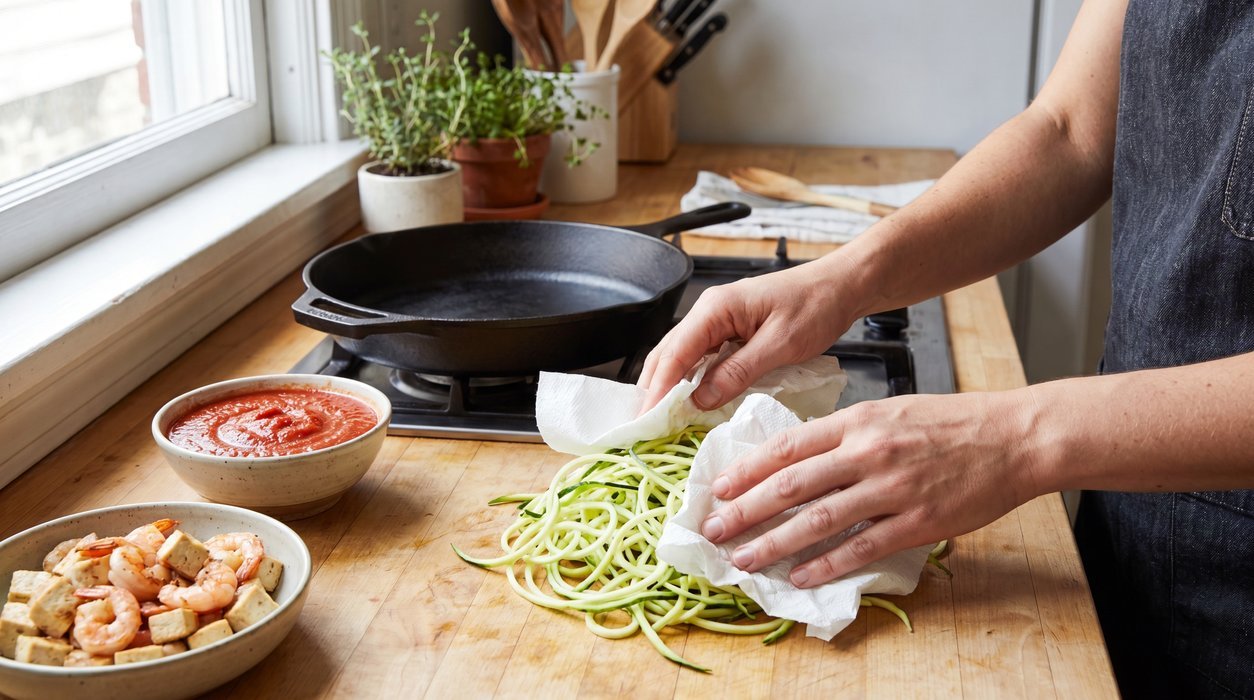
Zucchini noodles, often called zoodles, are mild, quick, and easy to pair with familiar sauces. They work especially well with pesto, turkey meatballs, shrimp, grilled chicken, tofu, or thick tomato sauce.
The main mistake is overcooking them. Zucchini releases water quickly, so a short sauté or raw noodles with warm sauce usually gives a better texture.
For a firmer bowl, salt the noodles lightly, let them sit for about 10 minutes, then pat them dry. This small step may help prevent a watery sauce.
2. Spaghetti Squash for Cozy, Fork-Twirling Texture
Spaghetti squash naturally separates into strands, which makes it feel more pasta-like than many vegetables. Its slight sweetness pairs well with marinara, roasted garlic, basil, sausage-style seasonings, and baked casserole dishes.
Roasting usually gives better flavor than microwaving. Cut the squash in half, scoop out the seeds, roast cut-side down, then scrape the strands with a fork.
Spaghetti squash is not as low in carbohydrates as shirataki or zucchini. Still, it offers volume and fiber, which can help a pasta-style meal feel more generous.
3. Shirataki Noodles for Very Low-Carb Meals
Shirataki noodles are made from konjac glucomannan, a soluble fiber. They are very low in digestible carbohydrates and are often used when someone wants a pasta-like base with minimal carbohydrate impact.
The texture is springy and slippery, so they are not ideal for every sauce. They work best in stir-fries, brothy bowls, sesame sauces, peanut sauces, and spicy garlic dishes.
Preparation matters. Rinse them well, boil briefly, then dry-sauté in a pan before adding sauce.
Research on glucomannan suggests it may reduce fasting blood glucose in adults, although effects on post-meal glucose are less consistent.[4]
4. Hearts of Palm Pasta for Convenience
Hearts of palm pasta is made from the inner core of certain palm plants. It often comes packaged in noodle, angel-hair, or lasagna-style shapes.
This is one of the easiest swaps because it usually only needs rinsing and heating. It works with marinara, creamy sauces, lemon-garlic sauce, seafood, and roasted vegetables.
The texture is closer to a tender vegetable than wheat pasta. Still, it holds up better than many watery vegetable noodles and can make a fast dinner feel planned.
5. Edamame Pasta for More Protein and Bite
Edamame pasta is usually made from green soybeans. It tends to have a firmer chew and more protein than vegetable-based pasta swaps.
This option works well when you miss the substance of regular pasta. Try it with pesto, tomato sauce, garlic olive oil, roasted vegetables, or a protein-rich sauce.
Edamame pasta is not the lowest-carb option on this list. Its protein and fiber can still make it useful for a more filling pasta-style meal.
Cook it carefully and taste early. Many legume-based pastas become mushy when they boil too long.
How Do Pasta Swaps Affect Blood Sugar?
Blood sugar response depends on the full meal, not just the noodle. Carbohydrate amount, fiber, protein, fat, sauce, portion size, and timing all matter.
The American Diabetes Association emphasizes non-starchy vegetables, lean protein, quality carbohydrates, whole and minimally processed foods, fiber, and reduced added sugars for diabetes and prediabetes nutrition patterns.[1]
Harvard T.H. Chan explains that high-glycemic foods are digested more quickly and can create larger blood sugar fluctuations. Higher-fiber foods tend to slow digestion and produce a more gradual rise.[2]
This is why a pasta swap can help, but it is not magic. A bowl of low-carb noodles with a sugary sauce and little protein may still leave someone hungry or tired later.
If your goal is steadier energy after meals, think in plates rather than restrictions. A balanced plate for stable blood sugar gives the noodle a better supporting cast.
Soluble fiber can form a gel in the gut, slowing digestion and helping reduce hunger. This helps explain why fiber-rich meals often feel steadier than refined, low-fiber meals.[3]
One thing worth pushing back on here: low-carb does not automatically mean better. A lower-carb noodle can reduce the carbohydrate load, but the meal may still fall short if it lacks protein, fiber, enough food volume, or flavor.
How to Make Low-Carb Noodles Feel Like a Real Meal
The fastest way to make low-carb noodles taste better is to stop treating them like diet food. Season them properly, remove excess water, and add ingredients that create contrast.
Use Thick Sauces
Vegetable noodles release moisture, so thick sauces usually work better. Tomato paste-enriched marinara, pesto, ricotta-based sauces, tahini sauces, and reduced cream-style sauces cling better than thin tomato sauce.
For zucchini noodles or hearts of palm pasta, warm the sauce separately and combine just before serving. That helps keep the sauce from turning watery.
Add Protein Before Adding More Noodles
Many people try to recreate a large pasta bowl by adding more noodles. With low-carb swaps, it often works better to increase protein first.
Depending on preferences, that could mean salmon, chicken, lean beef, tofu, tempeh, eggs, Greek yogurt, cottage cheese, shrimp, or a plant-based protein option.
Do Not Skip Fat Completely
A small amount of fat can make a pasta-style meal taste complete. Olive oil, avocado oil, pesto, nuts, seeds, cheese, tahini, or olives can bring flavor and improve satisfaction.
The goal is not to drown the meal in fat. It is to avoid the flat, watery quality that makes many low-carb pasta dishes feel unfinished.
A Simple 7-Day Pasta Swap Plan
A short experiment can make the decision easier. Instead of buying five new products at once, choose two low-carb pasta alternatives and test them with sauces you already like.
| Day | Simple Action |
|---|---|
| Day 1 | Choose one vegetable option and one higher-protein option, such as zucchini noodles and edamame pasta. |
| Day 2 | Pick one familiar sauce and one protein anchor. |
| Day 3 | Try the first option and note taste, fullness, digestion, and energy one to three hours later. |
| Day 4 | Use leftovers in a bowl with extra vegetables, herbs, and a small amount of healthy fat. |
| Day 5 | Try the second option with the same sauce and protein for a fair comparison. |
| Day 6 | Adjust cooking time, sauce thickness, or protein amount based on what worked best. |
| Day 7 | Choose one repeatable meal to keep as a regular dinner option. |
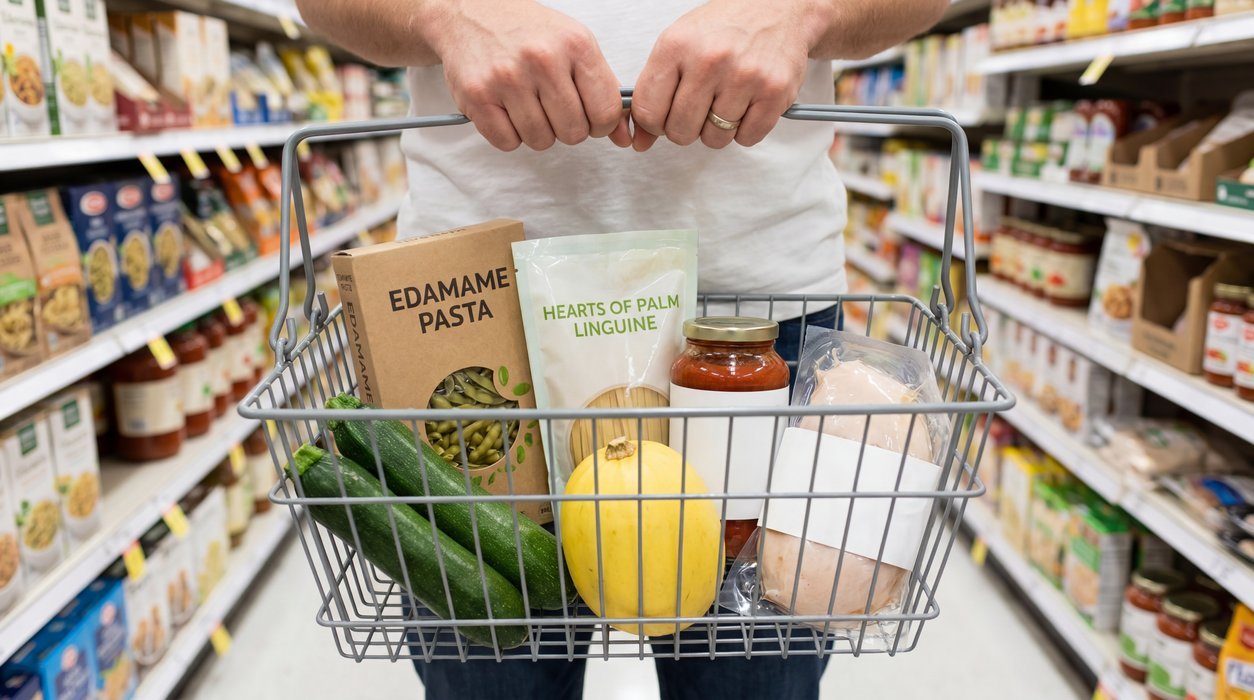
For the next grocery trip, a low-glycemic grocery list can help you pair pasta swaps with sauces, proteins, and sides that make the meal more balanced.
What Changes Might You Notice?
Many people first notice practical changes rather than dramatic ones. Early signs may include steadier fullness after dinner, fewer cravings later in the evening, or less of a post-meal energy dip.
These changes are not guaranteed. Sleep, stress, movement, medication, hormones, digestion, and total food intake can all influence hunger and glucose patterns.
A realistic test period is two to four weeks. During that time, compare how you feel after regular pasta, vegetable noodles, and a higher-protein option like edamame pasta.
If you use a glucose meter or CGM, your own response can be more useful than generic rules. The same noodle may affect two people differently.
Conclusion
Pasta does not have to disappear from a metabolic-health-focused kitchen. The better approach is to choose the right substitute, prepare it well, and build the bowl around protein, fiber, flavor, and satisfaction.
Low-carb pasta alternatives can make weeknight meals feel familiar while reducing the carbohydrate load for some people. The best option is the one that tastes good enough to repeat and leaves you feeling steady afterward.
Start with one swap, one sauce, and one honest comparison. That is often enough to find a new default dinner that feels both practical and enjoyable.
Frequently Asked Questions
What are the best low-carb pasta alternatives?
The best low-carb pasta alternatives are zucchini noodles, spaghetti squash, shirataki noodles, hearts of palm pasta, and edamame pasta. Edamame pasta usually feels the most substantial, while shirataki noodles are very low in digestible carbohydrates. Zucchini noodles and spaghetti squash work best when excess water is managed. Hearts of palm pasta is a convenient mild option for fast meals.
Which low-carb pasta alternative is best for blood sugar?
There is no single best option for everyone. Shirataki noodles and zucchini noodles are very low in digestible carbohydrates, while edamame pasta offers more protein and fiber. For many people, the full meal matters more than the noodle alone. Pairing the pasta alternative with protein, vegetables, and a lower-sugar sauce may support steadier post-meal energy.
Do low-carb noodles taste like regular pasta?
Most low-carb noodles do not taste exactly like wheat pasta. Edamame pasta usually comes closest in chew, while vegetable-based options taste lighter and fresher. The meal usually tastes better when the sauce and protein are chosen for the specific substitute. Expecting a perfect copy can lead to disappointment, but building a good pasta-style bowl is realistic.
How do you make zucchini noodles less watery?
Salt zucchini noodles lightly, let them rest for about 10 minutes, then pat them dry before cooking. Use a short sauté rather than a long simmer. Warm the sauce separately when possible and combine right before serving. Thick sauces also help because they are less likely to become diluted.
Medical Disclaimer: The information provided in this article is for educational purposes only and does not constitute medical advice. Always consult a qualified healthcare provider before making changes to your diet, lifestyle, or treatment plan. TheMetabolicHub.com does not replace professional medical guidance.
References
- American Diabetes Association. Nutrition & Wellness: Goals of Nutrition Management in People with Prediabetes and Diabetes. American Diabetes Association
- Harvard T.H. Chan School of Public Health. Carbohydrates and Blood Sugar. The Nutrition Source
- Harvard T.H. Chan School of Public Health. Fiber. The Nutrition Source
- Mirzababaei A, Abaj F, Clark CCT, Daneshzad E, Mirzaei K. The effect of Glucomannan on fasting and postprandial blood glucose in adults: a systematic review and meta-analysis of randomized controlled trials. J Diabetes Metab Disord. 2022. PMID: 35673426
- Vuksan V, et al. Konjac-mannan (glucomannan) improves glycemia and other associated risk factors for coronary heart disease in type 2 diabetes: a randomized controlled metabolic trial. Diabetes Care. 1999. PMID: 10372241
- Sood N, Baker WL, Coleman CI. Effect of glucomannan on plasma lipid and glucose concentrations, body weight, and blood pressure: systematic review and meta-analysis. Am J Clin Nutr. 2008. PMID: 18842808