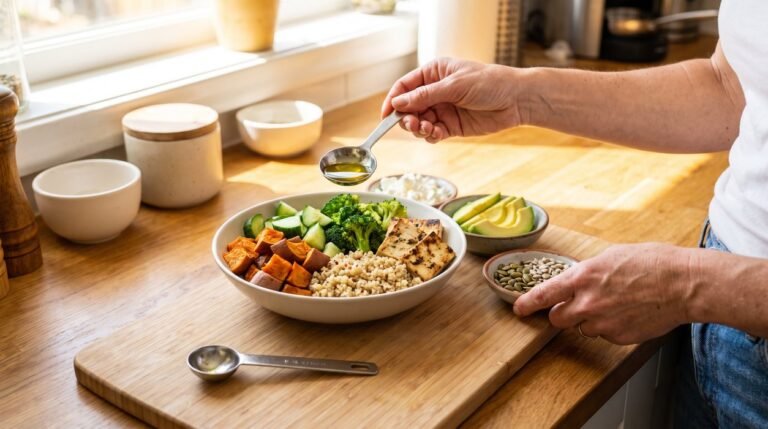
Weight Loss Resistance — Why You Feel Stuck
Eating healthier but still struggling with stubborn weight, belly fat, or constant hunger? Explore the metabolic patterns that can make weight loss feel harder — and practical strategies to help you move forward.

Weight Loss Resistance: When Your Body Feels Stuck
You are eating better. You are trying to move more. But the scale barely changes, your waist still feels stubborn, and cravings seem to appear exactly when your motivation is running low.
If that sounds familiar, the answer is not always to become stricter. Weight loss can feel harder when hunger keeps returning, sleep is poor, stress is high, most of your day is spent sitting, or your meals simply do not keep you satisfied for long enough.
This section is here to help you spot those patterns without blame. You will find practical guidance for stubborn weight, belly fat, plateaus, cravings, weekend regain, low energy, and the frustrating feeling that the strategies that once worked no longer seem to work the same way.
The goal is not another perfect diet. It is to make everyday life easier to manage. A more filling breakfast, a better plan for afternoon cravings, more movement during a desk-heavy day, or a simple backup dinner for exhausting evenings can sometimes be far more useful than trying to overhaul everything at once.
Start with the problem that feels most familiar right now. One small change that makes your routine easier to repeat can be more powerful than another dramatic reset you cannot maintain.
Start with What Feels Most Familiar
Choose the struggle that sounds most like your current experience. Then take one small, practical step from there.
- When Weight Loss Feels Unusually Hard
- When You Still Feel Hungry
- When Your Progress Feels Stalled
- When Stress Changes Your Appetite
- When Poor Sleep Makes Everything Harder
- When You Want a Stronger Movement Routine
Our approach No shame. No perfect diet. Just practical ways to understand what keeps you stuck and build habits that feel easier to repeat in real life.
The latest articles
Cortisol and Weight Gain: What’s Real—and What Social Media Gets Wrong
If social media has told you that a rounder middle, stubborn scale, poor sleep, afternoon fatigue, and food cravings all prove you have “high cortisol,” you are not alone. Cortisol is involved in stress and metabolism, but the viral story is far too tidy. Cortisol weight gain is not a diagnosis, a body type, or…
Volume Eating Made Simple: Build Bigger Meals That Keep You Full for Hours
A small “diet” lunch can leave you prowling the kitchen an hour later, while a generous-looking dinner may feel far more settled. That difference is not just willpower; meal volume, water, protein, fiber, fat, and enjoyment can all shape satisfaction. Volume eating is a way to build physically larger meals with more low-energy-density foods, not…
Eating Too Little and a Weight-Loss Plateau: 6 Signs to Notice
You have made breakfast smaller, removed snacks, and pushed through hunger—yet the scale has barely moved. The natural reaction is to cut more, but a more restrictive plan is not always the safest or most useful next step. Eating too little and a weight-loss plateau can overlap when restriction increases hunger, lowers spontaneous movement, reduces…
How to Plan a Diet Break Without Losing Momentum
Weeks of tracking, planning, and eating in a deficit can make every meal feel like another decision to manage. Wanting a pause does not mean you lack discipline; it may mean the current phase is becoming harder to sustain. If you are learning how to take a diet break, think of it as a preplanned…
Why Weekend Eating Can Erase a Weekday Calorie Deficit
You can eat carefully from Monday through Friday, step on the scale after the weekend, and wonder how several solid days disappeared. The frustrating part is that nothing may have felt extreme: brunch, a restaurant dinner, a few drinks, and less movement than usual. Weekend overeating and weight loss can clash when those small changes…
The Hidden Calories in Healthy Meals That Add Up Fast
You prepare a meal with vegetables, lean protein, and whole grains, yet the final plate somehow contains far more energy than expected. This may not be random, and it does not mean you chose the wrong foods. The encouraging news: recognizing hidden calories in healthy meals can make portions easier to manage without removing nutritious…