Volume Eating Made Simple: Build Bigger Meals That Keep You Full for Hours
A small “diet” lunch can leave you prowling the kitchen an hour later, while a generous-looking dinner may feel far more settled. That difference is not just willpower; meal volume, water, protein, fiber, fat, and enjoyment can all shape satisfaction.
Volume eating is a way to build physically larger meals with more low-energy-density foods, not a rule that every meal must be huge.
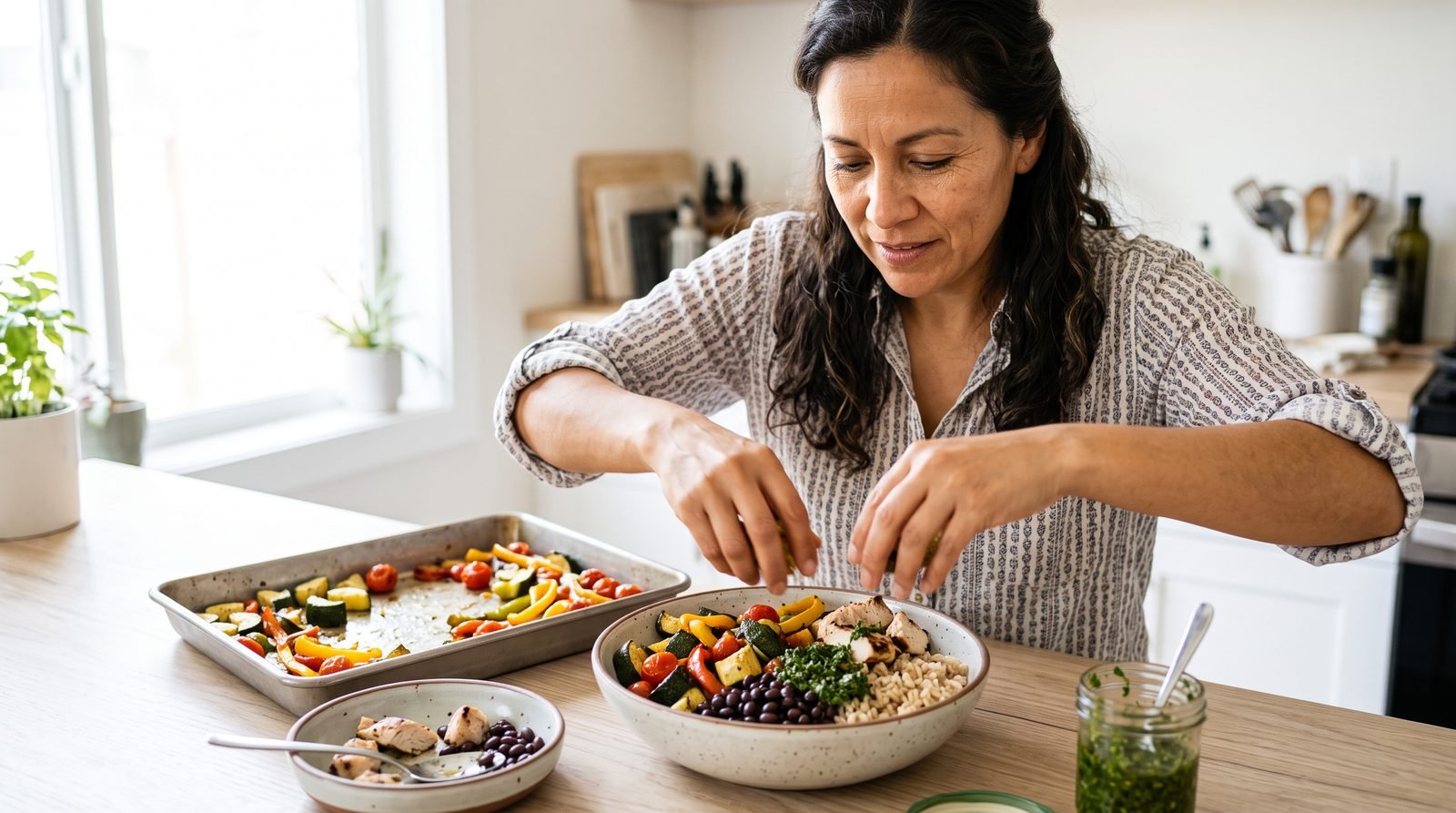
The goal is to make an appropriate amount of energy feel more satisfying by giving vegetables, fruit, broth-based foods, beans, whole grains, and lean protein more room on the plate.
Quick Win: At your next meal, keep the protein and carbohydrate you planned, then add one generous handful of a water-rich vegetable or fruit. Notice fullness, enjoyment, and hunger over the next few hours rather than assuming one meal proves the method works.
What Volume Eating Actually Means
Energy density describes how many calories a food contains for a given weight. Foods with plenty of water and fiber usually provide fewer calories per bite than foods that are dry, fatty, or heavily concentrated.[1]
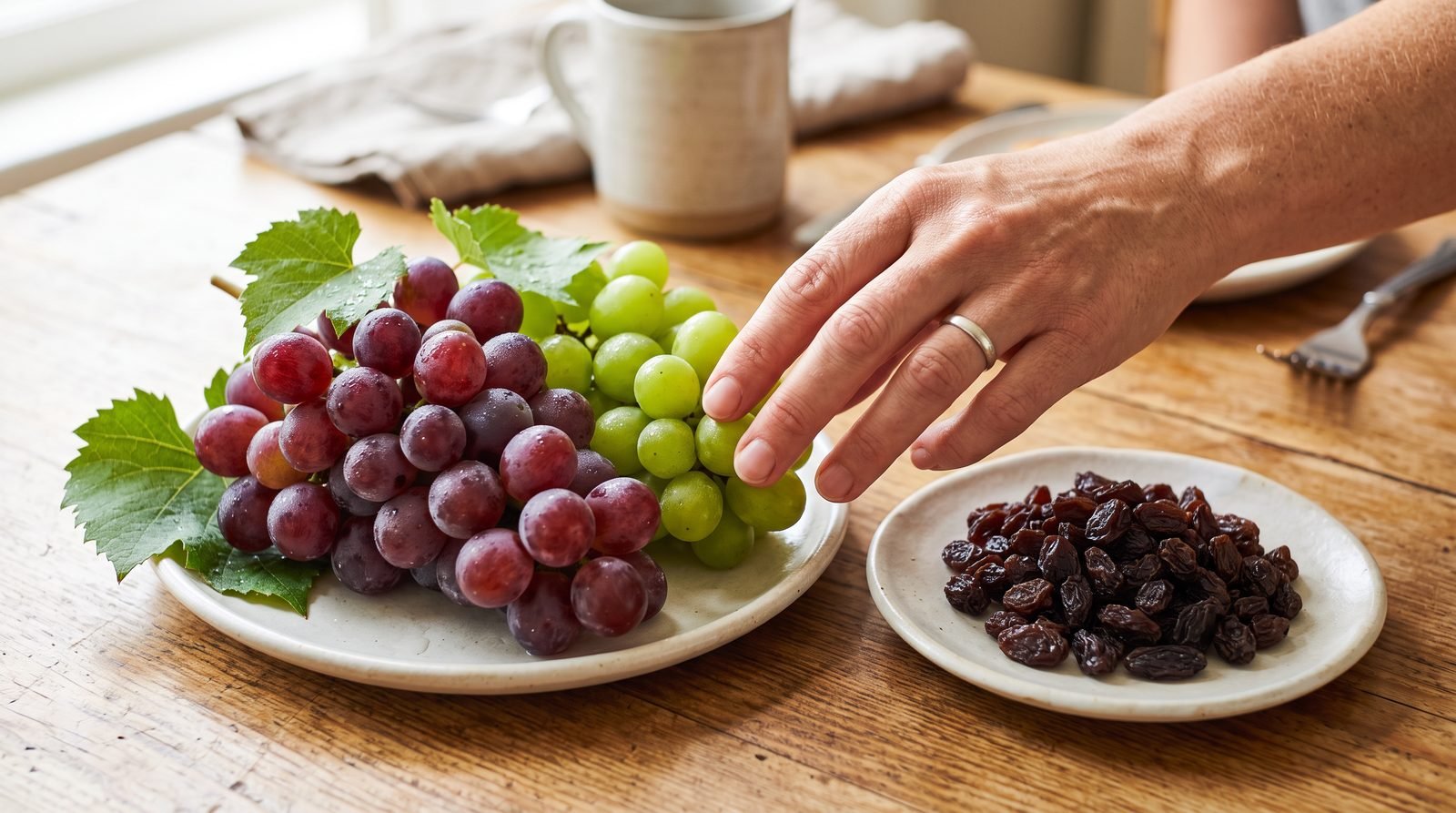
That is why a cup of grapes takes up much more space than a small handful of raisins, even though both come from the same fruit. Broth-based soup also fills more bowl space than crackers because much of its weight comes from water.
The useful idea is substitution, not endless addition. You expand part of a familiar meal with lower-energy-density foods while keeping enough protein, carbohydrate, fat, and flavor to make the meal nutritionally complete and enjoyable.
Key Takeaway: A bigger-looking meal can contain a moderate amount of energy, but “big” does not automatically mean filling. Protein, fiber, taste, and your own appetite still matter.
What the evidence can—and cannot—promise
A meta-analysis of clinical trials found that changing dietary energy density affected fullness, while the pooled hunger result was not significant and studies varied widely.[2] Feeling pleasantly full after eating is not identical to having no appetite later.
Short controlled-feeding studies also show that portion size and energy density can influence how much people eat. In one two-day crossover trial, reducing both lowered energy intake without meaningful differences in reported hunger or fullness between conditions.[3]
How Energy Density Changes a Meal
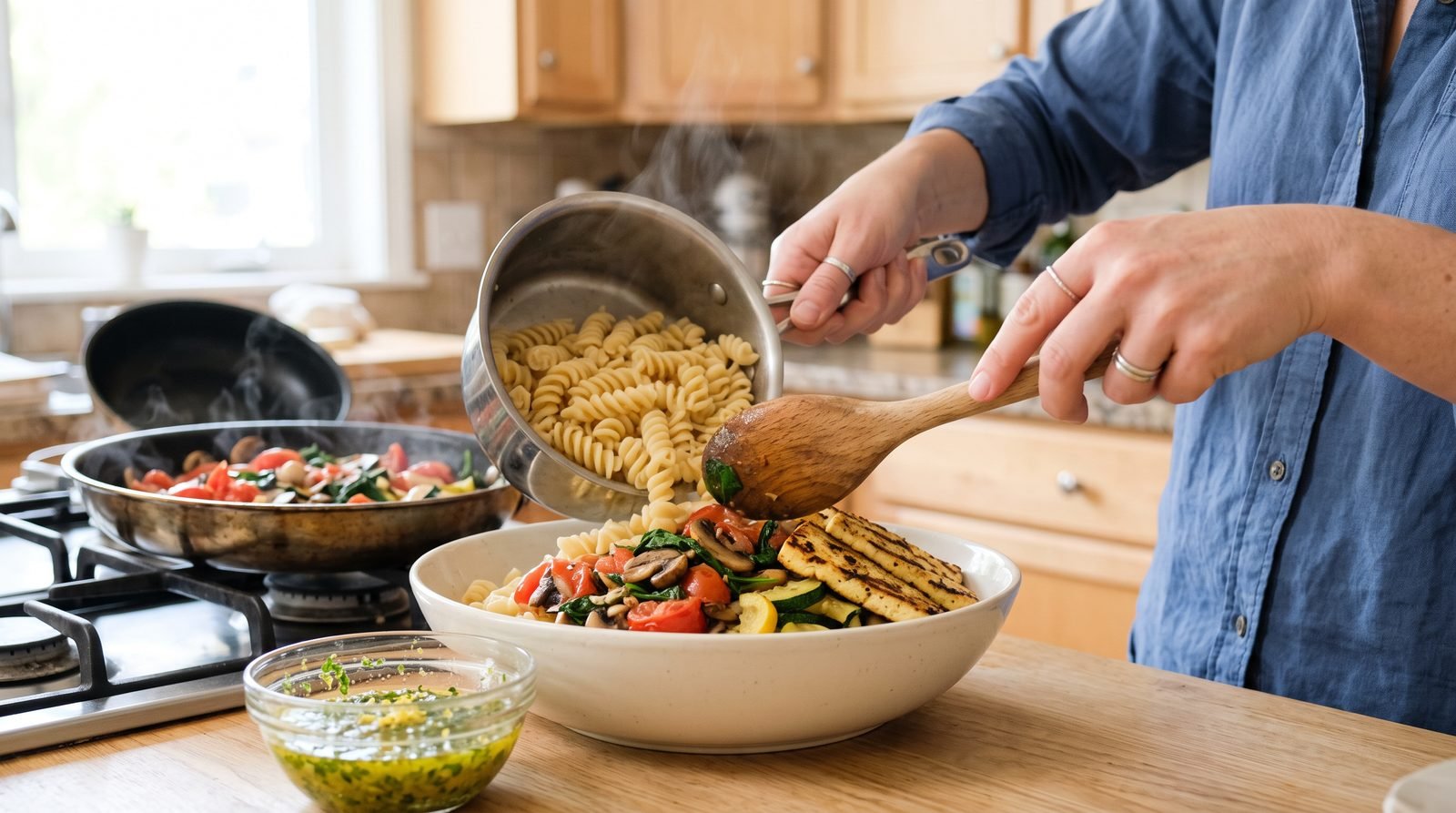
Consider a bowl of pasta with a creamy sauce. The same size bowl can become less energy-dense when some pasta and sauce are replaced with tomatoes, mushrooms, spinach, zucchini, or a broth-based vegetable sauce.
The meal is not “free food,” and the vegetables do not cancel the pasta. They change the proportions, increase physical volume, and add micronutrients and fiber while leaving space for a satisfying carbohydrate portion.
| Meal part | Volume-building option | What still matters |
|---|---|---|
| Vegetables and fruit | Leafy greens, tomatoes, cucumber, mushrooms, zucchini, berries, melon, citrus | Preparation method and added oils, cheese, dressings, or sugar |
| Soups and stews | Broth, vegetables, beans, lentils, lean meat or tofu | Adequate protein and sodium needs, especially with medical conditions |
| Grains and starches | Pair rice, pasta, oats, bread, or potatoes with vegetables, beans, or fruit | Do not shrink the carbohydrate until the meal feels punitive |
| Protein | Fish, poultry, eggs, Greek yogurt, cottage cheese, tofu, tempeh, beans, lentils | Choose a portion that fits your needs, preferences, and health context |
| Flavor and fat | Herbs, citrus, salsa, vinegar, spices, yogurt sauces, measured oils | Fat supports flavor and nutrient absorption; it is concentrated, not forbidden |
Larger portions are not automatically helpful. A 2022 meta-analysis of randomized feeding trials found that larger portions were associated with greater daily energy intake, while long-term body-weight evidence was insufficient.[4]
The strategy works best when the added volume comes from foods that meaningfully lower the whole meal’s energy density. Simply piling vegetables beside an unchanged large meal may improve vegetable intake without reducing total energy.
How to Build a High-Volume Meal in Five Steps
1. Start with the meal you already like
Do not begin with a giant bowl of vegetables you do not want. Start with tacos, pasta, curry, a sandwich, oatmeal, rice, or another familiar meal, then decide which part can be expanded naturally.
2. Choose one strong protein anchor
Protein can help a meal feel more substantial, although studies differ and the evidence is not a promise that more is always better. A systematic review in adults with overweight or obesity found possible improvements in fullness, with important heterogeneity and risk-of-bias limitations.[6]
Practical anchors include eggs, yogurt, cottage cheese, poultry, fish, tofu, tempeh, lentils, or beans. If you have kidney disease or another condition affecting protein needs, ask your healthcare professional for personalized guidance.
3. Add water-rich produce where it fits
Add vegetables to soups, curries, pasta sauces, tacos, omelets, and grain bowls. Fruit can expand oatmeal, yogurt, or a snack without forcing savory vegetables into every eating occasion.
In controlled meal studies, serving more low-energy-dense vegetables increased vegetable intake. Replacing some higher-energy-dense components was more effective for lowering meal energy than merely adding vegetables to the existing plate.[5]
4. Keep a satisfying carbohydrate
Volume eating does not require cauliflower rice at every meal or the removal of bread, pasta, potatoes, or grains. Carbohydrates can provide energy, pleasure, cultural familiarity, and useful nutrients.
A workable meal might pair rice with stir-fried vegetables and tofu, or pasta with vegetables and chicken. The carbohydrate is part of the meal rather than something hidden under a mountain of lettuce.
5. Use fat and toppings deliberately
Oil, nuts, seeds, cheese, avocado, and creamy dressings can make food satisfying. They are also energy-dense, so pouring them freely can change the meal more than adding vegetables changes it in the other direction.
This is one reason calories and nutrients answer different questions. A nutritious ingredient can be energy-dense, and an energy-dense ingredient can still belong in a balanced meal.
How to Use Volume Eating Without Overdoing It
One thing worth pushing back on here: the largest possible meal is not automatically the best meal. Extreme volume can become uncomfortable, worsen bloating, or turn eating into a contest to obtain the fewest calories for the most food.
A meal can also look enormous and still lack protein, fat, or enough total energy. If you feel physically stretched but mentally unsatisfied, cold, fatigued, preoccupied with food, or hungry again quickly, “more vegetables” may not be the answer.
- Increase fiber gradually. Sudden large amounts of beans, bran, or cruciferous vegetables can cause gas and discomfort.
- Respect digestive conditions. Gastroparesis, inflammatory bowel disease flares, bowel narrowing, and some post-surgical situations may require different volume or fiber guidance.
- Watch liquid calories separately. Drinks can add substantial energy without producing the same experience as chewing a meal.
- Do not ignore eating-disorder signs. Anxiety about energy-dense food, rigid substitutions, or using stomach discomfort to avoid eating deserves support from a qualified professional.
This is not a personal failure if a high-volume plate does not keep you satisfied. Appetite is influenced by sleep, stress, medication, menstrual-cycle changes, recent weight loss, meal timing, and many other factors.
If hunger rises during a calorie deficit, a broader set of strategies for hunger during weight loss may be more useful than relying on food volume alone.
Everyday High-Volume Meal Examples
These are flexible examples rather than recipes. Adjust amounts to your appetite, medical needs, household, and culture; the point is the structure, not a perfect plate.
- Oatmeal: Cook oats with extra water or milk, then add berries and Greek yogurt instead of relying only on a small bowl of dry granola.
- Tacos: Keep tortillas and the filling you enjoy, then add cabbage, pico de gallo, peppers, beans, or a crunchy salad alongside.
- Pasta: Combine pasta with a tomato-based sauce, mushrooms, spinach, zucchini, and a clear protein source.
- Sandwich lunch: Pair a satisfying sandwich with vegetable soup, fruit, or a dressed chopped salad rather than replacing the sandwich with leaves.
- Snack: Pair popcorn or fruit with yogurt, cheese, edamame, or another protein-containing food when that combination feels more sustaining.
The most successful change is usually the one that leaves the meal recognizable. If the “improved” version no longer tastes like the food you wanted, the strategy may be difficult to repeat.
A Practical Seven-Day Test
Choose one meal per day for a week. Keep its main protein and carbohydrate, then change only one volume lever: add produce, use a broth-based starter, mix vegetables into the dish, or swap part of a dense topping for a lighter sauce.
- Before eating, rate hunger from 0 to 10 without judging the number.
- Eat at a comfortable pace and stop when pleasantly satisfied, not painfully full.
- Record satisfaction immediately after the meal.
- Notice when comfortable hunger returns and whether you spent the interval thinking about food.
- Keep, adjust, or discard the change based on the pattern across several days.
Early progress may look like a meal feeling more abundant, fewer searches for “something else,” or better vegetable intake. Weight change cannot be predicted from one week, and short-term scale movement is affected by fluid, digestion, sodium, and carbohydrate intake.
Conclusion
Volume eating is a meal-design tool, not a requirement to live on soup and salad. It works by lowering energy density through thoughtful substitutions while preserving enough protein, carbohydrate, fat, and flavor for real satisfaction.
Start with one familiar meal and one change. If the result tastes good, feels comfortable, and supports a steadier appetite, repeat it; if not, adjust the meal rather than blaming yourself.
Frequently Asked Questions
Does volume eating help with weight loss?
Volume eating may make a moderate calorie reduction feel more manageable for some people, but it does not guarantee weight loss. Total intake, food choices, activity, sleep, medications, health conditions, and individual appetite all matter.
Can you do volume eating without counting calories?
Yes. You can focus on meal proportions, hunger, satisfaction, and repeatable substitutions without tracking numbers. If tracking becomes stressful or rigid, a non-numerical approach may be a better fit.
Are high-volume meals always low in calories?
No. A large meal can still be energy-dense when it contains generous oil, nuts, cheese, creamy sauces, fried foods, or sugary drinks. Those foods are not forbidden, but their portions affect the meal’s energy density.
Why am I still hungry after a huge salad?
The salad may lack protein, carbohydrate, fat, or enough total energy. It may also be unsatisfying for reasons unrelated to size, including poor sleep, stress, recent restriction, medication, or simply wanting a different meal.
Medical Disclaimer: This article is for educational purposes only and is not a substitute for individualized medical advice, diagnosis, or treatment. Speak with a qualified healthcare professional if you have a medical condition, take medication, are pregnant, or have persistent or concerning symptoms. Seek urgent medical care for severe or rapidly worsening symptoms.
References
- Centers for Disease Control and Prevention. Eat More, Weigh Less? How to Manage Your Weight Without Being Hungry. CDC guide to energy density
- Moosavian SP, Haghighatdoost F. Dietary energy density and appetite: A systematic review and meta-analysis of clinical trials. Nutrition. 2020;69:110551. PMID: 31525704
- Rolls BJ, Roe LS, Meengs JS. Reductions in portion size and energy density of foods are additive and lead to sustained decreases in energy intake. Am J Clin Nutr. 2006;83(1):11–17. PMID: 16400043
- Higgins KA, Hudson JL, Hayes AMR, et al. Systematic review and meta-analysis on the effect of portion size and ingestive frequency on energy intake and body weight among adults in randomized controlled feeding trials. Adv Nutr. 2022;13(1):248–268. PMID: 34687532
- Rolls BJ, Roe LS, Meengs JS. Portion size can be used strategically to increase vegetable consumption in adults. Am J Clin Nutr. 2010;91(4):913–922. PMID: 20147467
- de Carvalho KMB, Pizato N, Botelho PB, Dutra ES, Gonçalves VSS. Dietary protein and appetite sensations in individuals with overweight and obesity: a systematic review. Eur J Nutr. 2020;59(6):2317–2332. PMID: 32648023