
7 Blood-Sugar-Friendly Breakfast Formulas That Still Include Carbs
A blood sugar friendly breakfast does not have to remove oats, toast, fruit, tortillas, or sweet potato. Carbohydrate affects blood glucose, but the amount, food form, preparation, medication, activity, sleep, and the rest of the meal all help shape your response.
The seven breakfasts below keep a measured carbohydrate source and pair it with protein, fiber, produce, or unsaturated fat. Each is a complete one-serving recipe, not a rigid prescription.
Quick Win: Choose one breakfast you already eat. Keep a carbohydrate you enjoy, add a clear protein source, and include a fiber-rich whole food. Change one variable at a time so any glucose pattern you observe is easier to interpret.
What Makes a Breakfast More Blood-Sugar Friendly?
The CDC explains that carbohydrate foods raise blood glucose and that eating them with protein, fat, or fiber can slow how quickly glucose rises.[1] That is a useful building principle, but it is not a promise that every mixed meal produces the same curve.
The American Diabetes Association’s 2026 standards emphasize individualized meal plans rather than one ideal percentage of carbohydrate, protein, and fat. They also favor nutrient-dense patterns built around vegetables, whole fruit, legumes, lean protein, whole grains, nuts, seeds, and suitable dairy or alternatives.[2]
A 2024 meta-analysis found that adding protein to carbohydrate changed acute glucose and insulin responses, with smaller glucose effects in adults with type 2 diabetes than in adults without diabetes.[3] Protein is therefore part of the meal—not a universal glucose “eraser.”
Key Takeaway: Think “carbohydrate plus support,” not “carbohydrate versus health.” A measured whole-food carbohydrate, a meaningful protein source, and fiber-rich produce or seeds make a practical starting structure.
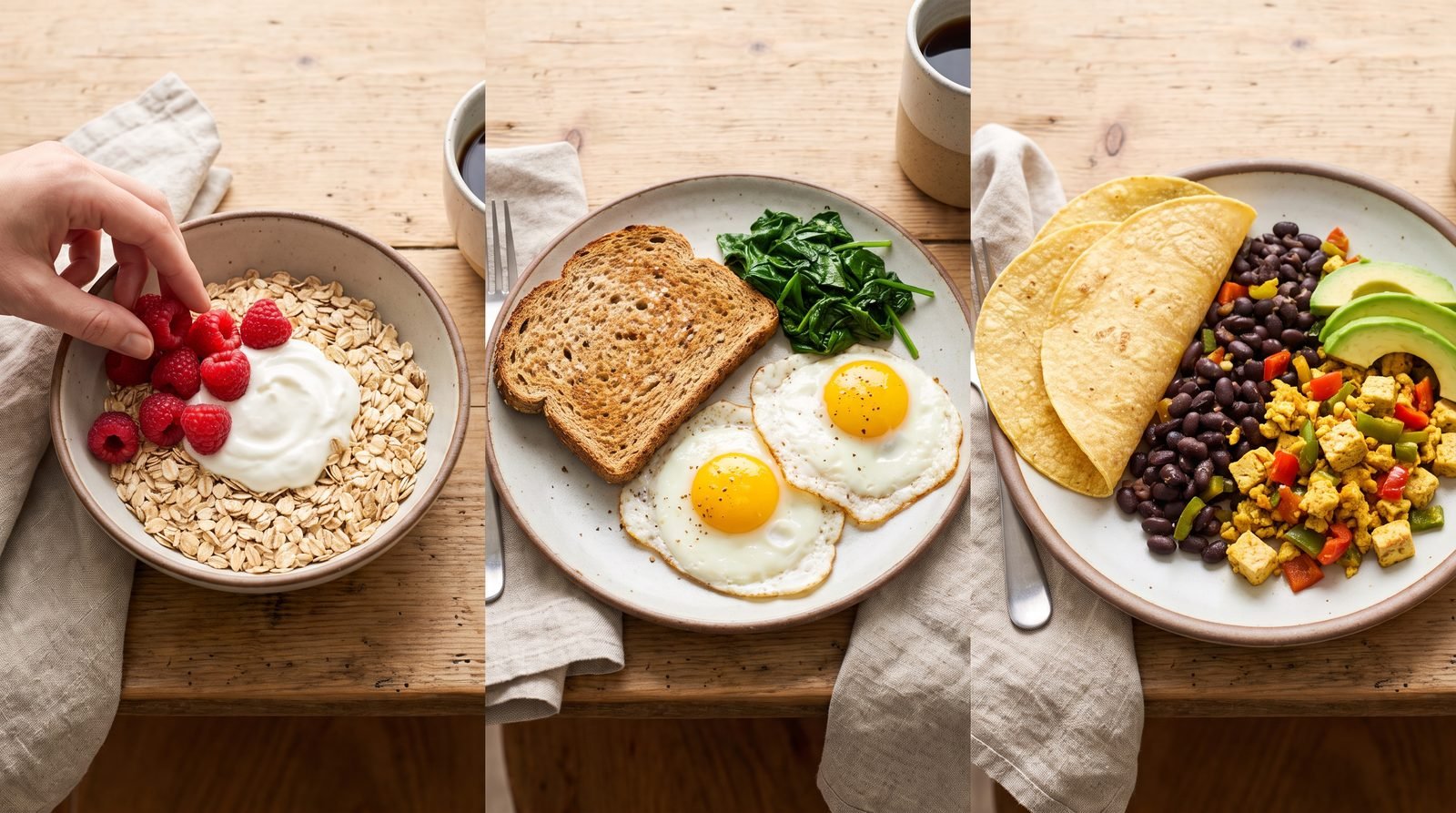
Lower-glycemic-index or lower-glycemic-load breakfasts reduced acute post-meal glycemic responses in a meta-analysis of randomized trials.[4] GI is still only one feature: portions, ripeness, cooking, meal composition, and individual physiology matter.
If you use insulin or a medicine that can cause hypoglycemia, do not make a major carbohydrate change without a plan for monitoring and medication adjustment from your diabetes team.
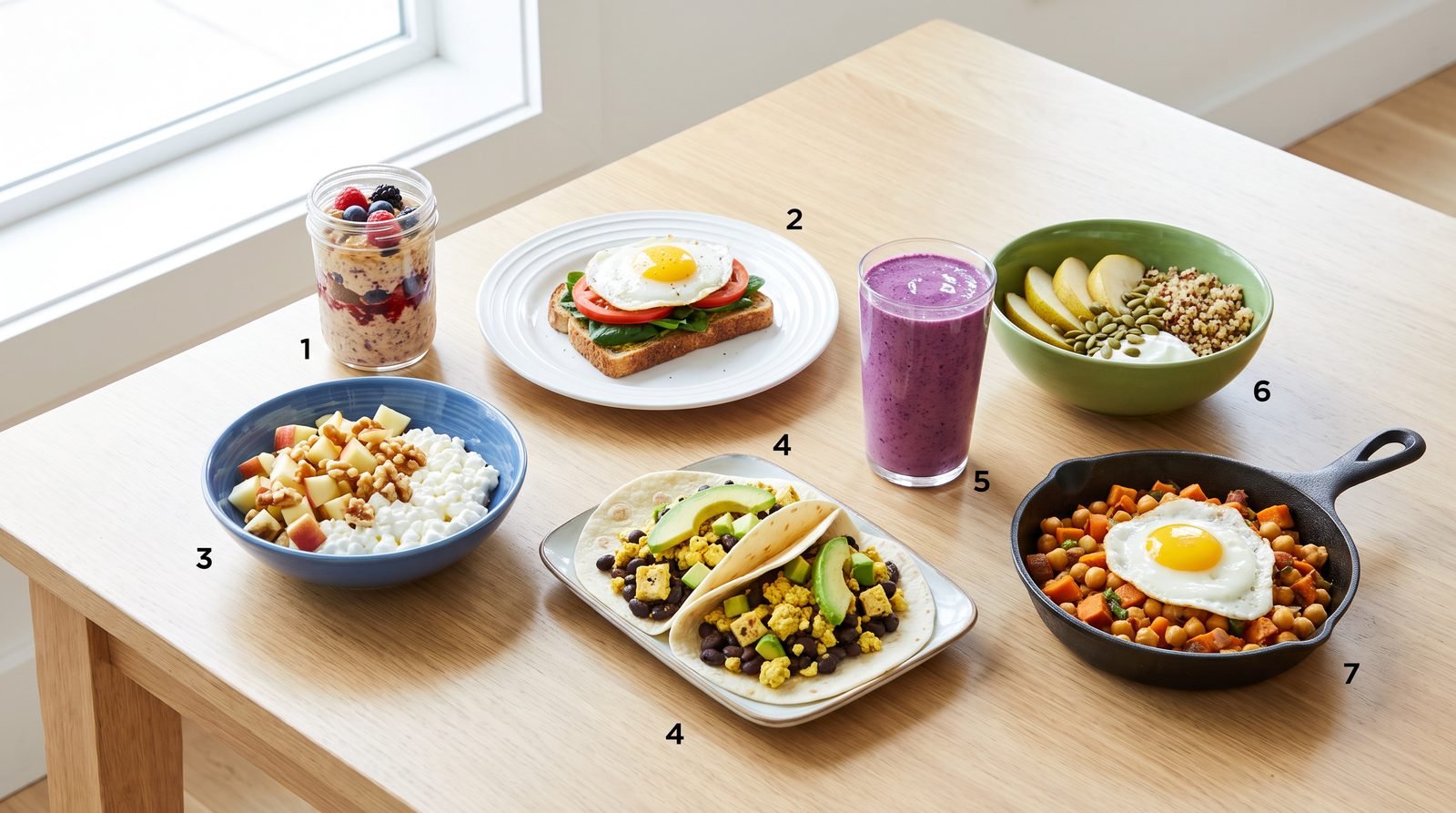
Seven Carb-Inclusive Breakfast Recipes
Nutrition values below are estimates per serving calculated from standard food-composition data. Product labels, fruit size, draining, and substitutions change the totals. Optional sweeteners and beverages are not included.
1. Berry–Peanut Butter Overnight Oats
Yield: 1 serving.
Ingredients:
- 1/2 cup old-fashioned rolled oats
- 3/4 cup plain nonfat Greek yogurt
- 1/3 cup unsweetened milk or fortified soy milk
- 1/2 cup raspberries or mixed berries
- 1 tablespoon chia seeds
- 1 tablespoon natural peanut butter
- 1/4 teaspoon cinnamon
Directions:
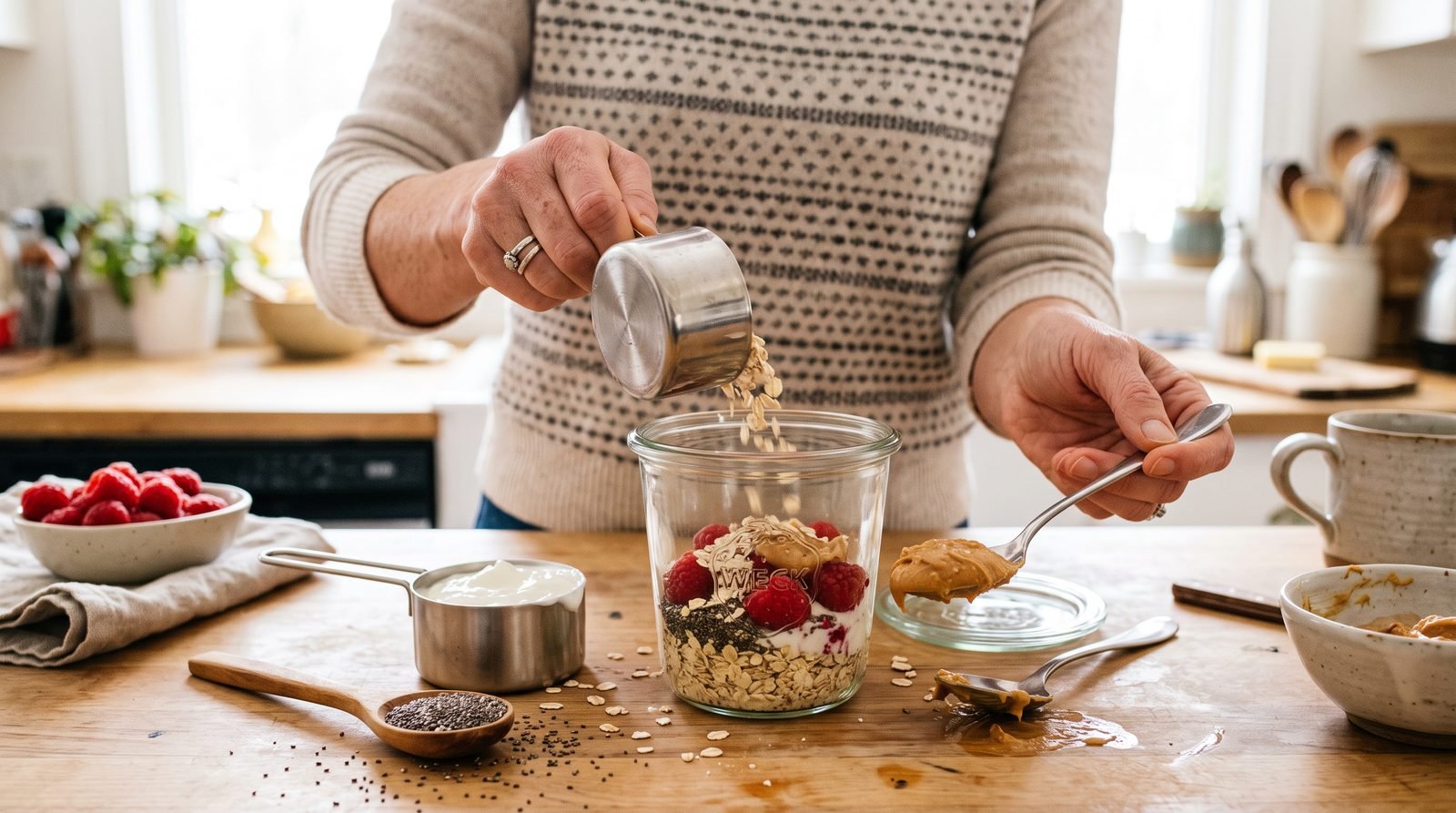
- Stir the oats, yogurt, milk, chia, and cinnamon in a lidded jar.
- Fold in half the berries, cover, and refrigerate for at least 6 hours.
- Top with the remaining berries and peanut butter before eating.
Estimated nutrition per serving: approximately 430 calories, 27 g protein, 51 g carbohydrate, 11 g fiber, 15 g sugar, and 14 g fat.
2. Spinach–Tomato Egg Toast
Yield: 1 serving.
Ingredients:
- 1 large slice whole-grain bread
- 2 large eggs
- 1 packed cup baby spinach
- 1/2 cup chopped tomato
- 1 teaspoon olive oil
- 1 tablespoon crumbled feta
- Black pepper and a pinch of dried oregano
Directions:
- Toast the bread. Warm the oil in a small skillet over medium heat.
- Cook the tomato and spinach for 2 minutes, then add the eggs and scramble until set.
- Spoon onto the toast and finish with feta, pepper, and oregano.
Estimated nutrition per serving: approximately 335 calories, 22 g protein, 28 g carbohydrate, 6 g fiber, 5 g sugar, and 16 g fat.
3. Apple–Walnut Cottage Cheese Bowl
Yield: 1 serving.
Ingredients:
- 1 cup low-fat cottage cheese
- 1 small apple, cored and diced
- 1 tablespoon chopped walnuts
- 1 tablespoon ground flaxseed
- 1/2 teaspoon cinnamon
- 1 teaspoon lemon juice
Directions:
- Toss the diced apple with lemon juice and cinnamon.
- Spoon the cottage cheese into a bowl and add the apple.
- Sprinkle with walnuts and ground flaxseed.
Estimated nutrition per serving: approximately 365 calories, 31 g protein, 37 g carbohydrate, 7 g fiber, 24 g sugar, and 13 g fat.
4. Black Bean–Tofu Breakfast Tacos
Yield: 1 serving, 2 tacos.
Ingredients:
- 2 small corn tortillas
- 4 ounces firm tofu, drained and crumbled
- 1/3 cup no-salt-added black beans, rinsed and drained
- 1/2 cup diced bell pepper and onion
- 1 teaspoon olive oil
- 2 tablespoons salsa
- 1/4 avocado, sliced
- 1/4 teaspoon ground cumin and a pinch of salt
Directions:
- Warm the oil in a skillet and cook the pepper and onion for 3 minutes.
- Add tofu, beans, cumin, and salt; cook for 4 minutes, stirring gently.
- Warm the tortillas and divide the filling between them. Top with salsa and avocado.
Estimated nutrition per serving: approximately 440 calories, 23 g protein, 49 g carbohydrate, 14 g fiber, 5 g sugar, and 19 g fat.
5. Kefir–Berry Oat Smoothie
Yield: 1 serving, about 14 fluid ounces.
Ingredients:
- 1 cup plain low-fat kefir
- 1/2 cup frozen mixed berries
- 1/2 small banana
- 1/4 cup rolled oats
- 1 tablespoon hemp hearts
- 1 tablespoon natural peanut butter
- 1/2 cup ice and water as needed
Directions:
- Add kefir, berries, banana, oats, hemp hearts, peanut butter, and ice to a blender.
- Blend until smooth, adding a small splash of water only if needed.
- Pour into a glass and drink with the oat and berry pulp intact; do not strain.
Estimated nutrition per serving: approximately 400 calories, 20 g protein, 49 g carbohydrate, 7 g fiber, 23 g sugar, and 15 g fat.
6. Pear–Pumpkin Seed Quinoa Yogurt Bowl
Yield: 1 serving.
Ingredients:
- 1/2 cup cooked and cooled quinoa
- 3/4 cup plain nonfat Greek yogurt
- 1/2 medium pear, diced
- 1 tablespoon pumpkin seeds
- 1 tablespoon ground flaxseed
- 1/4 teaspoon cinnamon
- 1/4 teaspoon vanilla extract
Directions:
- Stir the quinoa, yogurt, cinnamon, and vanilla in a bowl.
- Add the diced pear.
- Finish with pumpkin seeds and ground flaxseed.
Estimated nutrition per serving: approximately 390 calories, 27 g protein, 48 g carbohydrate, 8 g fiber, 17 g sugar, and 11 g fat.
7. Chickpea–Sweet Potato Breakfast Hash
Yield: 1 serving.
Ingredients:
- 1/2 cup cooked sweet potato cubes
- 1/2 cup no-salt-added chickpeas, rinsed and drained
- 1 large egg
- 1/2 cup chopped zucchini
- 1/4 cup diced red bell pepper
- 1 teaspoon olive oil
- 1/4 teaspoon smoked paprika
- 1 tablespoon chopped parsley and a pinch of salt
Directions:
- Warm the oil in a skillet over medium heat. Cook sweet potato, chickpeas, zucchini, pepper, paprika, and salt for 5 minutes.
- Make a well, add the egg, cover, and cook until the white is firm and the yolk reaches your preferred doneness.
- Finish with parsley and serve immediately.
Estimated nutrition per serving: approximately 455 calories, 20 g protein, 59 g carbohydrate, 13 g fiber, 11 g sugar, and 17 g fat.
How to Adjust a Recipe Safely
Start with a recipe close to your usual breakfast rather than switching everything at once. If you monitor glucose, compare the same recipe on more than one ordinary day before drawing conclusions; sleep, stress, illness, activity, and medication timing can all change the result.
- Need less carbohydrate? Reduce one carbohydrate ingredient modestly, not every carbohydrate source at once. Keep the protein and produce.
- Need more energy? Add a measured portion of oats, fruit, whole-grain toast, nuts, seeds, avocado, or another food that fits your plan.
- Need more fiber? Increase beans, berries, oats, chia, or flax gradually and drink enough fluid if that is medically appropriate.
- Need less sodium? Choose no-salt-added beans, compare cottage-cheese labels, and season with herbs, citrus, or spices.
- Have kidney disease, gastroparesis, or food allergies? Ask your clinician or registered dietitian which protein, potassium, phosphorus, fiber, and texture choices fit your needs.
Evidence on fiber in starchy foods suggests that fiber type and food structure can alter acute glucose responses, but studies are heterogeneous and more research is needed in people with glucose abnormalities.[5] Whole foods are helpful building blocks, not standardized medicines.
For more context, use this broader guide to choosing breakfast for blood sugar. If you are changing the protein portion, review how protein can affect blood sugar, especially when insulin dosing is involved.
Conclusion
A blood-sugar-friendly breakfast can include carbohydrates. The practical move is to choose a portion that fits your plan and pair it with protein, fiber, produce, or unsaturated fat rather than expecting one “perfect” food to control the entire response.
Pick one recipe, keep the ingredients and portion consistent for a few trials, and use your appetite, preferences, clinical targets, and reliable glucose data to decide what to repeat.
Frequently Asked Questions
How many carbohydrates should breakfast contain?
There is no single amount for everyone. Your medication, insulin-to-carbohydrate ratio, body size, activity, pregnancy status, goals, and usual eating pattern matter. A registered dietitian or diabetes educator can help set an individualized target.
Is fruit too sugary for breakfast?
Whole fruit can fit. It supplies carbohydrate as well as water, fiber, vitamins, and minerals. Portion, fruit form, ripeness, and what accompanies it matter; juice usually acts differently from intact fruit.
Are smoothies a poor choice for blood sugar?
Not automatically. A smoothie made with whole fruit, unsweetened dairy or soy, oats, and seeds retains more structure than juice, but it can be consumed quickly. Use measured ingredients and keep the fiber-containing pulp.
Should I test glucose after trying a new breakfast?
If glucose monitoring is part of your care plan, follow the timing and targets supplied by your clinician. One reading is not a verdict; repeatable patterns are more informative, and urgent or extreme values need medical guidance.
Medical Disclaimer: This article is for educational purposes only and is not a substitute for individualized medical advice, diagnosis, or treatment. Speak with a qualified healthcare professional before changing carbohydrate intake, insulin, or glucose-lowering medication, and seek urgent care for severe hypoglycemia, marked hyperglycemia, vomiting, confusion, or rapidly worsening symptoms.
References
- Centers for Disease Control and Prevention. Diabetes Meal Planning. Updated May 15, 2024. CDC meal-planning guidance
- American Diabetes Association Professional Practice Committee. Facilitating Positive Health Behaviors and Well-being to Improve Health Outcomes: Standards of Care in Diabetes—2026. Diabetes Care. 2026;49(Suppl 1):S89–S131. ADA Standards, Section 5
- Wolever TMS, Zurbau A, Koecher K, Au-Yeung F. The effect of adding protein to a carbohydrate meal on postprandial glucose and insulin responses: a systematic review and meta-analysis of acute controlled feeding trials. J Nutr. 2024;154(9):2640–2654. PMID: 39019167
- Toh DWK, Koh ES, Kim JE. Lowering breakfast glycemic index and glycemic load attenuates postprandial glycemic response: a systematically searched meta-analysis of randomized controlled trials. Nutrition. 2020;71:110634. PMID: 31838460
- Tsitsou S, Athanasaki C, Dimitriadis G, Papakonstantinou E. Acute effects of dietary fiber in starchy foods on glycemic and insulinemic responses: a systematic review of randomized controlled crossover trials. Nutrients. 2023;15(10):2383. PMID: 37242267
- U.S. Department of Agriculture. FoodData Central. USDA nutrient-data information