10 Hidden Sugars in Salad Dressings — and How to Spot Them
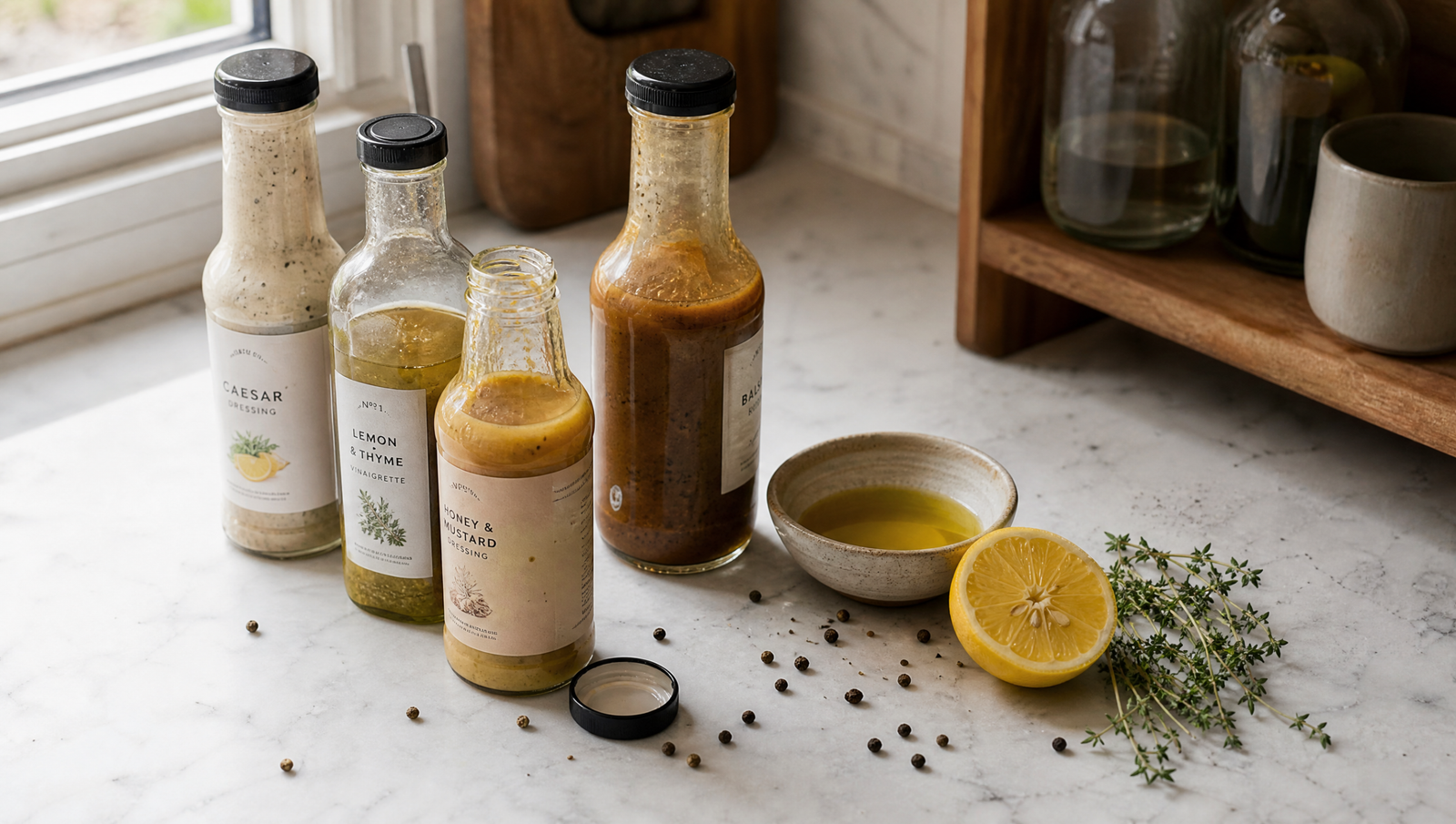
You build the salad carefully — leafy greens, chopped vegetables, maybe some grilled chicken or chickpeas. Then you reach for the bottle labeled “light,” “natural,” or “made with real ingredients.” Without realizing it, you may have just added the sugar equivalent of a small cookie to your lunch.
Hidden sugars in salad dressings are one of the more consistent blind spots in everyday eating. They’re not a crisis — but for anyone managing blood sugar fluctuations, cravings, or insulin sensitivity, they can quietly add up across the day.
This guide covers which sweeteners to recognize, how to read labels accurately, and which low-sugar salad dressing options actually hold up in taste and nutrition.
Quick Wins: Low-Sugar Dressing Swaps
- Extra-virgin olive oil + apple cider vinegar + Dijon mustard = zero added sugar, if the mustard label checks out
- Tahini + lemon juice + water = rich, nutty, near-zero added sugar
- Full-fat plain Greek yogurt + herbs + garlic = a better base than most commercial “healthy” ranch
- Target on commercial dressings: fewer than 2g added sugar per 2-tablespoon serving
Why Hidden Sugars in Salad Dressings Add Up
No single salad dressing is going to derail anyone’s metabolic health on its own. The issue is repetition and pattern — not one meal, but the cumulative effect of using a moderately sweetened dressing at lunch and dinner, day after day.
Two tablespoons of a popular honey Dijon dressing can contain 6–9 grams of sugar. That’s not far from the sugar content of a standard cookie. Many people also pour more than a two-tablespoon serving without realizing it.
For people managing post-meal blood sugar spikes, insulin sensitivity, or persistent cravings, these small repeated sources of added sugar can matter more than they appear to on the label.
The “Healthy Halo” Problem
Products labeled “fat-free,” “organic,” “clean,” or “made with real fruit” can trigger what researchers call the health halo effect — a cognitive bias where one positive attribute leads people to underestimate other nutritional downsides.
A fat-free raspberry vinaigrette sounds virtuous. In practice, manufacturers often replace fat with sugar to maintain palatability. The ingredient list tells a different story than the front of the package.
The 10 Sweeteners to Recognize in Salad Dressings
1. High-Fructose Corn Syrup
High-fructose corn syrup contains both fructose and glucose. The fructose portion is processed primarily in the liver; the glucose portion raises blood sugar and stimulates insulin more directly.
Research has linked consistently high fructose intake to elevated triglycerides and fat storage in the liver, especially when total intake is high.[1] HFCS remains one of the common sweeteners in commercial dressings.
2. Cane Sugar / Evaporated Cane Juice
Cane sugar and evaporated cane juice sound less processed than white sugar, but metabolically they are very similar. Both provide sucrose, which breaks down into glucose and fructose.
“Evaporated cane juice” can also make sugar easier to miss because it does not look like the word people are scanning for: sugar.
3. Honey
“Made with real honey” is a marketing angle, not a guarantee that the dressing is low in sugar. Honey contains glucose and fructose and still counts toward total and added sugar intake.
Honey does contain trace antioxidants, but the quantities used in most commercial dressings are too small to turn a sweetened dressing into a meaningful health food.
4. Agave Nectar
Agave is often promoted as low-glycemic because it may produce a smaller immediate blood glucose rise than some other sweeteners. The reason is its high fructose content.
That does not make it metabolically neutral. Fructose is processed largely in the liver, and consistently high intakes are associated with higher triglycerides and liver fat accumulation in susceptible contexts.[2]
5. Fruit Juice Concentrate
Apple, white grape, and pear juice concentrates appear in “clean label” dressings as sweetening agents. This is fruit with much of the water and fiber removed, leaving a concentrated source of sugar.
Under current U.S. FDA labeling rules, fruit or vegetable juice concentrates used as sweeteners are generally counted as added sugars on the Nutrition Facts panel. That makes the Added Sugars line a useful starting point, but the ingredient list still matters.[3]
6. Maple Syrup
Real maple syrup contains trace minerals, but its primary sugar is sucrose. That means it still breaks down into glucose and fructose during digestion.
Its presence in a dressing does not make that dressing low in sugar or automatically better for blood sugar management.
7. Maltose
Maltose is a sugar made of two glucose molecules linked together. It can raise blood sugar quickly because it breaks down into glucose.
It may appear in dressings derived from fermented or malted ingredients, including certain Asian-style and teriyaki-flavored varieties.
8. Molasses
Molasses is a byproduct of refining cane sugar. It retains slightly more minerals than white sugar, but it is still a concentrated sweetener.
Its dark, complex flavor can make a dressing taste savory or smoky rather than obviously sweet, which makes it easier to overlook.
9. Brown Rice Syrup
Brown rice syrup is common in gluten-free and “natural” products. It is composed largely of maltose and glucose-based carbohydrates.
It can sound like a gentler alternative, but it still adds fast-absorbing carbohydrate with little nutritional value beyond energy.
10. Glucose Syrup / Corn Syrup
Standard glucose syrup or corn syrup is different from HFCS because it is composed primarily of glucose-based sugars. That means it can raise blood sugar and trigger an insulin response directly.
It appears under both names in commercial dressings, especially in lower-cost and shelf-stable varieties.
How to Read Labels for Sugar in Dressings
Since 2020, U.S. food manufacturers have been required to list “Added Sugars” as a separate line beneath total sugars on the Nutrition Facts panel. This is one of the best places to start.[3]
A practical threshold: aim for fewer than 2 grams of added sugar per two-tablespoon serving. Above 4 grams per serving, cumulative intake becomes more meaningful, especially if the dressing is used often or poured generously.
Ingredient List Order Matters
Ingredients are listed in descending order by weight. If any form of sugar appears within the first five ingredients, it is probably a meaningful part of the formula rather than a trace ingredient.
Also watch for sugar split across multiple names. A dressing may contain cane sugar, honey, and fruit juice concentrate, which makes no single sweetener look dominant even though the total sugar content is still significant.
Label Claims to Be Skeptical Of
| Label Claim | What It Actually Means |
|---|---|
| “No added sugar” | No sugars were added during processing. Still check the ingredient list and total sugars, especially outside the U.S. where labeling rules may differ. |
| “Low sugar” | May sound helpful, but the exact meaning depends on the product category and local labeling rules. |
| “Naturally sweetened” | Not a guarantee of low sugar. It says nothing about quantity or blood sugar impact. |
| “Organic” | Refers to farming practices. Organic cane sugar and organic honey are still sugar. |
One thing worth pushing back on: the assumption that “natural sweetener” means metabolically safer. Agave, honey, fruit juice concentrate, and maple syrup may sound more wholesome than corn syrup, but they still contribute sugars that count toward total intake. Some are especially high in fructose; others, like maple syrup, are mostly sucrose, which breaks down into glucose and fructose. The source matters less than the amount, frequency, and overall dietary pattern.[2]
Best, Caution, and Limit: A Quick Dressing Guide
| Dressing Type | Sugar Profile | Guidance |
|---|---|---|
| Olive oil + vinegar / citrus | 0g added sugar | Best choice — simple, flexible, and naturally sugar-free |
| Tahini-based | 0–1g added sugar | Best choice — rich, filling, and usually near-zero added sugar |
| Greek yogurt-based homemade dressing | 0g added sugar | Best choice — creamy, higher in protein, and easy to flavor with herbs |
| Simple commercial vinaigrettes | 0–2g added sugar | Use with caution — check the label because brands vary widely |
| Balsamic-based dressings | 2–5g added sugar | Use with caution — portion size matters |
| Honey mustard / honey-based | 5–9g added sugar | Limit — especially if used often or poured generously |
| Sweet fruit vinaigrettes | 6–12g added sugar | Limit — often one of the highest-sugar categories |
What You Can Actually Do About It
Start with a five-minute label audit of the dressings currently in the refrigerator. Check the Added Sugars line, then scan the ingredient list for the ten names above. Most people find at least one surprise.
For homemade alternatives, the foundation is fat and acid. Extra-virgin olive oil paired with apple cider vinegar or fresh lemon juice delivers real flavor without added sweetener. Add Dijon mustard, garlic, herbs, pepper, or a pinch of salt for balance.
Tahini-based dressings are another strong option. Sesame paste thinned with lemon juice and water creates a rich, nutty texture with little or no added sugar.
For creamy dressings, full-fat plain Greek yogurt blended with herbs, garlic, and a drizzle of olive oil can outperform many commercial “healthy” ranch alternatives in both nutrition and satiety.
What Changes When You Cut Dressing Sugar
Some people notice the difference fairly quickly — especially fewer post-lunch energy dips or steadier hunger between meals. The effect depends on the rest of the meal, portion size, activity, sleep, and overall diet.
Over time, consistently lowering added sugar intake may support better triglycerides, insulin sensitivity, and overall metabolic markers — especially when paired with higher-fiber meals, enough protein, and regular movement.[4]
These are not dramatic effects from a single condiment swap. But condiments are a daily pattern — and daily patterns are where insulin sensitivity is influenced over time.
Common Mistakes When Avoiding Sugar in Dressings
The most common mistake is trusting front-of-pack claims without checking the ingredient list. Marketing language is not the same as the Nutrition Facts panel.
The second is underestimating portion size. Most nutrition labels are based on two tablespoons. If you pour four tablespoons, the sugar doubles.
The third is switching to “natural” or “organic” options without checking labels. Organic cane sugar, organic honey, agave, and fruit juice concentrate are still sweeteners.
This is why hidden sugars in food can be confusing. The issue is rarely one obvious dessert. More often, it is a series of small additions that look healthy in isolation but become meaningful when repeated every day.
Frequently Asked Questions
What are hidden sugars in salad dressings?
Hidden sugars in salad dressings are sweeteners that may not appear simply as “sugar” on the ingredient list. Common examples include high-fructose corn syrup, agave nectar, fruit juice concentrate, brown rice syrup, honey, glucose syrup, cane sugar, and evaporated cane juice. Checking both the Added Sugars line and the full ingredient list is the most reliable way to identify them.
How much sugar should a salad dressing have per serving?
For blood sugar management purposes, aim for 2 grams or fewer of added sugar per two-tablespoon serving. Most homemade oil-and-vinegar dressings contain zero added sugar. Commercial dressings above 4 grams per serving can add up meaningfully when used regularly or poured in larger portions.
Is honey in salad dressing a concern for blood sugar?
Honey is still a source of sugar. Dressings “made with real honey” are not automatically low-sugar or metabolically neutral. The amount matters most: if honey pushes the dressing above 4 grams of added sugar per serving, it is worth using less often or in a smaller portion.
What is the best salad dressing for blood sugar?
Oil-based dressings — particularly those using extra-virgin olive oil and acid such as vinegar or fresh citrus — are among the strongest choices for blood sugar management because they contain no added sugars and support absorption of fat-soluble vitamins from salad vegetables. Extra-virgin olive oil also fits well within a Mediterranean-style eating pattern, which has been linked to better cardiometabolic outcomes in clinical research. Tahini-based dressings are another strong option, offering richness and satiety with near-zero added sugar.
Conclusion
Hidden sugars in salad dressings are easy to miss because they often appear in foods that look healthy. The salad itself may be an excellent choice, but a dressing adding 6–10 grams of added sugar at multiple meals can become a repeated metabolic signal over time.
Reading labels, learning sugar’s many aliases, and defaulting to simple homemade alternatives are practical, sustainable steps — not perfectionism. The ingredient list is always more informative than the front of the package.
Your metabolic health is built on the sum of daily patterns. Dressings are a pattern that is genuinely easy to improve.
Medical Disclaimer: The information provided in this article is for educational purposes only and does not constitute medical advice. Always consult a qualified healthcare provider before making changes to your diet, lifestyle, or treatment plan. TheMetabolicHub.com does not replace professional medical guidance.
References
- Tappy L, Lê KA. Metabolic effects of fructose and the worldwide increase in obesity. Physiol Rev. 2010;90(1):23-46. PMID: 20086073
- Stanhope KL, Schwarz JM, Keim NL, et al. Consuming fructose-sweetened, not glucose-sweetened, beverages increases visceral adiposity and lipids and decreases insulin sensitivity in overweight/obese humans. J Clin Invest. 2009;119(5):1322-1334. PMID: 19381015
- U.S. Food and Drug Administration. Nutrition Facts Label — Added Sugars. fda.gov
- Malik VS, Hu FB. Sugar-sweetened beverages and cardiometabolic health: an update of the evidence. Nutrients. 2019;11(8):1840. PMID: 31426423
- Estruch R, et al. Primary Prevention of Cardiovascular Disease with a Mediterranean Diet Supplemented with Extra-Virgin Olive Oil or Nuts. N Engl J Med. 2018;378(25):e34. PMID: 29897866