
How to Eat More Fiber Without the Bloat: A Gentle 14-Day Plan

Going from very little fiber to bran cereal, a large bean salad, and a fiber bar in one day can produce more gas than confidence.
A better experiment is slower: change one food, hold long enough to observe it, and advance only when your digestion is reasonably settled.
This 14-day fiber increase plan is a flexible titration framework. It does not require you to reach a universal target by day 14, and it cannot guarantee a bloat-free result.
Quick Win: For the first two days, do not add anything. Write down your usual fiber sources, fluid pattern, bowel comfort, and bloating. A baseline makes the next small change more useful than a dramatic “healthy eating” reset.
Why a Gradual Fiber Increase Matters
Fiber is not one substance. Different fibers vary in solubility, viscosity, fermentability, food structure, and effects on stool. Gut bacteria can ferment some types and produce gas; other fibers primarily add bulk or hold water.
A review of 103 clinical trials found that gastrointestinal tolerance differed substantially by nondigestible carbohydrate type and dose.[4] That makes “add 10 grams tomorrow” a poor universal instruction.
The NIDDK advises adults to add fiber a little at a time so the body can adjust. Its general reference range is 22–34 grams per day depending on age and sex, while personal needs may differ.[1]
The Nutrition Facts label uses 28 grams as the Daily Value for a 2,000-calorie reference diet.[3] That number is useful for comparing packaged foods, not a deadline or individualized prescription.
Key Takeaway: Progress means finding more fiber-containing foods you can tolerate consistently. It does not mean forcing the highest number or accepting severe discomfort.

Before You Start: Check the Safety Fit
Do not use a generic high-fiber plan as treatment for new or severe symptoms. Ask a clinician first if you have a known bowel narrowing or obstruction risk, active inflammatory bowel disease symptoms, gastroparesis, recent gastrointestinal surgery, severe constipation, or a prescribed fluid restriction.
Seek prompt medical advice for blood in stool, black stool, unexplained weight loss, fever, persistent vomiting, severe or worsening abdominal pain, a swollen abdomen, inability to pass stool or gas, or a major unexplained change in bowel habits.
If you have recurring bloating, diarrhea, constipation, or pain, a symptom diary can help a doctor or dietitian identify whether lactose, fructose, FODMAPs, fiber dose, or another condition deserves targeted evaluation.[2]
Choose your observation rules
Use a simple 0–3 scale once daily: 0 for none, 1 for mild and easy to ignore, 2 for noticeable but manageable, and 3 for severe or disruptive. Track bloating, pain, gas, stool ease, and stool frequency separately.
Advance only when symptoms are near your usual level. If a symptom becomes clearly worse, hold the current step or return to the last comfortable pattern. That is information, not failure.
Choose a starting food you can repeat
The best first change is usually familiar, affordable, and easy to portion. A food you can eat several times gives you a clearer signal than an unusual restaurant meal with many ingredients.
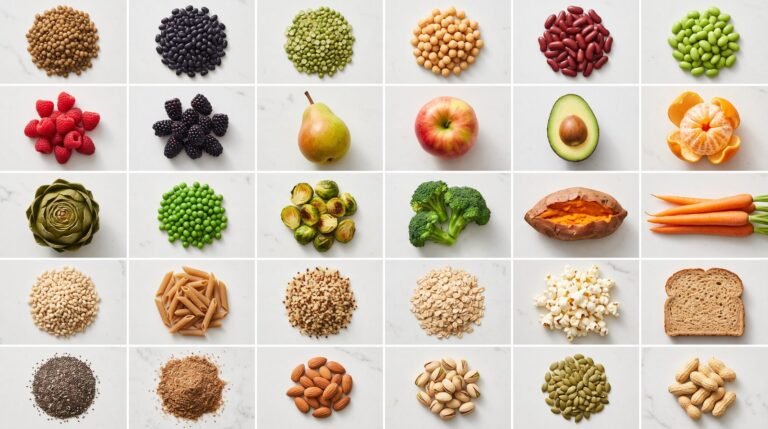
Favor one whole-food source before a concentrated powder or bar. Oats, berries, cooked vegetables, whole-grain bread, or a small legume portion also contribute nutrients and make the food context easier to recognize.
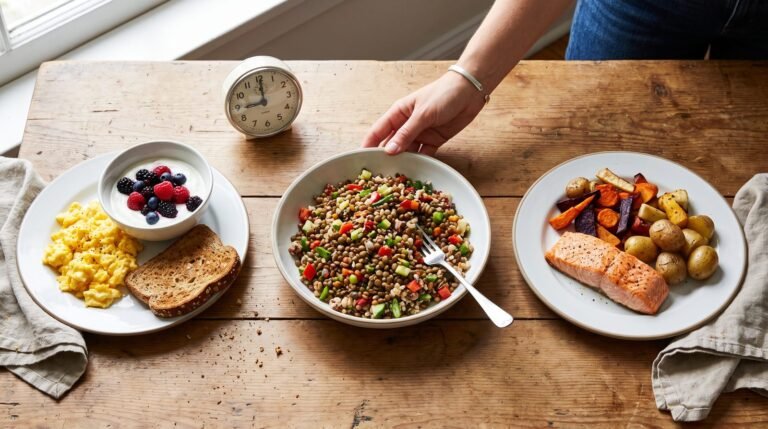
Keep the surrounding meal adequate. Replacing a complete breakfast with berries alone may change hunger and total intake, making digestive observations harder to interpret. Add or substitute thoughtfully instead of turning the plan into restriction.
Decide in advance what “too much” means for you. A mild increase in gas that resolves may be tolerable; pain, disrupted sleep, urgent diarrhea, or symptoms that impair normal activities are reasons to stop advancing.
The Gentle 14-Day Fiber Increase Plan
Days 1–2: Establish your baseline
Eat normally. Record the obvious fiber sources already present—whole grains, fruit, vegetables, beans, lentils, nuts, seeds, or a supplement—and note when you eat them.
Check one or two Nutrition Facts labels. Comparing fiber per serving is enough; you do not need a perfect gram total. Also note fluid intake, but do not force a fixed amount if you have heart, kidney, or another condition that changes fluid needs.
Days 3–4: Add one gentle food source
Choose one familiar food and one eating occasion. Examples include adding 1/2 cup berries to breakfast, replacing a low-fiber bread with one whole-grain slice, or adding 1/2 cup cooked carrots to dinner.
Keep everything else as stable as practical. Chew slowly, sit down to eat, and observe the next day rather than stacking several changes because the first meal felt fine.
Days 5–6: Hold and learn
Repeat the same change if it felt comfortable. Do not escalate automatically. A two-day hold helps you distinguish a repeatable response from a single unusual day.
If bloating is mild and settles, continue. If it is disruptive or pain increases, return to baseline and consider a smaller portion or a different food after symptoms settle.
Days 7–8: Add a second source at another meal
Keep the first tolerated change and add one different source elsewhere: a small serving of oats, cooked vegetables, a piece of whole fruit, or a measured spoonful of seeds.
Choose texture deliberately. Cooked vegetables and soft oats may feel different from a large raw salad or coarse bran, even when both contain fiber.
Days 9–10: Trial legumes cautiously—or hold
If the first two steps are comfortable, try 1/4 cup rinsed canned lentils or beans with one meal. Rinsing removes some of the liquid surrounding canned legumes, but it does not make them symptom-free.
If legumes already cause significant gas or you are not settled, skip this step and repeat a tolerated grain, fruit, or vegetable instead. The plan is not a bean challenge.
Days 11–12: Diversify without doubling
Choose one new category rather than doubling every portion: fruit if you have focused on grains, vegetables if breakfast has carried most of the change, or nuts and seeds if they suit your medical needs.
Avoid introducing a fiber supplement, high-fiber bar, large bran portion, and multiple servings of inulin-enriched foods at the same time. Highly fermentable ingredients can be difficult to interpret when stacked.

Days 13–14: Consolidate your comfortable pattern
Stop adding and repeat the two or three changes that felt easiest. Review your notes for timing, portion, food form, stool comfort, and whether symptoms returned to baseline between steps.
Your result might be modest: berries at breakfast, cooked vegetables at dinner, and beans twice a week. Consistency is more useful than a temporary high number followed by avoidance.
How to Troubleshoot Bloating
The NIDDK notes that too much fiber can worsen gas symptoms for some people.[2] If bloating rises, first reduce the number of simultaneous changes rather than removing every fiber food.
- Change one variable. Adjust portion, type, timing, or preparation—not all four.
- Try cooked instead of raw. Texture and meal volume may affect comfort.
- Spread changes across meals. One very large fiber load may feel different from smaller portions.
- Check added fibers. Inulin, chicory root, oligofructose, and sugar alcohols in bars or powders can complicate the picture.
- Consider meal pace. Eating quickly, drinking through a straw, gum chewing, and carbonated drinks can increase swallowed air.
- Review fluid guidance. NIDDK recommends liquids to help fiber work, but people with a fluid restriction need individualized advice.[1]
If you have IBS, fiber type matters. A 2014 meta-analysis found benefit for soluble fiber supplements, while bran did not show benefit in the included IBS trials.[5]
That does not mean everyone should start psyllium. Supplements can interact with medication timing and should be discussed with a clinician or pharmacist.
A 2025 systematic review in generally healthy people found small-to-modest effects on laxation and substantial variation among fiber sources.[6] More is not predictably better for every outcome.
What to Do After Day 14
Continue the comfortable pattern for another week before making a new change. If your intake remains low, add one more tolerated source and repeat the hold-and-observe cycle.
Use 15 quick ways to add more fiber without bloating when you want additional options. If digestion is sensitive, compare gentler high-fiber foods rather than forcing coarse bran or large raw portions.
Ask a registered dietitian for help if your diet is becoming narrower, you cannot increase fiber without persistent symptoms, constipation continues, or you are unsure how a digestive diagnosis changes the plan.
Conclusion
A gradual fiber plan is an observation process, not a race. Baseline first, one change at a time, holding days, and clear stop conditions make it easier to learn what your gut actually tolerates.
At day 14, keep the smallest set of changes that improved variety or bowel comfort without creating disruptive symptoms. That is a durable foundation for the next step.
Frequently Asked Questions
How quickly should I increase fiber?
There is no universal speed. This plan changes one source every few days and includes holding periods, but persistent symptoms are a reason to slow down and seek individualized advice.
Does bloating mean fiber is bad for me?
Not necessarily. Dose, type, fermentability, food form, meal size, and an underlying condition can all matter. Severe, persistent, or painful bloating needs medical assessment rather than repeated self-experiments.
Should I take a fiber supplement?
Food can be a practical first route, but some people benefit from a supplement. Ask a clinician or pharmacist about product type, dose, fluid needs, medication spacing, and whether a supplement fits your diagnosis.
What if I am still constipated after two weeks?
Do not keep escalating automatically. Constipation has many causes, including medications and medical conditions. Contact a healthcare professional, especially with pain, vomiting, bleeding, weight loss, or inability to pass gas.
Medical Disclaimer: This article is for educational purposes only and is not a substitute for individualized medical advice, diagnosis, or treatment. Ask a qualified healthcare professional before substantially changing fiber or fluid intake if you have a digestive disease, swallowing difficulty, bowel-narrowing risk, recent surgery, kidney or heart disease, take medication, are pregnant, or have persistent symptoms.
References
- National Institute of Diabetes and Digestive and Kidney Diseases. Eating, Diet, & Nutrition for Constipation. NIDDK constipation nutrition guidance
- National Institute of Diabetes and Digestive and Kidney Diseases. Eating, Diet, & Nutrition for Gas in the Digestive Tract. NIDDK gas and diet guidance
- U.S. Food and Drug Administration. Daily Value on the Nutrition and Supplement Facts Labels. FDA Daily Value reference
- Myhrstad MCW, Tunsjø H, Charnock C, Telle-Hansen VH. Gastrointestinal effects and tolerance of nondigestible carbohydrate consumption. Adv Nutr. 2023;14(1):153–191. PMID: 36041173
- Moayyedi P, Quigley EMM, Lacy BE, et al. The effect of fiber supplementation on irritable bowel syndrome: a systematic review and meta-analysis. Am J Gastroenterol. 2014;109(9):1367–1374. PMID: 25070054
- van der Schoot A, Chung M, Wallace TC, et al. Fiber intake and laxation in people with normal bowel function: systematic review. Dietary Reference Intakes Systematic Review. 2025. PMID: 41264751