
Protein Timing for Women: The Simple Schedule That Makes Each Meal Count
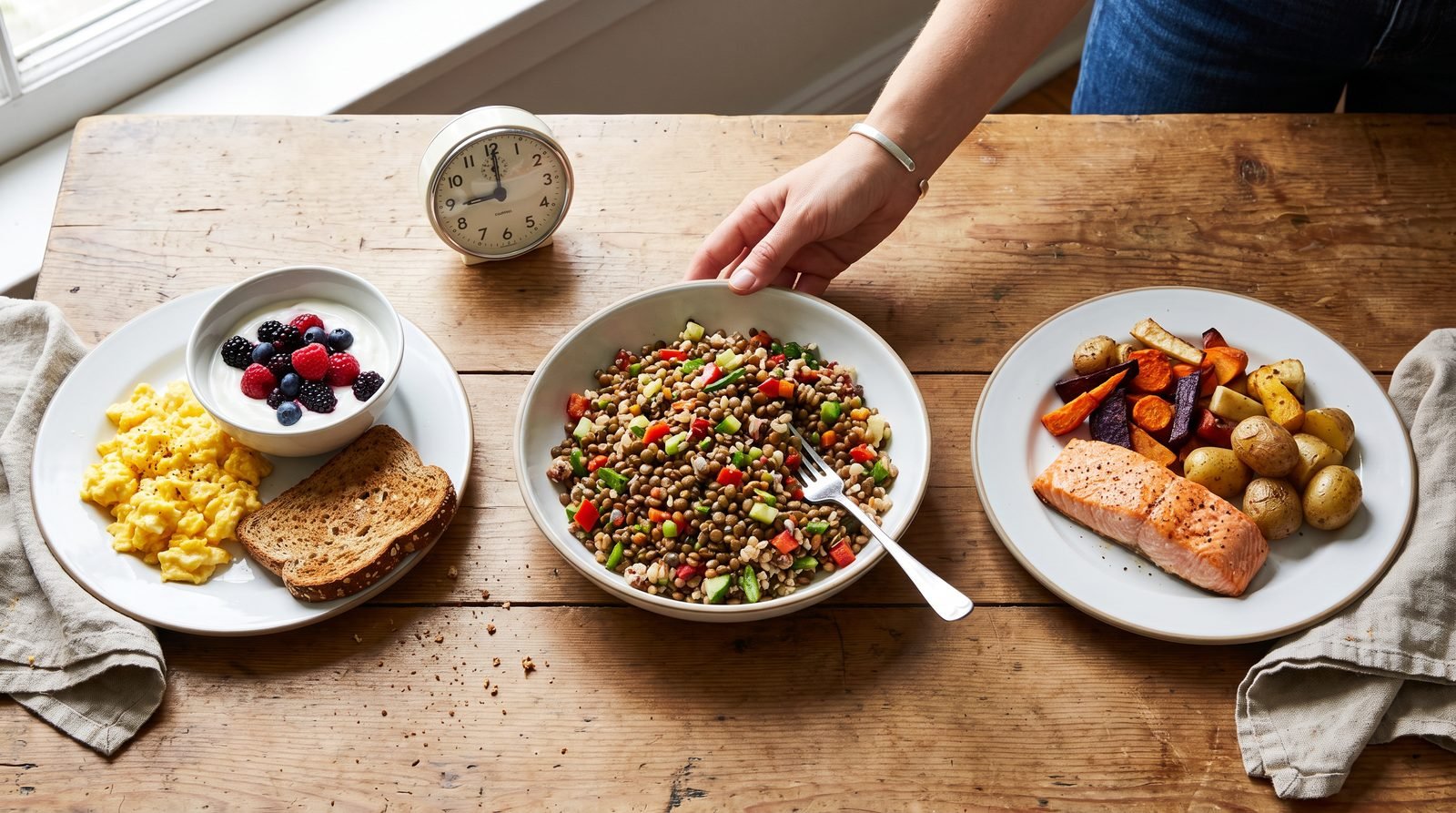
If dinner carries nearly all your protein while breakfast is mostly coffee and toast, you are not doing anything “wrong.” That pattern is simply common—and it gives you an easy place to experiment. Protein timing for women is less about hitting a perfect minute and more about giving several meals enough protein to feel substantial, support muscle repair, and help you meet your daily needs without an enormous evening catch-up.
Quick win: Keep your usual dinner and strengthen the lightest earlier meal. Add Greek yogurt, eggs, cottage cheese, tofu, beans, fish, poultry, or another protein food you enjoy. Repeat at lunch if needed. That one change is more useful than chasing a narrow “anabolic window.”
What protein timing actually means
Protein timing can refer to several different ideas: how protein is distributed across meals, whether you eat it near exercise, and whether a late snack has a useful role. Those questions are related, but they are not interchangeable.
For most women, the order of priorities is straightforward:
- Eat enough overall. A perfect distribution cannot compensate for a chronically inadequate daily intake.
- Include protein in more than one eating occasion. This makes the daily total easier to reach and can make meals more satisfying.
- Pair protein with resistance training. Muscle responds to both the training signal and the amino acids supplied by food.
- Fine-tune timing only if it helps your goals and routine. The schedule should serve your life, not become another rule to fail.
The U.S. adult protein Recommended Dietary Allowance is commonly expressed as 0.8 grams per kilogram of body weight per day. It is a population-level adequacy benchmark, not a personalized target for every goal or health condition. Training volume, age, energy intake, pregnancy, breastfeeding, illness, and clinical needs can change the conversation. A registered dietitian or clinician can help personalize the amount when those factors matter.
What the evidence can—and cannot—promise
A small controlled feeding study in eight healthy adults found higher 24-hour muscle protein synthesis when roughly 30 grams of protein was eaten at each of three meals instead of concentrating most protein at dinner. That experiment is useful for understanding biology, but its size and short duration cannot prove that everyone needs the same meal target or that the pattern produces better long-term strength.
Larger evidence reviews are more cautious. A 2021 systematic review found that a more even protein pattern was associated with higher muscle mass in some studies, but evidence was insufficient for firm conclusions about strength or protein turnover. A 2020 systematic review and meta-analysis found that protein supplementation could improve lean body mass, while subgroup analyses did not show a clear advantage for a particular timing strategy. In other words, daily adequacy and training appear more important than precision timing.
That nuance matters. You may see confident claims that the body can “only absorb” 20 or 30 grams at once. The body can digest and use more than that; the narrower question is how much maximally stimulates muscle protein synthesis after a specific meal. Reviews emphasize that the response varies with body size, age, meal composition, training, and the protein source. More protein at one meal is not automatically wasted, and there is no universal cutoff.
If you want a deeper explanation of the evidence behind spreading protein across meals, that guide covers the general distribution debate. Here, the goal is to turn the uncertainty into a workable schedule for women with real jobs, workouts, appetites, and family meals.
A simple protein schedule that bends with your day
Start with three protein opportunities rather than three identical meals. Each opportunity should contain a recognizable protein anchor. Your portions do not have to match, and snacks are optional.
Morning: repair the protein gap
Breakfast is often the lightest protein meal. Instead of rebuilding it from scratch, add one anchor to what you already eat:
- Stir Greek yogurt or cottage cheese into a fruit-and-oat breakfast.
- Add eggs or tofu alongside toast.
- Use dairy or fortified soy milk in oats rather than water.
- Pair a bagel or cereal with yogurt, eggs, or a simple smoothie that contains a real protein source.
The point is not to eliminate carbohydrate. Carbohydrate can support training and energy; fiber-rich choices can also help fullness and digestive health. Protein is an addition to a balanced meal, not a replacement for everything else.

Midday: make lunch more than a side dish
Lunch may look balanced but contain only a token amount of protein. A few chickpeas scattered over greens or one thin slice of turkey may not carry the meal. Increase the actual protein portion, then keep the vegetables, grains, fruit, or fat that make lunch enjoyable.
Useful anchors include a substantial serving of beans or lentils, tofu or tempeh, eggs, canned fish, chicken, turkey, Greek yogurt, cottage cheese, or leftovers from dinner. If you prefer plant-forward meals, these high-protein vegetarian dinner ideas can also become next-day lunches.
Evening: keep dinner normal
You do not need to shrink dinner simply because you added protein earlier. The practical goal is usually to avoid needing dinner to rescue the entire day. Build it with a protein source, produce, a carbohydrate you enjoy, and enough fat for flavor and satisfaction.
Optional snack: solve a real problem
A protein-containing snack can help when meals are far apart, appetite is high after training, or a small breakfast cannot be changed. It is not mandatory. Examples include yogurt and fruit, edamame, cottage cheese with tomatoes, a hard-boiled egg with crackers, or hummus with vegetables and pita. These are combinations, not rigid prescriptions.
How to make each meal count without tracking grams
If counting is useful and safe for you, a dietitian can translate a daily target into flexible meal ranges. If tracking feels stressful—or you have a history of disordered eating—use a visual method instead:
- Choose the protein anchor first. Make it a clear part of the meal, not a garnish.
- Add a fiber-rich carbohydrate. Think beans, lentils, whole grains, fruit, or starchy vegetables, depending on the meal.
- Add color and texture. Vegetables or fruit make the plate more complete and enjoyable.
- Add flavor and adequate energy. Sauces, dressings, avocado, nuts, seeds, or olive oil can make meals satisfying.
Plant proteins can work within this schedule. You do not need to combine “complete” proteins with mathematical precision at every bite. Eating a varied diet across the day supplies different amino acids. A recent small crossover study in middle-aged women found similar 24-hour muscle protein synthesis with meals containing 23 grams of protein from complete, complementary plant, or incomplete plant sources, although the tiny sample means it should not be treated as the final word.
Protein before or after exercise: widen the window
If you strength-train, place a protein-containing meal or snack within a few hours before or after the session. That broad window is practical and supported more reasonably than the idea that you must drink a shake within 30 minutes.
If you ate a full meal with protein one or two hours before training, you do not need to panic afterward. If you trained after a long gap without food, a post-workout meal may feel more important. Let hunger, the next planned meal, and your total daily intake guide you.
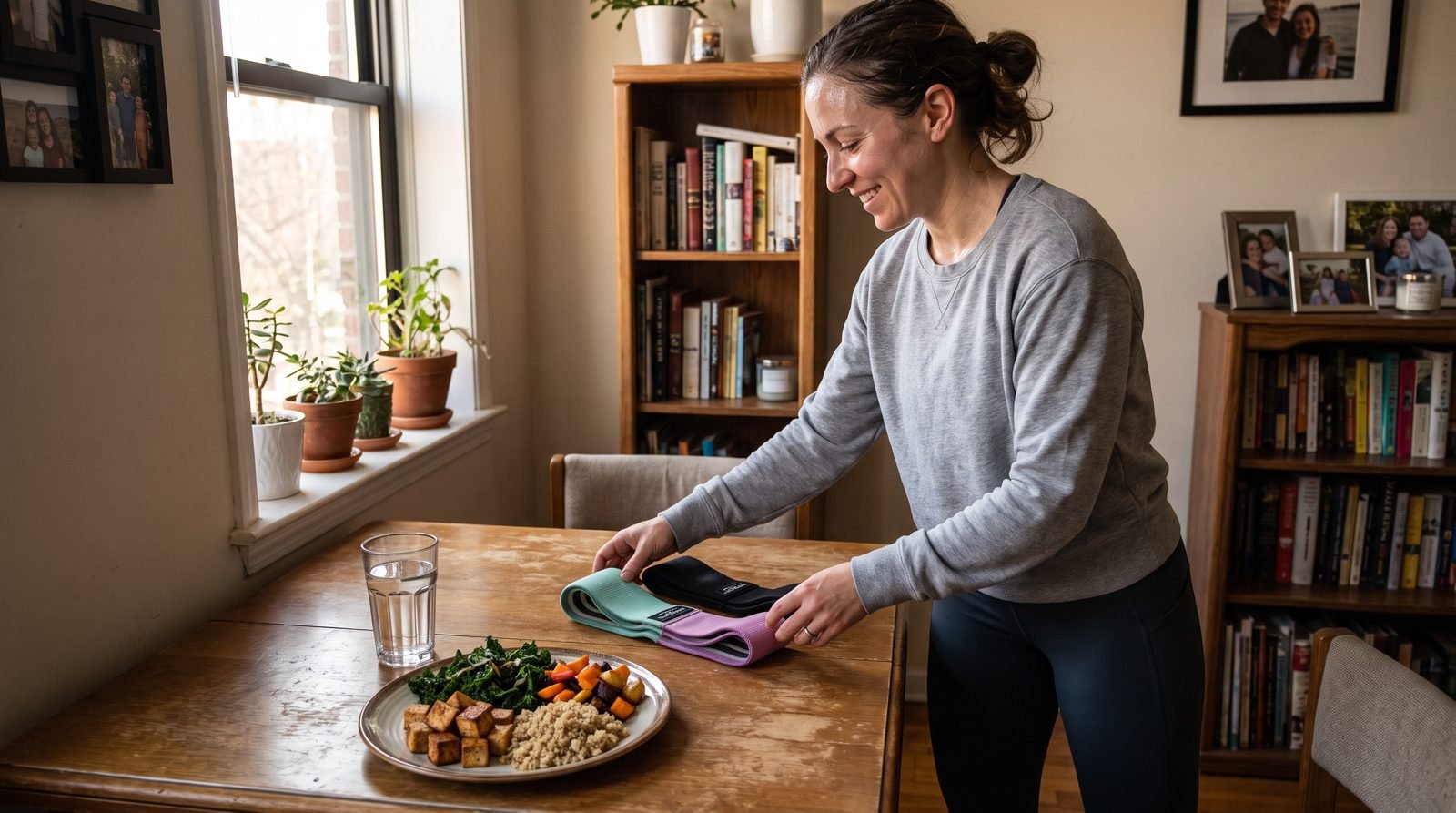
Also remember that protein cannot replace the training stimulus. The American College of Sports Medicine’s 2026 resistance-training guidance emphasizes regular participation and training major muscle groups at least twice per week over complicated programming for most healthy adults. Consistency with both food and movement beats a flawless supplement schedule.
Women’s life stages and health conditions
Perimenopause and later adulthood
Hormonal changes, aging, lower activity, sleep disruption, and dieting can all affect body composition. Protein-rich meals and resistance training may support muscle maintenance, but they do not “balance hormones” or guarantee fat loss. A schedule that makes breakfast and lunch more substantial may simply help you meet needs more reliably.
Pregnancy and breastfeeding
Protein needs and food-safety considerations change during pregnancy and lactation. Do not use a generic fitness target or restrictive meal plan as a substitute for prenatal guidance. Ask an obstetric clinician or registered dietitian for individualized recommendations.
Kidney or liver disease
Some people with kidney or liver conditions need a specific protein amount or distribution. More is not automatically better. Follow the plan provided by your clinical team rather than increasing protein based on a general article.
Low appetite, digestive symptoms, or an eating-disorder history
Large portions may be uncomfortable. Smaller, more frequent eating opportunities or energy-dense protein foods may be easier, but persistent low appetite, unexplained weight change, trouble swallowing, or gastrointestinal symptoms deserve professional assessment. If tracking food or protein intensifies anxiety or compulsive behavior, step away from numbers and seek support.
Four common timing problems—and realistic fixes
1. “I am not hungry in the morning”
Do not force a huge meal. Try a smaller option, move breakfast later, or use a drinkable combination such as milk or fortified soy milk blended with yogurt and fruit. You can also strengthen lunch instead.
2. “My schedule changes every day”
Use anchors rather than times: first meal, middle meal, evening meal. Pack one shelf-stable backup such as roasted edamame, a tuna pouch with crackers, or a tolerated protein bar for genuine schedule disruptions.
3. “I eat protein, but meals still do not satisfy me”
Protein is only one part of fullness. Check whether the meal also contains enough total food, fiber-rich carbohydrate, fat, and volume. Chronic restriction can make hunger feel relentless even when protein intake is high.
4. “I missed my post-workout protein”
Eat your next normal balanced meal. One missed snack does not erase a workout, and one perfectly timed shake does not create progress by itself.
Frequently asked questions
Is 30 grams of protein at every meal required?
No. Thirty grams is a useful research-sized example, not a universal rule. Your body size, total needs, age, training, appetite, food preferences, and health conditions matter. Focus first on a clear protein source at several meals.
Does protein timing for women change across the menstrual cycle?
Research does not currently justify a rigid cycle-based protein schedule for the general population. Appetite and training may feel different across the cycle, so adjust meals for comfort and adequacy rather than following unsupported phase rules.
Is protein before bed necessary?
No. A pre-sleep protein snack may be useful for some athletes, people with high needs, or anyone who struggles to eat enough earlier. It is optional for most adults and should not worsen reflux, sleep, or overall comfort.
Can I use protein powder?
Protein powder can be convenient, but it is not required. Choose products with transparent labeling and third-party testing when possible. Check with a clinician if you are pregnant, breastfeeding, have kidney or liver disease, take medication, or have allergies.
The schedule should make eating easier
The best protein schedule is the one that helps you eat enough, supports training, and fits your actual day. Begin with your lightest protein meal, add a recognizable anchor, and keep dinner enjoyable. Reassess after a week or two: Do meals feel more substantial? Is recovery easier? Are you less dependent on an oversized dinner? Those practical signals matter more than chasing a perfect clock.
Medical Disclaimer: This article is for general educational purposes only and is not a substitute for personalized medical advice, diagnosis, or treatment. Speak with a qualified healthcare professional if you have symptoms, take medication, are pregnant or breastfeeding, or are considering major changes to your diet, supplements, or treatment plan.
Sources
- Institute of Medicine. Dietary Reference Intakes for Energy, Carbohydrate, Fiber, Fat, Fatty Acids, Cholesterol, Protein, and Amino Acids. National Academies Press; 2005.
- Jespersen SE, Agergaard J. Evenness of dietary protein distribution is associated with higher muscle mass but not muscle strength or protein turnover in healthy adults: a systematic review. European Journal of Nutrition. 2021;60(6):3185-3202. PMID: 33550490.
- Hudson JL, et al. The Role of Protein Intake and its Timing on Body Composition and Muscle Function in Healthy Adults: A Systematic Review and Meta-Analysis of Randomized Controlled Trials. Advances in Nutrition. 2020;11(6):1443-1460. PMID: 32232404.
- Mamerow MM, et al. Dietary protein distribution positively influences 24-h muscle protein synthesis in healthy adults. Journal of Nutrition. 2014;144(6):876-880. PMID: 24477298.
- Schoenfeld BJ, Aragon AA. How much protein can the body use in a single meal for muscle-building? Implications for daily protein distribution. Journal of the International Society of Sports Nutrition. 2018;15:10. PMID: 29497353.
- American College of Sports Medicine. ACSM Unveils Landmark 2026 Resistance Training Guidelines. Published March 17, 2026.
- Arentson-Lantz EJ, et al. Meals Containing Equivalent Total Protein from Foods Providing Complete, Complementary, or Incomplete Essential Amino Acid Profiles do not Differentially Affect 24-h Skeletal Muscle Protein Synthesis in Healthy, Middle-Aged Women. Journal of Nutrition. 2024;154(12). PMID: 39396760.