
Stress and Sleep in Prediabetes: How to Break the Cycle

Waking up tired after a restless night can make the next day feel harder before it even starts: stronger cravings, lower patience, less motivation to move, and a fasting glucose reading that feels confusing.
This may not be random. The encouraging news: stress and sleep in prediabetes can often be approached as a pattern, not a personal failure.
Quick Win: Tonight, choose one realistic lights-down time and spend the final 10 minutes doing something low-stimulation, such as paper reading, gentle stretching, or slow nasal breathing.
How are stress and sleep in prediabetes connected?
Stress and sleep in prediabetes are connected through insulin sensitivity, stress hormones, appetite signals, inflammation, and the energy needed for daily self-care. When sleep is short, fragmented, or poorly timed, the body may have a harder time managing glucose efficiently.[1]
Prediabetes means blood glucose levels are higher than normal but not high enough for a diabetes diagnosis. This stage is also a window where consistent lifestyle changes may help lower future type 2 diabetes risk.[2]
Most people do not notice changes overnight. Many first notice steadier energy, fewer evening cravings, calmer mornings, or a more predictable routine over the first few weeks.
Key takeaways
- Poor sleep may reduce insulin sensitivity and make glucose patterns harder to manage.
- Stress can affect blood sugar directly through hormones and indirectly through disrupted self-care.
- A consistent wake time, morning light, balanced dinners, and gentle post-meal movement can support a more stable routine.
- Snoring, gasping, morning headaches, or severe daytime sleepiness deserve medical attention.
Why can poor sleep make prediabetes harder to manage?
Healthy glucose control depends partly on how well cells respond to insulin. When insulin sensitivity is lower, glucose may remain in the bloodstream longer after meals or rise more easily during stress.[3]
Sleep is one of the daily signals that helps regulate this system. Short sleep, irregular sleep timing, and disrupted sleep quality are associated with changes in glucose metabolism and insulin resistance.[1]
Sleep loss can change the next day’s food signals
After a poor night, many adults notice stronger cravings for fast energy. Higher-fiber meals, balanced portions, and meal planning may feel much harder than they did the day before.
This is not a character flaw. Sleep debt can affect appetite, reward sensitivity, and fatigue, which makes the easiest food choice feel more urgent.
Sleep timing matters too
Total sleep matters, but timing matters as well. Very late bedtimes, inconsistent wake times, and bright evening light can work against the circadian rhythm that helps coordinate metabolism.[4]
That is one reason a prediabetes plan often begins with consistency instead of perfection. A reliable wake time gives the body a clearer daily signal.
| Pattern | How it may affect blood sugar habits |
|---|---|
| Short sleep | May increase fatigue, cravings, and difficulty staying active. |
| Fragmented sleep | May reduce sleep quality even when time in bed looks adequate. |
| Late-night stress | May keep the nervous system alert when the body needs recovery. |
| Irregular schedule | May make hunger, energy, and meal timing feel less predictable. |

For a deeper look at lab markers, this guide on how poor sleep may affect A1C explains why sleep quality can matter beyond one morning glucose number.
How does stress affect overnight blood sugar?
Stress is not only an emotion. It is also a biological state that can involve cortisol, adrenaline, higher alertness, and changes in glucose availability.
In short bursts, this response is useful. When stress stays high for weeks or months, it may contribute to insulin resistance and make glucose patterns less stable.[5]
Cortisol can be part of the morning glucose story
Cortisol naturally rises toward morning to help the body wake up. But when stress is high, sleep is poor, or recovery is limited, the overall rhythm may feel less steady.
Some adults notice higher fasting glucose after a stressful day, poor sleep, late meals, alcohol, illness, or intense evening exercise. One morning number rarely tells the whole story.
Stress also changes behavior
Stress can make it harder to prepare meals, take a walk, stop working on time, or avoid scrolling late at night. These small changes can compound when they repeat for days.
The CDC notes that stress hormones can affect blood sugar and that stress may interfere with self-care behaviors. That combination is why stress management belongs in a metabolic health plan, not as an afterthought.[6]
One thing worth pushing back on here: the common advice is to “just sleep more.” That is partly right, but it misses the fact that stressed adults often cannot force sleep on command. A better first step is lowering evening arousal so sleep has a more realistic chance to happen.
What signs suggest the cycle is active?
The cycle can look different from person to person. Still, certain patterns may suggest that stress and sleep in prediabetes are affecting metabolic habits.
- Waking unrefreshed even after enough time in bed
- Higher morning glucose after stressful or restless nights
- Stronger evening cravings for sweet or salty foods
- Low motivation for movement despite good intentions
- Feeling wired at night and tired during the day
- More irritability, brain fog, or afternoon energy crashes
These signs do not diagnose prediabetes or a sleep disorder. They are useful clues to discuss with a healthcare professional, especially if they happen often.
Snoring, gasping, morning headaches, high blood pressure, or severe daytime sleepiness deserve medical attention. Sleep apnea is common and can affect glucose regulation, yet many adults do not realize their sleep quality is being disrupted.[7]
How can you start improving the cycle?
Improving the cycle does not require a perfect night routine or a complete life overhaul. It usually begins with repeatable behaviors that lower stress load, protect sleep timing, and support insulin sensitivity.
1. Start with a stable wake time
A consistent wake time is often more realistic than forcing an early bedtime. It anchors the body clock and makes sleep pressure more predictable the following night.
For many adults, a wake time that varies by less than an hour most days is a practical first target. The goal is rhythm, not rigidity.
2. Use light strategically
Morning light helps signal daytime to the brain. Evening dim light helps signal that the active part of the day is ending.
A simple approach is to get outdoor light within the first hour of waking when possible. At night, dim bright overhead lights and reduce high-stimulation screen use during the last 30 to 60 minutes.
3. Make dinner easier on overnight glucose
Dinner does not need to be restrictive to support steadier glucose. A balanced plate with protein, fiber-rich carbohydrates, colorful plants, and healthy fats may reduce the chance of a large late-night glucose swing.
Examples include lentil soup with vegetables, salmon with beans and greens, tofu stir-fry with brown rice, or eggs with avocado and roasted vegetables. The best meal is one that fits your culture, preferences, budget, and digestion.
4. Add gentle movement after meals
A short walk after dinner may help muscles use glucose and can also create a mental boundary between the workday and evening. Even 10 minutes can be a useful starting point for tired days.
This should feel calming, not punishing. The purpose is to support glucose handling and downshift the nervous system.
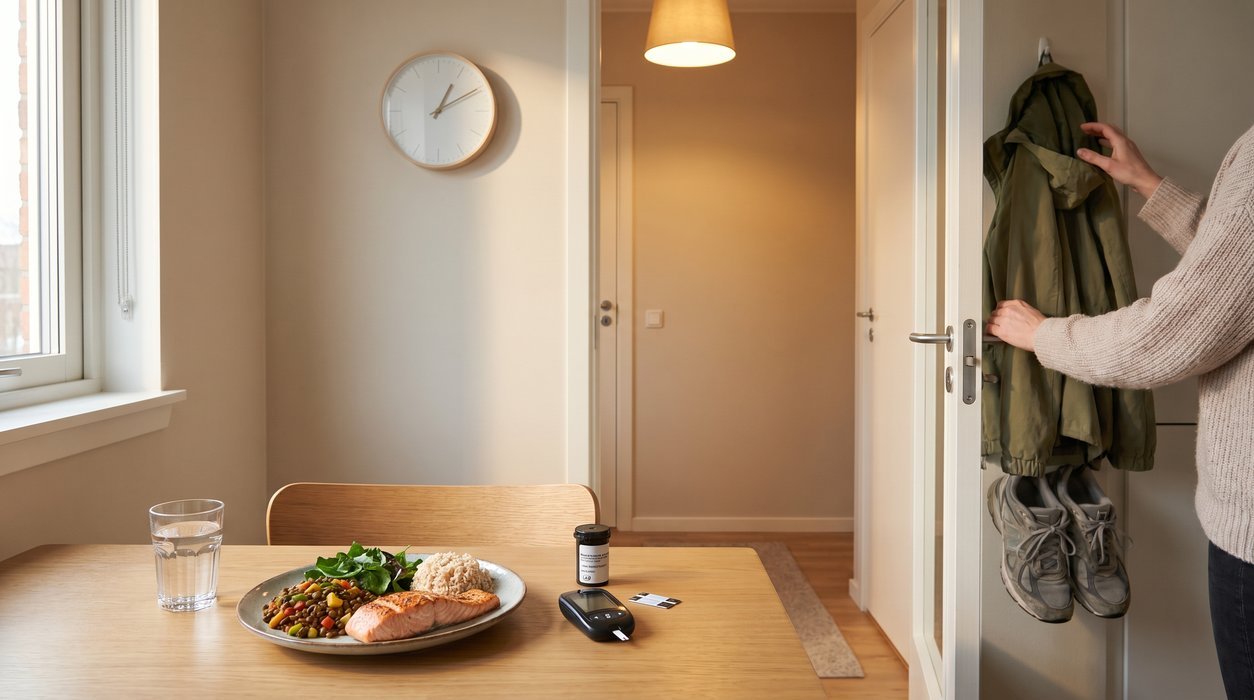
5. Create a stress landing pad
Many people try to go from full-speed problem-solving straight into sleep. The brain often resists that transition.
A stress landing pad is a 5- to 10-minute ritual that gives worries somewhere to go. It may include writing tomorrow’s top three tasks, making a quick note of unresolved concerns, or practicing slow breathing.
What progress can realistically look like?
Progress with stress and sleep in prediabetes is often gradual. Many people first notice changes in daytime energy, cravings, mood, or consistency before seeing major changes in lab markers.
Early signs may include fewer late-night snacks, easier morning movement, a calmer bedtime, or more stable energy after breakfast. These changes matter because they make the next healthy choice more likely.
Blood markers such as fasting glucose or A1C usually need longer and should be interpreted with a healthcare provider. A1C reflects an average pattern over time, so single-day perfection is not the point.
| Timeframe | Possible signs of progress |
|---|---|
| First few days | Bedtime feels less chaotic, evening snacking becomes more intentional, and morning light becomes easier. |
| 2–4 weeks | Sleep timing may feel more predictable, cravings may soften, and meal planning may feel less forced. |
| 8–12 weeks | Healthcare-monitored markers may begin to show whether the broader plan is supporting glucose trends. |
Meaningful changes often require consistency across sleep, food, movement, stress, and medical follow-up. This broader guide to first steps after a prediabetes result can help you connect those pieces without turning everything into another source of pressure.
A practical 7-day reset
This reset is not a treatment plan. It is a gentle structure for observing how stress, sleep, meals, and energy interact.
- Day 1: Choose a wake time that is realistic for most days this week.
- Day 2: Get outdoor light in the morning, even for a few minutes.
- Day 3: Build dinner around protein, fiber-rich plants, and a satisfying carbohydrate portion.
- Day 4: Take a calm 10-minute walk after one meal.
- Day 5: Write tomorrow’s top three tasks before the evening wind-down.
- Day 6: Move screens away from the bed or set a firm charging place outside arm’s reach.
- Day 7: Review patterns without judgment: sleep timing, stress level, cravings, movement, and morning energy.
The most useful question is not “Did I do it perfectly?” It is “Which one change made the next day easier?”
If one habit clearly helps, repeat it for another week before adding more. That is how a plan becomes sustainable instead of overwhelming.
Frequently asked questions
What is the relationship between stress and sleep in prediabetes?
Stress and sleep in prediabetes are linked because both can affect insulin sensitivity, appetite, stress hormones, and daily energy. Short or disrupted sleep may make blood sugar regulation more difficult for some adults. Stress can also make healthy routines harder to repeat. Better sleep and stress habits may support a broader lifestyle plan, but they should not replace medical guidance or recommended monitoring.
Can stress raise fasting blood sugar?
Stress can affect blood sugar through hormones such as cortisol and adrenaline. Some people notice higher fasting glucose after poor sleep, illness, emotional stress, late meals, or disrupted routines. A healthcare provider can help interpret repeated fasting glucose changes in context.
How many hours of sleep should adults aim for?
Many adult sleep guidelines recommend at least 7 hours of sleep per night for overall health.[8] Quality, timing, and consistency also matter. Someone who spends enough time in bed but still wakes exhausted may need to look at stress, alcohol, medications, sleep apnea symptoms, or other health factors.
Is waking up at night bad for blood sugar?
Occasional waking is common and does not automatically mean blood sugar is worsening. Frequent waking, gasping, loud snoring, or waking unrefreshed can be more concerning. Those patterns are worth discussing with a clinician, especially when paired with prediabetes, high blood pressure, or daytime sleepiness.
Conclusion
The stress-sleep-prediabetes cycle can feel discouraging because it affects both biology and behavior. Poor sleep may make cravings stronger, stress can make glucose patterns less predictable, and fatigue can make healthy habits feel harder.
You are not alone in that pattern. Start with the smallest lever that lowers evening arousal or makes tomorrow easier: a stable wake time, morning light, a calmer dinner, a short walk, or a brief stress landing pad.
Stress and sleep in prediabetes do not have to be managed through perfection. They respond best to repeatable signals that help the body feel safer, steadier, and better supported over time.
Medical Disclaimer: The information provided in this article is for educational purposes only and does not constitute medical advice. Always consult a qualified healthcare provider before making changes to your diet, lifestyle, or treatment plan. TheMetabolicHub.com does not replace professional medical guidance.
References
- Maloney A, Kanaley JA. Short Sleep Duration Disrupts Glucose Metabolism: Can Exercise Turn Back the Clock? Exercise and Sport Sciences Reviews. 2024;52(3):77-86. PMID: 38608214
- National Institute of Diabetes and Digestive and Kidney Diseases. Insulin Resistance & Prediabetes. NIDDK
- American Diabetes Association Professional Practice Committee. 3. Prevention or Delay of Diabetes and Associated Comorbidities: Standards of Care in Diabetes—2026. Diabetes Care. 2026;49(Suppl 1):S50-S61. DOI: 10.2337/dc26-S003
- St-Onge MP, et al. The Interrelationship Between Sleep, Diet, and Glucose Metabolism. Sleep Medicine Reviews. 2023. PMID: 37156196
- Yaribeygi H, et al. Molecular Mechanisms Linking Stress and Insulin Resistance. EXCLI Journal. 2022. PMID: 35368460
- Centers for Disease Control and Prevention. Diabetes and Mental Health. CDC
- Giampá SQC, et al. Obstructive Sleep Apnea and Metabolic Syndrome. Sleep Medicine Clinics. 2023. PMID: 36863747
- Watson NF, et al. Recommended Amount of Sleep for a Healthy Adult: A Joint Consensus Statement. Journal of Clinical Sleep Medicine. 2015. PMID: 26039963