
Gut Health and Prediabetes: How Your Microbiome Affects Blood Sugar
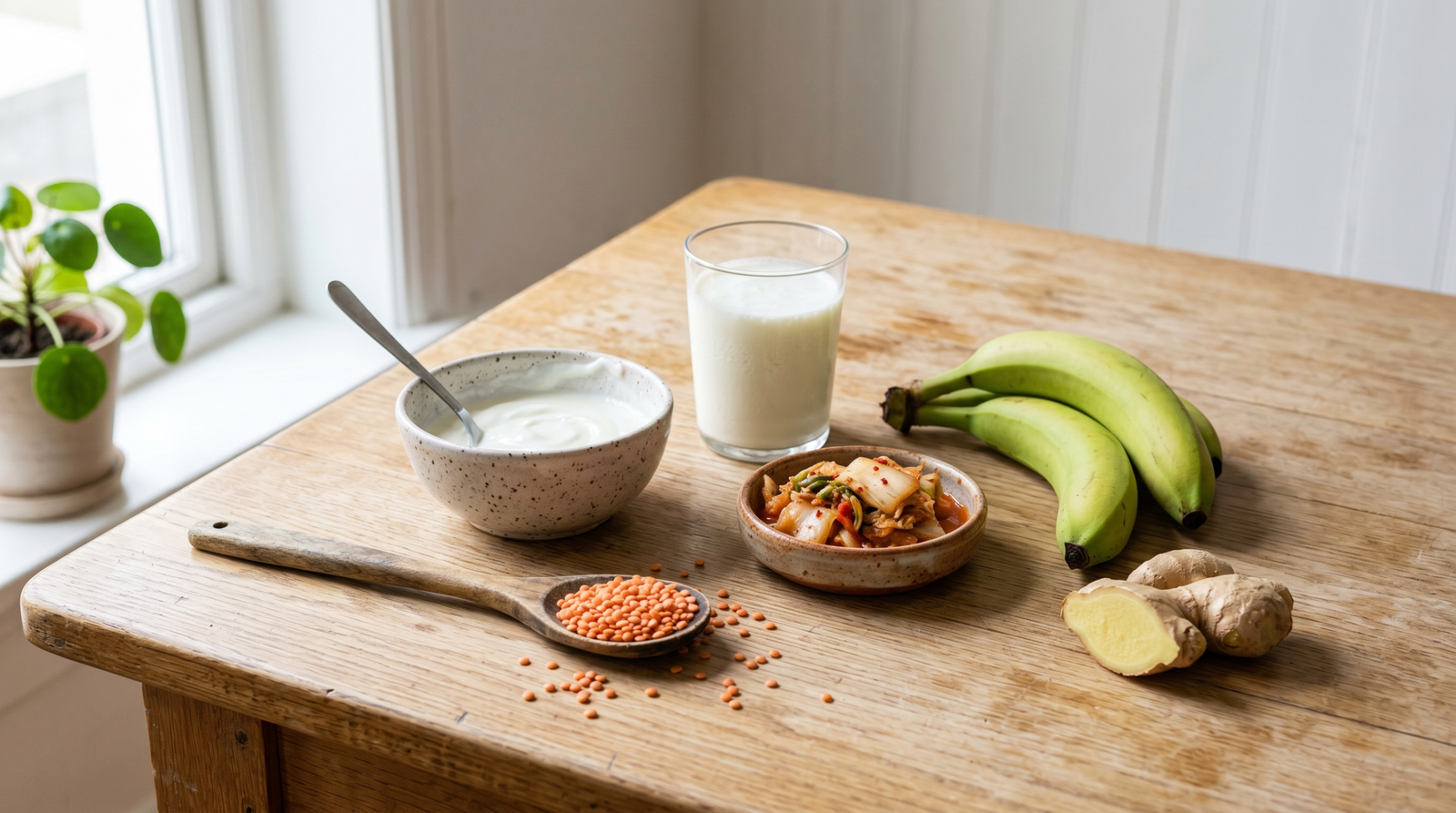
The fatigue hits in the afternoon, almost on schedule. You feel bloated after meals that shouldn’t cause it. You crave something sweet even when you just ate. And despite eating reasonably well, your energy feels unreliable — like your body isn’t quite keeping up.
These patterns are often treated as separate issues. Bloating gets filed under digestion. Fatigue gets attributed to stress or poor sleep. Blood sugar swings get blamed on carbs. But increasingly, research points to a single upstream system that connects all of them: the gut.
You’re not imagining this. The gut microbiome — the community of trillions of microorganisms living in your digestive tract — communicates directly with the systems that regulate blood sugar. When that ecosystem is disrupted, insulin resistance can follow quietly, over months or years, before any lab value flags a problem.
The encouraging news: gut health and prediabetes are deeply connected, which means the microbiome is one of the most actionable levers available. This article explains what the science actually shows — and what you can do with it today.
Quick Win
Add one serving of a fermented food — plain kefir, unsweetened yogurt, or a small portion of kimchi — to your daily meals. Research shows fermented foods increase gut microbial diversity within weeks, which supports better glucose regulation over time.
In This Article
- What Gut Health Has to Do With Prediabetes
- How Gut Bacteria Actually Regulate Blood Sugar
- Dysbiosis: When the Microbiome Becomes a Metabolic Problem
- What Can Actually Help — and How Fast
- Diet Strategies That Support Gut Health and Blood Sugar
- Probiotics for Prediabetes: What the Evidence Actually Shows
- Common Mistakes When Trying to Improve Gut Health
- Lifestyle Factors Beyond Diet
- Frequently Asked Questions
What Gut Health Has to Do With Prediabetes
Gut health and prediabetes are connected through several well-documented biological pathways — not through vague “wellness” language.
Prediabetes is defined as a fasting blood glucose of 100–125 mg/dL, or an HbA1c of 5.7–6.4%.[1] It affects an estimated 96 million adults in the US — roughly 1 in 3 — and most don’t know they have it. Left unaddressed, it progresses to type 2 diabetes in about 15–30% of people within five years.
The conventional explanation focuses on the pancreas and peripheral insulin resistance. What it leaves out: a key upstream contributor that sits in your digestive tract.
The intestinal lining is just one cell-layer thick — a remarkably thin barrier between your gut microbiome and your bloodstream. What microbes produce, and what they allow through that barrier, has measurable effects on insulin sensitivity, systemic inflammation, and how your body handles glucose after every meal.
The gut doesn’t just react to diet — it actively shapes how your body handles glucose.

| Gut Microbiome Factor | Effect on Blood Sugar |
|---|---|
| Short-chain fatty acids (SCFAs) | Stimulate GLP-1 release; improve insulin sensitivity in muscle and liver tissue |
| Intestinal permeability | Allows bacterial fragments (LPS) into the bloodstream → triggers inflammation → impairs insulin receptor signaling |
| Microbial diversity | Higher diversity consistently associated with better glucose tolerance and lower fasting insulin |
| Gut-brain-pancreas axis | Gut-derived serotonin and vagal nerve signaling influence pancreatic function and glucose clearance |
How Gut Bacteria Actually Regulate Blood Sugar
The connection between gut health and blood sugar runs through three well-supported mechanisms. Understanding these helps explain why focusing only on glycemic index — without addressing the gut — often produces incomplete results.
Short-Chain Fatty Acids and Insulin Sensitivity
When fiber-fermenting bacteria break down plant foods, they produce short-chain fatty acids (SCFAs) — primarily butyrate, propionate, and acetate. Think of SCFAs as the metabolic output of a well-fed gut.
Butyrate, in particular, activates receptors on gut cells that trigger the release of GLP-1 — a hormone that enhances insulin secretion from the pancreas and slows glucose entry into the bloodstream. SCFAs also improve insulin sensitivity in muscle and liver by activating AMPK, an enzyme that works like a cellular fuel gauge — signaling cells to take up glucose without requiring more insulin to do the job.[2]
People with type 2 diabetes consistently show lower levels of butyrate-producing bacteria — including Faecalibacterium prausnitzii and Roseburia intestinalis — compared to metabolically healthy individuals. This is not a coincidence. It’s a measurable gap in a system that influences glucose regulation daily.
Intestinal Permeability and Low-Grade Inflammation
A compromised gut barrier — increased intestinal permeability — allows bacterial fragments called lipopolysaccharides (LPS) to pass into the bloodstream.
LPS comes from the outer membrane of common gut bacteria. In small amounts, this is manageable. But when the gut barrier is chronically leaky, LPS accumulates in circulation and triggers a persistent, low-grade inflammatory response.
That inflammation is not metabolically neutral. Inflammatory signals — including TNF-α and IL-6 — interfere with insulin receptor function, making cells progressively less responsive to insulin’s signal to absorb glucose. Research suggests that elevated endotoxin levels are independently associated with insulin resistance, even after adjusting for BMI and dietary patterns.[3]
This is one reason why bloating, gut discomfort, and blood sugar instability so often occur together. They may share the same root: a barrier that’s not doing its job.
The Gut-Brain-Pancreas Axis
The gut microbiome also influences blood sugar through the vagus nerve and gut-derived hormones that affect appetite regulation and glucose control at the level of the brain.
Over 90% of the body’s serotonin is produced in the gut. Emerging research links gut-derived serotonin to glucose tolerance and pancreatic beta cell function. The gut and the pancreas are, in effect, in constant conversation — and the microbiome helps set the terms of that conversation.
Dysbiosis: When the Microbiome Becomes a Metabolic Problem
Dysbiosis refers to an imbalance in the gut microbial community: reduced diversity, overgrowth of pro-inflammatory species, or depletion of the keystone bacteria that keep the system stable. It’s not a diagnosis — it’s a pattern.
Large human studies have documented that people with prediabetes and type 2 diabetes tend to show reduced microbial diversity, lower abundance of butyrate-producing bacteria, and elevated Proteobacteria — a phylum that includes many LPS-producing species.
Dysbiosis is both a consequence and a potential cause of metabolic disruption — a bidirectional relationship. Mechanistic evidence from germ-free animal models is compelling: when gut microbiota from people with diabetes are transplanted into germ-free mice, the recipients develop insulin resistance.
What Drives Dysbiosis?
Diet is the dominant driver. A low-fiber, ultra-processed diet starves fiber-fermenting bacteria while enriching species that thrive on simple sugars.
But dysbiosis has other contributors that often go unaddressed. A single course of antibiotics can measurably reduce microbial diversity for months. Chronic sleep deprivation alters gut motility and mucosal immunity — a lever most gut-health conversations skip entirely. Chronic stress and sedentary behavior add to the effect.
One pattern that shows up repeatedly in the research: people who address diet but ignore sleep and stress see slower, less consistent microbiome improvements. The gut is more sensitive to systemic signals than most people expect.

What Can Actually Help — and How Fast
The research here is more encouraging than most people expect — and more specific than “eat better and stress less.”
Dietary changes can begin shifting microbial composition within 3–5 days. More meaningful improvements — steadier afternoon energy, less pronounced post-meal crashes, reduced bloating — tend to build over 4–6 weeks of consistent habits.
Two concrete actions to start with:
- Add a prebiotic-rich food daily — oats, lentils, garlic, or a green banana — to feed butyrate-producing bacteria. These are not exotic foods. They’re in most grocery stores and easy to work into existing meals.
- Pair that with one fermented food — plain kefir, unsweetened yogurt, or a tablespoon of sauerkraut — to introduce live microorganisms alongside the fiber that sustains them.
Within 2–4 weeks, many people notice steadier energy levels and less intense post-meal fatigue — early signs that glucose regulation is beginning to improve.
Changes in fasting blood glucose take longer. Research points to 8–12 weeks of consistent dietary adjustments before meaningful shifts appear in lab values. The gut is a slow system by design. Consistency matters more than intensity.
This kind of change can develop quietly over years — which is why so many people are caught off guard when a doctor first raises the topic of prediabetes. It is not a personal failure. The microbiome is responsive, and that responsiveness works in your favor.
Diet Strategies That Support Gut Health and Blood Sugar
Increase Fermentable Fiber
Prebiotic fibers — found in oats, Jerusalem artichokes, leeks, garlic, chicory root, and green bananas — are selectively fermented by beneficial bacteria. This is what drives SCFA production.
Increasing prebiotic fiber is one of the most reliably effective dietary changes for raising butyrate levels and improving microbial diversity. Aim for 25–38 grams of total fiber daily, with variety — different fibers feed different bacterial species, which is why no single food does the whole job.
A 2021 randomized trial found that a high-fiber diet increased microbiome-encoded carbohydrate-active enzymes and reduced HbA1c in participants with type 2 diabetes — with the effect mediated by specific bacterial species the fiber selectively enriched.[4]
Incorporate Fermented Foods
Fermented foods — plain yogurt, kefir, kimchi, sauerkraut, and tempeh — introduce live microorganisms and their metabolic byproducts into the gut environment.
A Stanford study published in Cell found that a diet high in fermented foods significantly increased microbiome diversity and reduced inflammatory markers compared to a high-fiber diet alone.[5]
The two approaches are complementary, not competing: fermented foods introduce new microbial species, while prebiotic fiber provides the substrate those species need to establish and thrive.
Limit Ultra-Processed Foods
Ultra-processed foods are low in fiber and high in emulsifiers, refined carbohydrates, and additives that research suggests directly compromise the gut epithelial lining.
Emulsifiers like carboxymethylcellulose have been shown in animal models to degrade the mucus layer protecting gut cells, increasing intestinal permeability. Displacing ultra-processed items with whole or minimally processed alternatives moves several levers simultaneously: lower glycemic load, higher fiber, fewer gut-disruptive additives.
Also worth noting: the gut microbiome’s role in metabolic syndrome follows similar pathways — ultra-processed diets show up consistently as a driver in both conditions.
Probiotics for Prediabetes: What the Evidence Actually Shows
Probiotic supplements are heavily marketed for metabolic health. The evidence is more nuanced than the packaging suggests.
Several meta-analyses have found modest but statistically significant reductions in fasting blood glucose and insulin resistance scores with multi-strain probiotic supplementation. A 2020 meta-analysis covering 33 randomized controlled trials found probiotics reduced fasting glucose by an average of 1.95 mg/dL and HOMA-IR (a calculated score using fasting glucose and fasting insulin — worth requesting specifically if it’s not included in your standard panel) by 0.57 points.
These are not large effects on their own. But they are consistent, and individual studies using high-dose, multi-strain formulations — particularly those containing Lactobacillus acidophilus, Bifidobacterium longum, and Lactobacillus rhamnosus — show more meaningful improvements when paired with dietary change.
One thing worth pushing back on here: the standard advice treats probiotics as a standalone intervention. But probiotics are transient colonizers in most people — they don’t permanently reshape the microbiome without sustained dietary support. A probiotic taken alongside a low-fiber diet has no substrate to work with. The bacteria are cleared within days to weeks of stopping supplementation. Diet has to come first. The probiotic is a complement, not a replacement.
Common Mistakes When Trying to Improve Gut Health
Focusing on probiotics alone is the most common error. Without dietary fiber to sustain introduced bacteria, the effect is temporary at best.
Trusting the marketing on “gut health” products: many commercial kombuchas contain 20–30 grams of added sugar per bottle — which directly counteracts any probiotic benefit for someone managing blood sugar. Plain kefir and unsweetened yogurt are considerably more effective options.
Drastically increasing fiber too quickly: rapidly adding prebiotic fiber — especially for people whose microbiomes aren’t yet adapted to fermenting it — causes bloating, gas, and GI discomfort. This leads many people to abandon the strategy prematurely. Increasing fiber gradually over 3–4 weeks, starting with soluble sources like oats and lentils, significantly reduces this problem.
Ignoring sleep and stress: both acute sleep deprivation and chronic stress alter gut microbial composition and increase intestinal permeability — mechanisms that directly worsen insulin sensitivity.[6] Cortisol suppresses mucosal immunity and disrupts the tight junction proteins that maintain the gut barrier. Treating gut health as purely a food problem leaves a significant lever unpulled.
Lifestyle Factors Beyond Diet
Several modifiable behaviors have documented effects on microbiome composition — beyond what any dietary change alone can achieve.
Exercise consistently increases microbial diversity and butyrate-producing species, independent of diet. Research has found that six weeks of regular endurance exercise increased Roseburia hominis and F. prausnitzii in previously sedentary participants — and these gains reversed when exercise stopped.[7] Even 20–25 minutes of moderate movement daily moves the needle.
Sleep quality affects the microbiome through circadian rhythm synchronization. Gut bacteria have their own circadian patterns; chronic sleep disruption desynchronizes microbial activity in ways that impair SCFA production and increase permeability.
Stress management matters more than most gut health guides acknowledge. Practices that activate the parasympathetic nervous system — diaphragmatic breathing, for example — reduce cortisol and support gut motility and barrier function. Not glamorous, but the mechanism is well-documented.

Frequently Asked Questions
What does gut health have to do with prediabetes?
Gut health and prediabetes are connected through several documented biological pathways. The gut microbiome produces short-chain fatty acids that enhance insulin sensitivity, regulates the gut barrier that prevents pro-inflammatory compounds from entering the bloodstream, and communicates with the pancreas and brain through hormonal and neural signals. When this microbial ecosystem is disrupted — through low-fiber diets, poor sleep, chronic stress, or antibiotic use — insulin resistance can develop or worsen over time. Addressing gut health is one evidence-based lever for supporting blood sugar regulation, particularly when combined with consistent dietary and lifestyle changes.
How long does it take to improve gut health for blood sugar benefits?
Dietary changes can begin shifting microbial composition within 3–5 days. More meaningful improvements — steadier energy, reduced post-meal crashes, and better glucose tolerance — tend to build over 4–6 weeks of consistent habits. Changes in fasting blood glucose biomarkers typically take 8–12 weeks of sustained dietary adjustment to reflect in lab results. Consistency matters more than any single intervention.
Are fermented foods or probiotic supplements better for blood sugar?
Fermented foods have a stronger evidence base as a daily habit, partly because they arrive alongside fiber, nutrients, and metabolic byproducts that supplements don’t provide. Probiotic supplements show modest but consistent reductions in fasting glucose and insulin resistance markers in meta-analyses — but they work best when paired with a fiber-rich diet. A probiotic without dietary fiber is unlikely to have lasting effects, since the introduced bacteria need substrate to survive. Plain yogurt, kefir, kimchi, and sauerkraut are practical, well-supported starting points.
What foods best support butyrate production?
Butyrate is produced when gut bacteria ferment specific dietary fibers. The most effective food sources are cooked and cooled starchy foods (which contain resistant starch), oats, lentils and other legumes, green bananas, garlic, and leeks. These selectively feed Faecalibacterium prausnitzii and Roseburia species — the primary butyrate producers — most effectively. Variety matters: different fibers feed different bacterial species, so no single food does the complete job.
Is commercial microbiome testing worth it for managing prediabetes?
Currently, commercial microbiome tests lack the clinical validation needed to guide specific medical decisions. Methodology and interpretation vary widely between providers, and the field is still developing standardized reference ranges. Focusing on evidence-based dietary and lifestyle changes is more actionable than attempting to optimize based on these results. If you’re working with a healthcare provider on prediabetes management, discussing gut health within that clinical context is a more reliable approach.
Medical Disclaimer: The information provided in this article is for educational purposes only and does not constitute medical advice. Always consult a qualified healthcare provider before making changes to your diet, lifestyle, or treatment plan. TheMetabolicHub.com does not replace professional medical guidance.
References
- American Diabetes Association. Standards of Medical Care in Diabetes. Diabetes Care. 2024. Available at: diabetes.org
- Canfora EE et al. Short-chain fatty acids in control of body weight and insulin sensitivity. Nat Rev Endocrinol. 2015;11(10):577–591. PMID: 26260141
- Cani PD et al. Metabolic endotoxemia initiates obesity and insulin resistance. Diabetes. 2007;56(7):1761–72. PMID: 17456850
- Zhao L et al. Gut bacteria selectively promoted by dietary fibers alleviate type 2 diabetes. Science. 2018;359(6380):1151–56. PMID: 29522030
- Wastyk HC et al. Gut-microbiota-targeted diets modulate human immune status. Cell. 2021;184(16):4137–4153. PMID: 34256014
- Spiegel K et al. Sleep curtailment results in decreased insulin sensitivity and increased glucose levels. J Sleep Res. 2005;14(2):159–67. PMID: 16227462
- Allen JM et al. Exercise alters gut microbiota composition and function in lean and obese humans. Med Sci Sports Exerc. 2018;50(4):747–757. PMID: 29166320