15 High-Protein, High-Fiber Meals That Fit a PCOS-Friendly Eating Pattern
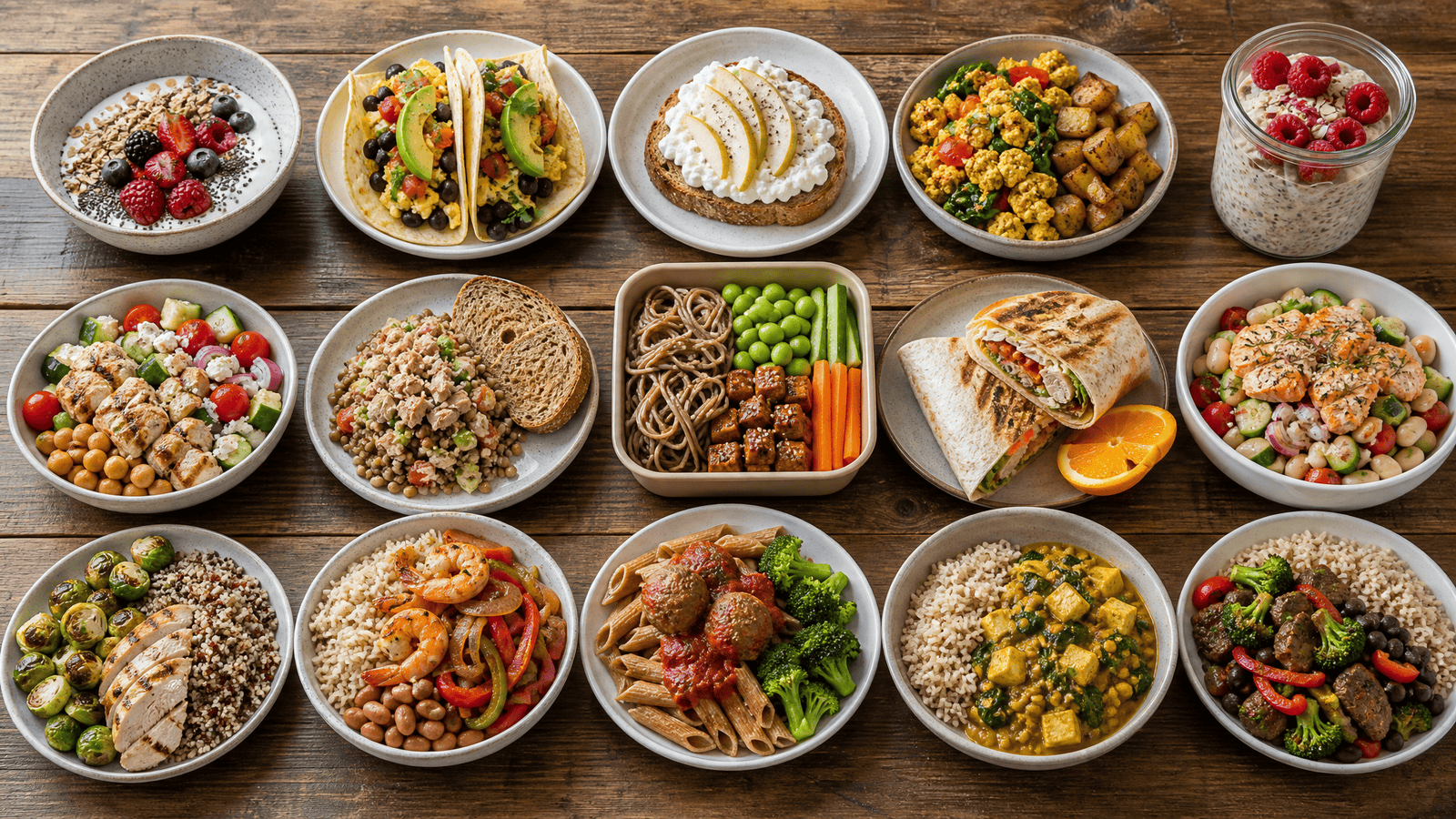
Eating with polycystic ovary syndrome can feel unnecessarily complicated. One post says to cut carbohydrates. Another bans dairy, gluten, fruit, or soy. Meanwhile, you still need a lunch you can pack and a dinner everyone will eat. These PCOS meal ideas take a more useful approach: combine a meaningful protein source, fiber-rich plants, satisfying carbohydrates, and enough flavor and fat to make the meal worth repeating.
Quick Win: You do not need a special “hormone-balancing” plate. Start with one protein, one or two fiber-rich foods, and a carbohydrate portion that fits your appetite, activity, medication, and glucose response. The 2023 International Evidence-based PCOS Guideline says no single diet composition has proved superior for PCOS outcomes. Your pattern should be sustainable, nutritionally adequate, culturally comfortable, and free from unnecessary restriction.[1][2]
Why pair protein and fiber?
PCOS is associated with a higher risk of impaired glucose tolerance and type 2 diabetes, although risk differs from person to person. Many women with PCOS also have insulin resistance. Nutrition is only one part of care, but a balanced meal can support fullness, preserve lean tissue, and provide carbohydrates in a slower, more satisfying package.
Protein contributes essential amino acids and tends to make meals more filling. Fiber comes from plant foods such as beans, lentils, whole grains, vegetables, fruit, nuts, and seeds. It supports bowel regularity and feeds parts of the gut microbiome; certain soluble fibers can also slow digestion. Neither nutrient needs to be pushed to an extreme.
A 2024 systematic review and meta-analysis of high-protein diets in women with PCOS found some potential cardiometabolic effects, but the studies were limited and did not establish one ideal high-protein prescription. That fits the broader guideline: there is no single PCOS diet. Protein and fiber are practical meal-building tools, not a cure for PCOS and not replacements for medication, sleep, movement, or individualized care.[3]
If you use insulin or medicine that can cause low blood glucose, change carbohydrate intake only with appropriate clinical guidance. If you have kidney disease, significant digestive disease, are pregnant, or have an eating-disorder history, a registered dietitian can help personalize protein, fiber, and meal timing safely.
A flexible PCOS-friendly meal formula
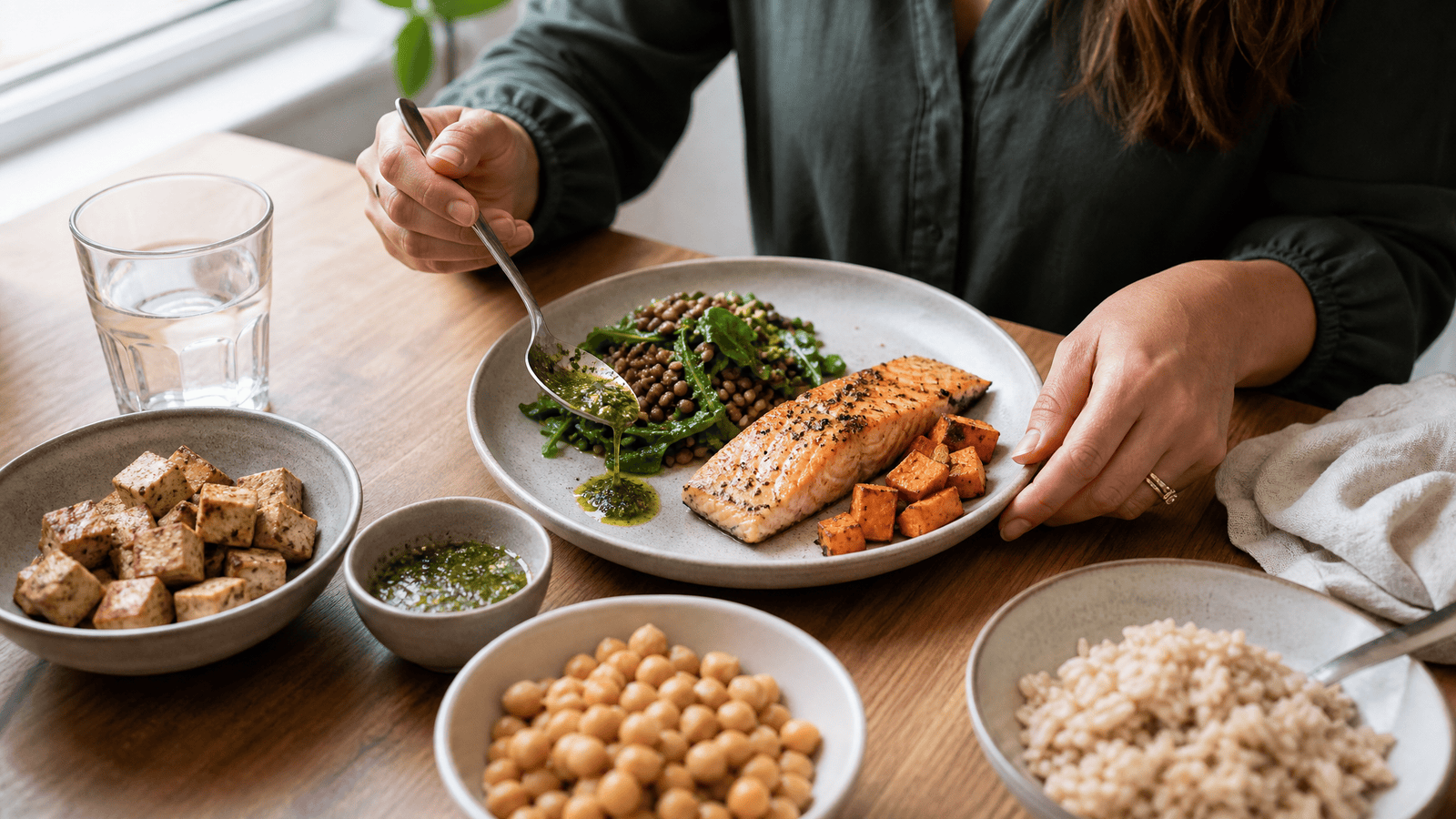
Think in four parts: protein + high-fiber plant + satisfying carbohydrate + flavor/fat. Sometimes one food covers two jobs: lentils provide both protein and fiber; edamame adds both; yogurt provides protein while berries and chia add fiber. There is no required gram target at every meal.
For a visual starting point, use roughly one-quarter plate protein, one-quarter higher-fiber carbohydrate, and half nonstarchy vegetables, then adjust. A smaller person with a quiet day and a larger, very active person will not need identical portions. Hunger, training, pregnancy goals, medication, culture, budget, and symptoms all matter. Our approved guide to building a balanced plate explains the framework in more detail.
The approximate protein and fiber ranges below are planning estimates derived from standard food data. Brands, portions, substitutions, and restaurant preparation can change them. These are meal ideas—not complete recipes—so season and prepare each combination using methods and amounts that suit you.[4]
Five high-protein, high-fiber breakfast ideas
1. Greek yogurt, berry, chia, and oat bowl
Combine about 1 cup plain Greek yogurt with 1 cup berries, 1 tablespoon chia seeds, and 1/3 cup rolled oats. Add cinnamon and a spoonful of walnuts if desired. This cold breakfast is easy to assemble and offers roughly 28–32 grams of protein and 10–12 grams of fiber, depending on the yogurt and fruit. If dairy does not suit you, use a high-protein unsweetened soy yogurt and check the label.
2. Egg, black bean, and avocado breakfast tacos
Fill two corn tortillas with two eggs, 1/2 cup black beans, salsa, cabbage, and about 1/4 avocado. The beans and tortillas make the meal carbohydrate-inclusive rather than “low carb,” while eggs and beans contribute roughly 24 grams of protein and 12–14 grams of fiber. Add more eggs or beans for a larger meal.
3. Cottage cheese toast with pear and pumpkin seeds
Top two slices of whole-grain toast with 1 cup cottage cheese, one sliced pear, and 1 tablespoon pumpkin seeds. Sweet cinnamon or savory pepper both work. A typical build provides about 35 grams of protein and 10–12 grams of fiber. Choose lower-sodium cottage cheese if sodium is a concern.
4. Tofu vegetable scramble with potatoes
Pair about 6 ounces firm tofu with peppers, spinach, mushrooms, and 1 cup roasted baby potatoes. Add nutritional yeast, salsa, or herbs for flavor. The plate lands near 25–30 grams of protein and 9–11 grams of fiber. It is a useful plant-based option that does not require a protein powder.
5. Overnight oats with soy milk, hemp, and raspberries
Soak 1/2 cup oats in 1 cup unsweetened soy milk with 2 tablespoons hemp hearts and 1 cup raspberries. This flexible jar has roughly 22–25 grams of protein and 15–17 grams of fiber. If that much fiber is a jump for you, begin with half the berries or seeds and increase gradually with adequate fluid.
Five packable lunch ideas
6. Chicken, chickpea, and crunchy vegetable bowl
Build a bowl with 4 ounces cooked chicken, 1/2 cup chickpeas, chopped cucumber, tomato, carrots, greens, and a lemon-tahini dressing. Add pita or quinoa if your hunger calls for more carbohydrate. Without the optional grain, expect about 40 grams of protein and 10–12 grams of fiber.
7. Lentil tuna salad on whole-grain toast
Mix one drained tuna pouch with 3/4 cup cooked lentils, celery, herbs, lemon, and olive oil; serve with one or two slices of whole-grain toast. The combination is portable and supplies roughly 38–42 grams of protein and 14–17 grams of fiber. Choose lower-mercury light tuna more often if tuna is frequent, especially during pregnancy or when trying to conceive.
8. Tempeh edamame noodle box
Pack 3 ounces tempeh, 1/2 cup shelled edamame, 1 cup cooked soba noodles, shredded cabbage, carrots, and a sesame-lime dressing. This plant-based lunch provides roughly 35 grams of protein and 12–14 grams of fiber. Verify that buckwheat noodles are gluten-free only if medically necessary; many soba products also contain wheat.
9. Turkey hummus crunch wrap
Spread a high-fiber whole-grain wrap with 1/4 cup hummus; add 4 ounces sliced turkey, lettuce, tomato, bell pepper, and grated carrots. Pair with an orange. Depending on the wrap and turkey, the meal offers about 35–40 grams of protein and 12–16 grams of fiber. Check sodium if using deli meat often.
10. Salmon white bean salad
Combine a 4-ounce portion of cooked or canned salmon with 3/4 cup cannellini beans, arugula, tomatoes, cucumber, capers, lemon, and olive oil. Expect roughly 40 grams of protein and 10–12 grams of fiber. Use no-salt-added beans and rinse them when sodium matters.
Five satisfying dinner ideas
11. Sheet-pan chicken, Brussels sprouts, and quinoa
Serve 4 ounces chicken with about 2 cups roasted Brussels sprouts and 3/4 cup cooked quinoa. A mustard-herb or lemon-garlic sauce adds flavor without requiring a special PCOS product. The plate provides roughly 40 grams of protein and 11–13 grams of fiber.
12. Shrimp fajita bowl with pinto beans
Layer 5 ounces shrimp, 1/2 cup pinto beans, sautéed peppers and onions, 1/2 cup brown rice, salsa, cabbage, and avocado. This meal contains roughly 40–45 grams of protein and 12–14 grams of fiber. Frozen shrimp, frozen pepper strips, and canned beans keep it realistic for a weeknight.
13. Turkey meatballs, whole-wheat pasta, and broccoli
Pair about 4 ounces cooked turkey meatballs with 2 ounces dry-weight whole-wheat pasta, tomato sauce, and 2 cups broccoli. The meal typically reaches 35–40 grams of protein and 12–14 grams of fiber. Jarred sauce is fine; compare labels for sodium or added sugar only when those details matter to your overall pattern.
14. Red lentil curry with tofu and spinach
Serve about 1 cup cooked red lentil curry with 4 ounces tofu, generous spinach, and 1/2 cup cooked brown rice. Coconut milk can provide richness; use an amount that fits the rest of the meal. This plant-based combination offers roughly 30 grams of protein and 16–18 grams of fiber.
15. Beef, broccoli, and bean stir-fry
Combine 4 ounces lean beef, 2 cups broccoli and peppers, 1/2 cup black beans, and 1/2 to 1 cup cooked brown rice. Flavor with ginger, garlic, and a moderate-sodium sauce. The range is roughly 40 grams of protein and 12–15 grams of fiber, with rice adjusted to appetite and activity.
How to adjust these meals for your body and life
For more energy: increase the grain, potato, tortilla, fruit, or beans rather than assuming PCOS requires carb avoidance. For more fullness: first check whether the meal has enough total food, protein, fiber, and fat. For digestive comfort: increase beans, lentils, bran, chia, and large vegetable portions gradually. Rinsing canned beans and choosing cooked vegetables may help.
For a smaller appetite or GLP-1 medication: prioritize the protein-rich component, spread fiber through the day, hydrate, and discuss persistent nausea, vomiting, constipation, or inability to eat enough with your prescriber. For vegetarian meals: tofu, tempeh, edamame, lentils, beans, Greek yogurt, cottage cheese, and eggs make protein easier without relying on mock meat.
PCOS care may also include medication, sleep support, fertility care, and screening for glucose, lipids, blood pressure, depression, anxiety, and sleep apnea. Food does not replace that care. If you want the underlying metabolic context, read our approved explainer on PCOS and insulin resistance.[5]
Frequently Asked Questions
Do I need to eat low carb for PCOS?
These PCOS meal ideas do not require a low-carbohydrate target. No single carbohydrate target is best for everyone with PCOS, and the international guideline does not endorse one superior diet composition. Carbohydrate quality, quantity, meal context, preference, medication, and glucose response can all matter. Whole grains, beans, fruit, and dairy can fit a PCOS-friendly pattern.
How much protein should each meal contain?
There is no PCOS-specific number that every woman must hit. Needs vary with body size, age, pregnancy, kidney function, activity, and goals. A practical meal often lands around 20–40 grams, but your day’s total and overall adequacy matter more than forcing every plate into one range.
Can I eat these meals if I am trying to lose weight?
Yes, with portions adjusted to your needs—but weight loss is not required for a meal to support health. The guideline emphasizes healthy behaviors and prevention of excess weight gain as valid outcomes, including benefits without weight loss. Avoid portions so small that they drive fatigue, preoccupation, or rebound hunger.
What if I do not tolerate beans or dairy?
Use the swaps that work for you. Start legumes in small portions, try lentils or firm tofu, and choose cooked vegetables if raw foods bother you. Replace dairy with a fortified high-protein soy option, eggs, fish, poultry, tofu, or tempeh. Persistent digestive symptoms deserve assessment rather than an expanding list of self-imposed food bans.
Conclusion
A PCOS-friendly eating pattern does not need a separate pantry or a forbidden-food list. These 15 meals show how familiar ingredients can supply protein, fiber, satisfying carbohydrates, and flavor in different combinations. Choose two breakfasts, two lunches, and two dinners that suit your budget and schedule, repeat them, and adjust from real hunger, symptoms, labs, and professional guidance—not social-media rules.
Medical Disclaimer: The information provided in this article is for educational purposes only and does not constitute medical advice. Always consult a qualified healthcare provider before making changes to your diet, lifestyle, or treatment plan. TheMetabolicHub.com does not replace professional medical guidance.
References
- Teede HJ, et al. Recommendations From the 2023 International Evidence-based Guideline for the Assessment and Management of Polycystic Ovary Syndrome. J Clin Endocrinol Metab. 2023;108(10):2447–2469. PMID: 37580314. DOI: 10.1210/clinem/dgad463.
- Monash Centre for Health Research and Implementation. International Evidence-based PCOS Guideline. 2023.
- Wang F, Dou P, Wei W, et al. Effects of high-protein diets on the cardiometabolic factors and reproductive hormones of women with polycystic ovary syndrome: a systematic review and meta-analysis. Nutr Diabetes. 2024;14:6. DOI: 10.1038/s41387-024-00263-9.
- USDA Agricultural Research Service. FoodData Central.
- Eunice Kennedy Shriver National Institute of Child Health and Human Development. What are the treatments for PCOS?