
What Your Poop Can—and Can’t—Reveal About Your Gut Health

Poop is ordinary, but it can feel surprisingly hard to talk about. A sudden color change sends you searching online; a missed day makes you wonder whether you are constipated; loose stools make you question your microbiome. Your bowel movements do contain useful clues—but they are clues, not a home diagnostic test.
Key Takeaway: The most useful information comes from a pattern: stool consistency, frequency relative to your usual routine, ease of passing, urgency, pain, blood, medication changes, and how long the change lasts. A single unusual bowel movement often reflects food, fluid, stress, travel, menstruation, illness, or medicine. Persistent change or warning signs deserve medical attention.
This guide explains the relationship between bowel habits and gut health without treating every variation as disease—or dismissing symptoms that need care.
What stool actually contains
Stool is mostly water plus material your body did not absorb, including fiber, shed intestinal cells, mucus, bacteria, bile pigments, and small amounts of fat and other substances. Its appearance reflects transit through the digestive tract, water absorption in the colon, what you ate, medicines and supplements, and sometimes infection or disease.
That complexity is why no one stool is a report card for your entire gut. A green bowel movement after spinach, a darker stool after iron, or a loose stool during a brief infection can have a straightforward explanation. The same appearance may mean something different when it persists, occurs without an obvious trigger, or comes with pain, fever, bleeding, dehydration, or weight loss.
Four useful clues to notice
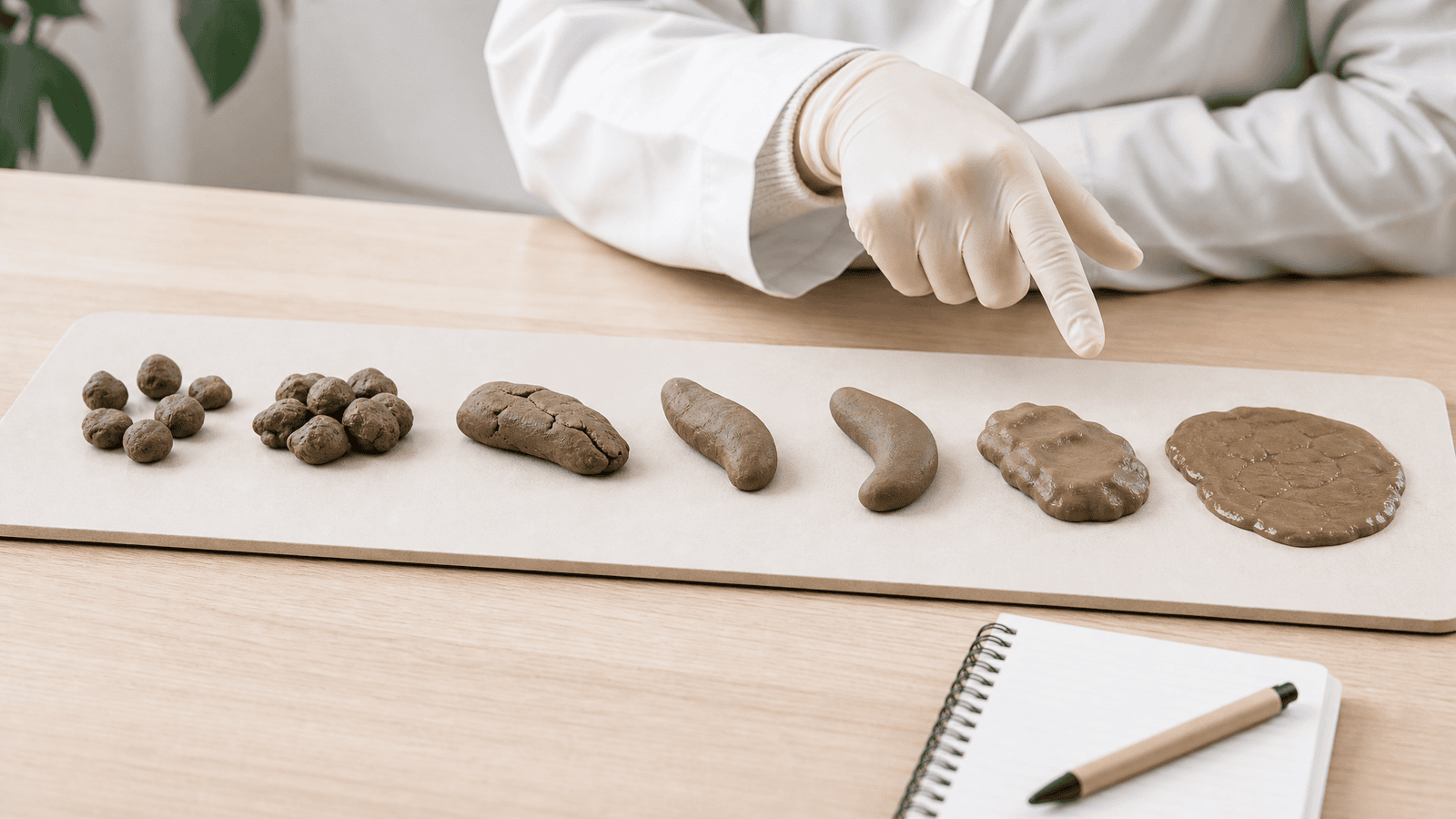
1. Consistency: the Bristol Stool Form Scale is descriptive, not diagnostic
The Bristol Stool Form Scale groups stool into seven visual types. Types 1 and 2 are hard or lumpy and often associated with slower transit or constipation. Types 3 and 4 are formed, with Type 4 commonly described as smooth and sausage- or snake-like. Type 5 is soft blobs; Types 6 and 7 are increasingly loose or watery and can align with faster transit or diarrhea.
A validation study found the scale had substantial validity and reliability for describing stool form, with stool water increasing from hard to normal to loose types. It is useful vocabulary for a symptom diary or clinician visit. It does not identify the cause. A Type 1 stool does not prove dehydration, and a Type 6 stool does not prove an infection or food intolerance.[1]
Look for repetition. Several hard stools plus straining and a sense of incomplete emptying gives more useful information than one firm stool. Repeated watery stools with urgency are more meaningful than one loose bowel movement after a rich meal.
2. Frequency: your change matters more than a perfect number
People have different normal routines. Constipation is not simply “not going every day.” The National Institute of Diabetes and Digestive and Kidney Diseases lists fewer than three bowel movements a week as one possible symptom, alongside hard or dry stools, difficult or painful passage, and the feeling that not all stool has passed.[2]
Diarrhea generally means loose, watery stools three or more times a day—or more often than is normal for you. Frequency becomes more concerning when the shift is abrupt, persistent, wakes you from sleep, interferes with eating or drinking, or comes with other symptoms.[3]
Menstrual-cycle changes, travel, new routines, acute stress, reduced movement, pregnancy, and menopause-related changes can affect bowel patterns. These factors may explain timing, but they should not be used to dismiss severe or progressive symptoms.
3. Color: food and bile explain many changes, but not all
Brown comes largely from bile pigments transformed during digestion. Shades of brown are expected, and green can also occur—often from leafy foods, coloring, supplements, or faster transit. Beets and red coloring may look alarming; iron and bismuth medicines can darken stool.
Context is essential because bright red or black, tarry stool can also indicate bleeding. Do not assume blood is “just hemorrhoids” without appropriate evaluation, especially when bleeding is new, recurrent, heavy, or accompanied by weakness, dizziness, pain, or a change in bowel habits.[4]
Very pale, white, or clay-colored stool is not typical and may reflect too little bile reaching the intestine. Yellow, greasy, foul-smelling stool can occur with excess fat in stool or malabsorption, particularly when it persists with weight loss or nutritional problems. Bring persistent color changes to a healthcare professional.
4. The experience around the bowel movement
Ease, urgency, pain, straining, incomplete emptying, mucus, leakage, and the need to use manual maneuvers can matter as much as appearance. Recurrent abdominal pain related to bowel movements plus a change in stool frequency or form may fit a pattern clinicians evaluate for irritable bowel syndrome. IBS is not diagnosed from appearance alone and does not mean symptoms are imaginary; it is a disorder of gut-brain interaction.[5]
Pelvic-floor dysfunction can also cause straining, incomplete emptying, or difficulty passing soft stool. Simply adding more fiber may not solve a coordination problem and can worsen discomfort for some people. A clinician may recommend pelvic-floor evaluation rather than another restrictive diet.
What poop cannot tell you by itself
It cannot reveal whether your microbiome is “healthy”
Stool contains microbes, but a consumer stool test does not turn one sample into a complete measure of gut health. Microbiomes vary among healthy people and across time. Results may describe organisms or markers without proving they caused your symptoms or identifying a treatment that improves meaningful outcomes.
Be cautious with plans that use a commercial result to prescribe long supplement lists or eliminate many foods. If you have persistent symptoms, a conventional medical history, exam, and targeted tests chosen for your pattern are more useful than assuming every deviation is “dysbiosis.”
It cannot diagnose a food intolerance
Seeing food fragments does not automatically mean poor absorption. Some plant structures—corn hulls, seeds, and vegetable skins—are visibly resistant to digestion. Rapid transit can also leave more recognizable material. A true intolerance or malabsorption problem requires the full symptom pattern and sometimes testing.
Before eliminating gluten, dairy, fermentable carbohydrates, or multiple food groups, document timing and discuss persistent symptoms with a clinician or registered dietitian. Restriction can reduce dietary variety, fiber, calcium, energy intake, or quality of life, and it may complicate testing for conditions such as celiac disease.
It cannot rule cancer, inflammatory bowel disease, or infection in or out
Many serious conditions have overlapping symptoms, and early disease may produce subtle or no visible stool changes. Conversely, blood may come from hemorrhoids or a fissure. Appearance cannot decide. Age, family history, duration, medicines, travel, exposures, laboratory findings, and associated symptoms guide evaluation.
Warning signs that need care
Seek urgent medical advice for black, tarry stool; red blood or maroon stool; severe or constant abdominal or rectal pain; inability to pass gas with constipation; repeated vomiting; fever with significant bowel symptoms; fainting, marked weakness, or signs of dehydration such as very little urine, extreme thirst, dizziness, or confusion.
Contact a clinician promptly when constipation does not improve with self-care, diarrhea lasts more than two days in an adult, diarrhea is very frequent, or there is unintentional weight loss, persistent greasy stool, nighttime symptoms, recurrent bleeding, anemia, a family history of colorectal cancer or inflammatory bowel disease, or a sustained change from your baseline.
Pregnant adults, people over 65, those taking antibiotics, and people with weakened immune systems or significant chronic disease may need earlier advice for diarrhea because complications can develop more quickly. If symptoms feel severe or rapidly worsening, do not wait for an arbitrary time threshold.
A simple seven-day bowel diary
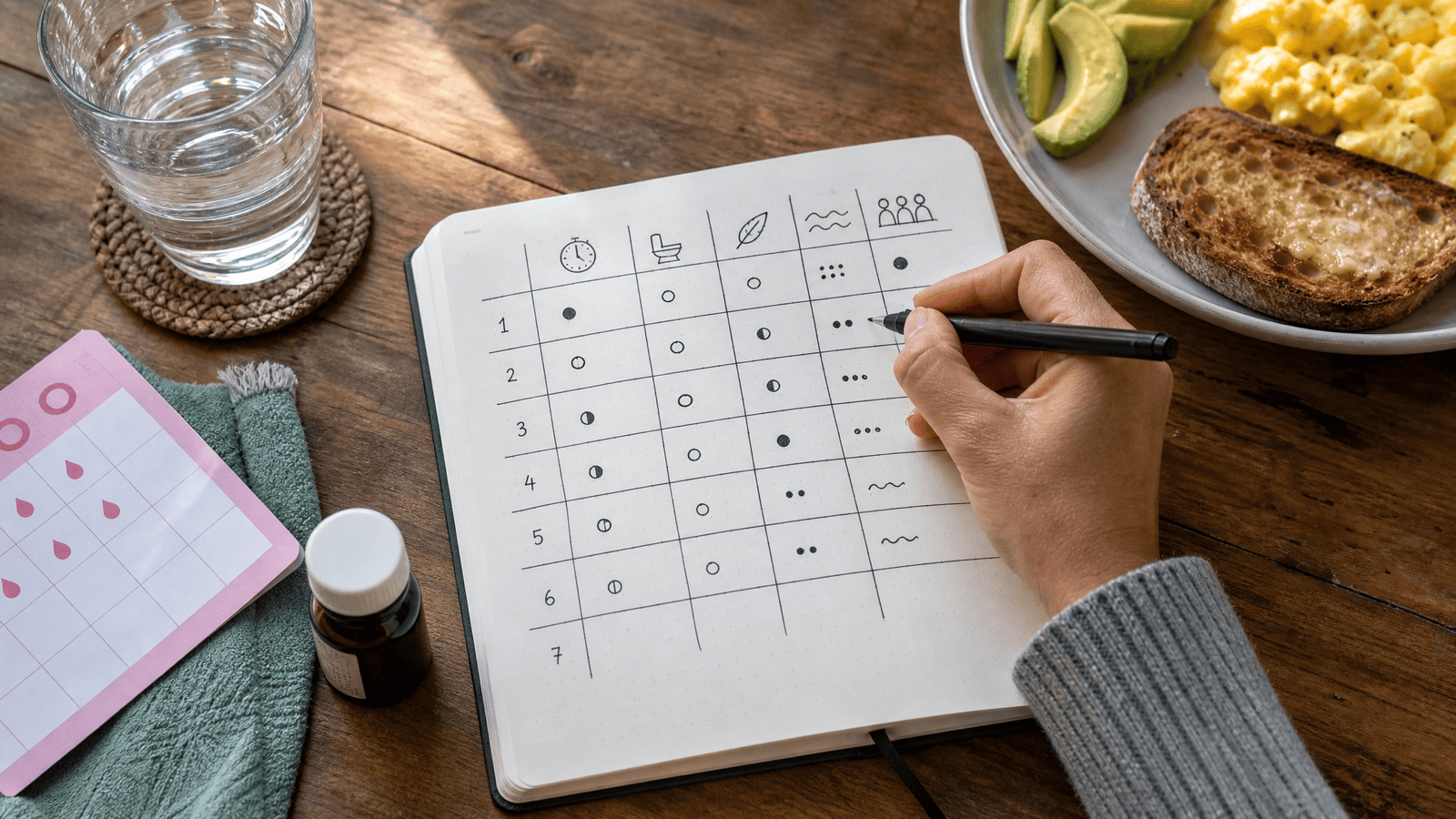
A short record can give a clinician better information than “my digestion is bad.” For each bowel movement, note the date and time, Bristol type, urgency, straining, pain, blood or unusual color, and whether you felt completely emptied. Add only relevant context: new medicine or supplement, menstruation, travel, illness, unusually high or low fiber intake, and major stress.
Do not photograph or inspect obsessively. The goal is pattern recognition, not daily perfection. Seven days may reveal that hard stools cluster after missed lunches and low fluid intake, or that loose stools began after an antibiotic. If symptoms are intermittent, extend the diary long enough to capture them without turning it into a source of anxiety.
Everyday ways to support regularity
Increase fiber gradually. A sudden jump in bran, beans, or supplements can increase gas and discomfort. Add one change at a time and drink enough fluid for your needs. If you want a food-first progression, use our approved guide to adding more fiber without bloating.
Eat regularly enough for your body. Meals stimulate colon movement in many people. Chronic under-eating or skipping meals may reduce stool bulk. Include fruits, vegetables, legumes, whole grains, nuts, and seeds as tolerated rather than searching for one magical “gut-health” food.
Use the body’s signals. Give yourself unhurried bathroom access and respond to the urge when possible. A small footstool may make the posture more comfortable. Avoid prolonged straining or scrolling on the toilet.
Review medicines. Iron, opioids, anticholinergic drugs, some antacids, antibiotics, magnesium products, metformin, and GLP-1 medicines can alter bowel habits. Do not stop prescriptions on your own. Ask a pharmacist or prescriber whether timing, dose, formulation, or symptom treatment should be reviewed.
Move and sleep. Regular movement may help some people with constipation, while sleep and stress influence gut-brain signaling. These supports are not cures and should not delay evaluation of warning signs.
Frequently Asked Questions
Is it unhealthy if I do not poop every day?
Not necessarily. For bowel habits and gut health, your usual pattern, stool consistency, comfort, and associated symptoms matter. Fewer than three bowel movements a week plus hard stool, straining, pain, or incomplete emptying supports concern for constipation. A comfortable, stable, less-than-daily pattern may be normal for you.
Does floating stool mean I am not absorbing fat?
Floating can result from gas and is not diagnostic. Persistently pale or yellow, greasy, foul-smelling stool that is difficult to flush—especially with weight loss or nutrient deficiencies—deserves medical evaluation for malabsorption or other causes.
Is mucus in stool always a problem?
Small amounts of mucus can occur because the intestine normally produces it. Recurrent or increasing mucus with blood, pain, fever, weight loss, or persistent diarrhea should be discussed with a clinician. Appearance alone cannot distinguish IBS, infection, inflammation, or another cause.
Should I take a probiotic based on my poop?
Not automatically. Probiotic effects depend on the specific strain, dose, condition, and outcome, and products are not interchangeable. Stool appearance does not identify a probiotic deficiency. Ask what problem you are treating, what evidence supports that exact product, and whether it is safe for you.
Conclusion
Your bowel movements can help describe transit, hydration, dietary changes, medicine effects, and symptom patterns. They cannot grade your microbiome, diagnose an intolerance, or rule serious disease in or out. Notice trends without chasing perfection, document high-value details, support regularity gently, and act promptly on bleeding, black tarry stool, severe pain, dehydration, persistent change, or unexplained weight loss.
Medical Disclaimer: The information provided in this article is for educational purposes only and does not constitute medical advice. Always consult a qualified healthcare provider before making changes to your diet, lifestyle, or treatment plan. TheMetabolicHub.com does not replace professional medical guidance.
References
- Blake MR, Raker JM, Whelan K. Validity and reliability of the Bristol Stool Form Scale in healthy adults and patients with diarrhoea-predominant irritable bowel syndrome. Aliment Pharmacol Ther. 2016;44(7):693–703. PMID: 27492648. DOI: 10.1111/apt.13746.
- National Institute of Diabetes and Digestive and Kidney Diseases. Symptoms & Causes of Constipation.
- National Institute of Diabetes and Digestive and Kidney Diseases. Symptoms & Causes of Diarrhea.
- Mayo Clinic. Stool color: When to worry. Updated 2024.
- National Institute of Diabetes and Digestive and Kidney Diseases. Symptoms & Causes of Irritable Bowel Syndrome.