
11 High-Protein Vegetarian Dinners for Steadier Blood Sugar
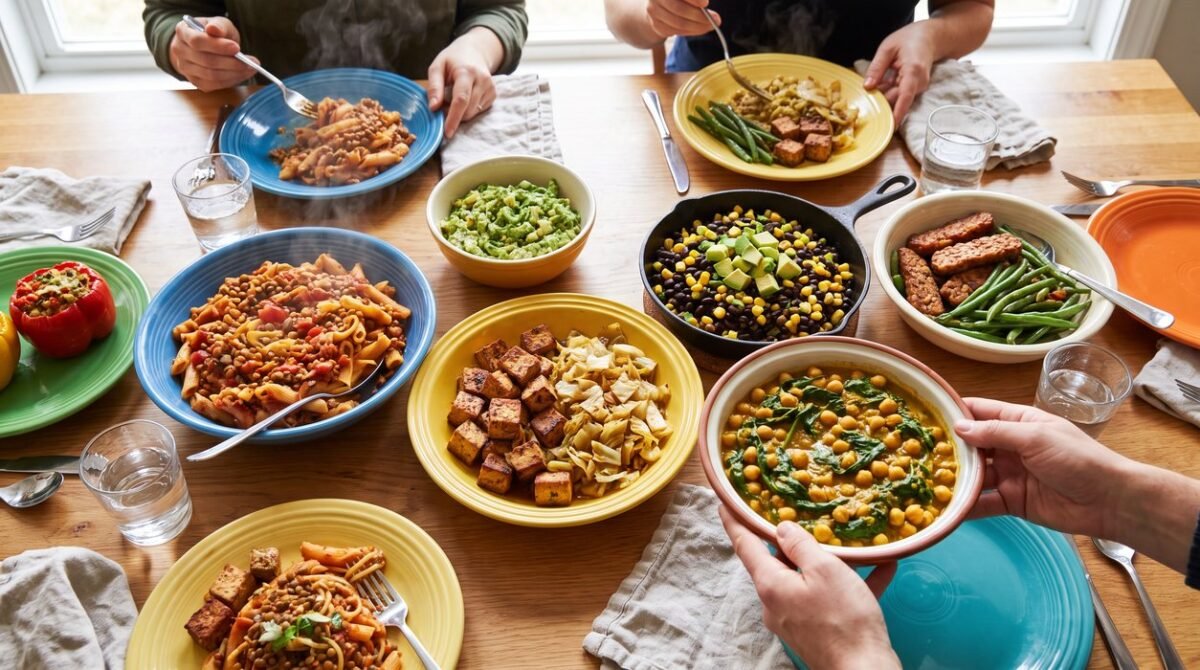
A vegetarian dinner can be rich in plants and still leave you hungry an hour later. The fix is not automatically fewer carbohydrates.
It is often a more complete plate: a clear protein anchor, fiber-rich produce, an intentional carbohydrate portion, and enough flavor to feel like dinner.
These high protein vegetarian dinners use ordinary foods such as lentils, tofu, tempeh, beans, edamame, eggs, Greek yogurt, and cottage cheese. Each idea is a flexible formula, so you can adjust portions and ingredients for your culture, budget, appetite, glucose response, and medical plan.
Key Takeaway: Protein can make a vegetarian dinner more satisfying, but it does not cancel the meal’s carbohydrates. Build the whole plate, keep portions individual, and use your own glucose data or clinical guidance when you need more precision.
What Makes a Vegetarian Dinner More Blood-Sugar Aware?
There is no single ideal percentage of carbohydrate, protein, and fat for everyone with diabetes or prediabetes. The American Diabetes Association recommends individualizing the eating plan around current habits, preferences, metabolic goals, medications, and access to food.[1], [2]
That matters because “vegetarian” describes what is excluded, not whether a meal is balanced. A bowl of refined pasta and a tofu-vegetable stir-fry are both meatless, yet their protein, fiber, carbohydrate, fat, and overall eating experience differ.
Start by choosing a protein anchor you can see on the plate. USDA MyPlate lists beans, peas, lentils, nuts, seeds, soy foods, and, for people who include them, eggs as vegetarian protein choices.[4] Dairy foods can add protein in lacto-vegetarian meals.
Next, add generous nonstarchy vegetables and a carbohydrate source that suits you. Beans and lentils do double duty because they contribute protein, fiber, and carbohydrate. Whole grains, potatoes, fruit, bread, and sauces also count toward the meal’s carbohydrate load.
The NIDDK plate method offers a visual starting point: half nonstarchy vegetables, one quarter protein foods, and one quarter higher-fiber carbohydrate foods.[3] It is a planning tool, not a rule that fits every body or every cuisine.
Protein changes a mixed meal’s physiology, but the effect is not a promise. A 2024 meta-analysis found a more consistent reduction in acute glucose response among adults without diabetes than among adults with type 2 diabetes.[5]
In the type 2 diabetes comparisons, effects were smaller and less consistent. That distinction is one reason to avoid treating protein as a universal glucose-lowering tool.
So the goal is not to “neutralize” carbohydrates with protein. It is to build a nourishing meal, then learn from your hunger, energy, treatment plan, and—when clinically useful—glucose readings.
For a deeper look at this nutrient’s role, read how protein and blood sugar interact. The dinner ideas below put that context into practice.
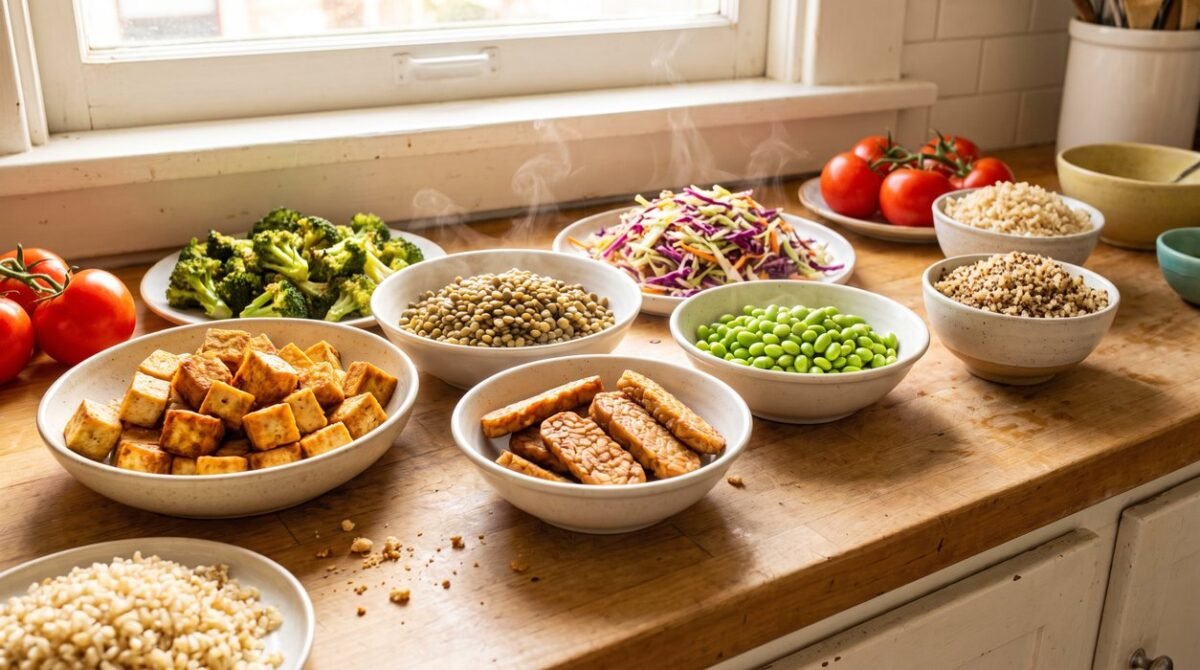
11 High Protein Vegetarian Dinners to Put on Repeat
Use these as templates rather than rigid recipes. Seasonings, cooking fats, and vegetable quantities can change without losing the basic structure. If you track carbohydrates or dose mealtime insulin, calculate the ingredients and portions you actually serve.
1. Lentil Bolognese with Roasted Broccoli
Simmer brown or green lentils into a tomato, mushroom, onion, and herb sauce. Spoon it over a moderate portion of whole-grain pasta and fill the rest of the plate with roasted broccoli. Parmesan is optional.
Why it works: Lentils provide both plant protein and fiber, while mushrooms give the sauce body. Adjust the pasta-to-sauce ratio instead of removing pasta automatically.
2. Sheet-Pan Tofu, Cabbage, and Peanut-Lime Slaw
Roast pressed tofu cubes and cabbage wedges until their edges brown. Serve with crisp slaw, a peanut-lime dressing, and brown rice or another grain in the portion that fits your plan.
Make it easier: Use bagged slaw and shelf-stable microwave rice. Check bottled sauces for added sugar and sodium, but do not assume a homemade sauce is automatically lower.
3. Black Bean and Vegetable Enchilada Skillet
Combine black beans, sautéed peppers, zucchini, corn, torn corn tortillas, and enchilada sauce in one skillet. Add cheese if desired, then finish with cabbage, cilantro, avocado, and plain Greek yogurt.
Portion cue: Beans, corn, tortillas, and sauce all contribute carbohydrate. Keep the vegetables generous and decide which carbohydrate ingredients you want to feature rather than stacking them by accident.
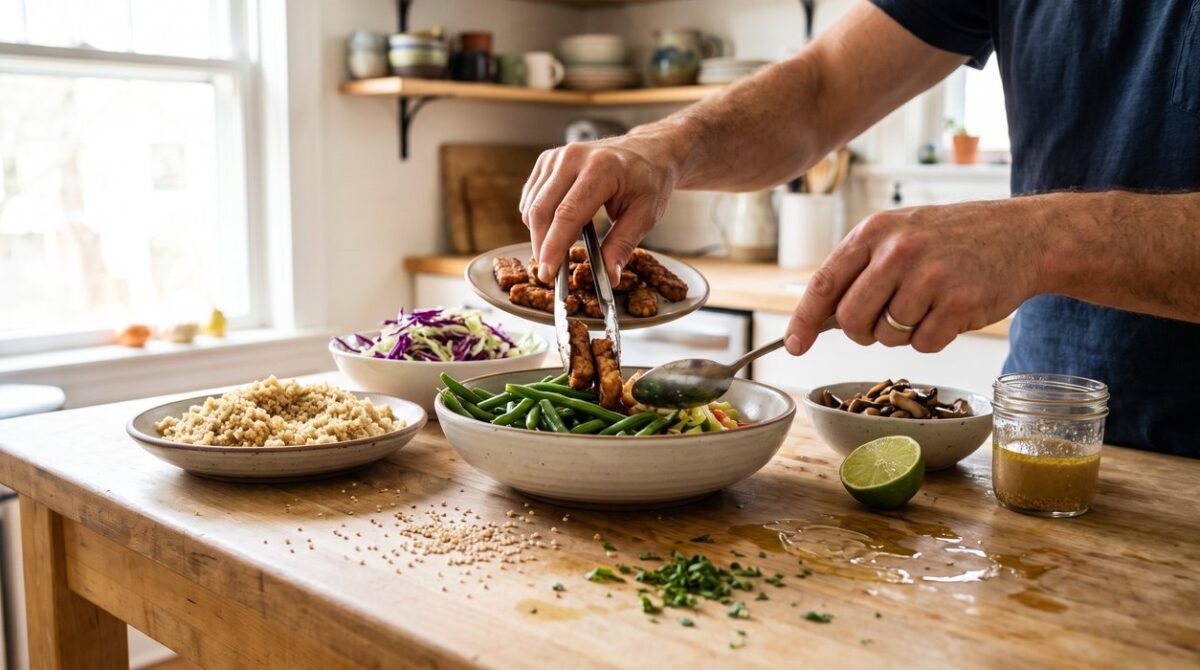
4. Tempeh Sesame Green-Bean Bowls
Pan-sear tempeh with ginger, garlic, reduced-sodium tamari, and sesame. Add green beans and mushrooms, then serve over quinoa, barley, or shredded cabbage with a spoonful of the cooking sauce.
Flavor move: Browning the tempeh before adding liquid improves texture. A sharp element such as rice vinegar can make a modest amount of sauce taste more vivid.
5. Chickpea, Spinach, and Paneer Curry
Cook chickpeas and paneer with tomato, spinach, onion, ginger, and your preferred curry spices. Serve with cauliflower, rice, or a combination of both, according to appetite and carbohydrate needs.
Flexible swap: Replace paneer with extra-firm tofu for a vegan version. Chickpeas remain a carbohydrate-containing food even though they are also rich in fiber and plant protein.
6. Herby White-Bean Stuffed Peppers
Fill roasted pepper halves with white beans, chopped kale, tomatoes, herbs, and a small amount of farro or quinoa. Top with feta, nutritional yeast, or toasted pumpkin seeds and serve with a lemony salad.
Batch benefit: Prepare extra filling for lunch. Store wet garnishes separately so the peppers reheat without becoming soggy.
| Dinner | Protein anchor | Fiber-rich plants | Adjustable carbohydrate |
|---|---|---|---|
| Lentil Bolognese | Lentils | Tomato, mushrooms, broccoli | Whole-grain pasta |
| Tofu sheet pan | Tofu, peanuts | Cabbage, slaw | Brown rice |
| Enchilada skillet | Black beans, optional dairy | Peppers, zucchini, cabbage | Tortillas and corn |
| Tempeh bowl | Tempeh | Green beans, mushrooms | Quinoa or barley |
| Chickpea curry | Chickpeas, paneer or tofu | Spinach, tomato | Rice |
| Stuffed peppers | White beans, seeds | Peppers, kale, salad | Farro or quinoa |
7. Egg and Edamame Fried Rice
Stir-fry chilled brown rice with shelled edamame, eggs, carrots, peas, scallions, and plenty of shredded cabbage. Season with ginger, garlic, and reduced-sodium soy sauce rather than relying on a sugary bottled glaze.
Vegan option: Use crumbled tofu in place of egg and keep the edamame. Rice portion, cooking oil, and sauce still matter, so build the bowl you intend to eat.
8. Savory Greek Yogurt and Roasted Chickpea Plate
Spread plain Greek yogurt with lemon, garlic, dill, and pepper. Add roasted chickpeas, tomatoes, cucumbers, olives, greens, and a whole-grain pita wedge or seeded crackers.
No-cook shortcut: Use rinsed canned chickpeas without roasting. If sodium is a concern, compare yogurt, olives, canned beans, crackers, and seasoning as one meal rather than judging one ingredient alone.
9. Cottage Cheese Polenta with Garlicky Greens
Whisk cottage cheese into warm polenta, then top with garlicky greens, white beans, blistered tomatoes, and walnuts. The result is creamy without making cheese the only substantial part of dinner.
Texture tip: Blend the cottage cheese first if you prefer a smoother base. Choose a portion of polenta that leaves room for beans and vegetables.
10. Red Lentil Pasta Primavera with Pistachio Gremolata
Toss red lentil pasta with asparagus, peas, zucchini, lemon zest, herbs, and a pistachio-parsley topping. Keep enough pasta water to create a glossy sauce without heavy cream.
Label check: Legume pasta often provides more protein and fiber than refined wheat pasta, but products vary. Compare serving size, protein, fiber, carbohydrate, and ingredients on the package you buy.
11. Three-Bean Chili with Crunchy Cabbage
Simmer kidney, black, and pinto beans with tomato, peppers, onion, spices, and optional textured vegetable protein. Top with crunchy cabbage, avocado, cilantro, and plain yogurt or a nondairy alternative.
Freezer strategy: Freeze the chili in meal-size portions without toppings. At dinner, add fresh cabbage and choose whether you want cornbread, brown rice, or no additional grain.
How to Adjust Any Dinner for Your Needs
Begin with consistency, not the smallest possible plate. If you monitor glucose, compare similar meals under similar conditions before drawing conclusions. Sleep, stress, activity, illness, timing, and medication can all change the result.
- If you are hungry soon after dinner: check whether the meal had a clear protein source, enough total food, vegetables, and a satisfying fat or sauce.
- If the meal is carbohydrate-heavy for your plan: reduce one concentrated source, not every plant food. For example, keep beans and vegetables while adjusting rice, pasta, bread, or a sweet sauce.
- If your protein source is small: increase tofu, tempeh, lentils, beans, eggs, yogurt, or cottage cheese, or combine two modest sources.
- If digestion is sensitive: increase legumes gradually, rinse canned beans, choose well-cooked lentils, and discuss persistent symptoms with a professional.
- If you eat vegan: rotate legumes, soy foods, nuts, seeds, and fortified foods; ask about vitamin B12 and other nutrient needs rather than guessing.
Protein needs change with body size, age, activity, pregnancy, recovery, and health conditions. Kidney disease can require individualized guidance, so a high-protein label should never override advice from your kidney or diabetes care team.
If you use insulin or a sulfonylurea, large changes in carbohydrate amount or meal timing can raise the risk of hypoglycemia. Do not change medication doses from an article; coordinate meaningful diet changes with the clinician who manages your treatment.[3]
For another practical framework, see foods that can support steadier blood sugar. It can help you make substitutions without turning this list into a rigid meal plan.
A Low-Effort Prep Plan for Three Dinners
Cook one grain, roast two trays of vegetables, and prepare two protein anchors. For example, roast tofu and peppers, simmer lentils, cook brown rice, and mix one lemon-herb sauce.
On night one, make tofu bowls. On night two, turn the lentils into Bolognese over pasta with leftover vegetables. On night three, combine rice, vegetables, and remaining tofu in fried rice, adding eggs or edamame as desired.
This approach repeats ingredients without repeating the same meal. Refrigerate cooked food promptly, use clean containers, and follow current food-safety guidance for storage and reheating.
Frequently Asked Questions
How much protein should a vegetarian dinner contain?
There is no universal dinner target. Daily needs and meal distribution depend on body size, age, activity, total intake, health conditions, and preferences. A registered dietitian can translate those factors into a useful range.
Are beans protein or carbohydrate?
They provide both, along with fiber and micronutrients. Count them according to the method in your diabetes plan instead of forcing them into only one category.
Does adding protein prevent a blood sugar spike?
No. Protein can alter the response to a mixed meal, but effects vary by dose, protein source, health status, and the rest of the meal. It does not erase carbohydrate or guarantee a specific reading.[5]
Are vegetarian diets proven to improve A1C?
Randomized-trial reviews suggest vegetarian and vegan patterns may modestly improve some outcomes in adults with type 2 diabetes, but results depend on the foods, comparator diet, adherence, and individual context.[6]
Can these dinners work for prediabetes?
They can be adapted for many people with prediabetes, but no dinner list replaces individualized care. Use portions and ingredients that fit your full nutrition needs and follow-up plan.
Conclusion
A useful vegetarian dinner is more than a meat-free main. Give protein a visible place, surround it with fiber-rich plants, choose carbohydrates intentionally, and make the meal enjoyable enough to repeat.
Pick two ideas from this list for the coming week. Once their portions and preparation feel easy, add another. A short rotation of dependable meals is often more practical than a perfect plan you cannot sustain.
Medical Disclaimer: This article is for general educational purposes only and is not a substitute for personalized medical advice, diagnosis, or treatment. Speak with a qualified healthcare professional if you have symptoms, take medication, are pregnant or breastfeeding, or are considering major changes to your diet, supplements, or treatment plan.
References
- American Diabetes Association Professional Practice Committee. Facilitating Positive Health Behaviors and Well-being to Improve Health Outcomes: Standards of Care in Diabetes—2026. Diabetes Care.
- Evert AB, et al. Nutrition Therapy for Adults With Diabetes or Prediabetes: A Consensus Report. Diabetes Care.
- National Institute of Diabetes and Digestive and Kidney Diseases. Healthy Living with Diabetes.
- U.S. Department of Agriculture. MyPlate Protein Foods Group.
- Wolever TMS, et al. The Effect of Adding Protein to a Carbohydrate Meal on Postprandial Glucose and Insulin Responses: A Systematic Review and Meta-Analysis of Acute Controlled Feeding Trials. The Journal of Nutrition. 2024.
- Vegetarian and Vegan Dietary Patterns to Treat Adult Type 2 Diabetes: A Systematic Review and Meta-Analysis of Randomized Controlled Trials. PubMed record. 2024.