Not Eating Enough Protein? 5 Clues Your Meals May Be Falling Short

Not eating enough protein does not always mean having a clinical protein deficiency. For most generally well-nourished adults, the more useful question is whether their usual meals provide enough protein for their age, activity level, appetite, and current goals.
There is no reliable set of everyday symptoms that can diagnose low protein intake on its own. Hunger, fatigue, weaker workouts, or hair changes can have many causes. But if your meals repeatedly contain very little protein, there are practical clues worth looking at.
Quick Win: Identify the meal in your day with the least obvious protein. For the next seven days, add one meaningful protein source to that meal and notice whether the meal becomes easier to build and more satisfying.
How can you tell if your meals may be low in protein?
You cannot reliably diagnose inadequate protein intake from hunger, fatigue, soreness, hair loss, or any other single symptom. A better first step is to look directly at your eating pattern.
Your protein intake may be worth reviewing if several meals contain little obvious protein, most of your daily protein is saved for dinner, you have recently reduced calories substantially, or your activity level has increased without much change to what you eat.
That is different from assuming that every afternoon slump or craving is a protein problem. Sleep, total calorie intake, iron status, thyroid conditions, medications, stress, illness, and many other factors can produce similar experiences.
If you want a broader guide to protein needs for women and metabolic health, daily amount, life stage, and activity level all deserve consideration rather than relying on symptoms alone.
Low protein intake is not the same as protein deficiency
| Situation | What It Means |
|---|---|
| Clinical protein-energy undernutrition | A medical form of undernutrition involving inadequate energy and macronutrient intake, often together with other nutrient deficiencies. |
| Protein intake below your current needs | Your diet may still provide adequate calories and nutrients overall, but your usual protein intake may not optimally support training, muscle retention, or your current circumstances. |
| A low-protein meal | One meal contains little protein. This alone does not mean your total daily protein intake is inadequate. |
True protein-energy undernutrition can cause weakness, loss of muscle and body weight, impaired healing, hair and skin changes, and—in severe cases—swelling and broader organ effects.[1]
That clinical picture is very different from eating oatmeal with little protein at breakfast or realizing that your lunch does not keep you satisfied.
For many otherwise well-nourished adults, the practical question is therefore not, “Am I protein deficient?” but rather, “Does my usual protein intake make sense for my body and what I am asking it to do?”
5 clues your meals may be falling short on protein
These are not diagnostic signs of protein deficiency. They are observable patterns that can justify taking a closer look at the amount and distribution of protein in your diet.
1. Several of your meals contain almost no obvious protein source
This is the most useful clue because you can actually observe it.
A meal can look healthy and still contain relatively little protein. Examples might include fruit and toast, oatmeal made with water and fruit, a vegetable salad without beans, tofu, fish, eggs, dairy, or another protein source, or pasta without a meaningful protein component.
No individual meal needs to meet a perfect protein target. But if breakfast and lunch regularly contain very little protein and almost everything arrives at dinner, reviewing your daily pattern makes sense.
2. Low-protein meals repeatedly leave you less satisfied
Protein can contribute to fullness, although appetite is influenced by far more than protein alone.
Systematic reviews suggest that higher-protein diets can increase fullness or satiety in some adults, but the effect is not identical across studies or individuals.[2]
That means feeling hungry two hours after eating is not a protein-deficiency test. A small meal, insufficient calories, little fiber, poor sleep, high activity, stress, or simply normal appetite can all contribute.
A more useful experiment is comparative: if a meal contains very little protein and repeatedly leaves you unsatisfied, try adding a meaningful protein source while keeping the rest of the meal reasonably similar.
3. You are dieting and protein disappeared along with the calories
When people reduce calories, they often make every part of the meal smaller. That can unintentionally reduce protein at the same time.
This matters because weight loss can involve loss of both fat and lean tissue. A 2024 systematic review and meta-analysis of adults with overweight or obesity found that higher protein intake during weight loss helped limit the decline in muscle mass compared with lower-protein approaches.[3]
Protein is not a guarantee against muscle loss, and more is not automatically better. Resistance training, the size of the energy deficit, starting body composition, age, and other factors matter too.
If you are eating substantially less than before, check whether the foods you reduced included most of your previous protein sources.
4. Your training increased but your diet did not change
Physical training creates a greater need for recovery and adaptation. Protein provides the amino acids needed to build and remodel muscle proteins.
Research on resistance training shows that increasing protein intake can enhance gains in lean mass and strength when combined with training, particularly when baseline protein intake is lower.[4]
That does not mean muscle soreness is a reliable marker of protein intake. How sore you feel is affected by the type of exercise, training volume, unfamiliar movements, sleep, recovery, and previous training experience.
A better clue is the mismatch itself: if your training load has risen significantly but your eating pattern has stayed unchanged or become more restrictive, it is reasonable to review whether you are eating enough total energy and protein.

5. You rely on small protein add-ons instead of actual protein anchors
A spoonful of seeds, a few nuts, a little cheese, or a splash of plant milk can add useful nutrients. But depending on the food and portion, these additions may contribute much less protein than people assume.
This becomes especially relevant in meals built mainly from vegetables, fruit, grains, or snack foods.
Instead of asking whether a meal contains any protein, ask whether you can identify the main protein source without searching for it.
That could be Greek yogurt, cottage cheese, eggs, fish, poultry, tofu, tempeh, edamame, beans, lentils, seitan, soy foods, lean meat, or another substantial source that fits your eating pattern.
| Clue | Better Question to Ask | Possible Adjustment |
|---|---|---|
| Protein-light meals | Where is the main protein source? | Add an obvious protein anchor to the meal |
| Low meal satisfaction | Is the meal also small or low in fiber and total energy? | Test a more balanced meal rather than blaming protein alone |
| Calorie restriction | Did protein fall when portions got smaller? | Preserve protein-rich foods while adjusting overall intake |
| More training | Did food intake adapt to the new training demand? | Review protein and total energy together |
| Protein only at dinner | Could breakfast or lunch use a stronger protein source? | Redistribute some protein earlier in the day |
Why does protein matter?
Protein supplies amino acids that the body uses to build and maintain muscle, enzymes, transport proteins, hormones, immune components, skin, and many other tissues.
Muscle is especially relevant to metabolic health because skeletal muscle is an important site of glucose disposal. Maintaining muscle therefore matters for much more than appearance or athletic performance.
Protein can also contribute to meal satisfaction. In some people, increasing protein within an otherwise balanced eating pattern can improve fullness, although the size of the effect varies and protein should not be treated as the only determinant of appetite.[2]
A useful breakfast, for example, does not need to eliminate carbohydrates. Protein can be combined with fiber-rich carbohydrates, fruit, vegetables, and fats as part of a complete meal—similar to the meal-building approach used in this guide to a blood-sugar-friendly breakfast.
How much protein do adults need?
The current U.S. Recommended Dietary Allowance for protein in healthy adults is 0.8 grams per kilogram of body weight per day.[5]
The RDA is a population reference intake designed to meet the requirements of nearly all healthy people in a life-stage group. It should not be interpreted as proof that 0.8 g/kg is ideal for every fitness goal, weight-loss phase, age, or medical circumstance.
At the same time, there is no single higher number that every adult should automatically target.
| Context | What the Evidence Means Practically |
|---|---|
| Generally healthy adult | The adult RDA of 0.8 g/kg/day is the established reference intake for meeting protein requirements in healthy adults. |
| Resistance training | Higher intake can support training adaptations. A large meta-analysis found little additional average lean-mass benefit beyond roughly 1.6 g/kg/day during resistance training.[4] |
| Weight loss | Higher protein intake may help preserve muscle mass during energy restriction, especially when paired with resistance training.[3] |
| Older age or medical conditions | Needs and priorities may differ, so individual health status and professional guidance become more important. |
The most useful target therefore depends on context rather than a universal “optimal protein intake.” Body size, total calorie intake, training, age, food preferences, weight goals, and health conditions all matter.
If you currently eat very little protein, improving meal structure may be more useful than jumping immediately to a high numerical target.
A more useful protein portion approach
Hand-size estimates can be convenient, but they are imprecise because different foods contain very different amounts of protein for the same volume.
Instead, learn what a substantial protein serving looks like among the foods you actually eat. The exact amount varies by product and preparation, so food labels and reliable food-composition databases are useful when precision matters.
- Dairy: Greek yogurt, skyr, cottage cheese, kefir, or higher-protein milk products.
- Eggs and animal proteins: eggs, fish, poultry, lean meat, or canned fish.
- Soy-based foods: tofu, tempeh, edamame, and soy milk.
- Legumes: lentils, beans, chickpeas, and peas.
- Other plant options: seitan, higher-protein meat alternatives, nuts, seeds, and whole grains as contributors to the daily total.
Plant-based diets can provide adequate protein, but meals may require more deliberate planning when animal foods are limited or excluded.
How can you build better protein meals?
Instead of trying to make every meal “high protein,” give each main meal an identifiable protein anchor and build the rest of the plate around it.
Then add fiber-rich carbohydrates, vegetables or fruit, and satisfying fats according to your appetite and needs.
Breakfast might be Greek yogurt with berries, oats, and nuts; eggs with vegetables and whole-grain toast; tofu scramble with beans; or a smoothie that contains an actual protein source rather than fruit and almond milk alone.
Lunch or dinner might be a lentil bowl with quinoa and tahini, chicken salad with beans, salmon with potatoes and greens, tofu with rice and vegetables, or a bean-based chili.
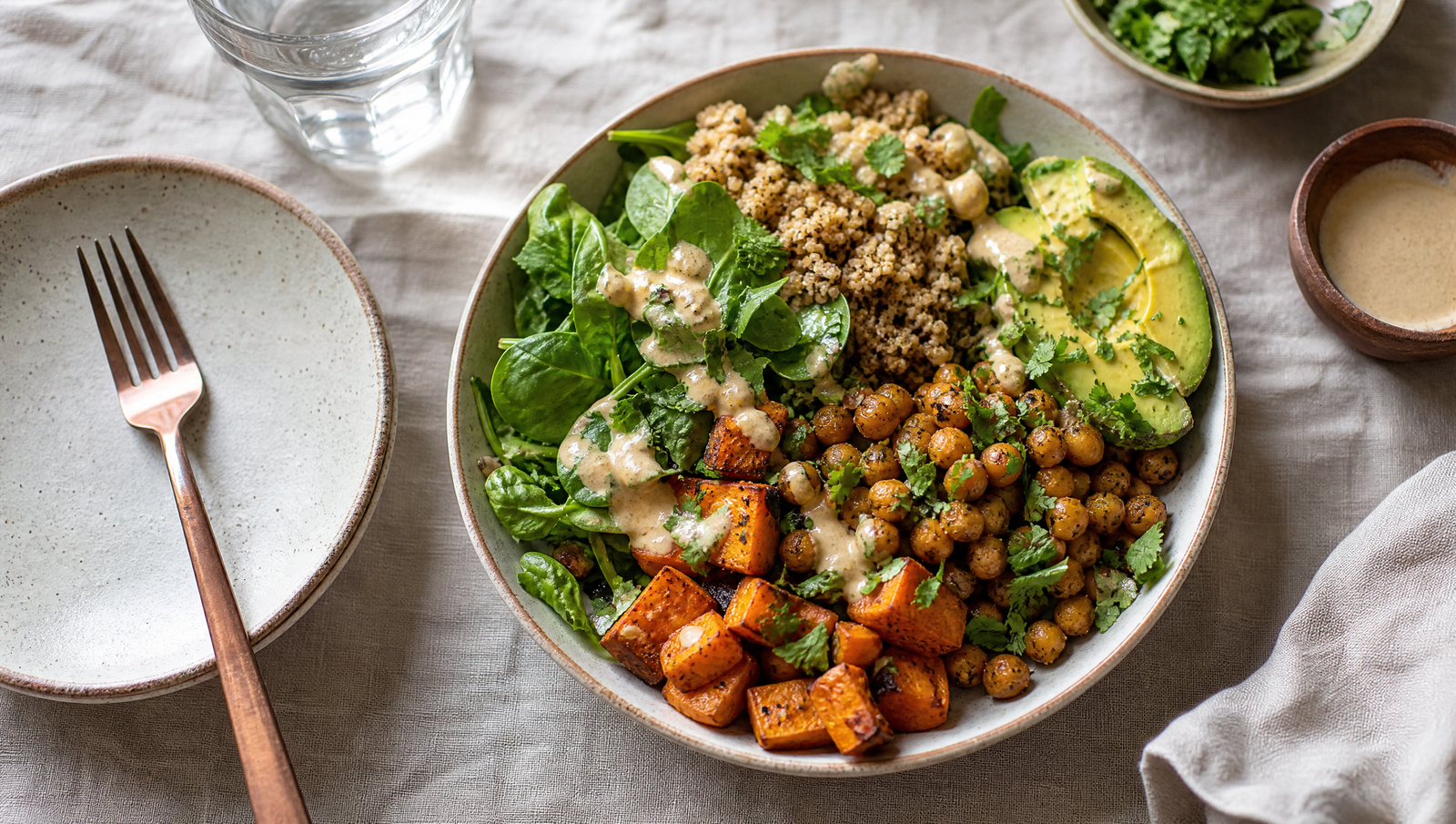
Common protein-light meal patterns
- Fruit smoothie + almond milk: add Greek yogurt, soy milk, cottage cheese, or an appropriate protein powder.
- Oatmeal + fruit: consider dairy or soy milk, yogurt, or another substantial protein source.
- Vegetable salad: add lentils, beans, tofu, tempeh, eggs, fish, poultry, or another protein anchor.
- Toast + fruit: add eggs, cottage cheese, Greek yogurt, tofu, or another protein-rich food.
- Pasta + tomato sauce: consider lentils, beans, tofu, fish, poultry, lean meat, or a higher-protein pasta depending on your preferences.
The point is not that any of the original meals are “bad.” It is simply easier to evaluate your protein intake when the main source is visible rather than coming from several tiny additions.
When do symptoms need a broader medical look?
Talk to a qualified healthcare provider if you have persistent weakness or fatigue, unexplained weight loss, significant muscle loss, swelling, persistent digestive problems, substantial hair loss, menstrual changes, poor wound healing, or other concerning symptoms.
These findings should not automatically be blamed on protein intake. Clinical undernutrition can involve inadequate calories, protein, micronutrients, chronic disease, malabsorption, medications, or other underlying problems.[1]
Hair and nail changes are a good example. Protein-energy undernutrition can affect hair and skin, but so can iron deficiency, thyroid disease, zinc deficiency, rapid weight loss and under-eating, illness, medication, and other causes.
That is why hair shedding or brittle nails should not be used as a home test for protein deficiency.
Professional guidance is also particularly useful for people with kidney disease, significant liver disease, chronic illness, pregnancy, lactation, an eating disorder history, recent surgery, or other circumstances that change nutritional needs.
A simple protein check for your day
You do not have to calculate every gram to improve a clearly protein-light diet.
Start by looking at how protein is distributed across your normal day. A more even protein pattern across meals may be easier to build than trying to catch up with a very large serving at dinner.
- Breakfast: Can you identify an obvious protein source?
- Lunch: Is protein part of the main meal or only a small garnish?
- Dinner: Does your evening meal contain almost all of your daily protein?
- Snacks: Do you actually need more protein here, or are your main meals already sufficient?
- Training days: Are you eating enough overall to support your activity as well as enough protein?
If breakfast is your weakest meal, options such as eggs, Greek yogurt, tofu, cottage cheese, tempeh, or a well-constructed protein smoothie can make protein more visible without rebuilding your entire diet. You can also use these high-protein breakfast tips for more practical ideas.
For lunch, fish, poultry, lentils, beans, tofu, tempeh, edamame, seitan, or lean meat can turn a bowl, soup, salad, or wrap into a more substantial meal.
Protein can also be combined with high-fiber carbohydrates rather than replacing them. Lentils with vegetables, fish with potatoes and greens, tofu with rice and vegetables, or yogurt with oats and berries are examples of mixed meals.
If blood sugar response is one of your goals, protein is only one part of the picture. Meal composition, carbohydrate type and amount, activity, medication, sleep, and individual physiology all matter. This guide to reducing blood sugar spikes covers that broader context.

| Meal | Protein Anchor | Possible Add-Ons |
|---|---|---|
| Breakfast | Greek yogurt, eggs, tofu, cottage cheese, or protein smoothie | Berries, oats, chia seeds, vegetables, or whole-grain toast |
| Lunch | Chicken, lentils, tuna, tempeh, beans, tofu, or edamame | Greens, quinoa, avocado, olive oil, or roasted vegetables |
| Dinner | Fish, tofu, lean meat, legumes, tempeh, or seitan | Potatoes, rice, vegetables, herbs, or fermented foods |
| Snack, if wanted | Cottage cheese, yogurt, kefir, hummus, or edamame | Fruit, vegetables, seeds, or whole-grain crackers |
Keep the first step simple. Fix the meal that currently contains the least protein before trying to optimize your entire day.
Frequently Asked Questions
What are the early signs of not eating enough protein?
There is no reliable symptom checklist that can diagnose inadequate protein intake. A more useful clue is an eating pattern in which several meals contain little meaningful protein, especially during calorie restriction, higher activity, low appetite, or other situations that increase the importance of preserving muscle. Persistent weakness, weight loss, swelling, or other concerning symptoms deserve medical evaluation rather than self-diagnosis.
Can low protein make you hungry?
Protein can contribute to fullness, and higher-protein meals or diets increase satiety for some people. However, hunger is influenced by total calories, meal size, fiber, sleep, activity, stress, food preferences, and many other factors. Feeling hungry soon after a meal does not prove that your protein intake is too low.
Is true protein deficiency common in healthy adults?
Clinical protein-energy undernutrition is different from simply eating less protein than might be useful for a particular training or weight-management goal. It is more likely in situations involving inadequate overall food intake, chronic disease, malabsorption, severe food insecurity, increased metabolic demands, or other medical and social risk factors.
Does muscle soreness mean you need more protein?
No. Muscle soreness is affected by training volume, unfamiliar exercise, eccentric loading, training experience, sleep, and recovery. Protein is important for muscle remodeling and adaptation, but soreness itself is not a reliable way to determine whether your protein intake is adequate.
How much protein should adults eat per day?
The U.S. Recommended Dietary Allowance for healthy adults is 0.8 grams of protein per kilogram of body weight per day. Individual needs and useful targets can differ with age, resistance training, energy restriction, body composition goals, pregnancy, illness, and other circumstances. There is no single higher intake that is automatically optimal for every adult.
Is 1.6 grams of protein per kilogram necessary?
No. It is not a universal requirement. In resistance-training research, benefits for lean-mass gains tend to plateau on average around total intakes near 1.6 grams per kilogram per day. That finding applies to a specific training context and should not be interpreted as a target that every adult needs to reach.
What is the easiest way to increase protein without tracking everything?
Look at your main meals and identify which one has the least obvious protein. Add a substantial protein source such as Greek yogurt, eggs, tofu, fish, poultry, lentils, beans, tempeh, cottage cheese, edamame, or another food that fits your diet. Improving one consistently protein-light meal is often more practical than counting every gram immediately.
Conclusion
Not eating enough protein is best evaluated by looking at your actual diet and context—not by trying to diagnose yourself from fatigue, cravings, muscle soreness, or brittle nails.
True protein-energy undernutrition is a medical condition. For many otherwise well-nourished adults, the more relevant issue is whether protein intake is appropriate for current activity, calorie intake, age, and goals.
Start with something observable: look at breakfast, lunch, and dinner and identify where the main protein sources actually are. If one meal repeatedly contains very little, improve that meal first.
A simple next step is to add a clear protein source to a protein-light meal rather than assuming you need a supplement or an extreme high-protein diet.
And if symptoms such as persistent weakness, unexplained weight loss, significant hair loss, swelling, or other concerning changes are present, treat them as a reason to seek proper medical assessment—not as proof that protein is the missing nutrient.
Medical Disclaimer: The information provided in this article is for educational purposes only and does not constitute medical advice. Always consult a qualified healthcare provider before making changes to your diet, lifestyle, or treatment plan. TheMetabolicHub.com does not replace professional medical guidance.
References
- Bhupathiraju SN, Hu FB. Protein-Energy Undernutrition (PEU). MSD Manual Professional Edition. Reviewed December 2025, updated 2026. MSD Manual
- de Carvalho KMB, Pizato N, Botelho PB, Dutra ES, Gonçalves VSS. Dietary protein and appetite sensations in individuals with overweight and obesity: a systematic review. Eur J Nutr. 2020;59(6):2317-2332. PMID: 32648023
- Kokura Y, Ueshima J, Saino Y, Maeda K. Enhanced protein intake on maintaining muscle mass, strength, and physical function in adults with overweight/obesity: A systematic review and meta-analysis. Clin Nutr ESPEN. 2024;63:417-426. PMID: 39002131
- Morton RW, Murphy KT, McKellar SR, et al. A systematic review, meta-analysis and meta-regression of the effect of protein supplementation on resistance training-induced gains in muscle mass and strength in healthy adults. Br J Sports Med. 2018;52(6):376-384. PMID: 28698222
- Institute of Medicine. Dietary Reference Intakes: The Essential Guide to Nutrient Requirements. National Academies Press. 2006. National Academies Press
- U.S. Department of Agriculture, Agricultural Research Service. FoodData Central. USDA FoodData Central