
A 14-Day Beginner Strength Training Metabolic Health Plan
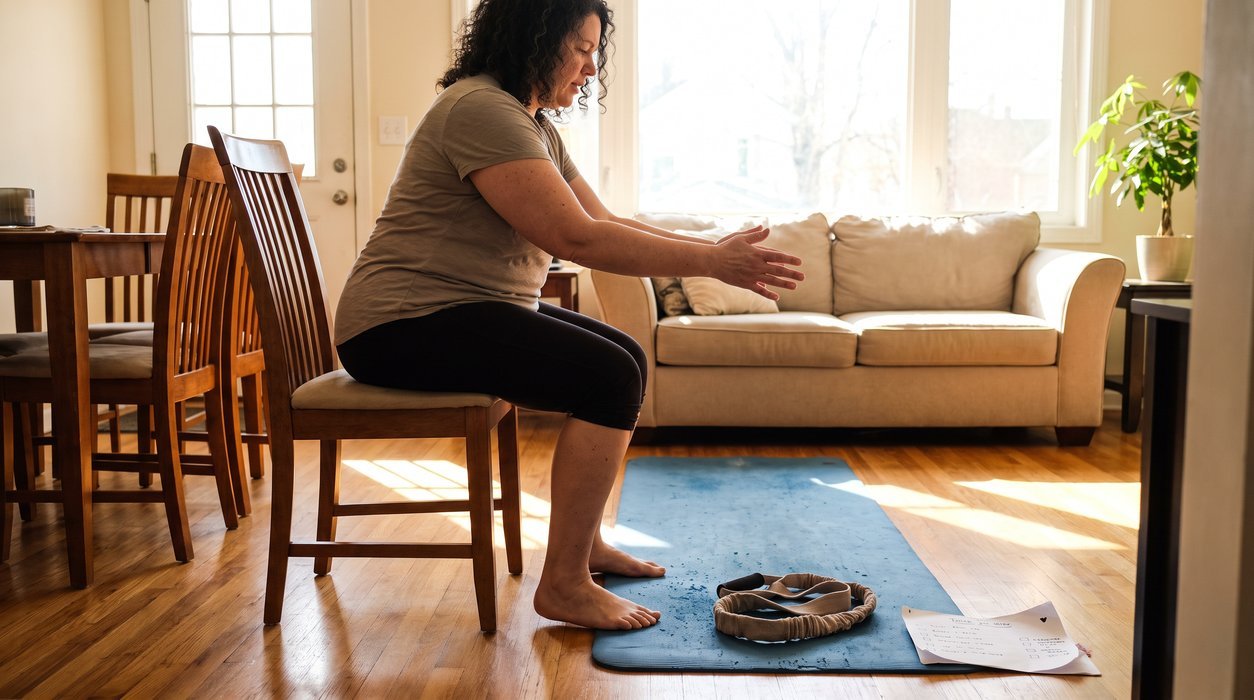
Feeling tired after meals, stuck in a weight-management plateau, or unsure why daily walks are not moving the needle can make metabolic health feel confusing. This may not be random, and it is not a personal failure.
The encouraging news: a beginner strength training metabolic health routine can give your body a clear, repeatable signal to use muscle, recover, and handle energy more efficiently.
Quick Win: Today, do one slow set of 8 chair squats, 8 wall push-ups, and 8 glute bridges, resting as needed and stopping 2–3 reps before fatigue.
How does beginner strength training metabolic health work?
Beginner strength training metabolic health routines may support better glucose use because skeletal muscle is one of the body’s major tissues for storing and using glucose. When muscles contract during resistance exercise, they can take up glucose through both insulin-related and non-insulin pathways.[1]
For beginners, the goal is not soreness, exhaustion, or a dramatic body transformation in two weeks. The goal is to practice basic movements often enough that the body starts adapting without feeling punished.
A 14-day plan can help adults build confidence, learn form, and create momentum. It is long enough to establish rhythm, but short enough to feel manageable if exercise has felt intimidating or inconsistent.
Key takeaways
- Strength training may support insulin sensitivity by improving how working muscle uses glucose.
- Beginners do not need heavy weights; bodyweight, bands, and stable household items can work well.
- The first two weeks should feel controlled, not extreme.
- Two to three full-body sessions per week is a realistic starting rhythm.
- Walking, protein, sleep, and recovery help the plan work better.
Why muscle matters for blood sugar control
Muscle is not only for lifting, posture, or appearance. It is metabolically active tissue that helps the body store glycogen, use fatty acids, and respond to energy demands throughout the day.
Research suggests skeletal muscle plays a central role in insulin-stimulated glucose uptake, which makes it relevant for insulin resistance, prediabetes risk, energy swings, and blood sugar control.[2]
Resistance training challenges muscle fibers with controlled tension. Over time, that tension may support strength, muscle quality, and metabolic flexibility, especially when paired with daily movement and adequate recovery.
This does not mean strength training replaces nutrition, sleep, medication, or medical care. It means muscle can be a practical lever inside a broader metabolic-health routine.
Why beginners do not need heavy weights
Beginners can start with chair squats, wall push-ups, glute bridges, resistance-band rows, or light dumbbells. The first two weeks are mainly about coordination, joint comfort, and learning how each movement should feel.
A useful beginner target is to finish most sets with about 2–3 good repetitions left in reserve. That buffer helps reduce overdoing it and makes it easier to return for the next session.
What should beginners know before starting?
Adults with known heart disease, uncontrolled blood pressure, severe neuropathy, recent surgery, pregnancy-related concerns, chest pain, or unexplained dizziness should speak with a qualified healthcare provider before changing exercise habits.
Anyone using insulin or glucose-lowering medication should also ask a clinician how activity may affect glucose patterns. Strength sessions can influence blood sugar differently depending on food timing, medication, sleep, stress, and training intensity.
For most generally healthy beginners, the safest starting point is modest volume, slow tempo, and good technique. A little muscle fatigue is normal; sharp pain, joint instability, or unusual shortness of breath is not.
The simple effort scale
Use a 1–10 effort scale. Most workouts in this beginner strength training metabolic health plan should land around 5–7 out of 10, where the movement feels challenging but controlled.
| Effort Level | How It Feels | Beginner Guidance |
|---|---|---|
| 3–4 | Easy warm-up work | Good for practice, recovery, and mobility days |
| 5–7 | Challenging but steady | Best target for most strength sets in this plan |
| 8–10 | Very hard or near maximum | Not needed during the first two weeks |
The 14-day beginner strength plan
This plan uses three full-body strength sessions per week, short mobility days, and easy walking. That pattern aligns with public health guidance encouraging adults to include muscle-strengthening activities for major muscle groups at least two days per week.[3]
Each strength session takes about 20–30 minutes. Rest 45–90 seconds between sets, or longer if breathing or form needs more time to settle.
Step 1: Practice the five movement patterns
The plan rotates five movement patterns: squat, hinge, push, pull, and core or carry. These train the legs, hips, upper body, trunk, and posture without requiring a complicated gym program.
- Squat: chair squat or box squat
- Hinge: glute bridge or light Romanian deadlift pattern
- Push: wall push-up, incline push-up, or dumbbell press
- Pull: resistance-band row or towel row variation
- Core/carry: dead bug, side plank, or suitcase carry

One thing worth pushing back on here: many beginners assume strength training only “counts” when it feels exhausting. That misses the adaptation phase, where the nervous system, joints, connective tissue, and movement confidence are learning together.
This matters because a plan that feels repeatable is more likely to become a lifestyle. For metabolic health, the routine someone can repeat calmly often has more value than the workout they can only tolerate once.
Step 2: Follow days 1–7 to learn the pattern
| Day | Focus | Workout |
|---|---|---|
| Day 1 | Full-body strength A | 2 sets each: chair squat 8 reps, wall push-up 8 reps, glute bridge 10 reps, band row 10 reps, dead bug 6 per side |
| Day 2 | Easy movement | 10–20 minute walk plus 5 minutes gentle hip and shoulder mobility |
| Day 3 | Full-body strength B | 2 sets each: sit-to-stand 8 reps, incline push-up 6–8 reps, hip hinge practice 10 reps, band row 10 reps, side plank 10–20 seconds per side |
| Day 4 | Recovery | Easy walk or light stretching; keep it comfortable |
| Day 5 | Full-body strength A | Repeat Day 1; add 1–2 reps only if form feels smooth |
| Day 6 | Walk and reset | 15–25 minute relaxed walk, ideally after a meal if it fits your schedule |
| Day 7 | Rest | No formal workout; light movement is fine |
Step 3: Use days 8–14 to add a little capacity
| Day | Focus | Workout |
|---|---|---|
| Day 8 | Full-body strength A | 2–3 sets: chair squat 8–10 reps, wall or incline push-up 8 reps, glute bridge 10–12 reps, band row 10–12 reps, dead bug 6–8 per side |
| Day 9 | Easy movement | 10–20 minute walk plus 5 minutes mobility |
| Day 10 | Full-body strength B | 2–3 sets: sit-to-stand 8–10 reps, incline push-up 6–10 reps, light hip hinge 10 reps, band row 10–12 reps, side plank 15–25 seconds per side |
| Day 11 | Recovery | Gentle walk, mobility, or full rest depending on soreness |
| Day 12 | Full-body strength A | Repeat Day 8; choose either one extra set or a slightly harder variation, not both |
| Day 13 | Walk and reflect | 15–30 minute easy walk; note energy, sleep, soreness, and confidence |
| Day 14 | Rest and plan | No formal workout; choose the next two weekly training days |
What progress can beginners realistically expect?
Two weeks is not long enough to judge deep metabolic change. It is long enough to notice better movement confidence, less intimidation, and clearer awareness of how strength work affects appetite, energy, sleep, and post-meal patterns.
Early signs may include easier sit-to-stands, steadier posture during rows, or less soreness after repeated sessions. Some people also notice that easy walking feels more natural when strength training is in place.
Meaningful changes in fasting glucose, waist measurements, body composition, or insulin sensitivity often require more time and consistency. Guidelines frame exercise as a recurring lifestyle habit rather than a short challenge.[4]
What to track without obsessing
Tracking should reduce confusion, not create pressure. Choose two or three markers that fit your life and review them at the end of day 14.
- Number of completed strength sessions
- Energy levels before and after workouts
- Sleep quality on training nights
- Reps, sets, or exercise variation used
- Glucose patterns if already using a monitor under clinical guidance

Habits that support the plan
Strength training works best when the surrounding lifestyle is not constantly working against recovery. Food quality, protein intake, sleep, stress, and daily movement all influence how the body adapts.
For meals, a simple starting point is to include protein, fiber-rich carbohydrates, and unsaturated fats when possible. This can help meals feel more satisfying and may support steadier post-meal energy for many adults.
Walking also pairs well with strength work. The Diabetes Prevention Program and related lifestyle approaches have long emphasized regular physical activity as one part of diabetes risk reduction for high-risk adults.[5]
For a broader next step, see this guide to lower diabetes risk with daily habits. It connects movement, meals, sleep, and realistic behavior change.
Recovery is part of the plan
Muscle adapts between sessions. Poor sleep, under-eating, or training hard every day can make a beginner plan feel heavier than it needs to be.
A useful rhythm is simple: strength train, move lightly the next day, sleep as consistently as possible, and eat enough protein to support repair. This is not perfection; it is a baseline.
What should happen after day 14?
After day 14, keep the same structure for another two to four weeks. Change only one variable at a time: add one set, use a slightly harder variation, or increase resistance modestly.
Adults do not need to rush into advanced programming. A realistic next phase is three full-body sessions weekly, plus walking or cycling on non-strength days.
When an exercise becomes easy at the top of the rep range for all sets, progress gently. For example, move from wall push-ups to countertop push-ups, or from light band rows to a slightly stronger band.
The goal is progressive overload without drama. Small increases give muscle a reason to adapt while keeping the plan friendly enough to repeat.
Anyone also dealing with stubborn hunger, energy crashes, or waist changes may find it helpful to understand why insulin resistance can make weight loss feel harder. Strength training is one tool, not the whole story.
Frequently Asked Questions
Is beginner strength training metabolic health friendly?
Yes, beginner strength training metabolic health routines can be a practical way to start because they focus on controlled movement, repeatability, and gradual progression. Muscle is closely connected to glucose use and insulin sensitivity, so building strength may support better metabolic function over time. The key is to start at a manageable effort level and avoid turning the first two weeks into a high-intensity challenge.
Can strength training help with insulin resistance?
Resistance training may help improve insulin sensitivity in some adults, especially when practiced consistently and paired with other supportive habits. Systematic reviews in people with type 2 diabetes suggest resistance training can support glycemic-control strategies.[6] It should not be treated as a stand-alone therapy or replacement for medical care.
Do beginners need weights for this plan?
No, beginners can start with bodyweight exercises, resistance bands, or stable household objects. Chair squats, wall push-ups, glute bridges, and band rows can create enough stimulus during the first two weeks. Weights can be added later when the movements feel comfortable and controlled.
How sore should a beginner feel after strength training?
Mild soreness can happen, especially after unfamiliar movements, but severe soreness is not the goal. Beginners should be able to move normally the next day and complete daily tasks without major discomfort. If soreness is intense, reduce sets, reps, or exercise difficulty in the next session.
Conclusion
A 14-day plan is not about transforming everything quickly. It is about giving the body a clear, repeatable signal: use muscle, recover well, and come back again.
For adults starting from scratch, beginner strength training metabolic health work should feel steady, safe, and surprisingly simple. Chair squats, wall push-ups, bridges, rows, and easy walks can become the foundation for a stronger metabolic routine.
After two weeks, the best next step is not a harder identity. It is another calm week of practice.
Medical Disclaimer: The information provided in this article is for educational purposes only and does not constitute medical advice. Always consult a qualified healthcare provider before making changes to your diet, lifestyle, or treatment plan. TheMetabolicHub.com does not replace professional medical guidance.
References
- Stanford KI, Goodyear LJ. Exercise and type 2 diabetes: molecular mechanisms regulating glucose uptake in skeletal muscle. Adv Physiol Educ. 2014. PMID: 25434013
- Merz KE, Thurmond DC. Role of skeletal muscle in insulin resistance and glucose uptake. Compr Physiol. 2020. PMID: 32940941
- World Health Organization. Physical activity recommendations for adults. WHO
- American Diabetes Association. Facilitating Positive Health Behaviors and Well-being to Improve Health Outcomes: Standards of Care in Diabetes—2026. Diabetes Care. 2026. Diabetes Care
- National Institute of Diabetes and Digestive and Kidney Diseases. Diabetes Prevention Program (DPP). NIDDK
- Gordon BA, Benson AC, Bird SR, Fraser SF. Resistance training improves metabolic health in type 2 diabetes: a systematic review. Diabetes Res Clin Pract. 2009. PMID: 19135754
- Resistance training, skeletal muscle hypertrophy, and glucose homeostasis: a systematic review and meta-analysis. PMID: 39484808