How to Reduce Visceral Fat and Improve Metabolic Health
A waistline that keeps creeping up can feel confusing when meals are mostly reasonable and workouts happen when life allows. This may not be random, and it is not a personal failure. The encouraging news: learning how to reduce visceral fat can also support steadier energy, better blood sugar patterns, and long-term metabolic health.
Quick Win: After your largest meal today, take a 10- to 15-minute easy walk at a pace that still lets you hold a conversation.
How to Reduce Visceral Fat: The Direct Answer
The best way to reduce visceral fat is to combine a repeatable calorie-aware eating pattern, daily movement, strength training, consistent sleep, and lower-friction stress regulation. No single food, supplement, fasting schedule, or ab exercise can selectively target deep belly fat.
For many adults, how to reduce visceral fat starts with boring habits that work together: protein-forward meals, more fiber, fewer liquid calories, post-meal walks, and two to three strength sessions per week. Early changes may show up as steadier energy or better waist measurements before the scale changes dramatically.
Visceral fat sits deep inside the abdomen around organs such as the liver, pancreas, and intestines. It is different from pinchable subcutaneous fat and is more closely tied to insulin resistance, triglycerides, blood pressure, and fatty liver risk patterns.[1]
Key Takeaways
- Visceral fat is deep abdominal fat that is strongly linked with metabolic health markers.
- Waist measurement can be more useful than scale weight alone for tracking abdominal fat trends.
- Protein, fiber-rich carbohydrates, unsaturated fats, and minimally processed foods support satiety.
- Walking and strength training work best when they are realistic enough to repeat.
- Sleep and stress do not replace nutrition and exercise, but they can change how easy those habits feel.
Why Does Visceral Fat Affect Metabolic Health?
Visceral fat matters because it is not just passive storage. It can release fatty acids and inflammatory signals that may interfere with insulin action, liver metabolism, and healthy blood vessel function.[2]
Insulin resistance means the body needs more insulin to move glucose from the blood into cells. Over time, this pattern may be associated with higher fasting glucose, higher triglycerides, lower HDL cholesterol, and a larger waist circumference.
Visceral fat is different from pinchable belly fat
Subcutaneous fat sits under the skin and can often be pinched. Visceral fat sits deeper inside the abdominal cavity and cannot be measured directly without imaging such as MRI or CT.
This is why body weight alone can be misleading. Two people can weigh the same but have different waist measurements, muscle mass, liver fat patterns, and metabolic markers.
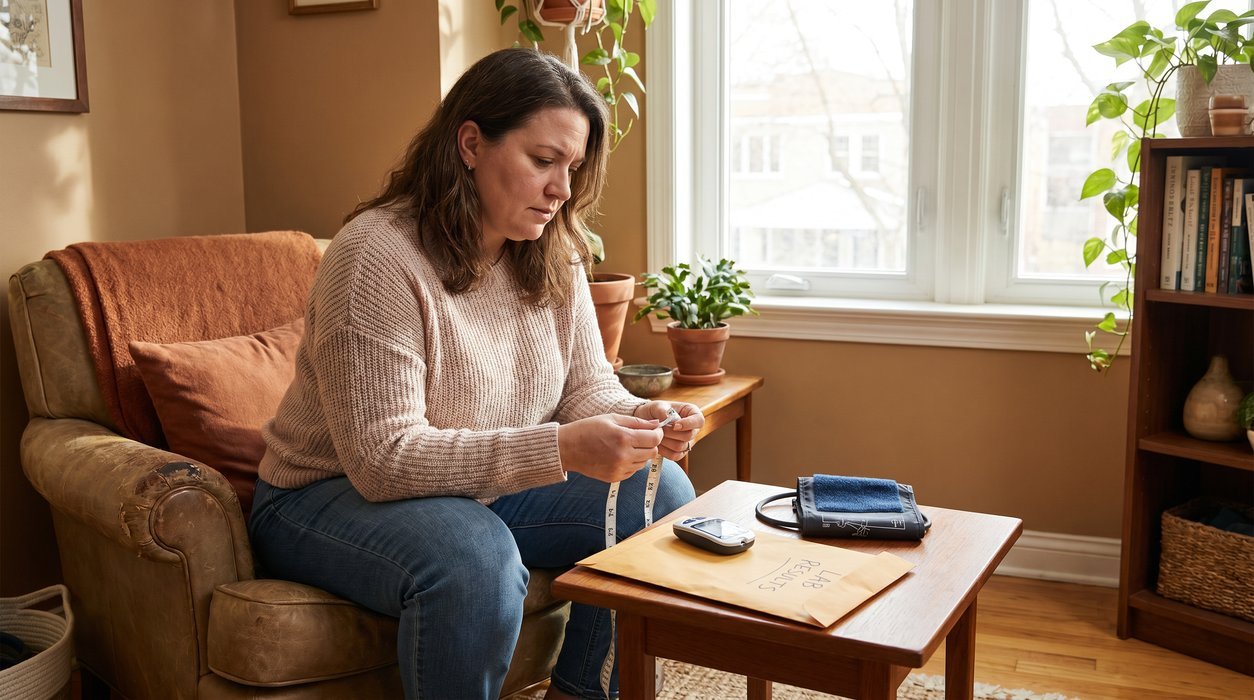
Common markers worth discussing with a clinician
No symptom can diagnose visceral fat levels on its own. Still, a growing waistline, elevated fasting glucose, high triglycerides, higher blood pressure, and fatigue after carb-heavy meals are useful signals to discuss with a qualified healthcare provider.
| Marker | Why it may matter |
|---|---|
| Waist circumference | May reflect abdominal fat patterns better than scale weight alone. |
| Fasting glucose or HbA1c | Can show how well the body is managing blood sugar over time. |
| Triglycerides and HDL | Often shift with insulin resistance, diet quality, activity, and weight changes. |
| Blood pressure | May improve with weight management, movement, sodium balance, and better sleep. |
Waist circumference is increasingly treated as a useful clinical sign because it adds information beyond BMI for abdominal adiposity and cardiometabolic risk.[1] It is not a judgment of body shape; it is one data point.
What Should You Eat to Support Visceral Fat Loss?
Nutrition for visceral fat loss is less about perfection and more about reducing patterns that drive overeating, blood sugar spikes, and low satiety. A strong foundation is protein, fiber-rich carbohydrates, unsaturated fats, and mostly minimally processed foods.
Viscous fiber has been studied in randomized trials and may modestly support body weight and waist circumference, even without strict calorie restriction.[3] Beans, lentils, oats, barley, chia seeds, vegetables, and fruit are practical places to start.
Build meals around protein and plants
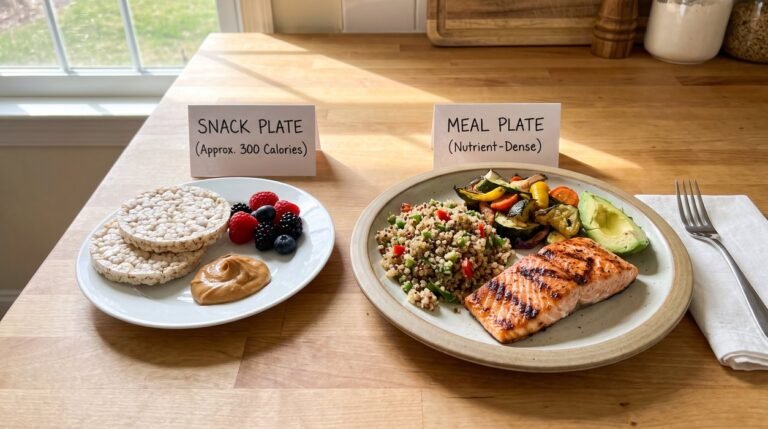
A simple plate structure works well for many adults: one palm-sized protein, half a plate of vegetables or high-fiber plants, one portion of slow-digesting carbohydrate, and a small amount of healthy fat.
Protein may help preserve or build lean mass when paired with resistance training.[7] That matters because muscle helps store glucose after meals and supports a healthier body composition during fat loss.
Choose carbohydrates by response, not fear
Carbohydrates do not need to disappear. For many people, the better move is replacing refined, low-fiber carbs with oats, beans, lentils, potatoes, fruit, brown rice, quinoa, and other minimally processed options.
Pairing carbs with protein, fiber, and fat can make meals more satisfying and may reduce the size of post-meal glucose swings. For a deeper explanation, see why fat loss can feel harder with insulin resistance.
Reduce foods that make moderation harder
Ultra-processed snack foods, sugar-sweetened drinks, frequent desserts, and large portions of refined starches can make it harder to maintain a calorie deficit. They are not moral failures, but they are often easy to overconsume.
A practical first step is changing the default environment. Keep protein, fruit, yogurt, vegetables, eggs, beans, nuts, and simple prepared meals easier to reach than grazing foods.
What Exercise Helps Reduce Visceral Fat?
Exercise supports visceral fat loss through higher energy expenditure, better insulin sensitivity, improved muscle glucose uptake, and more lean mass. The most useful routine usually blends walking or aerobic exercise with strength training.
Systematic review evidence suggests exercise can reduce visceral adipose tissue in adults with overweight or obesity, even without calorie restriction.[4] The routine still needs to fit real life, or it will not last.
Step 1: Start with walking
Walking is underrated because it is repeatable. A 10-minute walk after meals, a longer weekend walk, or a daily step target can support glucose handling and energy balance without demanding intense recovery.
Post-meal movement is especially practical. A systematic review found that exercise after eating can reduce acute postprandial glucose excursions compared with no exercise.[6]
Step 2: Add strength training
Strength training supports body composition by helping maintain or build muscle while fat mass decreases. Two to three sessions per week is a realistic starting point for many adults.
Good choices include squats to a chair, hip hinges, step-ups, rows, push-ups against a bench, loaded carries, and resistance-band movements. The goal is controlled effort, not soreness.

Step 3: Use intensity carefully
Higher-intensity exercise may help some adults improve fitness and body composition, but it is not required every day. Too much intensity can increase hunger, soreness, and fatigue if recovery is poor.
WHO guidance recommends 150 to 300 minutes of moderate aerobic activity weekly, or 75 to 150 minutes of vigorous activity, plus muscle-strengthening activities on two or more days per week.[5]
One thing worth pushing back on here: the conventional take says belly fat is mainly about doing more ab exercises. Core training can strengthen the trunk, but it does not selectively remove fat from the waist. This matters because time is better spent on full-body movement, nutrition consistency, sleep, and strength training.
How Do Sleep and Stress Fit Into the Picture?
Sleep and stress do not replace nutrition and exercise, but they can change how easy those habits feel. Shorter sleep duration has been associated with greater visceral fat mass in US adults, though this does not prove cause and effect.[8]
When sleep is short or fragmented, cravings often feel louder, appetite is harder to regulate, and workouts can feel heavier. Many people also snack late at night when they are tired rather than hungry.
Make the sleep target boring and repeatable
A useful starting point is a consistent wake time, morning light exposure, a caffeine cut-off, and a wind-down routine that does not depend on perfect discipline.
Even moving bedtime 20 to 30 minutes earlier can help. For more context, read how sleep affects insulin sensitivity.
Lower stress load without pretending life is calm
Stress management is not about eliminating stress. It is about lowering the constant physiological “on” signal when possible.
Simple tools can work: three minutes of slow breathing, walking without a phone, journaling before bed, therapy, social support, or reducing unnecessary commitments. The best stress tool is the one that actually happens.
How Can You Track Progress Without Obsessing Over the Scale?
When trying to reduce visceral fat, the scale can be useful but incomplete. Waist measurement, energy, hunger, strength, walking capacity, sleep quality, and blood markers often tell a fuller story.
Many people notice early changes in bloating, meal-related sleepiness, cravings, or walking stamina before major weight changes appear. More meaningful body composition changes often require several weeks to several months of consistent habits.
Use a small tracking dashboard
Pick three to five markers and track them at a low-friction cadence. Too much tracking can create stress, while no tracking can make progress invisible.
| Track | Frequency | What to look for |
|---|---|---|
| Waist measurement | Every 2 to 4 weeks | Gradual change over time, not daily variation. |
| Steps or walking minutes | Weekly average | A steady upward trend that still feels sustainable. |
| Strength exercises | Each session | More reps, better control, or slightly heavier loads. |
| Blood markers | As advised by a clinician | Changes in glucose, HbA1c, lipids, liver enzymes, or blood pressure. |
Expect plateaus without assuming failure
Fat loss is rarely linear. Water shifts, menstrual cycles, sodium intake, travel, sleep loss, constipation, and training soreness can all mask progress for days or weeks.
A plateau is a reason to review the system, not to panic. The best first checks are food portions, liquid calories, weekend patterns, step count, protein intake, sleep, and alcohol frequency.
What Is a Simple 14-Day Plan to Start?
A good starting plan should feel almost too simple. The purpose of the first two weeks is to build momentum, reduce friction, and create a baseline that can be adjusted later.
Days 1 to 3: Stabilize meals
- Build two meals per day around protein and vegetables.
- Add one high-fiber carbohydrate, such as beans, oats, potatoes, fruit, or whole grains.
- Replace sugar-sweetened drinks with water, unsweetened tea, or sparkling water most of the time.
- Take a 10-minute walk after the largest meal.
Days 4 to 7: Add movement structure
- Walk 20 to 30 minutes on at least four days.
- Complete two short strength sessions using bodyweight or resistance bands.
- Set a consistent wake time on workdays and non-workdays when realistic.
- Keep a simple food and energy note without judging it.
Days 8 to 14: Refine the routine
- Prepare one easy protein option in advance, such as eggs, lentils, chicken, tofu, Greek yogurt, or beans.
- Increase vegetables at one meal rather than cutting more food out.
- Add one slightly longer walk or bike ride.
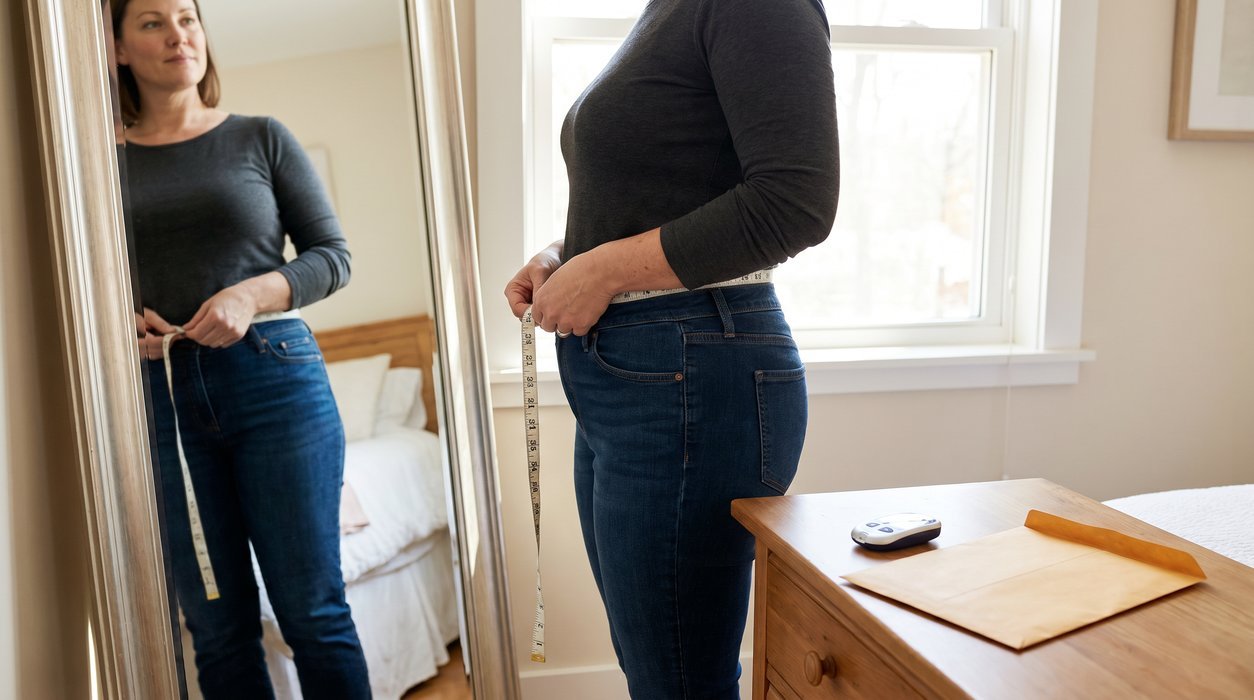
- Measure waist once at the end of the second week, using the same location and conditions.
This plan may help reduce visceral fat when it creates a sustainable calorie deficit and improves insulin sensitivity over time. It should be adapted for medical conditions, injuries, food access, cultural preferences, and personal schedules.
Frequently Asked Questions
What is the most effective way to reduce visceral fat?
The most effective way to reduce visceral fat is to combine a high-quality eating pattern, regular aerobic movement, strength training, consistent sleep, and stress management. These habits may support a steady calorie deficit and better insulin sensitivity. No single exercise or food can selectively target deep belly fat. Most adults do best with a plan they can repeat for months, not days.
Can walking help reduce visceral fat?
Walking may help by increasing daily energy expenditure and supporting glucose use by working muscles. Post-meal walks are especially practical for adults managing blood sugar swings. Walking is also easier to recover from than intense exercise, which makes it a strong consistency tool. For best results, combine it with strength training and nutrition changes.
How long does it take to lose visceral fat?
Timelines vary based on starting point, sleep, activity, diet, genetics, stress, medications, and medical conditions. Some people notice better energy or less post-meal sleepiness within one to two weeks. Waist changes often take several weeks or months. A slower plan that can be repeated is usually more useful than a strict plan that collapses quickly.
Do ab exercises burn visceral fat?
Ab exercises can strengthen the trunk, improve posture, and support training quality. They do not selectively remove visceral fat from the abdomen. A better strategy is full-body activity, strength training, nutrition consistency, and sleep support. Core work can still be included, but it should not be the whole plan.
Conclusion
Learning how to reduce visceral fat is not about chasing a perfect diet or punishing workouts. It is about building a repeatable system that supports energy balance, muscle activity, insulin sensitivity, sleep rhythm, and better food quality.
Start with the next visible action: a protein-and-fiber meal, a short walk after dinner, a simple strength session, or an earlier bedtime. Small changes become powerful when they are easy enough to repeat.
Medical Disclaimer: The information provided in this article is for educational purposes only and does not constitute medical advice. Always consult a qualified healthcare provider before making changes to your diet, lifestyle, or treatment plan. TheMetabolicHub.com does not replace professional medical guidance.
References
- Ross R, Neeland IJ, Yamashita S, et al. Waist circumference as a vital sign in clinical practice: a Consensus Statement from the IAS and ICCR Working Group on Visceral Obesity. Nature Reviews Endocrinology. 2020;16(3):177-189. PMID: 32020062
- Bullón-Vela V, Abete I, Zulet MA, et al. Relationship of visceral adipose tissue with surrogate insulin resistance and liver risk factors in subjects with metabolic syndrome. Therapeutic Advances in Endocrinology and Metabolism. 2020;11:2042018820958298. PMC
- Jovanovski E, Mazhar N, Komishon A, et al. Can dietary viscous fiber affect body weight independently of an energy-restrictive diet? A systematic review and meta-analysis of randomized controlled trials. American Journal of Clinical Nutrition. 2020;111(2):471-485. PMID: 31897475
- Vissers D, Hens W, Taeymans J, Baeyens JP, Poortmans J, Van Gaal L. The effect of exercise on visceral adipose tissue in overweight adults: a systematic review and meta-analysis. PLoS One. 2013;8(2):e56415. PMID: 23409182
- Bull FC, Al-Ansari SS, Biddle S, et al. World Health Organization 2020 guidelines on physical activity and sedentary behaviour. British Journal of Sports Medicine. 2020;54(24):1451-1462. PMID: 33239350
- Engeroff T, Groneberg DA, Wilke J. After Dinner Rest a While, After Supper Walk a Mile? A systematic review with meta-analysis on the acute postprandial glycemic response to exercise before and after meal ingestion. Sports Medicine. 2023;53(4):849-869. PMID: 36715875
- Nunes EA, Colenso-Semple L, McKellar SR, et al. Systematic review and meta-analysis of protein intake to support muscle mass and function in healthy adults. Journal of Cachexia, Sarcopenia and Muscle. 2022;13(2):795-810. PMID: 35187864
- Giannos P, Prokopidis K, Candow DG, et al. Shorter sleep duration is associated with greater visceral fat mass in US adults: findings from NHANES, 2011-2014. Sleep Medicine. 2023;105:78-84. PMID: 36966579