
Calories vs Nutrients: Why Food Quality Matters More
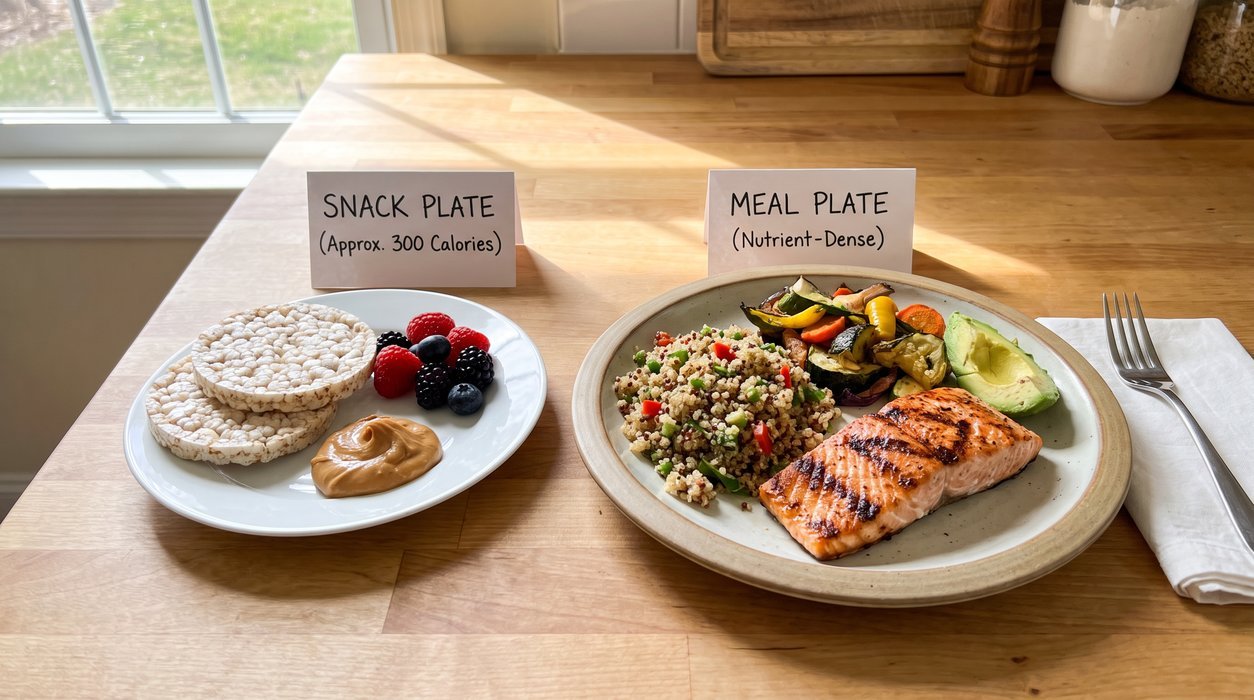
Calories vs nutrients can feel like a frustrating choice when calorie tracking looks disciplined on paper, but hunger, cravings, energy, or body composition still do not respond the way the numbers promised. This may not be random; calorie math can miss what food actually gives the body. The encouraging news: calories vs nutrients offers a more useful way to build meals that feel steady, satisfying, and repeatable.
Quick Win: At your next meal, keep the portion familiar but add one clear protein source, one high-fiber plant food, and one colorful fruit or vegetable before changing calories.
Calories vs nutrients: why food quality matters more
Calories describe energy, but they do not describe nourishment. For body weight, calorie balance still matters; for hunger, energy, blood sugar patterns, and long-term consistency, nutrient quality often decides whether that balance feels realistic.
That is why calories vs nutrients is often the better starting point for everyday meal decisions. Calories can influence body weight, but nutrients help shape satiety, digestion, muscle maintenance, and how steady meals feel across the day.[1]
This does not mean calories are irrelevant. It means the quality of those calories can affect how full, stable, and consistent someone feels while making changes.
A nutrient-first approach asks a better question: “What is this meal giving my body?” For many people, that question leads to steadier habits than simply trying to eat less.
Key takeaways
- Calories measure energy, but they do not show whether a meal provides enough protein, fiber, vitamins, minerals, or healthy fats.
- Nutrient-dense meals may support steadier hunger, energy, digestion, and post-meal glucose patterns.
- Calorie awareness can still be useful, but it works best when food quality comes first.
- A practical starting point is to add protein, fiber-rich plants, colorful produce, and satisfying fats before cutting portions.
What is the real difference between calories and nutrients?
A calorie is a unit of energy. Nutrients are the substances in food that the body uses to build tissue, regulate processes, support immunity, and produce energy from that food.
Macronutrients include protein, carbohydrates, and fats. Micronutrients include vitamins and minerals such as magnesium, potassium, iron, zinc, folate, vitamin C, and vitamin D.
Fiber does not behave like a classic calorie source, but it can strongly influence fullness, digestion, gut bacteria, and post-meal glucose patterns. A calorie target alone cannot show whether someone is meeting recommended fiber or nutrient needs.[2]
Calories vs nutrients comparison table
| Calorie-focused question | Nutrient-focused question |
|---|---|
| How many calories are in this? | How much protein, fiber, color, and mineral density does this meal provide? |
| Can this fit my calorie target? | Will this meal help me feel steady for the next few hours? |
| How can I eat less? | How can I build a meal that supports satiety with fewer gaps? |
| Is this food “good” or “bad”? | What role does this food play in my overall eating pattern? |
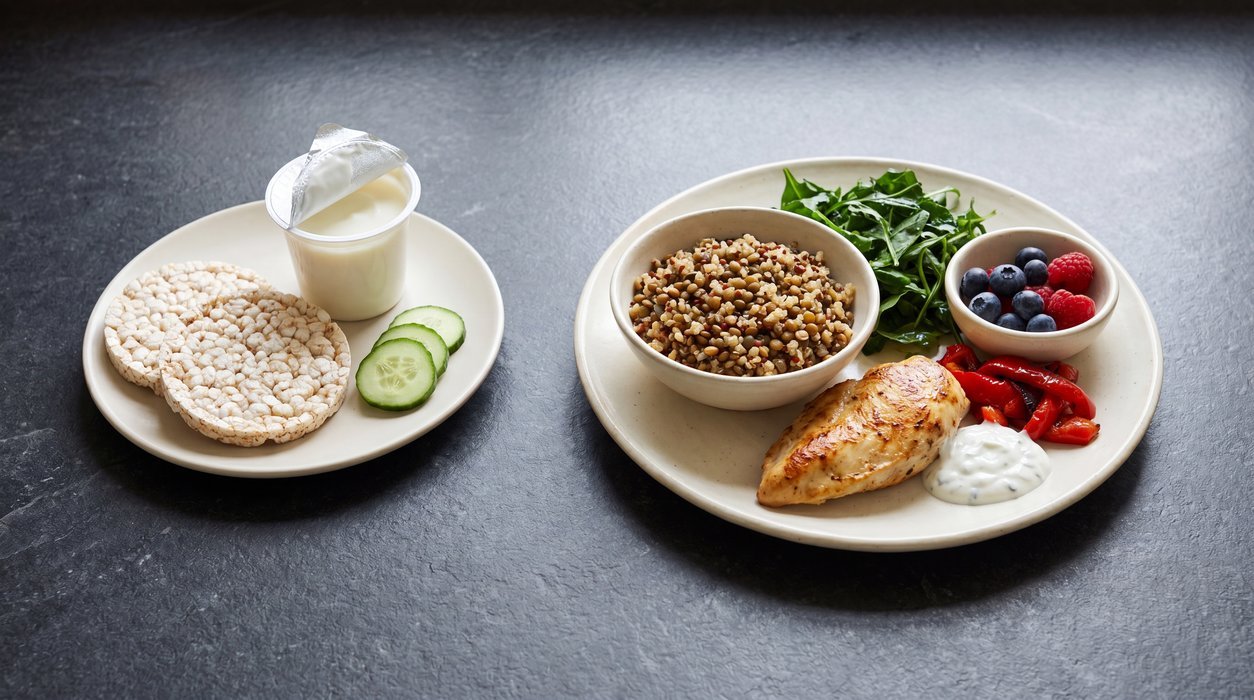
The practical difference is simple. Calorie counting often starts with subtraction, while nutrient-focused eating starts with addition: add protein, add fiber, add plants, and add enough food to feel steady.
7 smart reasons quality matters
- Protein helps meals last longer. A meal with enough protein is usually more satisfying than a low-protein meal with the same calorie count.
- Fiber changes digestion speed. Beans, lentils, oats, berries, vegetables, and whole grains can slow digestion and support steadier post-meal patterns.
- Food structure affects appetite. Whole or minimally processed foods often require more chewing and may feel more filling than ultra-processed options.
- Micronutrients matter. Magnesium, potassium, B vitamins, zinc, iron, selenium, and vitamin D support normal body functions that calorie math cannot measure.
- Muscle needs nourishment. Enough protein and overall nutrition help support lean mass, which plays a major role in glucose handling.
- Meal satisfaction supports consistency. A smaller meal is not always easier to repeat if it leaves someone hungry and distracted.
- Food quality is easier to act on at meals. People can often see protein, fiber-rich plants, and satisfying fats on the plate more easily than they can estimate exact calories.
Why calorie counting can miss metabolic health
Calorie tracking may help some people become aware of portions. It can also create a false sense of precision because food labels, restaurant meals, cooking methods, and tracking apps all involve estimates.
More importantly, the same calorie amount can affect appetite and blood sugar differently depending on food structure, fiber, protein, fat, processing level, and meal timing.
Low-calorie does not always mean metabolically supportive
Many “diet” foods are designed to reduce calories while staying sweet, crunchy, or snackable. They may be convenient, but they are not always rich in protein, fiber, potassium, magnesium, or other nutrients that support everyday metabolic function.
When meals are low in nutrients, hunger can return quickly. This is not a personal failure; the meal may simply not have been built to satisfy the body.
Food processing can change how calories behave
Research suggests that ultra-processed diets can increase calorie intake even when meals are matched for calories, sugar, fat, sodium, and fiber on paper. Food texture, eating speed, food structure, and how easy a food is to overconsume may all matter.[3]
This is one reason calories vs nutrients matters in real life. Two meals can look similar in calories while giving the body very different satiety signals.
One thing worth pushing back on here: many people assume calorie counting is the “objective” method and nutrient-focused eating is vague. In reality, calorie targets are often estimated, while nutrient anchors such as protein, fiber, and plants can be seen directly on the plate.
How nutrient-dense foods support hunger, blood sugar, and energy
Nutrient density means a food provides meaningful vitamins, minerals, fiber, protein, or beneficial plant compounds relative to its energy content. It is not about perfection or only eating “clean.”
A nutrient-dense meal might include eggs with vegetables and oats, Greek yogurt with berries and nuts, salmon with potatoes and greens, or lentil soup with olive oil and whole-grain bread.
Protein helps meals last longer
Protein can support satiety and may help meals feel more satisfying. A systematic review found that acute protein intake can suppress appetite-related signals, although long-term appetite effects are more nuanced.[4]
Higher-protein patterns have also shown moderate benefits for body-weight management in adults with excess weight, though individual needs vary.[5]
Good options include fish, poultry, eggs, Greek yogurt, cottage cheese, tofu, tempeh, beans, lentils, edamame, and lean meats. For more clues that protein may be too low, review these protein and appetite signals.
Fiber changes the way carbohydrates behave
Carbohydrates are not all the same. A bowl of lentils, a baked potato with beans, and a sugary drink can differ greatly in fiber, chewing time, nutrient content, and glucose impact.
Higher-fiber dietary patterns are associated with better cardiometabolic markers, including improved blood lipid patterns and glycemic control in many populations.[6]
Muscle is part of the metabolic picture
Preserving lean mass matters because skeletal muscle plays a major role in glucose uptake and insulin sensitivity. That makes protein, resistance exercise, and enough total nourishment relevant for metabolic health.[7]
This is where calories vs nutrients becomes more practical than restriction alone. A smaller meal is not automatically a better meal if it leaves someone low in protein, low in fiber, and hungry an hour later.
When calorie awareness still helps
Calorie awareness can still be useful when portions have gradually increased, weight change has stalled, or someone wants short-term data. The goal is awareness, not anxiety.
For people with a history of eating disorders, obsessive tracking, pregnancy, active medical treatment, or complex health needs, restrictive tracking should be avoided unless guided by a qualified professional.
When to choose which: Use nutrients first for daily meal building. Use calories carefully and temporarily when portion awareness is needed, not as the only measure of whether a food is supportive.
A 7-day nutrient-first plan
This plan is not a diet rulebook. It is a low-pressure way to shift attention from eating less to eating more intentionally.
Day 1: Audit without judging
Write down what you ate for one normal day. Do not change anything yet.
At the end of the day, look for three things: protein at each meal, fiber-rich foods, and colorful plants. This gives useful information without turning food into a math test.
Days 2–3: Add protein before removing anything
Choose one meal that tends to leave you hungry. Add a clear protein source before cutting calories.
Breakfast might become yogurt with berries and seeds instead of toast alone. Lunch might become a grain bowl with lentils, chicken, tofu, or eggs instead of mostly starch.
Days 4–5: Add fiber to your most processed meal
Pick the meal or snack that feels least satisfying. Add one fiber anchor: beans, vegetables, berries, oats, chia seeds, lentils, or whole grains.
The goal is not to make the meal perfect. The goal is to make it work harder for fullness, digestion, and blood sugar balance.

Days 6–7: Build one repeatable nutrient-dense meal
Create one meal you can repeat twice in the coming week. Keep it simple enough for real life.
Examples include a salmon potato bowl, tofu stir-fry with rice and vegetables, lentil soup with olive oil, or eggs with sautéed greens and oats. Repetition reduces decision fatigue.
A simple plate structure with protein, vegetables, whole-food carbohydrates, and healthy fats can make this easier to repeat without tracking every number.[8]
For busy afternoons, build snacks around the same nutrient logic. These blood sugar-friendly snacks can help translate the idea into practical options.
What progress can look like
Progress with nutrient-focused eating is usually not dramatic overnight. Many people first notice fewer afternoon crashes, steadier hunger, easier meal decisions, or less urgency around snacks.
Measurable changes may take longer and can depend on sleep, stress, movement, medication, health conditions, and baseline nutrition. For some adults, meaningful changes in waist measurements, glucose readings, blood lipids, or body composition may require several weeks or months.
Early signs often include feeling satisfied for three to four hours after meals, craving fewer quick-energy foods, or recovering better from workouts. These signs do not prove a specific medical outcome, but they can show that the eating pattern is becoming more supportive.
A better progress dashboard includes energy, hunger, digestion, strength, waist fit, glucose readings when used, lab markers when available, and consistency. The scale can be one data point, not the entire story.
Frequently Asked Questions
Should I focus on calories vs nutrients for weight management?
For many adults, focusing on calories vs nutrients is a more sustainable starting point because it improves meal quality before restriction. Calories still matter for body weight, but protein, fiber, and micronutrients can influence hunger, energy, and consistency. A nutrient-first approach may help people build meals that feel satisfying rather than simply smaller. Anyone with a medical condition or a history of disordered eating should seek individualized guidance.
Can you lose weight without counting calories?
Some people can support weight management without formal calorie tracking by improving meal structure, protein intake, fiber intake, and food quality. This may naturally reduce overeating because meals become more filling. Others may still benefit from short-term tracking for awareness. The best method is one that supports health, consistency, and a calm relationship with food.
What nutrients should I count first?
Start with protein, fiber, and colorful plant foods. These are practical markers because they show up clearly on the plate and are linked to satiety and cardiometabolic health. After that, it may help to consider omega-3 fats, magnesium-rich foods, potassium-rich foods, and overall food variety. Most people do not need to count every vitamin and mineral daily.
Are all calories the same?
Calories are the same as units of energy, but foods that contain those calories can behave differently in the body. Protein, fiber, food texture, processing level, and meal composition can affect fullness and glucose response. That is why 400 calories from a balanced meal may feel different from 400 calories from a sweet drink or snack. Food quality gives important context that calorie numbers alone cannot provide.
Conclusion
Calorie counting can describe how much energy a food contains, but it cannot tell the whole story of how that food supports hunger, blood sugar, muscle, digestion, or daily energy.
A nutrient-first approach gives people a more useful place to start: protein, fiber, plants, healthy fats, and enough satisfying food to repeat the habit. That is the practical power of shifting from calories vs nutrients toward food quality.
The goal is not perfect eating. The goal is building meals that help the body feel more supported, one plate at a time.
Medical Disclaimer: The information provided in this article is for educational purposes only and does not constitute medical advice. Always consult a qualified healthcare provider before making changes to your diet, lifestyle, or treatment plan. TheMetabolicHub.com does not replace professional medical guidance.
References
- U.S. Department of Agriculture and U.S. Department of Health and Human Services. Dietary Guidelines for Americans, 2025–2030. DietaryGuidelines.gov
- Trumbo P, Schlicker S, Yates AA, Poos M. Dietary reference intakes for energy, carbohydrate, fiber, fat, fatty acids, cholesterol, protein and amino acids. J Am Diet Assoc. 2002. PMID: 12449285
- Hall KD, Ayuketah A, Brychta R, et al. Ultra-processed diets cause excess calorie intake and weight gain: an inpatient randomized controlled trial of ad libitum food intake. Cell Metab. 2019. PMID: 31105044
- Kohanmoo A, Faghih S, Akhlaghi M. Effect of short- and long-term protein consumption on appetite and appetite-regulating gastrointestinal hormones. Physiol Behav. 2020. PMID: 32768415
- Hansen TT, Astrup A, Sjödin A. Are dietary proteins the key to successful body weight management? A systematic review and meta-analysis. Nutrients. 2021. PMID: 34579069
- Reynolds A, Mann J, Cummings J, Winter N, Mete E, Te Morenga L. Carbohydrate quality and human health: a series of systematic reviews and meta-analyses. Lancet. 2019. PMID: 30638909
- Merz KE, Thurmond DC. Role of skeletal muscle in insulin resistance and glucose uptake. Compr Physiol. 2020. PMID: 32940941
- Harvard T.H. Chan School of Public Health. Healthy Eating Plate. Harvard Nutrition Source