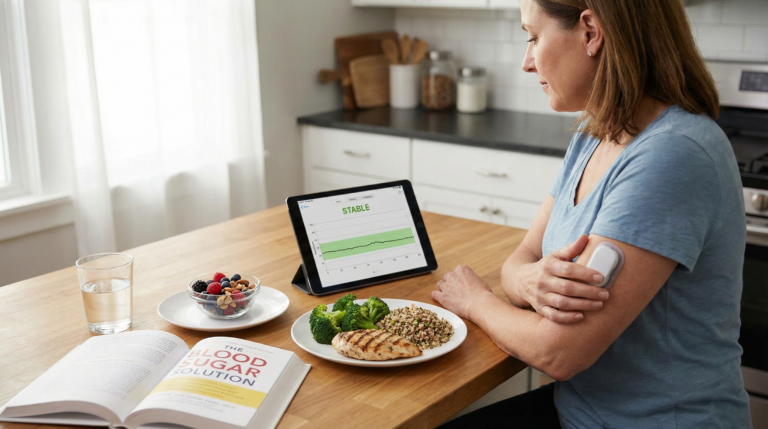
Why Blood Sugar Can Rise Before Your Period
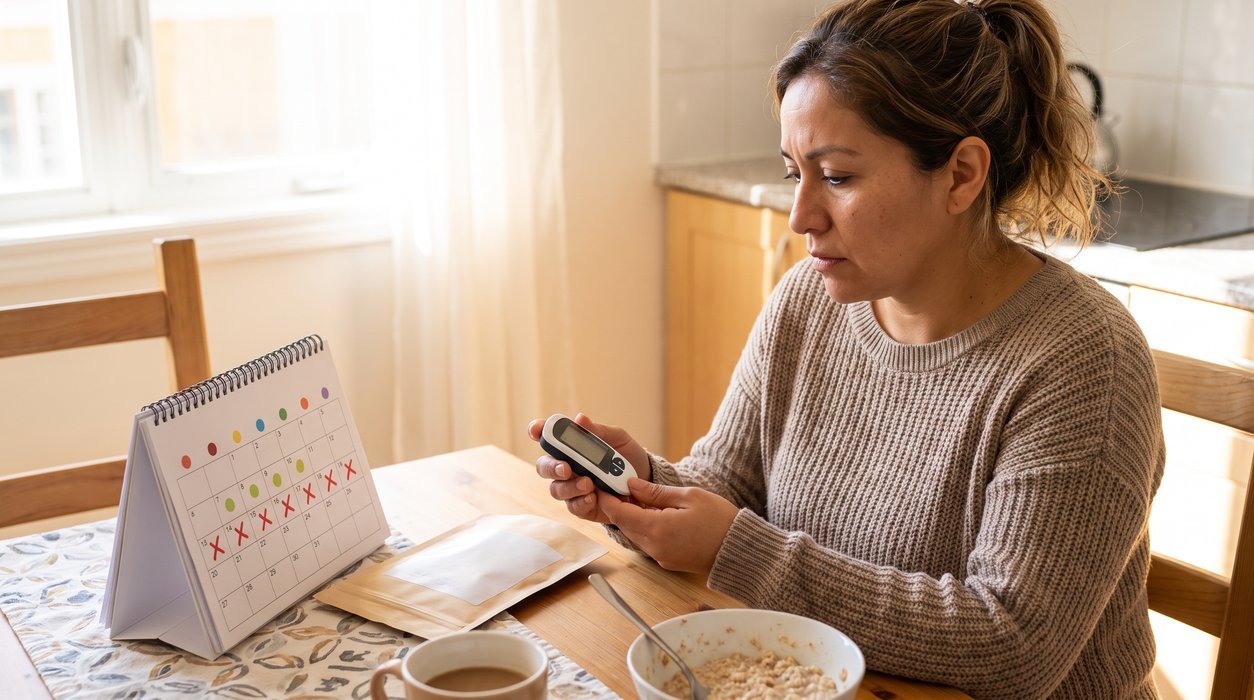
You eat a familiar meal, follow your usual routine, and still see a higher glucose reading than expected. When the same thing happens shortly before menstruation, it can feel as though your body has changed the rules without warning.
This may not be random. The encouraging news: understanding blood sugar before period changes can help you identify a recurring pattern, respond without self-blame, and know when the change deserves medical support.
Quick Win: For two or three cycles, record your cycle day, one or two consistent glucose measurements, sleep quality, major meals, and movement. Look for repetition before changing your routine or discussing medication adjustments.
Key Takeaways
- Some people notice higher glucose during the late luteal phase, but the response varies considerably.
- Hormonal shifts may overlap with changes in sleep, appetite, stress, pain, and daily movement.
- A pattern repeated across two or three cycles is more informative than one isolated reading.
- Medication changes should be discussed with a qualified diabetes healthcare professional.
Why Blood Sugar Before Period Onset Can Rise
After ovulation, the body enters the luteal phase. Estrogen and progesterone change during this phase and then fall as menstruation approaches if pregnancy has not occurred.
In some people, these shifts coincide with lower insulin sensitivity and higher glucose readings. The effect may appear as higher fasting glucose, larger post-meal rises, or more time above a person’s usual range.[1]
The pattern is best documented in people with type 1 diabetes, but it is not universal. Premenstrual changes in sleep, hunger, pain, stress, and movement may also influence readings.
A change in blood sugar before period onset therefore does not point to one single cause. Hormonal physiology and everyday behavior may be changing at the same time.
| Cycle stage | Typical hormonal context | Possible glucose experience |
|---|---|---|
| Menstruation | Estrogen and progesterone are relatively low | Readings may move toward the person’s usual range |
| Follicular phase | Estrogen generally rises while progesterone stays lower | Some people experience more predictable readings |
| Ovulation | Reproductive hormones shift around egg release | Brief changes may occur but can be difficult to isolate |
| Late luteal phase | Progesterone and estrogen fluctuate and then decline | Some people notice higher readings or greater variability |
How Can Menstrual Cycle Hormones Affect Glucose?
The menstrual cycle is a sequence of changing hormonal conditions rather than one stable state. These changes can affect tissues involved in glucose regulation, appetite, body temperature, sleep, and stress responses.
The follicular phase
The follicular phase begins on the first day of menstrual bleeding and lasts until ovulation. Estrogen generally rises during much of this phase, while progesterone remains relatively low.
Some people find that glucose is easier to manage during part of this phase. Illness, food composition, activity, medication, and stress may still outweigh any cycle-related effect.
Ovulation and the luteal phase
Progesterone rises after ovulation, while estrogen follows a more complex pattern. Both hormones eventually decline near the end of the cycle.
A systematic review found possible luteal-phase changes in glucose control and insulin sensitivity among some people with type 1 diabetes. It also highlighted inconsistent methods, small studies, and substantial individual variation.[1]
A small pilot study in women with type 1 diabetes also examined differences in insulin sensitivity between the follicular and luteal phases. Its findings support the possibility of a cycle-related effect, but the study was too small to predict an individual response.[2]
What May Be Happening Metabolically?
Mechanism in Brief: A temporary decrease in insulin sensitivity means muscle, liver, and fat tissue may not respond to insulin as efficiently. Glucose may remain in circulation longer, while stress-related signals may also encourage the liver to release glucose.
This does not necessarily mean insulin has stopped working or that diabetes has suddenly worsened. A modest cycle-linked change may sit on top of normal day-to-day glucose variability.
Hormones may also influence hunger, food preferences, fluid balance, body temperature, and sleep. Those effects can indirectly change meal size, food timing, activity, and the glucose response to a meal.
This helps explain why the same meal can produce a different glucose response on two otherwise similar days. The meal is only one part of the metabolic context.
What Else Can Raise Premenstrual Glucose?
Changes in appetite and cravings
Some people feel hungrier or experience stronger cravings during the luteal phase. A small pilot study examined insulin sensitivity, food intake, and cravings across cycle phases in participants with premenstrual syndrome.[3]
The study does not prove that everyone will eat more or have higher glucose before menstruation. It supports treating appetite changes as a possible contributor rather than a personal failure.
Carbohydrates are not automatically a problem. Larger portions, frequent grazing, or eating carbohydrates without much protein or fiber may simply produce a different post-meal curve than usual.
Sleep disruption
Premenstrual discomfort, temperature changes, headaches, mood symptoms, or nighttime waking can reduce sleep quality. Short or fragmented sleep may temporarily affect insulin sensitivity and make appetite regulation more difficult.
One poor night does not define metabolic health. Several disrupted nights may nevertheless help explain why a familiar breakfast produces a higher reading.
A deeper explanation of how sleep loss affects insulin sensitivity can help separate cycle-related changes from the effects of poor recovery.
Less movement
Cramps, fatigue, headaches, or low mood may result in fewer steps or missed workouts. Because active muscles use glucose, even a modest reduction in daily movement may affect post-meal readings.
Intense exercise is not required. Gentle movement that feels manageable may help, while rest may be the more appropriate choice during severe symptoms.
Stress and pain
Psychological stress and physical pain can activate hormones such as cortisol and adrenaline. These signals help make fuel available, partly by encouraging the liver to release glucose.
When stress, pain, and poor sleep occur together, their combined effect may be more noticeable than any single factor. This is one reason isolated readings are difficult to interpret.
One thing worth pushing back on here: a premenstrual glucose rise is not automatic evidence that someone ate badly or lacked discipline. The physiological context has changed, so comparing similar cycle days is often more useful than judging one number.
Why Does the Pattern Differ Between People?
Not everyone experiences higher glucose before menstruation. Some notice no consistent change, while others see lower glucose, greater variability, or a pattern that appears during only some cycles.
Ovulation, cycle length, insulin production, diabetes type, insulin resistance, medications, hormonal contraception, perimenopause, sleep, and stress may all influence the response. An irregular or non-ovulatory cycle may also change the timing.
Most menstrual-cycle glucose research has involved relatively small groups, often people with type 1 diabetes. Personal observations can be useful, but they should not be treated as a universal rule for everyone who menstruates.
CGMs add another consideration because they measure interstitial rather than blood glucose. Sensor lag, pressure on the sensor during sleep, placement, and normal device variation can affect individual readings.
A repeated pattern across two or three cycles is therefore more informative than one unusual week. It helps distinguish a likely cycle association from travel, illness, changed meals, stress, or sensor error.
How Can You Support Steadier Blood Sugar Before Your Period?
The goal is not perfect consistency. A more realistic approach is to reduce avoidable swings while accepting that hunger, energy, symptoms, and insulin sensitivity may temporarily change.
1. Build meals around protein and fiber
Protein, fiber-rich plants, and satisfying fats may slow digestion and support a steadier post-meal response. Carbohydrates can remain part of the meal rather than being removed entirely.
Examples include lentil soup with yogurt, tofu with vegetables and brown rice, or eggs with vegetables and whole-grain toast. Portions should reflect personal needs, medication, activity, and hunger.
2. Plan for stronger hunger
Trying to suppress genuine hunger can create an exhausting restriction-and-overeating cycle. This is not a personal failure.
A planned snack with protein and fiber may be easier to manage than waiting until cravings feel urgent. Options include fruit with nut butter, yogurt with berries, roasted chickpeas, or vegetables with hummus.
3. Use manageable post-meal movement
A 10- to 15-minute walk after a meal may help active muscles take up glucose. Gentle cycling or ordinary household movement may serve a similar purpose when walking is uncomfortable.
People at risk of hypoglycemia should follow their established exercise safety plan. Some intense activities can temporarily raise glucose, so the most appropriate option depends on the individual.

4. Protect sleep without chasing perfection
A consistent bedtime, cooler bedroom, and reduced late-night screen exposure may make sleep more accessible. Severe pain, mood changes, or persistent sleep disruption deserve clinical attention rather than endless self-optimization.
5. Do not change medication after one reading
People using insulin or other glucose-lowering medication may have different needs during different cycle phases. Changing a dose without an individualized plan can cause hypoglycemia when menstruation begins and insulin sensitivity changes again.
Bring two or three cycles of data to a diabetes clinician. A documented pattern provides a safer basis for discussing temporary basal rates, insulin ratios, timing, or other individualized adjustments.
What progress may look like
Allow at least two or three cycles before deciding whether a pattern or strategy is consistent. Many people first notice fewer unexpected post-meal rises, more predictable hunger, or a clearer point when glucose begins returning toward baseline.
The first useful change may be understanding the pattern rather than lowering every reading. Predictability can make meal planning, movement, and treatment discussions more precise.
What Should You Track Across Your Cycle?
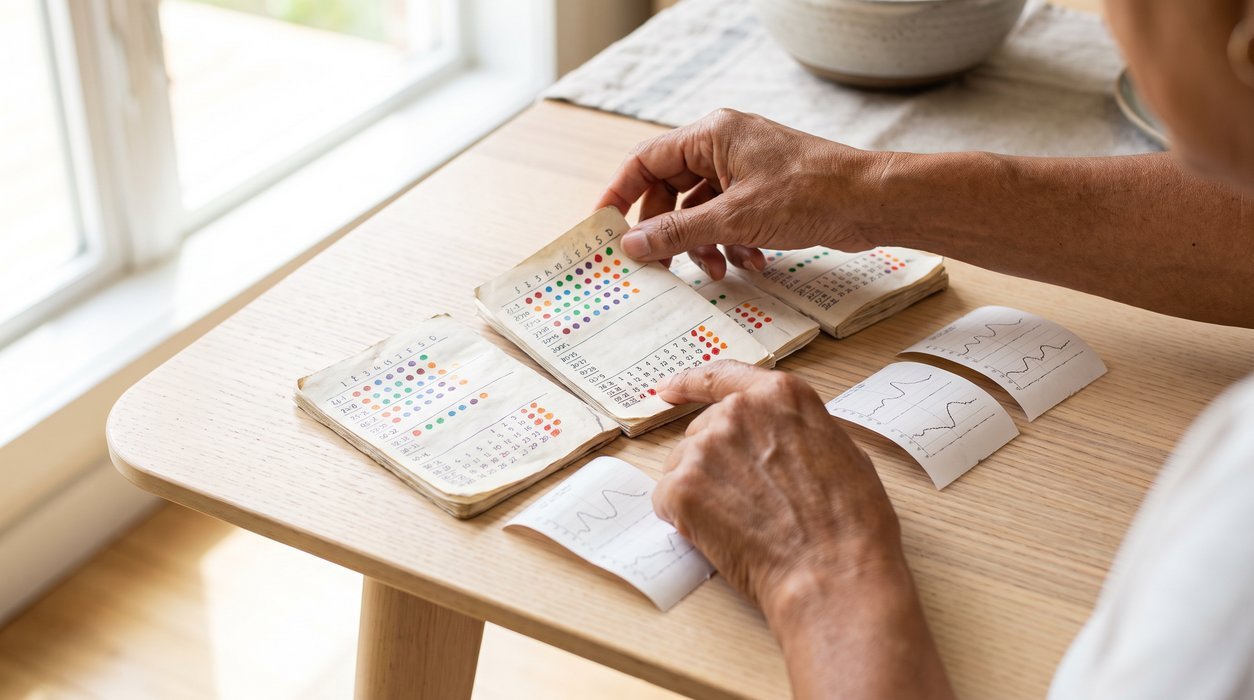
Tracking should create clarity rather than anxiety. A compact daily record is usually more useful than documenting every possible symptom.
- Mark cycle day one. Count the first day of menstrual bleeding as day one.
- Choose consistent glucose markers. Fasting glucose and a reading after the same meal are easier to compare than scattered checks.
- Note major influences. Record illness, alcohol, travel, changed medication, intense exercise, or unusually high stress.
- Rate sleep and symptoms simply. Low, moderate, or high may be enough for sleep disruption, hunger, pain, and fatigue.
- Review multiple cycles together. Look for changes beginning and ending at a similar point.
CGM users can review time in range, average glucose, and recurring meal patterns instead of focusing on every peak. International consensus guidance supports interpreting standardized metrics over adequate periods rather than relying on isolated readings.[4]
People without diabetes generally do not need intensive glucose monitoring solely because they experience premenstrual symptoms. Persistent symptoms or metabolic concerns are better evaluated with a healthcare provider who can select appropriate tests.
When Should You Speak With a Healthcare Provider?
A small, temporary, predictable rise may simply provide useful context. Professional guidance becomes more important when readings are substantial, persistent, symptomatic, or difficult to manage safely.
Contact a healthcare provider when glucose repeatedly exceeds the targets set for you, medication appears less effective, or high and low readings alternate unpredictably. People with type 1 diabetes should follow their ketone and sick-day plan when glucose remains high.
Seek urgent medical care for vomiting, confusion, rapid breathing, severe dehydration, significant ketones, or symptoms of diabetic ketoacidosis. Severe or recurrent hypoglycemia also requires prompt attention.
Markedly irregular cycles, very heavy bleeding, severe pain, or serious premenstrual mood symptoms should also be discussed. PCOS, thyroid conditions, perimenopause, and other health issues may affect menstrual patterns and metabolic health.
An A1C test reflects average glucose over approximately three months. It cannot show whether a change occurred specifically during the late luteal phase, so cycle and glucose records may provide useful additional context.[5]
Frequently Asked Questions
Why does blood sugar before period onset sometimes rise?
Blood sugar before period onset may rise because luteal-phase hormonal changes coincide with reduced insulin sensitivity in some people. Changes in appetite, sleep, stress, pain, and movement may add to the effect. Tracking several cycles is more reliable than interpreting one reading.
How many days before a period can glucose increase?
Some people notice changes during the final several days before menstruation, while others see an earlier shift or none at all. Premenstrual symptoms may begin one to two weeks beforehand, but glucose does not necessarily remain higher for that entire time.[6]
Does a premenstrual glucose rise mean I have diabetes?
No. A temporary change does not diagnose diabetes, and a home meter or CGM cannot establish a diagnosis by itself. Repeated high readings, increased thirst, frequent urination, or unexplained weight loss should be assessed by a healthcare provider.
Can cravings before a period affect glucose?
They can when hunger leads to larger portions or more frequent eating. Increased hunger is not a failure of discipline. Planned meals and snacks with protein, fiber, and satisfying carbohydrates may support a more predictable response.
Should insulin doses change before menstruation?
Some people with diabetes have different insulin needs across the cycle, but any adjustment should be individualized. Increasing insulin without a plan may cause hypoglycemia when hormone levels change again. Review recurring patterns with the clinician managing your diabetes.
Conclusion
A recurring rise in blood sugar before menstruation may reflect temporary changes in insulin sensitivity combined with shifts in hunger, sleep, stress, pain, and movement. It is a pattern to investigate with curiosity rather than blame.
Track a few consistent markers across two or three cycles and use manageable strategies such as balanced meals, planned snacks, and gentle movement. Bring persistent or substantial changes to a qualified healthcare provider, especially when medication may need adjustment.
Medical Disclaimer: The information provided in this article is for educational purposes only and does not constitute medical advice. Always consult a qualified healthcare provider before making changes to your diet, lifestyle, or treatment plan. TheMetabolicHub.com does not replace professional medical guidance.
References
- Gamarra E, Trimboli P. Menstrual cycle, glucose control and insulin sensitivity in type 1 diabetes: a systematic review. J Pers Med. 2023. PMID: 36836608
- Trout KK, Rickels MR, Schutta MH, et al. Menstrual cycle effects on insulin sensitivity in women with type 1 diabetes: a pilot study. Diabetes Technol Ther. 2007. PMID: 17425444
- Trout KK, Basel-Brown L, Rickels MR, et al. Insulin sensitivity, food intake, and cravings with premenstrual syndrome: a pilot study. J Womens Health. 2008. PMID: 18447765
- Battelino T, Danne T, Bergenstal RM, et al. Clinical targets for continuous glucose monitoring data interpretation: recommendations from the International Consensus on Time in Range. Diabetes Care. 2019. PMID: 31177185
- National Institute of Diabetes and Digestive and Kidney Diseases. The A1C test and diabetes. NIDDK
- American College of Obstetricians and Gynecologists. Premenstrual syndrome. ACOG