5 Sugar-Free Dessert Recipes That Actually Satisfy
Sweet cravings can feel louder at night, after a stressful day, or when lunch did not quite keep you full. This may not be random; it can reflect how sweetness, protein, fiber, sleep, stress, and meal timing all interact. The encouraging news: sugar-free dessert recipes can make dessert feel enjoyable without turning every craving into an all-or-nothing decision.
Sugar-free dessert recipes: the direct answer
Sugar-free dessert recipes are desserts made without added table sugar, honey, syrups, or sweetened packaged ingredients. They can still use naturally sweet whole foods, such as berries or apples, along with protein, fiber, healthy fats, cocoa, cinnamon, or carefully chosen low-calorie sweeteners.
For many adults, sugar-free dessert recipes may support steadier energy and fewer post-dessert cravings within one to two weeks, especially when they replace sugar-heavy snacks most days. They are not automatically low-carb, calorie-free, or right for every medical situation, so ingredients and portions still matter.[1]
Quick Win: Choose one dessert this week that combines sweetness with protein, fiber, or healthy fat, such as Greek yogurt bark, chia pudding, or baked apple with walnuts.
Key takeaways
- Sugar-free usually means no added sugar, not zero natural sugar from whole foods.
- Protein, fiber, and fat can make desserts more filling and may slow digestion.
- Fruit-based desserts are often better described as no added sugar desserts.
- Low-calorie sweeteners can help, but tolerance and taste vary by person.
- Portion size still matters, especially with nuts, nut butter, coconut, and almond flour.
5 sugar-free dessert recipes for everyday cravings
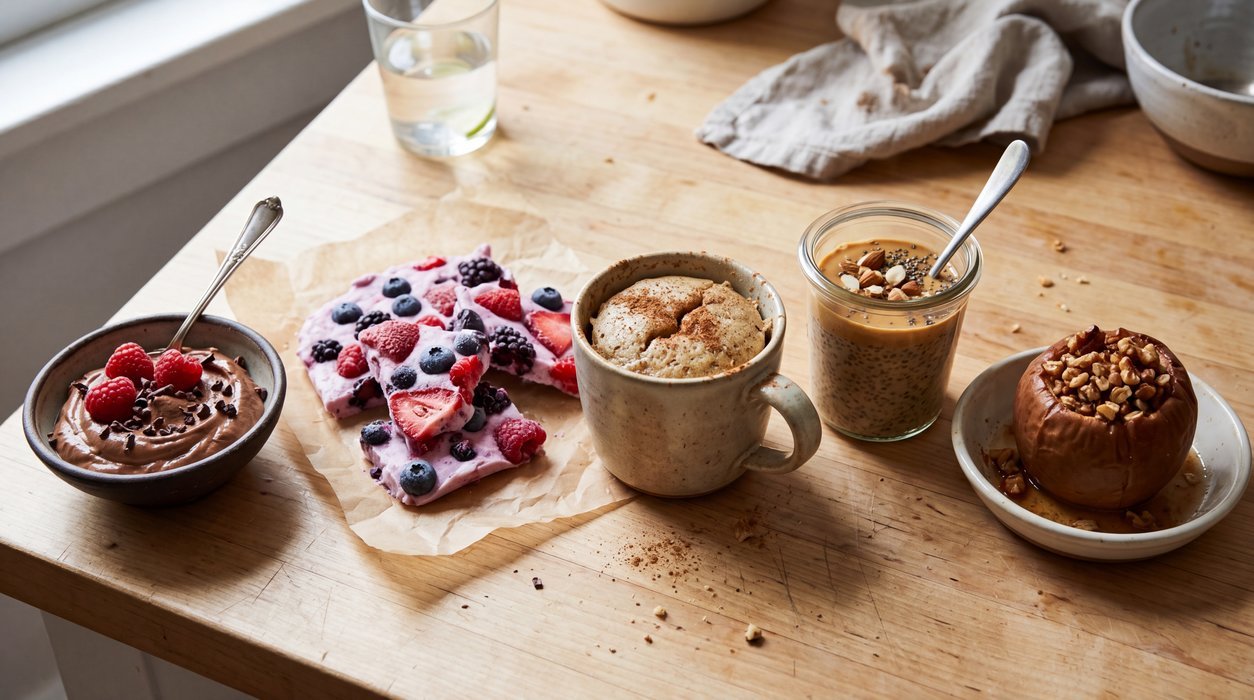
These sugar-free dessert recipes are designed for real life. They use familiar ingredients, avoid added sugar, and give each craving a different texture: creamy, frozen, warm, spoonable, and fruit-based.
1. Chocolate Avocado Mousse
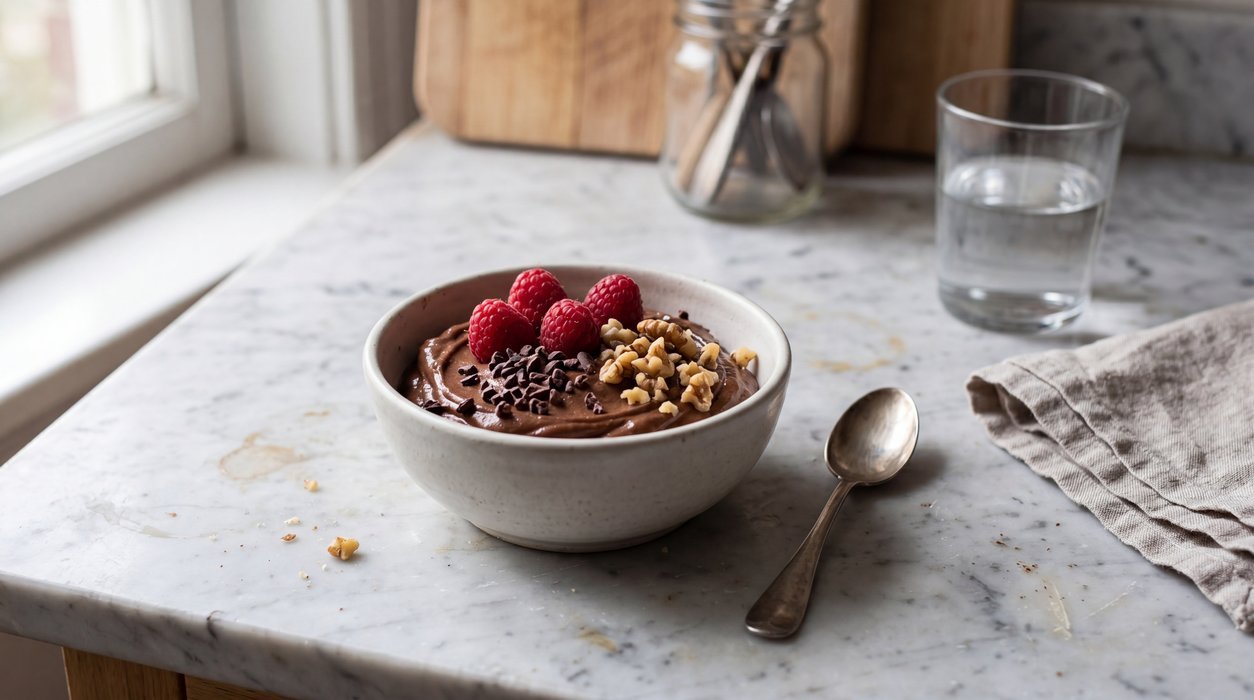
This mousse is rich, smooth, and deeply chocolatey. Avocado gives it creaminess and unsaturated fat, while cocoa adds intensity without added sugar.
| Ingredient | Amount |
|---|---|
| Ripe avocado | 1 medium |
| Unsweetened cocoa powder | 2 tablespoons |
| Unsweetened almond milk | 2–4 tablespoons |
| Vanilla extract | 1 teaspoon |
| Monk fruit or stevia | To taste |
| Pinch of salt | Optional |
Blend all ingredients until smooth, adding almond milk slowly until the mousse reaches your preferred texture. Chill for 20–30 minutes before serving.
Top with chopped walnuts, cacao nibs, or a few raspberries. This keeps the dessert satisfying without turning it into a sugar-heavy bowl.
2. Berry Greek Yogurt Bark
This frozen bark is a good option when you want something cold, creamy, and easy to keep ready. Greek yogurt adds protein, while berries bring color, flavor, and natural sweetness.
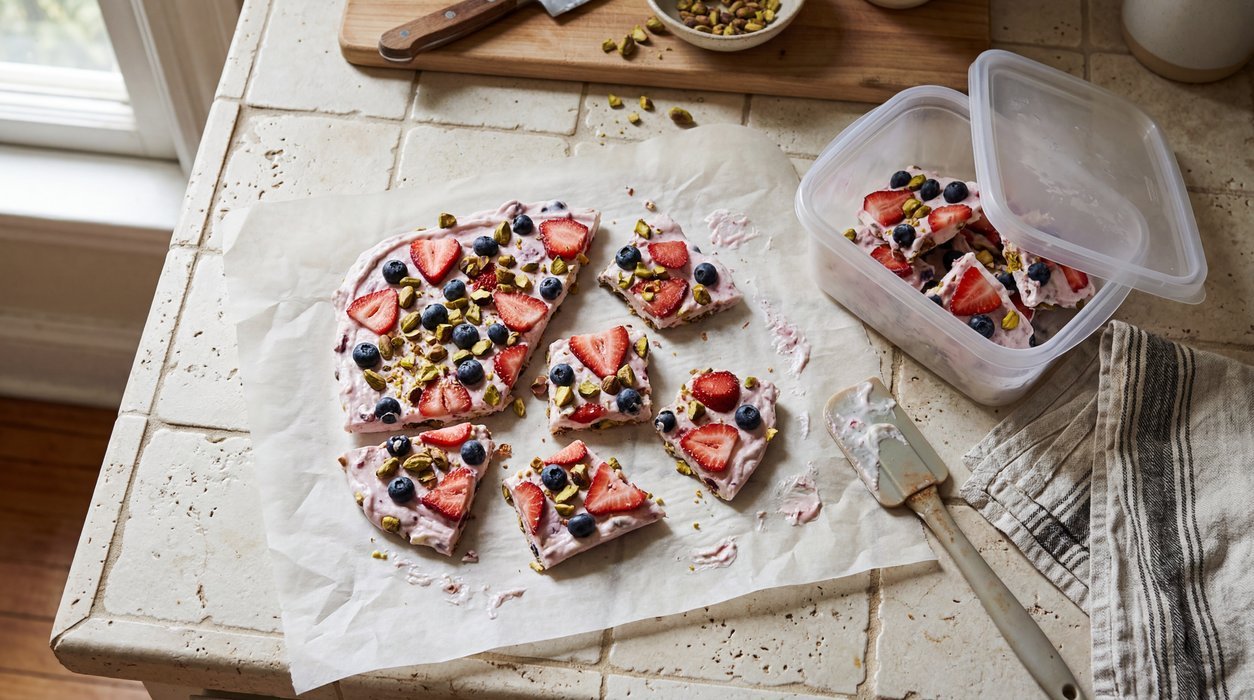
Mix 2 cups plain Greek yogurt with vanilla extract and a small amount of monk fruit or stevia if desired. Spread it on a parchment-lined tray, then scatter sliced strawberries, blueberries, and chopped pistachios over the top.
Freeze for at least 3 hours, then break into pieces. Store the bark in an airtight container in the freezer so it is ready before a craving becomes urgent.
Protein-rich desserts may support fullness and appetite regulation for some people. This is one reason yogurt-based desserts can feel more satisfying than candy or sweetened pastries.[2]
3. Cinnamon Almond Flour Mug Cake
A warm mug cake can feel comforting without requiring a full baking project. Almond flour gives it a soft crumb and adds fat and fiber compared with refined flour.

In a microwave-safe mug, mix 3 tablespoons almond flour, 1 egg, 1 tablespoon unsweetened almond milk, 1/2 teaspoon baking powder, 1/2 teaspoon cinnamon, vanilla extract, and monk fruit or stevia to taste.
Microwave for 60–90 seconds, depending on your microwave. Let it sit for one minute before eating, because the texture settles as it cools.
Cinnamon is useful as a flavor tool because it makes desserts taste sweeter without adding sugar. It should not be treated as a diabetes treatment or substitute for medical care.[5]
4. Peanut Butter Chia Pudding
Chia pudding is simple, but it needs enough flavor to avoid tasting flat. Peanut butter, vanilla, and a pinch of salt make it creamy and more satisfying.
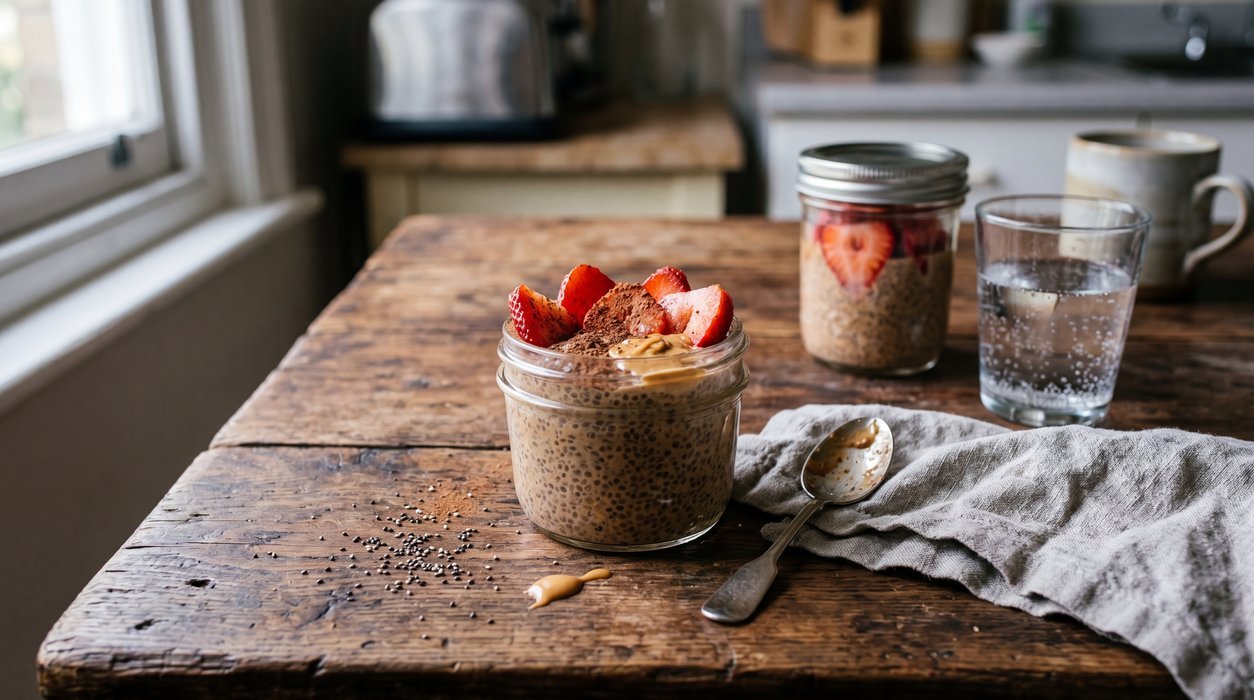
Stir together 3 tablespoons chia seeds, 3/4 cup unsweetened milk of choice, 1 tablespoon natural peanut butter, vanilla extract, and a small amount of your preferred sugar-free sweetener.
Refrigerate for at least 2 hours, or overnight. Stir once after the first 15 minutes to prevent clumping.
Chia seeds bring fiber, and soluble fiber can slow digestion and support a more gradual post-meal response. Add sliced strawberries or a dusting of cocoa before serving.[3]
5. Baked Apples With Walnuts and Cinnamon
This dessert is naturally sweet, warm, and familiar. It is not carb-free, but it can work as a balanced no added sugar dessert when portioned thoughtfully.
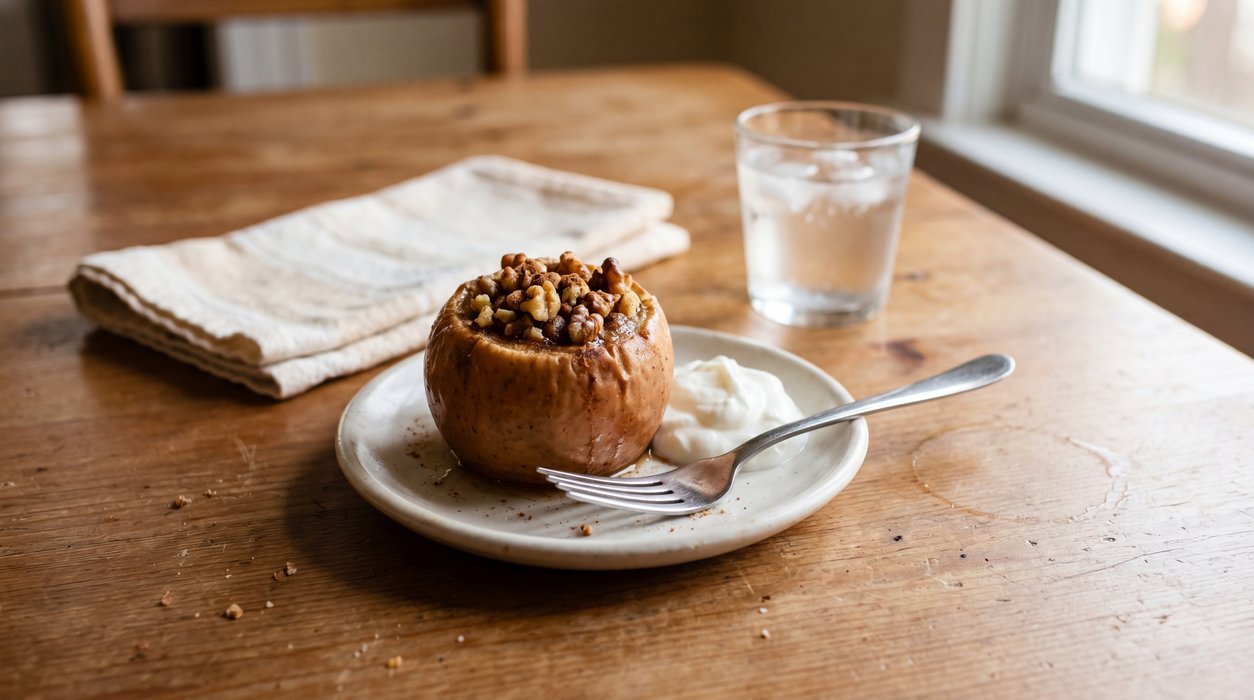
Core one apple and fill the center with chopped walnuts, cinnamon, vanilla, and a teaspoon of ground flaxseed. Bake at 350°F until tender, usually around 25–35 minutes depending on the apple.
Serve it with plain Greek yogurt or unsweetened coconut yogurt. The protein or fat on the side helps make the dessert feel more complete.
This is a useful option for people who prefer whole-food desserts over sweeteners. The goal is not to remove all sweetness, but to choose sweetness that comes with structure, fiber, and satisfaction.
How to make blood-sugar friendly desserts
Blood-sugar friendly desserts are usually built differently from standard desserts. Instead of combining refined flour, sugar, and low fiber, they include ingredients that slow digestion and improve satiety.
Protein, fiber, and fat can all influence how quickly a meal or snack is absorbed. That does not make dessert “free,” but it may support a smoother response than a dessert made mostly from added sugar and refined starch.[1]
Helpful dessert anchors include plain Greek yogurt, chia seeds, nuts, nut butter, eggs, avocado, unsweetened cocoa, and berries. For broader meal ideas, see these foods that lower blood sugar.
One thing worth pushing back on here: sugar-free does not automatically mean metabolically ideal. A dessert can contain no added sugar and still be easy to overeat, low in protein, or not satisfying enough to stop cravings.
This is not a personal failure. Cravings are shaped by biology, meal composition, sleep, stress, habit, and food environment, not willpower alone.
Which sweeteners work best?
Low- and no-calorie sweeteners can be useful in sugar-free dessert recipes, but they are not all the same in taste or digestion. Some work better in cold desserts, while others hold up better in baking.
| Sweetener | Best Use | What to Know |
|---|---|---|
| Monk fruit | Mousse, bark, mug cakes | Sweetness varies by blend, so start small. |
| Stevia | Yogurt, chia pudding, drinks | Too much can taste bitter. |
| Erythritol blends | Baked desserts | May cause digestive discomfort in some people. |
| Allulose | Soft desserts and sauces | Browns more like sugar, but tolerance varies. |
Regulatory agencies have evaluated several high-intensity sweeteners for food use. Individual tolerance still matters, especially for people who notice bloating, headaches, or digestive changes.[4]
The most practical strategy is to start with less sweetener than the recipe suggests, then adjust. Over time, lightly sweet desserts may begin to taste sweet enough.
A simple 7-day dessert plan
The easiest dessert plan removes decisions before cravings arrive. Prepare one chilled dessert and keep one warm option available, so the week does not depend on motivation.
- Day 1: Make peanut butter chia pudding for two servings.
- Day 2: Eat Greek yogurt bark after dinner.
- Day 3: Make a cinnamon almond flour mug cake.
- Day 4: Serve baked apple with Greek yogurt.
- Day 5: Blend chocolate avocado mousse.
- Day 6: Repeat the dessert that felt most satisfying.
- Day 7: Prep one freezer or fridge option for the next week.
Many people notice early changes first in evening grazing, after-dinner cravings, or post-dessert energy. More meaningful shifts in glucose markers usually require consistent eating patterns over weeks to months.
For an extra practical step, pair dessert with a short walk after dinner when it feels realistic. Similar Glucose Goddess Method habits use meal order and post-meal movement to support steadier glucose responses.[6]
Conclusion
Sugar-free desserts work best when they are built for satisfaction, not just sweetness. Protein, fiber, healthy fats, cocoa, cinnamon, berries, and thoughtful sweeteners can make dessert feel enjoyable while supporting a calmer routine.
These sugar-free dessert recipes give you one creamy option, one frozen option, one warm option, one prep-ahead option, and one fruit-based option. That variety makes it easier to choose a dessert that fits your appetite, schedule, and health goals.
A better dessert routine does not require perfection. It starts with having a few balanced options ready before cravings make the decision for you.
Frequently Asked Questions
Are sugar-free dessert recipes good for blood sugar balance?
Sugar-free dessert recipes may support blood sugar balance when they include protein, fiber, healthy fats, and minimal refined starch. They are not automatically low-carb, calorie-free, or appropriate for every person. People managing diabetes, prediabetes, pregnancy-related glucose changes, or glucose-lowering medication should follow guidance from a qualified healthcare provider. Personal responses can vary based on sleep, stress, activity, meal size, and ingredients.
What is the best sugar substitute for desserts?
The best sugar substitute depends on the recipe and personal tolerance. Monk fruit and stevia work well in many simple desserts, while allulose and erythritol blends may perform better in some baked recipes. Some people notice digestive discomfort from sugar alcohols, especially in larger amounts. Starting small and adjusting gradually is usually the easiest approach.
Are fruit-based desserts really sugar-free?
Fruit-based desserts are usually better described as no added sugar desserts rather than completely sugar-free. Whole fruit contains naturally occurring sugars along with water, fiber, vitamins, minerals, and plant compounds. Berries are often a practical choice because they are flavorful and easy to pair with protein-rich foods. Portion size and individual glucose response still matter.
Can sugar-free desserts still cause cravings?
Yes, they can for some people. A dessert that is very sweet but low in protein, fiber, or fat may still leave someone wanting more food soon afterward. A more balanced dessert, such as chia pudding or yogurt bark, may be easier to portion. Tracking hunger, fullness, and mood after dessert can help identify the best options.
Medical Disclaimer: The information provided in this article is for educational purposes only and does not constitute medical advice. Always consult a qualified healthcare provider before making changes to your diet, lifestyle, or treatment plan. TheMetabolicHub.com does not replace professional medical guidance.
References
- Evert AB, Dennison M, Gardner CD, et al. Nutrition Therapy for Adults With Diabetes or Prediabetes: A Consensus Report. Diabetes Care. 2019;42(5):731-754. PMID: 31000505
- Leidy HJ, Clifton PM, Astrup A, et al. The role of protein in weight loss and maintenance. Am J Clin Nutr. 2015;101(6):1320S-1329S. PMID: 25926512
- Harvard T.H. Chan School of Public Health. Fiber. The Nutrition Source
- U.S. Food and Drug Administration. High-Intensity Sweeteners. FDA
- National Center for Complementary and Integrative Health. Cinnamon: Usefulness and Safety. NCCIH
- Buffey AJ, Herring MP, Langley CK, Donnelly AE, Carson BP. The Acute Effects of Interrupting Prolonged Sitting Time in Adults with Standing and Light-Intensity Walking on Biomarkers of Cardiometabolic Health in Adults: A Systematic Review and Meta-analysis. Sports Med. 2022;52:1765-1787. DOI: 10.1007/s40279-022-01649-4