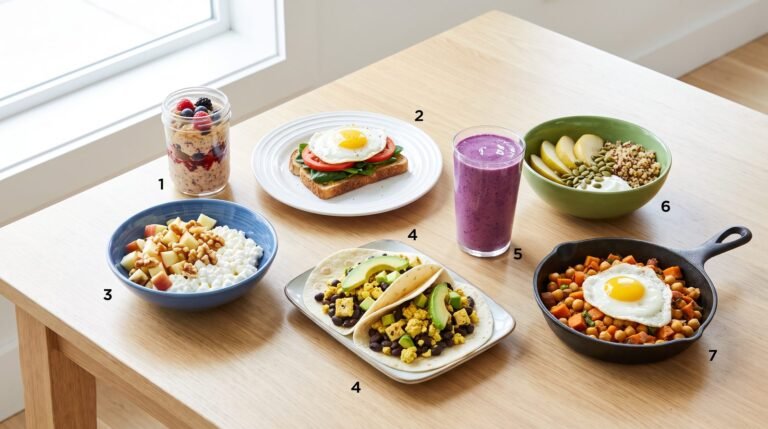
12 High-Protein Snacks Under 200 Calories: Easy & Filling Ideas
The hardest snack moments usually happen when the day is already stretched thin. A rushed lunch, a long meeting, or a late-afternoon energy dip can make anything sweet, salty, or crunchy feel hard to ignore.
This is not a personal failure. The encouraging news: 12 high-protein snacks under 200 calories can make snack choices easier when they use familiar foods you can actually find at a normal grocery store.
Quick Win: Pick two snacks from this list, portion them before the week starts, and keep one visible in the fridge for your most predictable snack window.
What Makes 12 High-Protein Snacks Under 200 Calories Useful?
A useful high-protein snack under 200 calories usually gives about 10–20 grams of protein, tastes satisfying, and does not rely mostly on added sugar or refined starch. The best options also add crunch, produce, fiber, or healthy fats so the snack feels like real food.
Protein needs vary by body size, age, activity level, and health context. The adult Recommended Dietary Allowance is commonly cited as 0.8 grams of protein per kilogram of body weight per day, although some people may need more depending on their goals and medical context.[1]
Key Takeaways
- Aim for at least 10 grams of protein when possible, especially for a snack that needs to hold you between meals.
- Use familiar protein foods first: Greek yogurt, cottage cheese, tuna, chicken, eggs, turkey, cheese, and protein powder if tolerated.
- Pair protein with fruit, vegetables, beans, or whole-food fats for better texture and satisfaction.
- Nutrition numbers are estimates. Labels and nutrient databases are useful because brands and portions vary.[2]
12 High-Protein Snacks Under 200 Calories You Can Actually Make
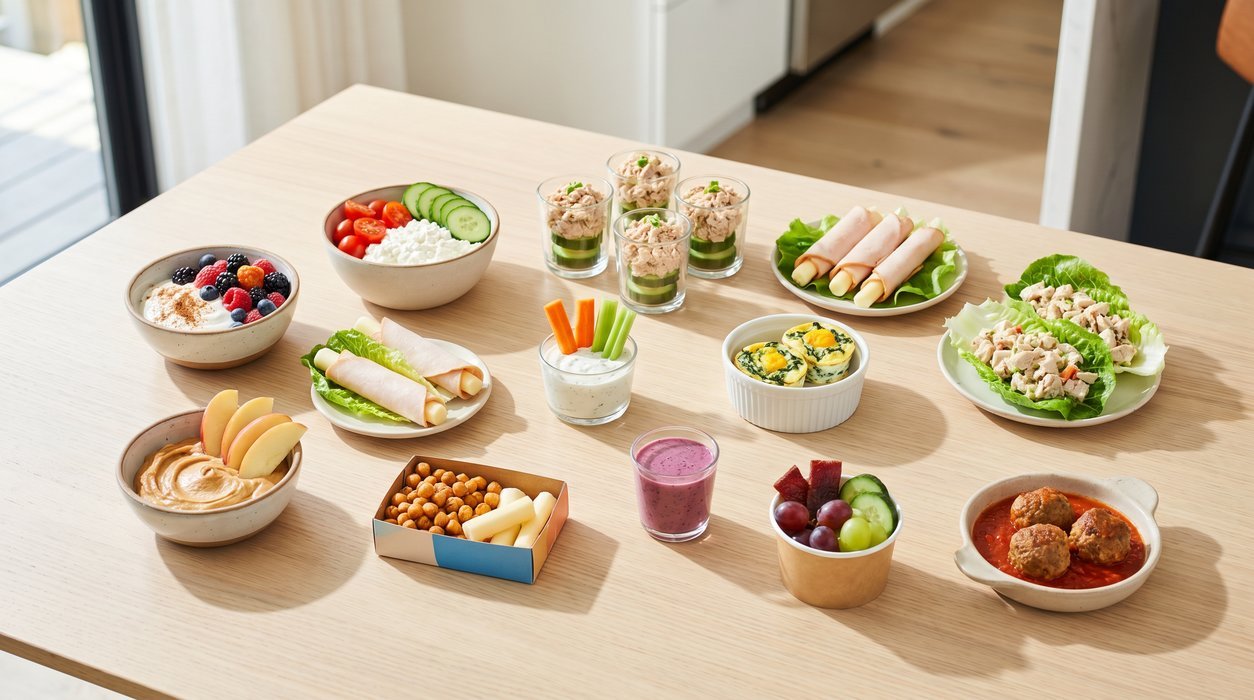
These 12 high-protein snacks under 200 calories are built around mainstream ingredients, not specialty-store foods. Most can be made in a few minutes or prepped in small batches.
| Snack | Estimated Protein | Estimated Calories | Best For |
|---|---|---|---|
| Greek yogurt berry cup | 15–18 g | 130–180 | Sweet cravings |
| Cottage cheese tomato cucumber bowl | 12–16 g | 110–170 | Creamy savory snacks |
| Tuna cucumber stacks | 15–20 g | 100–160 | Very lean protein |
| Turkey and string cheese roll-ups | 15–20 g | 130–190 | Fast fridge snack |
| Egg-white spinach bites | 11–15 g | 90–160 | Meal prep |
| Chicken salad lettuce cups | 16–22 g | 130–190 | Leftover chicken |
| Greek yogurt ranch veggie dip | 12–17 g | 110–170 | Crunchy snacks |
| Peanut butter yogurt apple dip | 14–18 g | 160–195 | Sweet and creamy |
| Roasted chickpea and string cheese box | 11–14 g | 150–195 | Portable crunch |
| Mini protein smoothie | 15–22 g | 120–190 | Post-workout or busy days |
| Lower-sugar beef jerky snack cup | 10–15 g | 100–170 | Shelf-stable protein |
| Mini turkey meatballs with marinara | 14–20 g | 150–195 | Warm savory snack |
1. Greek Yogurt Berry Cup
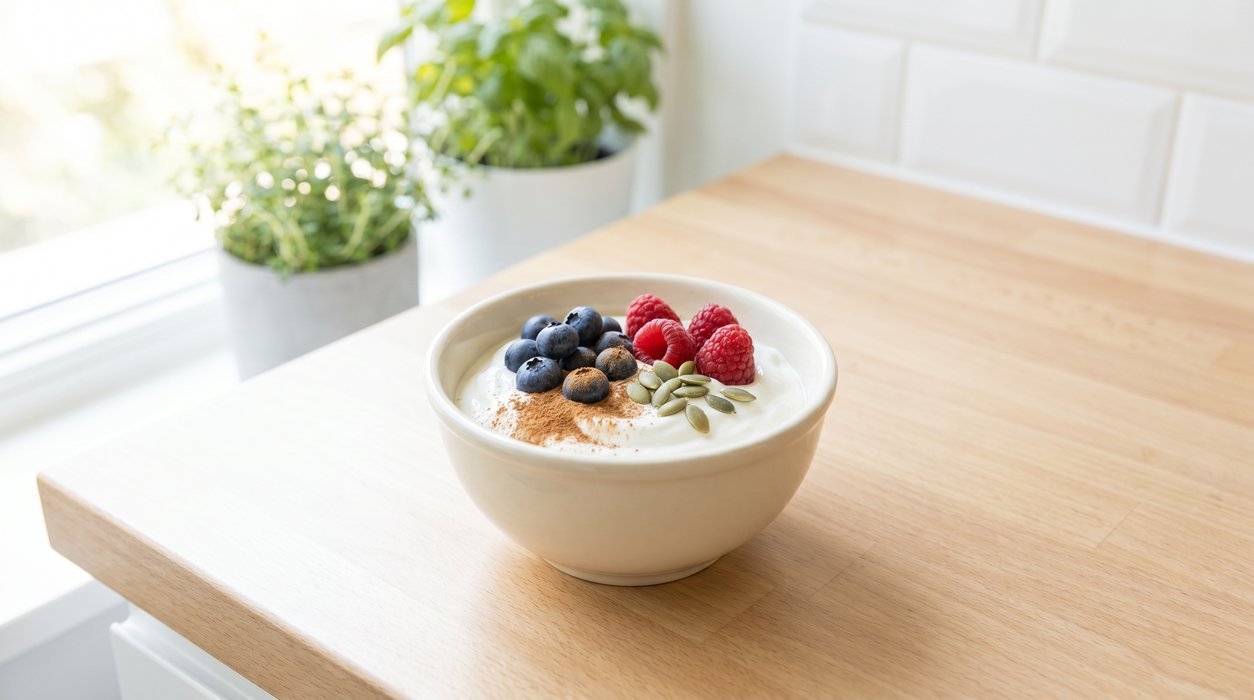
Use about 3/4 cup plain Greek yogurt with a small handful of berries and cinnamon. For extra texture, add a teaspoon of chopped walnuts or pumpkin seeds if the calories still fit.
This snack works well when cravings lean sweet. Choose plain yogurt most often, then add fruit instead of relying on sweetened flavors.
2. Cottage Cheese Tomato Cucumber Bowl
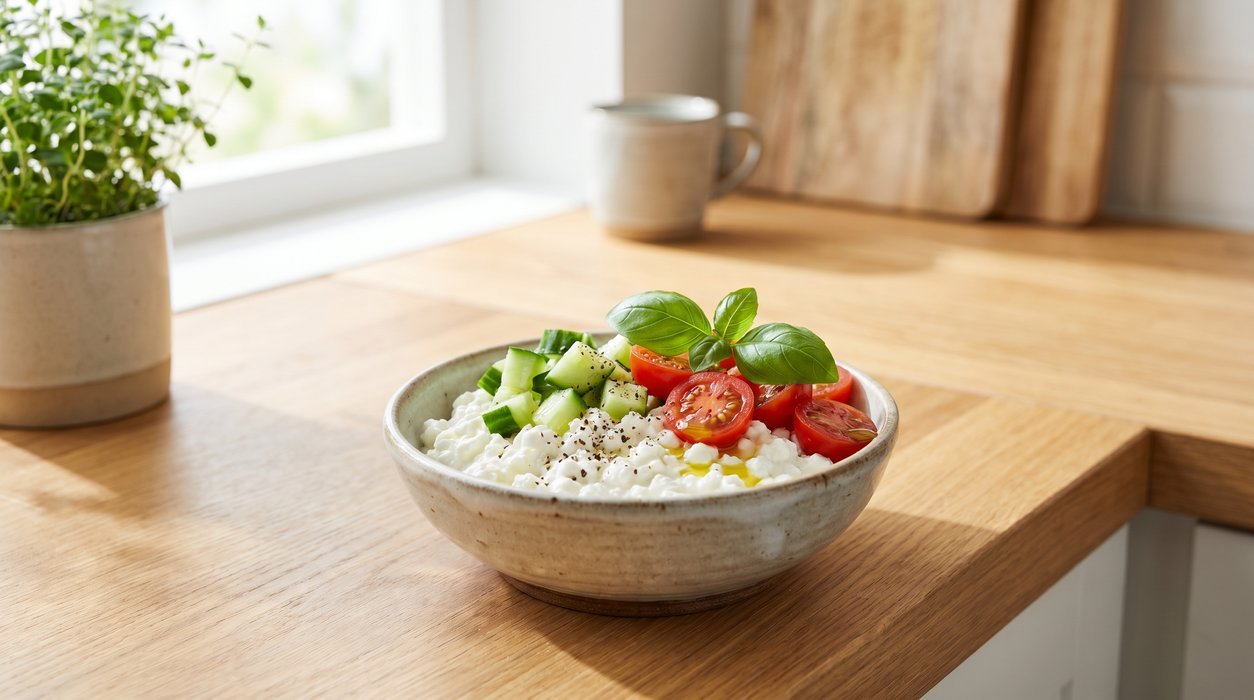
Top 1/2 cup low-fat cottage cheese with chopped cucumber, cherry tomatoes, black pepper, and a few basil leaves. It is simple, but it has enough texture to feel like more than a spoonful of dairy.
This is a good option when you want something creamy and savory. If sodium is a concern, compare labels because cottage cheese can vary a lot by brand.
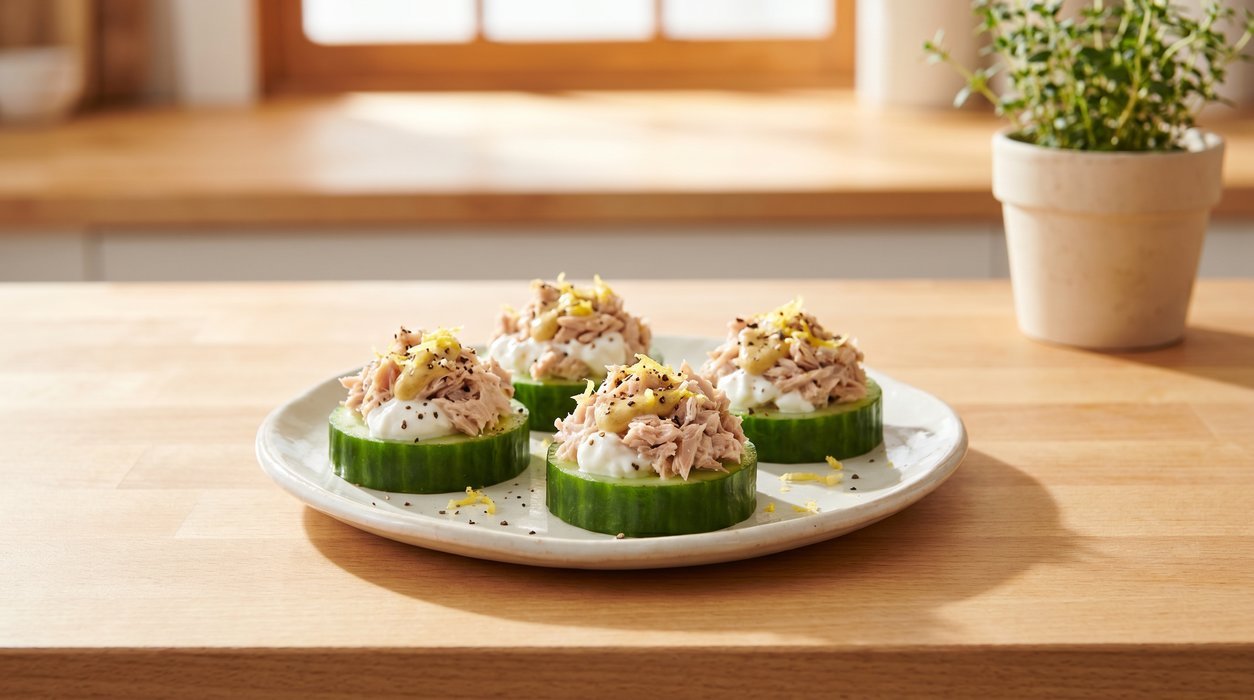
3. Tuna Cucumber Stacks
Mix a small tuna pouch with Greek yogurt, Dijon mustard, lemon juice, and pepper. Spoon it onto thick cucumber rounds for a crisp, lean, high-protein snack.
Tuna is convenient and familiar, but it should not be the only seafood protein someone eats every day. FDA/EPA fish advice emphasizes choosing a variety of lower-mercury fish, especially for people who are pregnant, breastfeeding, or feeding young children.[5]
4. Turkey and String Cheese Roll-Ups
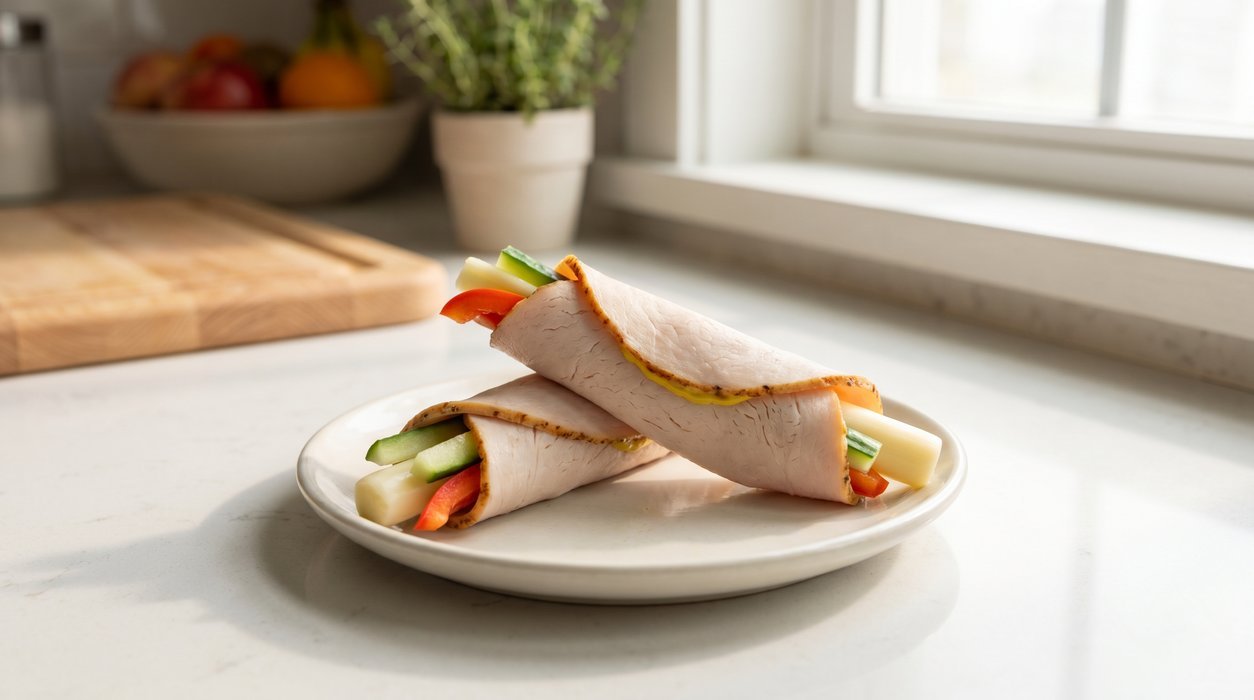
Wrap two or three slices of lower-sodium turkey breast around a light string cheese stick. Add cucumber strips or bell pepper slices inside if you want more crunch.
This is one of the fastest fridge snacks on the list. It is also one of the snacks where label reading matters because deli meats can be higher in sodium and more processed than plain poultry.
5. Egg-White Spinach Bites
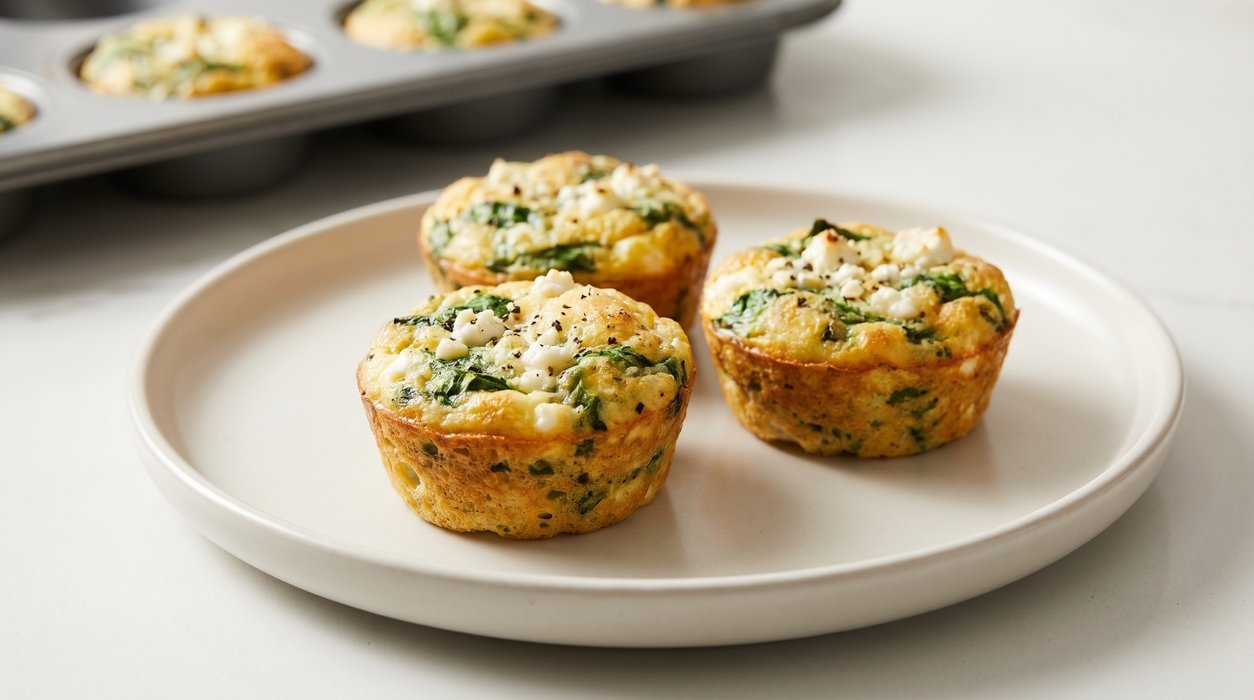
Bake egg whites with chopped spinach, a little cottage cheese, pepper, and a small sprinkle of feta in a mini muffin pan. Two or three bites can make a light, protein-focused snack.
This is a practical prep option for people who like warm snacks. Make a small batch, refrigerate it, and reheat only what you plan to eat.
6. Chicken Salad Lettuce Cups
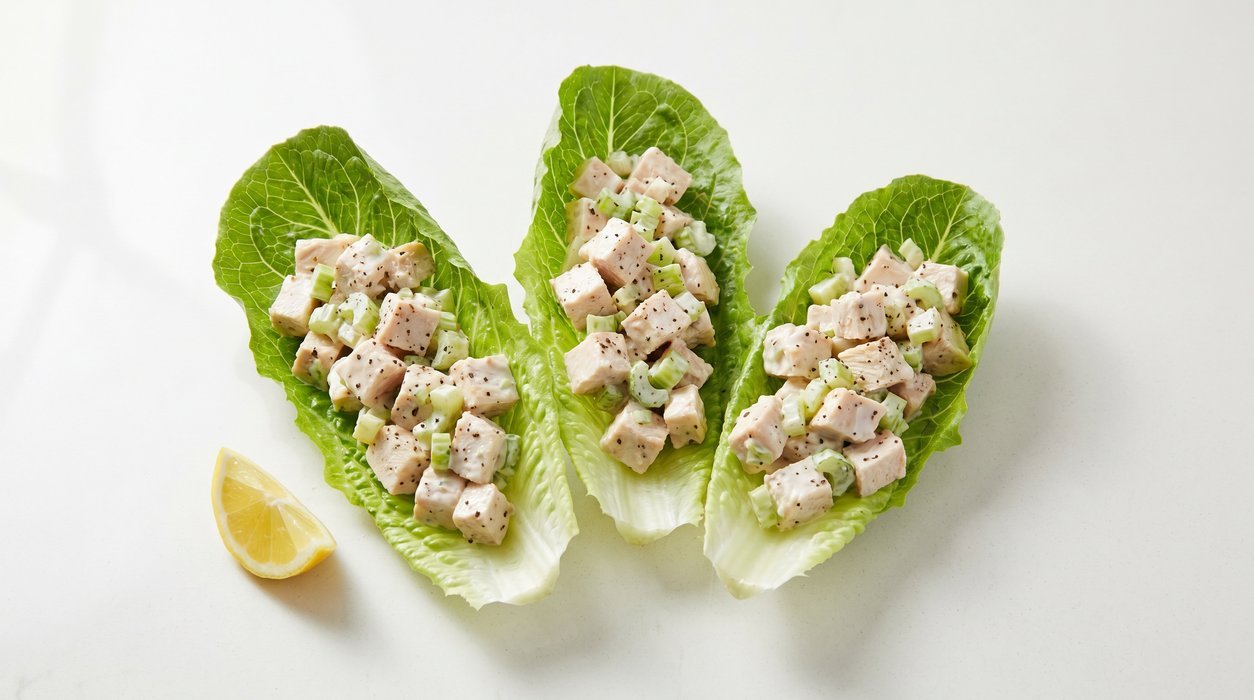
Mix chopped cooked chicken with a spoonful of Greek yogurt, celery, lemon juice, pepper, and a little mustard. Tuck the mixture into romaine or butter lettuce leaves.
This works especially well with leftover chicken. It gives the feel of a chicken salad sandwich without needing bread for the snack to feel complete.
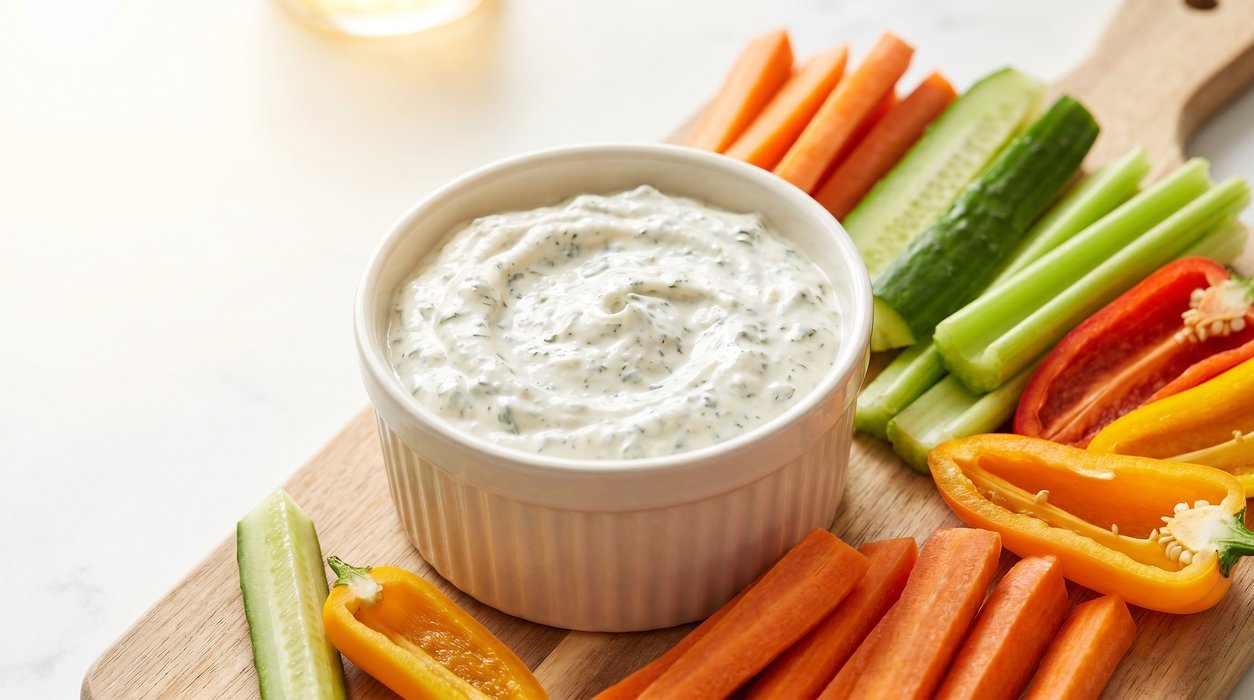
7. Greek Yogurt Ranch Veggie Dip
Stir plain Greek yogurt with garlic powder, onion powder, dill, parsley, pepper, and a pinch of salt. Serve it with carrots, cucumber, celery, or mini bell peppers.
This snack is useful when you want something crunchy but more filling than vegetables alone. It can also be easier to repeat than a more complicated snack recipe.
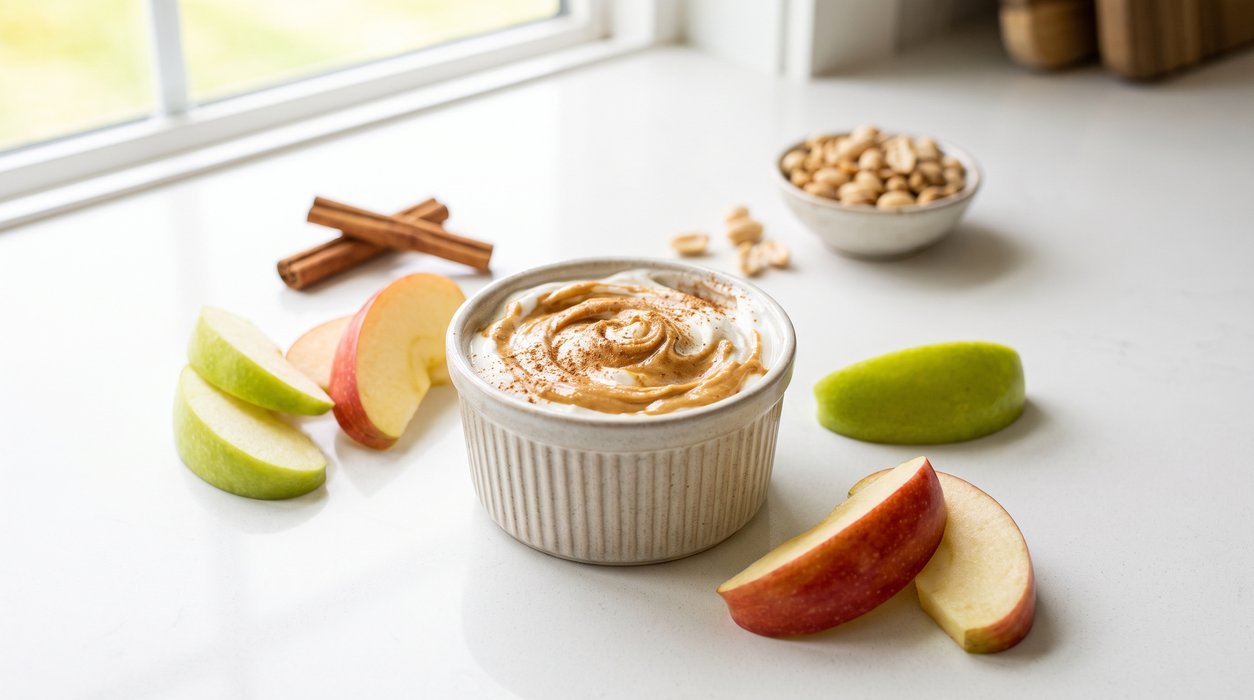
8. Peanut Butter Yogurt Apple Dip
Mix 1/2 cup plain Greek yogurt with 1 tablespoon peanut butter and cinnamon. Use apple slices for dipping, and keep the apple portion moderate if staying under 200 calories is the goal.
This snack works well when the craving is sweet and creamy. It also feels more satisfying than eating apple slices alone.
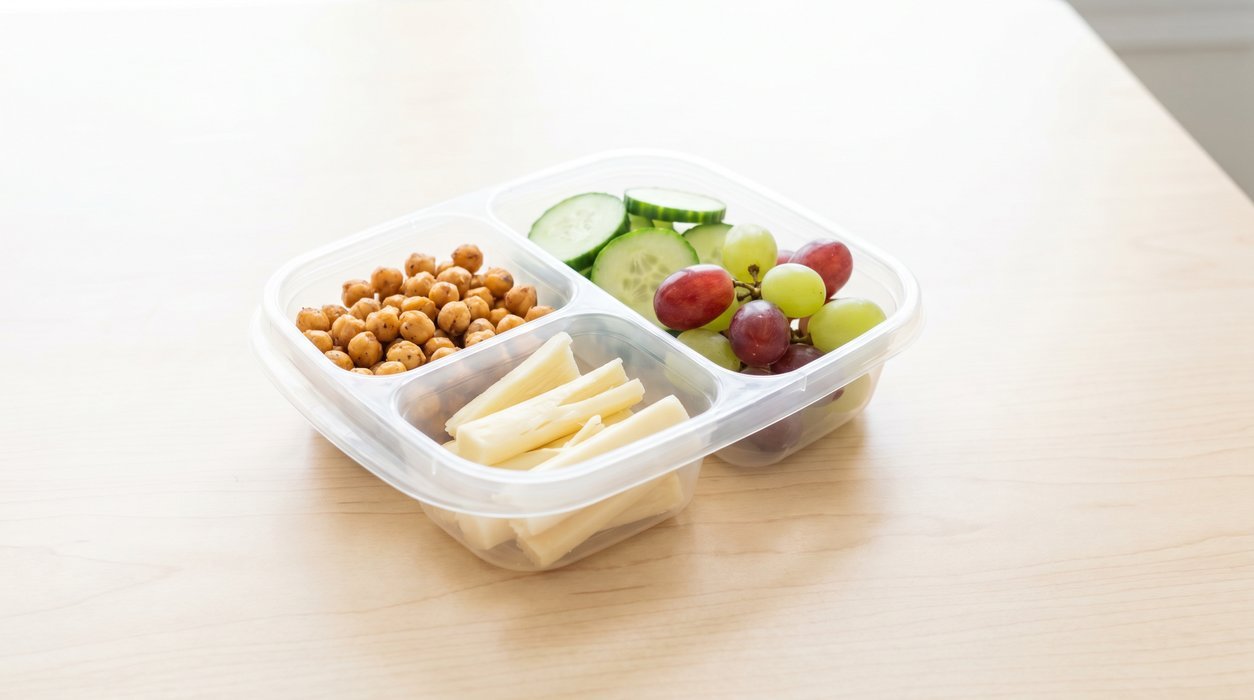
9. Roasted Chickpea and String Cheese Box
Pair one light string cheese with a small portion of roasted chickpeas and sliced cucumber or grapes. The chickpeas bring crunch, while the cheese helps the snack reach a more useful protein range.
Roasted chickpeas are easy to overeat straight from a bag. Portioning them into a small snack box helps keep the calories predictable.
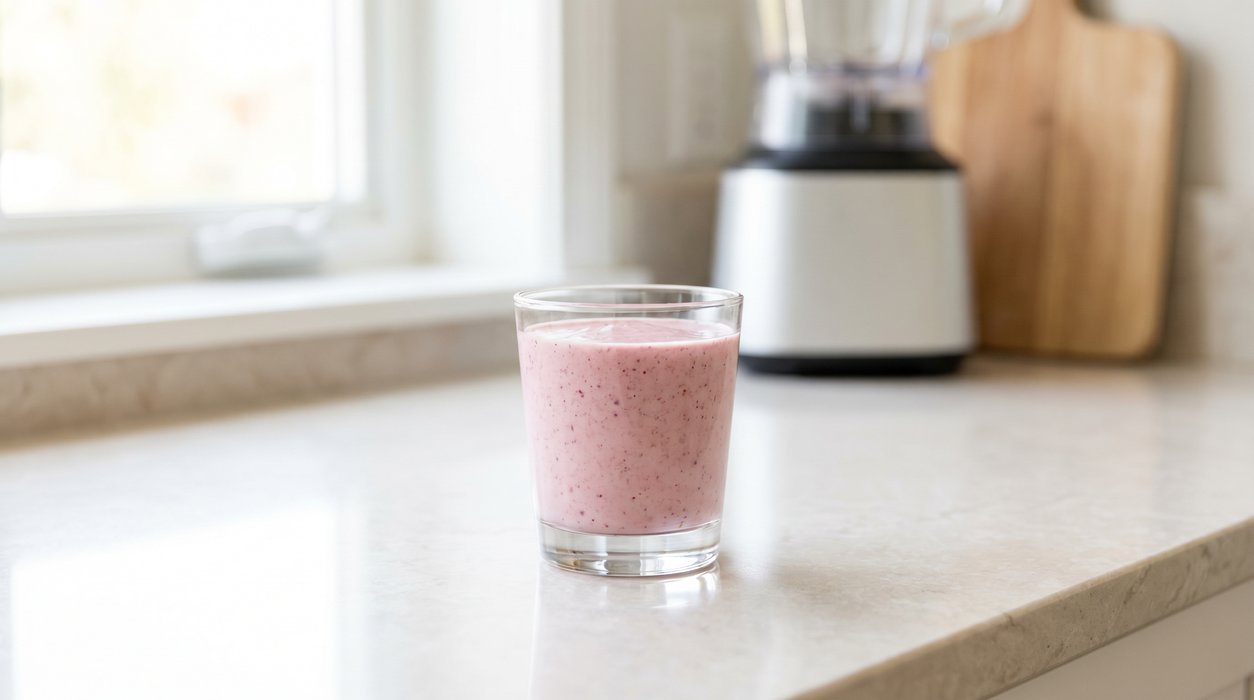
10. Mini Protein Smoothie
Blend half a scoop of protein powder with unsweetened milk, ice, and a few frozen berries. This makes a smaller smoothie that can stay under 200 calories more easily than a large blended drink.
Protein powder is not required for healthy eating, but it can be practical on busy days. Choose one with a short ingredient list when possible, and avoid using powders to replace balanced meals by default.
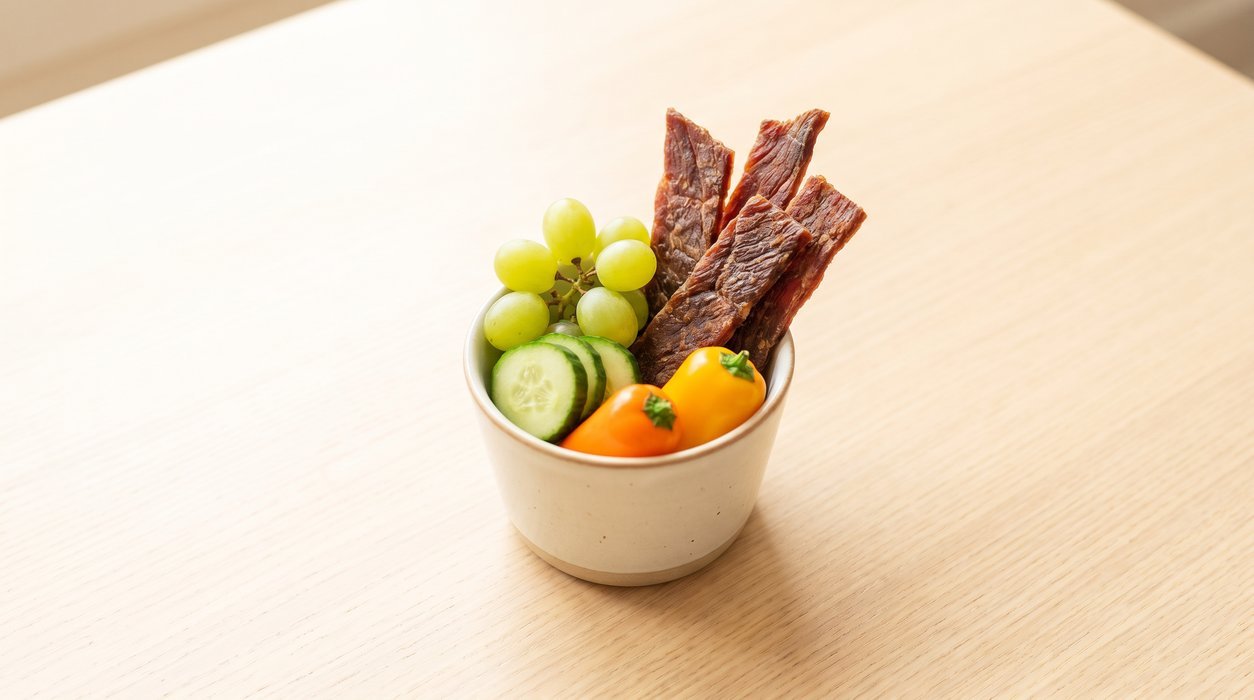
11. Lower-Sugar Beef Jerky Snack Cup
Choose about 1 ounce of lower-sugar beef jerky and pair it with grapes, cucumber slices, or mini peppers. The produce helps the snack feel fresher and less salty.
This is a useful shelf-stable option for travel, work bags, or busy days. Treat jerky as an occasional convenience snack rather than a daily default, since sodium and processing level can vary widely.
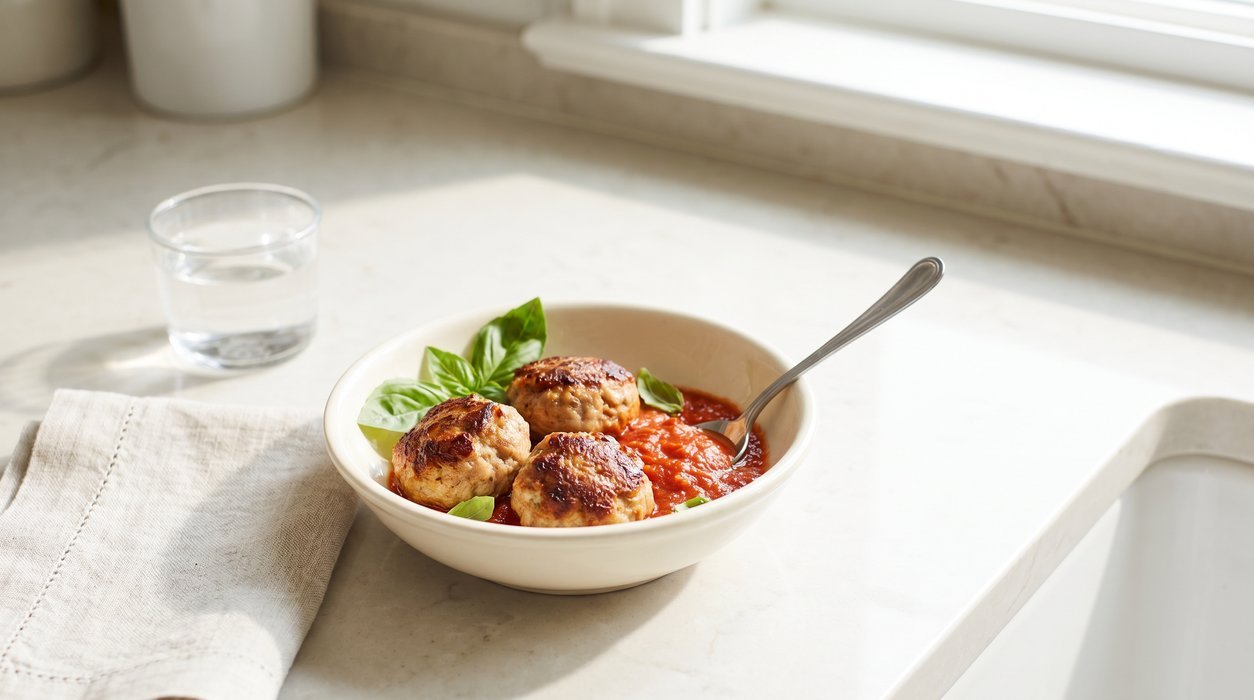
12. Mini Turkey Meatballs with Marinara
Warm three small turkey meatballs with a few tablespoons of marinara sauce. Choose lean turkey and keep the sauce portion modest to stay within the calorie range.
This snack feels more like a small meal, which can help when hunger is stronger. It is a useful option for people who prefer warm savory foods over cold snacks.
How Protein Snacks May Support Appetite and Blood Sugar
Protein is not just about muscle. It also plays a role in satiety, meal satisfaction, and how long a snack holds someone between meals.
Systematic review evidence suggests protein intake can influence appetite sensations and appetite-related hormones, although responses vary by person, protein source, timing, and overall diet pattern.[3]
For blood sugar balance, protein-rich snacks may reduce the likelihood of reaching for fast-digesting carbohydrates alone. This can matter for anyone managing energy dips, cravings, insulin resistance, or prediabetes.
The American Diabetes Association describes protein foods as including fish, chicken, meats, soy products, and cheese, while also noting that protein-rich foods can differ in fat, carbohydrate, calories, and overall nutrient profile.[4]
One thing worth pushing back on here: “high protein” does not automatically mean metabolically supportive. A snack can be high in protein and still be less useful if it is very salty, highly processed, low in fiber, or easy to overeat.
For a deeper explanation, see how protein affects blood sugar in the context of meals, snacks, and overall diet patterns.
How to Choose the Right Snack for Your Goal
The best snack depends on why the snack is needed. A late-afternoon bridge, a post-workout option, and a sweet craving do not have to look the same.
For steadier energy
Choose a snack that combines protein with fruit or vegetables. Greek yogurt with berries, tuna cucumber stacks, chicken salad lettuce cups, and yogurt ranch dip are strong options here.
For weight management
Look for snacks that are easy to portion before eating. Turkey and string cheese roll-ups, egg-white bites, roasted chickpea snack boxes, and mini protein smoothies are simple to measure.
Calories still matter, but fullness matters too. A 170-calorie snack that prevents grazing may be more useful than a tiny snack that leaves hunger unresolved.
For lower-carb snacking
Tuna cucumber stacks, turkey roll-ups, chicken lettuce cups, egg-white bites, and cottage cheese bowls are usually easier to fit into a lower-carbohydrate pattern. Add non-starchy vegetables for volume and crunch.
Anyone using glucose-lowering medication should discuss major carbohydrate changes with a qualified healthcare provider. Nutrition therapy for diabetes and prediabetes should be individualized.[6]
For grab-and-go snacks
Choose options that survive real life. Roasted chickpea snack boxes, lower-sugar beef jerky cups, turkey roll-ups, and mini smoothies can all work with minimal prep.
For more mix-and-match ideas, use blood sugar stabilizing snacks as a simple formula instead of relying on one perfect recipe.
What to Watch Before Choosing a Snack
Protein source quality matters. The American Heart Association recommends healthy protein sources, including mostly plant proteins, seafood, low-fat dairy, and lean unprocessed meat or poultry when included.[7]
- Sodium: Check deli turkey, cottage cheese, tuna, beef jerky, cheese, and prepared meatballs.
- Added sugar: Watch flavored yogurts, protein powders, jerky, smoothies, and sauces.
- Portions: Peanut butter, cheese, roasted chickpeas, and marinara can push calories up quickly.
- Medical context: People with kidney disease, medically restricted protein diets, diabetes medication use, pregnancy, or eating disorder history should personalize snack choices with professional guidance.
- Allergies and intolerances: Dairy, fish, eggs, peanuts, gluten, and soy may matter depending on the snack.
A Simple 7-Day Snack Rotation
A rotation prevents boredom and makes shopping easier. It also helps balance sweet, savory, crunchy, creamy, refrigerated, and shelf-stable options.
| Day | Snack | Prep Note |
|---|---|---|
| Monday | Greek yogurt berry cup | Add berries right before eating |
| Tuesday | Turkey and string cheese roll-ups | Choose lower-sodium turkey |
| Wednesday | Tuna cucumber stacks | Use a single-serve pouch |
| Thursday | Greek yogurt ranch veggie dip | Slice vegetables ahead |
| Friday | Chicken salad lettuce cups | Use leftover chicken |
| Saturday | Mini protein smoothie | Keep it small and unsweetened |
| Sunday | Mini turkey meatballs with marinara | Warm a small portion only |
Many people first notice fewer impulsive snack choices when high-protein options are already prepared. Over one to two weeks, afternoon hunger may feel less urgent if snacks are better matched to the day.
If cravings tend to start earlier, adding more protein to breakfast may also make the rest of the day easier to manage.
Frequently Asked Questions
What are the best 12 high-protein snacks under 200 calories?
The best 12 high-protein snacks under 200 calories include Greek yogurt with berries, cottage cheese with tomatoes, tuna cucumber stacks, turkey and cheese roll-ups, egg-white bites, chicken lettuce cups, Greek yogurt ranch dip, peanut butter yogurt apple dip, roasted chickpeas with string cheese, a mini protein smoothie, lower-sugar beef jerky, and mini turkey meatballs. The best choice depends on taste, sodium needs, allergies, and whether the snack must be portable.
Can a 200-calorie snack actually be filling?
Yes, but the composition matters. A snack with protein, fiber-rich produce, texture, and enough flavor may feel more satisfying than a snack made mostly from refined carbohydrates. Hunger still varies based on meal timing, sleep, stress, exercise, and total daily intake.
Are high-protein snacks good for blood sugar?
They can be helpful when they replace snacks made mostly from fast-digesting carbohydrates. Protein may support fullness and can make a snack feel more complete. For people with diabetes, prediabetes, or medication use, individual blood sugar responses and medical guidance still matter.
Do high-protein snacks need protein powder?
No. Greek yogurt, cottage cheese, tuna, chicken, turkey, eggs, cheese, and beans can all help build protein-rich snacks. Protein powder can be convenient, but it is optional and should not replace a balanced eating pattern.
Conclusion
High-protein snacking does not have to mean unusual ingredients, strict meal prep, or another protein bar. These 12 high-protein snacks under 200 calories use familiar foods that can fit into ordinary grocery shopping.
Start with the snack that sounds easiest to repeat, not the one that seems most perfect. Consistency usually improves when the option is already portioned, visible, and enjoyable enough to choose again.
Medical Disclaimer: The information provided in this article is for educational purposes only and does not constitute medical advice. Always consult a qualified healthcare provider before making changes to your diet, lifestyle, or treatment plan. TheMetabolicHub.com does not replace professional medical guidance.
References
- Institute of Medicine. Dietary Reference Intakes for Energy, Carbohydrate, Fiber, Fat, Fatty Acids, Cholesterol, Protein, and Amino Acids. National Academies Press. 2005. DOI: 10.17226/10490
- U.S. Department of Agriculture. FoodData Central. Source
- Kohanmoo A, Faghih S, Akhlaghi M. Effect of short- and long-term protein consumption on appetite and appetite-regulating gastrointestinal hormones, a systematic review and meta-analysis of randomized controlled trials. Physiol Behav. 2020. PMID: 32768415
- American Diabetes Association. Best Protein-Rich Foods for Diabetes. Source
- U.S. Food and Drug Administration. Advice about Eating Fish. Source
- Evert AB, Dennison M, Gardner CD, et al. Nutrition Therapy for Adults With Diabetes or Prediabetes: A Consensus Report. Diabetes Care. 2019;42(5):731-754. PMID: 31000505
- American Heart Association. Picking Healthy Proteins. Source