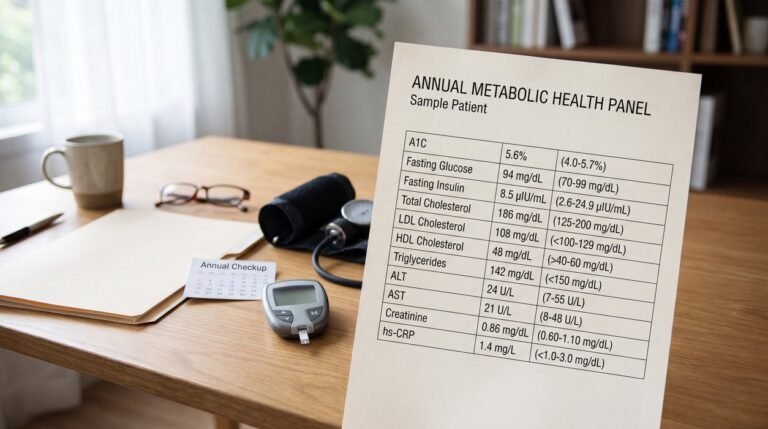
Metabolic Syndrome Markers: The 5 Numbers Every Woman Should Know

Feeling tired after meals, noticing waist changes, or hearing that your labs are “almost normal” can be confusing when something still feels off. This may not be random. The encouraging news: metabolic syndrome markers can help connect separate numbers into one clearer pattern.
Quick Win: This week, place your most recent waist measurement, fasting glucose, triglycerides, HDL cholesterol, and blood pressure in one note. Seeing them together is more useful than judging each number alone.
What are metabolic syndrome markers?
Metabolic syndrome markers are five measurable signs clinicians use to identify a cluster of cardiometabolic risk: increased waist circumference, high triglycerides, low HDL cholesterol, elevated blood pressure, and elevated fasting glucose. A person generally meets the clinical definition of metabolic syndrome when at least three of these markers are present.[1]
The metabolic syndrome markers matter because these numbers often move together. Instead of treating one “borderline” lab as isolated, the checklist can reveal a broader pattern involving insulin resistance, lipid metabolism, blood vessel stress, and abdominal fat distribution.[2]
For many adults, improvement is tracked over weeks to months rather than days. The goal is not panic or perfection; it is a clearer conversation with a qualified clinician and a practical plan for the markers that are changing.
Key takeaways
- Three out of five markers generally meet the clinical definition of metabolic syndrome.
- The five markers are waist circumference, triglycerides, HDL cholesterol, blood pressure, and fasting glucose.
- Common U.S. cutoffs for women include waist circumference above 35 inches and HDL cholesterol below 50 mg/dL.[3]
- Metabolic syndrome is not a personal failure. It is a measurable pattern that can be discussed, monitored, and supported.
- Food quality, movement, sleep, and appropriate medical follow-up may support better trends over time.
What are the 5 markers of metabolic syndrome?
Metabolic syndrome markers are based on measurements from a tape measure, blood pressure reading, and blood tests. Medication use for elevated glucose, blood pressure, or blood lipids may also count as evidence that a marker is already being managed clinically.[1]
| Marker | Common adult cutoff | What it may suggest |
|---|---|---|
| Waist circumference | Above 35 in / 88 cm for women | More abdominal fat linked to cardiometabolic risk |
| Triglycerides | 150 mg/dL or higher | Higher circulating blood fats |
| HDL cholesterol | Below 50 mg/dL for women | A less favorable lipid pattern |
| Blood pressure | 130/85 mmHg or higher | More pressure on blood vessels and the heart |
| Fasting glucose | 100 mg/dL or higher | Reduced blood sugar regulation |
Cutoffs can vary by ethnicity, country, pregnancy status, medication use, and individual medical context. A clinician can help interpret whether the pattern is clinically meaningful for the person in front of them.

Why do these markers cluster together?
Metabolic syndrome is useful because it looks at a pattern. Waist circumference, triglycerides, HDL cholesterol, blood pressure, and fasting glucose can all be influenced by insulin sensitivity, fat storage, liver metabolism, inflammation, sleep, activity, genetics, and medications.
Stat callout: In the Diabetes Prevention Program, a structured lifestyle intervention reduced type 2 diabetes incidence by 58% in high-risk adults compared with placebo over an average follow-up of 2.8 years.[4]
Mechanism Box: When insulin resistance develops, the body may need more insulin to move glucose into cells. Over time, this can overlap with higher fasting glucose, higher triglycerides, lower HDL, more abdominal fat storage, and higher blood pressure.
One thing worth pushing back on here: metabolic syndrome is often reduced to “belly fat.” Waist circumference matters, but it is only one marker. The practical issue is the cluster, because a person can miss risk when weight or waist size is the only thing being discussed.
Why does waist circumference matter?
Waist circumference is included because abdominal fat is more closely linked to cardiometabolic risk than body weight alone. Two people with the same body mass index can have different waist measurements, lipid patterns, glucose regulation, and blood pressure.
A waist measurement does not define health, worth, or effort. It is one practical marker that may help show whether fat distribution is adding stress to glucose regulation, blood pressure, and lipid metabolism.
To measure it consistently, use a flexible tape measure around the abdomen, often at the level of the top of the hip bones, after a normal exhale. Avoid pulling the tape tight enough to compress the skin.
How does fasting blood sugar fit in?
Fasting glucose reflects how much glucose is circulating after several hours without food. When fasting glucose rises, it may suggest that insulin is not keeping blood sugar in the preferred range as efficiently as before.
Fasting glucose is useful, but it is not the whole story. Some people have normal or near-normal fasting glucose while insulin levels are working harder in the background.
This is where context matters. Depending on the person, a clinician may also consider A1C, fasting insulin, family history, medications, sleep, thyroid health, menopause transition, or other factors.
For a more lab-focused next step, see what metabolic syndrome blood tests can show and which markers may be worth tracking over time.
Why do triglycerides and HDL matter together?
Triglycerides are a form of fat carried in the blood. Levels can rise with insulin resistance, excess energy intake, alcohol, genetics, some medications, and certain medical conditions.
HDL cholesterol is often called “good” cholesterol, but the number is better understood as one part of a broader lipid pattern. In metabolic syndrome, low HDL is considered alongside triglycerides, waist circumference, glucose, and blood pressure.
When triglycerides are high and HDL is low, the pattern may point toward altered lipid metabolism. This can be especially relevant when fasting glucose, waist circumference, or blood pressure are also trending upward.[3]
Why is blood pressure part of the picture?
Blood pressure is included because metabolic stress and vascular stress often overlap. Elevated readings can add strain to arteries, the heart, kidneys, and brain over time.
A single high reading does not automatically mean someone has chronic hypertension. Stress, caffeine, pain, exercise, poor sleep, illness, and measurement technique can all affect the number.
Patterns matter more than one isolated reading. Home blood pressure tracking, when recommended by a clinician, can sometimes give a clearer picture than one office measurement.
How can you start supporting these markers?
Start by creating a simple metabolic snapshot. Write down your most recent waist circumference, blood pressure, fasting glucose, triglycerides, and HDL cholesterol, along with the date each was measured.
Then look for patterns rather than perfection. One marker slightly outside range may call for awareness, while three or more markers suggest a stronger reason to discuss the full clinical picture with a healthcare provider.
Step 1: Confirm the numbers
Use recent lab results when possible. If your labs are older than a year, or if symptoms and risk factors have changed, ask your clinician whether updated testing is appropriate.
Step 2: Build one food anchor
Choose one daily meal that includes protein, high-fiber carbohydrates, and unsaturated fats. This might be Greek yogurt with berries and nuts, eggs with vegetables and beans, or salmon with lentils and salad.
Fiber-rich foods may support fullness and post-meal glucose control. They can also help replace more refined carbohydrates without requiring an extreme diet pattern.
Step 3: Add movement after meals
A 10- to 15-minute walk after one meal per day is a realistic starting point for many adults. This small routine may support post-meal glucose handling without needing an intense workout.

Step 4: Strength train twice per week
Muscle is an important site for glucose storage. Resistance training with weights, machines, bands, or bodyweight movements may help support insulin sensitivity and long-term metabolic health.[5]
If you are choosing where to start, compare exercise options for metabolic syndrome and match the plan to your current fitness, schedule, and medical status.
Step 5: Protect sleep and recovery
Poor sleep can make appetite, glucose regulation, and blood pressure harder to manage. A consistent sleep window, morning light exposure, and a realistic caffeine cutoff can be practical first steps.
Early signs of progress may include steadier energy after meals, more consistent blood pressure readings, improved walking stamina, or gradual changes in triglycerides and fasting glucose. Lab changes usually need weeks to months, not a few perfect days.
Frequently asked questions
What metabolic syndrome markers should women know?
The metabolic syndrome markers include increased waist circumference, high triglycerides, low HDL cholesterol, elevated blood pressure, and elevated fasting glucose. A person generally meets the clinical definition when three or more are present. For women, commonly used U.S. thresholds include waist circumference above 35 inches and HDL cholesterol below 50 mg/dL. A clinician can interpret these numbers alongside ethnicity, medications, age, pregnancy history, and overall health.
Can you have metabolic syndrome at a normal body weight?
Yes. Body weight alone can miss meaningful cardiometabolic risk. Waist circumference, triglycerides, HDL cholesterol, blood pressure, and fasting glucose may reveal patterns that scale weight does not show. Body composition, fat distribution, genetics, sleep, medications, and activity level can all influence these markers.
Is metabolic syndrome the same as insulin resistance?
They are related, but they are not identical. Insulin resistance describes a metabolic process where cells do not respond to insulin as effectively as expected. Metabolic syndrome is a clinical cluster of measurable markers that often reflects insulin resistance, altered lipid metabolism, and vascular stress. A person can have insulin resistance before all five markers become clearly abnormal.
Which metabolic syndrome marker usually changes first?
There is no single pattern for everyone. Some people first notice rising waist circumference or triglycerides, while others see fasting glucose or blood pressure gradually increase. HDL cholesterol may also trend lower over time, especially when triglycerides are elevated. Tracking all five markers together gives a clearer picture.
How often should metabolic syndrome markers be checked?
The right schedule depends on personal risk, medical history, medications, and previous results. Some adults may only need routine annual checks, while others may need closer follow-up if several markers are elevated. Home blood pressure monitoring or repeat labs may be helpful when recommended by a clinician. New symptoms, pregnancy-related history, or major health changes should be discussed with a healthcare provider.
Conclusion
The five markers of metabolic syndrome turn vague concerns into something easier to track. Waist circumference, triglycerides, HDL cholesterol, blood pressure, and fasting glucose each tell one part of the story.
For anyone managing metabolic health, metabolic syndrome markers can help connect the dots earlier. The next step is not panic; it is clear tracking, a better medical conversation, and steady habits that support healthier trends over time.
Medical Disclaimer: The information provided in this article is for educational purposes only and does not constitute medical advice. Always consult a qualified healthcare provider before making changes to your diet, lifestyle, or treatment plan. TheMetabolicHub.com does not replace professional medical guidance.
References
- Alberti KGMM, Eckel RH, Grundy SM, et al. Harmonizing the Metabolic Syndrome: A Joint Interim Statement. Circulation. 2009. PMID: 19805654
- Grundy SM, Cleeman JI, Daniels SR, et al. Diagnosis and Management of the Metabolic Syndrome: An American Heart Association/National Heart, Lung, and Blood Institute Scientific Statement. Circulation. 2005. AHA Journals
- National Center for Biotechnology Information. Criteria for Diagnosis of the Metabolic Syndrome. NCBI Bookshelf. NCBI Bookshelf
- Knowler WC, Barrett-Connor E, Fowler SE, et al. Reduction in the Incidence of Type 2 Diabetes with Lifestyle Intervention or Metformin. N Engl J Med. 2002. PMID: 11832527
- Colberg SR, Sigal RJ, Yardley JE, et al. Physical Activity/Exercise and Diabetes: A Position Statement of the American Diabetes Association. Diabetes Care. 2016. PMID: 27926890
- National Institute of Diabetes and Digestive and Kidney Diseases. Diabetes Prevention Program. NIDDK