Is Sourdough Better for Blood Sugar Than Whole Wheat?

A slice of bread can feel like a small decision with surprisingly big consequences when energy crashes, cravings, or glucose numbers are on your mind. This may not be random, and it is not a personal failure.
The encouraging news: sourdough blood sugar research can help explain why one loaf may feel steadier than another, even when both look “healthy” on the shelf.
Sourdough blood sugar: is it better than whole wheat?
Sourdough may be better for blood sugar than some whole wheat breads, especially when it is truly fermented and made with whole grain flour. But sourdough is not automatically better than every whole wheat loaf.
The best sourdough blood sugar option is usually a whole grain sourdough with a dense texture, simple ingredients, and enough fiber to slow digestion. Many people notice steadier energy within 1–2 weeks when bread portions are paired with protein, healthy fats, and vegetables.
A soft white “sourdough-style” bread may behave more like refined bread than a metabolic health food. A dense, high-fiber whole wheat bread may be a better choice than a refined sourdough with little fiber.
Key Takeaways
- Sourdough fermentation may reduce post-meal glucose and insulin responses in some studies, but effects vary by recipe and fermentation method.
- Whole wheat bread offers fiber, minerals, and plant compounds, but finely milled whole wheat can still digest quickly.
- Whole grain sourdough often gives the strongest mix of fermentation benefits and fiber.
- Portion size and meal pairing often matters as much as the bread type.
Quick Win: Choose one slice of true sourdough or high-fiber whole wheat bread, pair it with protein and fiber, then notice hunger, focus, and energy over the next 2–3 hours.
Sourdough vs whole wheat bread: quick comparison
The practical question is not whether sourdough or whole wheat is always “good” or “bad.” The better question is which loaf gives more nutrition for the amount of carbohydrate you are eating.
| Bread Type | Potential Blood Sugar Advantage | Main Watch-Out | Best Use |
|---|---|---|---|
| White sourdough | Fermentation may slow digestion compared with some white breads. | Often lower in fiber if made mostly from refined flour. | One slice with eggs, tofu, hummus, avocado, or Greek yogurt on the side. |
| Whole wheat bread | More fiber and micronutrients than refined white bread. | Finely milled flour can still raise glucose quickly for some people. | Open-faced sandwich with protein and vegetables. |
| Whole grain sourdough | Combines fermentation with whole grain fiber. | Quality varies widely across bakeries and brands. | Best everyday choice when ingredients and fiber content are strong. |
| Seeded whole grain bread | Seeds may add fat, protein, and fiber for slower digestion. | Some loaves contain added sugars or oversized slices. | Useful when true sourdough is unavailable. |
When to choose which: Choose whole grain sourdough when it is truly fermented, fiber-rich, and minimally sweetened. Choose whole wheat when it has more fiber, fewer additives, and a better ingredient list than the sourdough option.
What does the research suggest?
Sourdough blood sugar research points toward a useful possibility, not a blanket rule. Reviews suggest bread-making technology, including fermentation, can influence post-meal glucose and insulin responses.[1]
Some sourdough studies have found lower post-meal glucose or insulin responses compared with yeast-leavened breads. One study in people with impaired glucose tolerance reported lower early glucose and insulin responses after sourdough bread than after baker’s yeast bread.[2]
A later systematic review found that sourdough may improve several nutritional features of bread, including mineral bioaccessibility and glycemic effects. The same review also emphasized that results differ because sourdough products are made in many different ways.[3]

That uncertainty matters in everyday life. Two breads can both say “sourdough” and still differ in flour type, fermentation time, slice size, acidity, fiber, and added sugar.
For a broader eating pattern, pairing bread with a low-glycemic diet structure may help make carbohydrate choices feel less confusing and more repeatable.
How fermentation shapes sourdough blood sugar response
Sourdough fermentation uses lactic acid bacteria and wild yeasts to ferment flour and water over time. This process produces organic acids and changes the dough before baking.
Those organic acids may slow gastric emptying and influence how quickly starch becomes available for digestion. This may help explain why some sourdough breads create a flatter glucose curve than similar non-sourdough breads.[1]
Fermentation can also affect starch structure, protein structure, and mineral availability. These changes do not remove carbohydrate from bread, but they may change how the body handles that carbohydrate.
One thing worth pushing back on here: “sourdough” on the front of a package is not a regulated guarantee of long fermentation. Some supermarket loaves use yeast, vinegar, flavoring, or brief fermentation to create a sour taste without the same traditional process.
That detail is practical, not picky. For sourdough blood sugar goals, the ingredient list and nutrition label matter more than the word on the bag.
When whole wheat may still be the better choice
Whole wheat bread can still be a strong option when it is genuinely whole grain, higher in fiber, and made with simple ingredients. Whole grains are consistently associated with better long-term metabolic health patterns in large observational research.[4]
Harvard’s Nutrition Source notes that bran and fiber slow the breakdown of starch into glucose, supporting steadier blood sugar compared with refined grains.[5]
Whole wheat may win when the sourdough option is mostly refined flour. Fiber is one of the most reliable tools for slowing digestion, supporting fullness, and making meals feel more stable.
Look for “whole wheat,” “whole rye,” or another whole grain as the first ingredient. A useful target is at least 3 grams of fiber per slice, though dense loaves may provide more.
How to choose bread for steadier energy
The best bread for blood sugar balance is usually the one that gives the most fiber, protein, and fermentation quality for the portion you actually eat. Front-of-package claims are less useful than the nutrition label.
Start by comparing serving size, total carbohydrate, fiber, protein, sodium, and added sugar. CDC guidance notes that carbohydrates raise blood sugar, but eating them with protein, fat, or fiber can slow how quickly blood sugar rises.[6]
- Choose whole grain sourdough when available.
- Look for at least 3 grams of fiber per slice.
- Prefer breads with minimal added sugar.
- Choose dense, chewy loaves over very soft, airy breads when possible.
- Pair bread with protein, fat, and vegetables instead of eating it alone.
Balanced toast could mean sourdough with eggs and greens, hummus with cucumber and olive oil, or nut butter with chia seeds and berries. Whole wheat can work well with tuna, chickpea salad, tofu scramble, cottage cheese, or avocado.
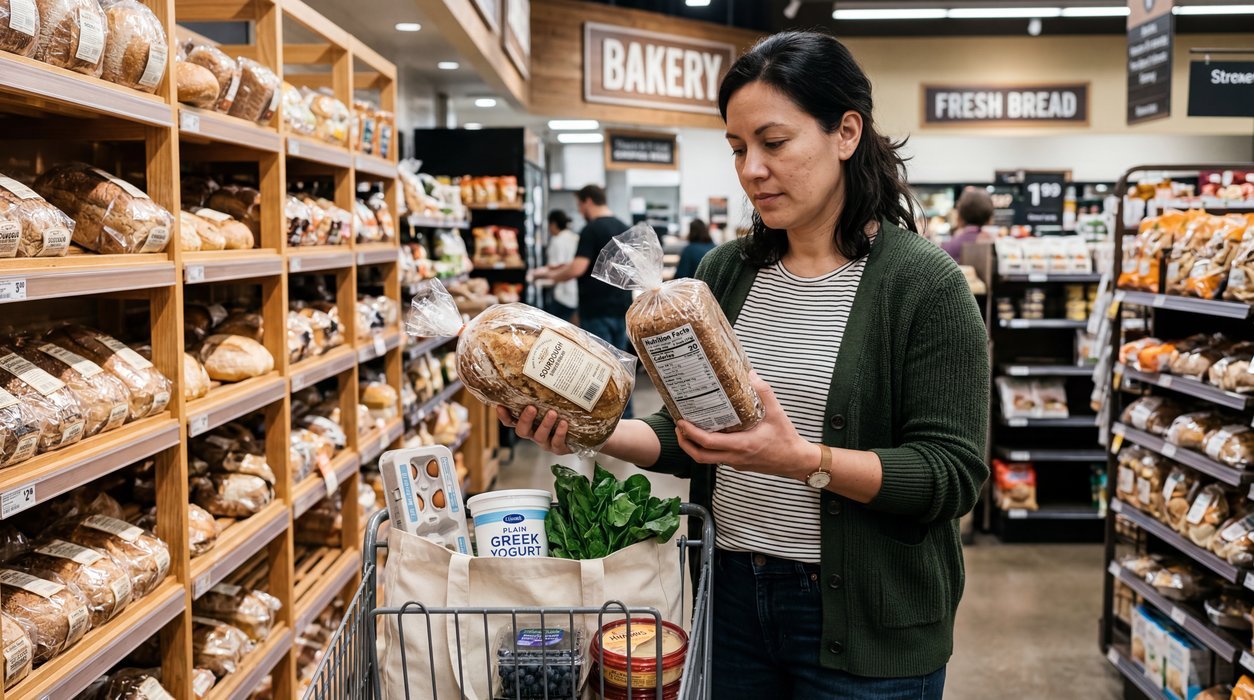
For many adults, one slice is easier to fit into a balanced meal than two large slices. Open-faced toast or half a sandwich with a salad can be a realistic middle ground.
A practical 7-day bread test
Use this simple test for one week to learn how your body responds. It is not a medical test, but it can make patterns easier to notice.
- Pick two breads: Choose one high-fiber whole wheat bread and one true sourdough, ideally whole grain sourdough.
- Keep portions similar: Compare one slice with one slice, not one small slice with a large roll.
- Use the same meal structure: Pair each bread with similar protein, fat, and fiber.
- Track how you feel: Notice hunger, cravings, energy, and focus 2–3 hours later.
- Check glucose if available: If you use a meter or CGM, compare patterns without overreacting to one reading.
Early signs often include steadier energy, longer fullness, or fewer mid-morning cravings. Lab markers such as fasting glucose or A1C usually need several weeks to months of broader consistency before trends are clearer.
When shopping, a low-glycemic grocery list can make better bread choices easier because it keeps the whole meal built around protein, fiber, vegetables, and minimally processed fats.
The goal is not to fear bread. The goal is to make bread work better inside a meal that supports steadier blood sugar and satisfaction.
Conclusion
Sourdough can be better for blood sugar than whole wheat in some situations, but the strongest answer is more specific. Choose whole grain sourdough when it is truly fermented, fiber-rich, minimally sweetened, and portioned realistically.
If the sourdough is refined and low in fiber, a dense whole wheat or seeded whole grain bread may be the better option. Sourdough blood sugar benefits are most likely when the bread is part of a balanced meal, not eaten alone.
Bread does not need to be perfect to be useful. A calmer approach is to choose better loaves, build steadier meals, and pay attention to the response your body gives back.
Frequently Asked Questions
Is sourdough better for blood sugar than whole wheat?
Sourdough may be better for blood sugar than some whole wheat breads, especially when it is truly fermented and made with whole grain flour. Sourdough blood sugar effects depend on fermentation time, flour type, slice size, fiber, and meal pairing. A whole grain sourdough is often a strong option because it combines fermentation with fiber. A high-fiber whole wheat bread may still be better than a refined white sourdough.
Does sourdough bread have a lower glycemic impact?
Some sourdough breads have a lower glycemic impact than comparable non-sourdough breads, but this is not guaranteed. Traditional fermentation can change acidity and starch digestibility, which may support a slower glucose response. Commercial sourdough-style breads vary widely. The most useful approach is to compare fiber, ingredients, serving size, and personal response.
Is whole wheat sourdough the best bread choice?
Whole wheat sourdough can be one of the better choices for blood sugar balance because it combines whole grain fiber with fermentation. It may also feel more filling than softer refined breads. Still, portion size matters. A large serving of any bread can raise glucose more than expected for some people.
What should I eat with bread to reduce a glucose spike?
Pair bread with protein, healthy fats, and fiber instead of eating it by itself. Examples include eggs with vegetables, hummus with olive oil, avocado with smoked salmon, tofu scramble, or Greek yogurt on the side. These additions do not remove the carbohydrate, but they may slow digestion and support a steadier response. A short walk after eating may also help many people manage post-meal glucose patterns.
Medical Disclaimer: The information provided in this article is for educational purposes only and does not constitute medical advice. Always consult a qualified healthcare provider before making changes to your diet, lifestyle, or treatment plan. TheMetabolicHub.com does not replace professional medical guidance.
References
- Stamataki NS, Yanni AE, Karathanos VT. Bread making technology influences postprandial glucose response: a review of the clinical evidence. Br J Nutr. 2017;117(7):1001-1012. PMID: 28462730
- Maioli M, Pes GM, Sanna M, et al. Sourdough-leavened bread improves postprandial glucose and insulin plasma levels in subjects with impaired glucose tolerance. Acta Diabetol. 2008;45(2):91-96. PMID: 18317680
- Ribet L, et al. Nutritional benefits of sourdoughs: A systematic review. Adv Nutr. 2023. PMID: 36811591
- Hu Y, Ding M, Sampson L, et al. Intake of whole grain foods and risk of type 2 diabetes: results from three prospective cohort studies. BMJ. 2020;370:m2206. PMID: 32641435
- Harvard T.H. Chan School of Public Health. Whole Grains. The Nutrition Source
- Centers for Disease Control and Prevention. Diabetes Meal Planning. CDC
- D’Amico V, et al. Does sourdough bread provide clinically relevant health benefits? Front Nutr. 2023. PMID: 37545587