Oat Milk Blood Sugar: 7 Best Swaps for Steady Energy

A morning latte should not leave someone shaky, hungry, or wondering why their glucose reading looks higher than expected. This may not be random, especially when the drink is mostly oat milk rather than a small splash. The encouraging news: oat milk blood sugar responses are easier to understand once portion, label, and meal context are separated.
Quick Win: For the next 7 days, keep breakfast similar and swap your usual oat milk drink for an unsweetened soy, almond, pea, or dairy option. Notice hunger, energy, cravings, and glucose readings if you monitor them.
Does oat milk blood sugar spike after drinking it?
Oat milk can raise blood sugar more than some lower-carbohydrate dairy alternatives, especially when it is sweetened, used in a large latte, or consumed without protein, fat, or fiber. The effect depends on the brand, serving size, and individual metabolic context.
The practical point is not that oat milk is “bad.” Oat milk blood sugar effects are worth watching when someone has insulin resistance, prediabetes, reactive hunger, or surprising post-drink glucose readings.
A small splash in coffee may be metabolically minor for many adults. A 16-ounce oat milk latte on an empty stomach can be closer to a liquid carbohydrate serving.
For most readers, the useful question is not whether oat milk is allowed, but whether oat milk blood sugar patterns fit their usual portion, timing, and breakfast routine.
Key takeaways
- Oat milk is made from a grain, so it naturally contains carbohydrate from oats.
- Unsweetened almond, soy, pea, or coconut beverages are often lower in carbohydrates, depending on brand.
- Soy and pea milks often provide more protein than oat or almond milk.
- The best choice depends on portion size, added sugar, protein, fortification, and what else is eaten with it.
How dairy alternatives compare for blood sugar
The best dairy alternative for blood sugar is usually unsweetened, moderate or low in carbohydrates, and useful in the meal where it is being used. For a smoothie or breakfast, protein matters more than it does in a small coffee splash.
This is why oat milk blood sugar effects are easiest to interpret when oat milk is compared with the exact unsweetened alternatives someone would realistically use.
| Milk option | Blood sugar consideration | Best use |
|---|---|---|
| Oat milk | Often higher in carbohydrates than unsweetened nut, soy, or pea milks. | Small servings, unsweetened versions, or paired with food. |
| Unsweetened almond milk | Usually low in carbohydrates but also low in protein. | Coffee, cereal topping, or low-carb liquid base. |
| Unsweetened soy milk | Often lower in carbohydrates and higher in protein than many plant milks. | Breakfast, smoothies, or satiety-focused swaps. |
| Unsweetened pea milk | Often higher in protein with relatively low carbohydrates. | Protein-forward smoothies or creamy coffee drinks. |
| Cow’s milk | Contains lactose, a natural milk sugar, plus protein. | Works for some adults, not suitable for dairy intolerance or preference. |
| Coconut milk beverage | Often low in carbohydrates when unsweetened, but usually low in protein. | Coffee or recipes where protein is coming from elsewhere. |
FoodData Central and nutrition research show that plant-based milks can differ widely in carbohydrate, protein, fat, fortification, and added sugars. That is why brand-level label reading is more useful than assuming “plant-based” means glucose-friendly.[1][2]

Why oat milk can affect glucose more than expected
Oat milk starts with oats, and oats are a grain. Grains contain starch, which is eventually broken down into glucose during digestion.
Whole oats also contain beta-glucan fiber and a more intact food structure. Oat milk is different because it is a liquid, usually strained, and often contains much less fiber than a bowl of oats.
Processing changes the food form
Research on oat-based foods suggests that oat starch, beta-glucans, physical form, and processing can influence glycemic response. A liquid oat beverage is not metabolically identical to chewing steel-cut oats or overnight oats.[3]
Liquids can also be consumed quickly. That can matter because a drink may deliver carbohydrates without the same fullness signals as a balanced meal.
Barista versions may be more concentrated
Many café-style oat milks are designed to foam well and taste creamy. Some include oils, added sugars, or a higher concentration of oat base.
That does not make them harmful by default. It means they should be treated like a meaningful ingredient, not a neutral splash.
Sweetened versions change the equation
Unsweetened oat milk may still contain carbohydrates from oats. Sweetened, vanilla, or flavored versions can add sugar on top of that base.
The FDA requires added sugars to appear on the Nutrition Facts label, which can help shoppers compare products more accurately.[4]
One thing worth pushing back on here: the goal is not to fear every glucose rise. Blood sugar naturally rises after carbohydrate-containing foods or drinks. The practical question is whether a daily habit is creating bigger or faster swings than someone realizes.
What to check on the label
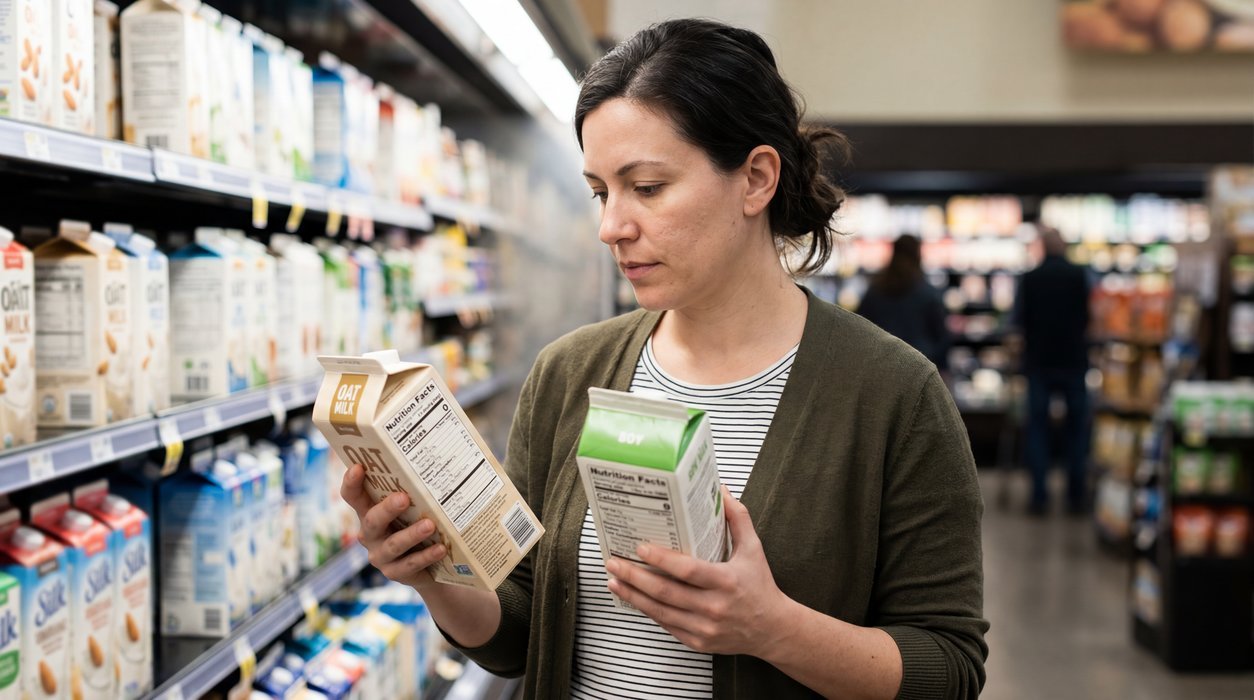
The front of the carton can be misleading. Words like “original,” “barista,” “creamy,” “vanilla,” and “plant-based” do not tell the full story.
Start with serving size, then check total carbohydrate, added sugar, protein, and fortification. These details explain more than the marketing language.
Total carbohydrate
Total carbohydrate is the first line to check when evaluating oat milk blood sugar effects. A large latte may use more than one cup, so the listed serving size can underestimate the real drink.
For oat milk blood sugar tracking, the serving size line matters because café drinks often contain more milk than a person would pour at home.
If glucose readings are confusing, it can help to compare them with a general guide to post-meal glucose spikes. That gives the oat milk response a more useful context.
Added sugar
Added sugar matters most in flavored or café-style products. It can also show up in bottled coffee drinks, matcha drinks, smoothies, and “original” varieties.
A product can be dairy-free and still be a higher-sugar drink. This is not a personal failure; it is often a labeling and portion-size issue.
Protein
Protein supports fullness and may make breakfast feel steadier. Higher-protein dietary patterns have been studied for appetite control and weight-management mechanisms.[5]
Soy and pea-based milks often provide more protein than oat, almond, rice, or coconut beverages. The exact amount still depends on the brand.
Which milk alternative fits which situation?
Use oat milk if you enjoy it, tolerate it well, keep the portion modest, and pair it with a protein-forward meal.
Use unsweetened soy or pea milk if you want more protein in a smoothie, cereal bowl, or breakfast drink.
Use unsweetened almond or coconut beverage if your main goal is a low-carbohydrate coffee splash and protein is coming from food.
For metabolic health, the drink is only one piece of the meal. A lower-carb milk with a low-protein breakfast may still leave someone hungry too soon.
A more useful upgrade is pairing the drink with a steadier blood sugar breakfast. That usually means protein, fiber-rich plants, and a carbohydrate portion that fits the person’s needs.
How to test oat milk blood sugar patterns
The simplest approach is to test one variable at a time for 7 days. Keep the rest of breakfast as consistent as possible.
A simple oat milk blood sugar test works best when only one variable changes at a time, such as the milk type or the portion size.
- Day 1: Write down the exact drink, milk type, and estimated amount.
- Day 2: Check total carbohydrate, added sugar, protein, and serving size.
- Day 3: Try the same drink with an unsweetened lower-carbohydrate option.
- Day 4: Pair the drink with a clear protein source at breakfast.
- Day 5: Reduce the oat milk portion instead of removing it fully.
- Day 6: Try oat milk after food instead of on an empty stomach.
- Day 7: Choose the option that best supports taste, energy, hunger, and practicality.
Many people first notice fewer mid-morning cravings, steadier focus, or less urgent hunger. People using a continuous glucose monitor may also compare similar mornings with different milk choices.
Finger-stick testing should follow clinician guidance, especially for anyone using glucose-lowering medication. If readings are consistently high or symptoms feel concerning, a qualified healthcare professional should guide next steps.
Frequently asked questions
Is oat milk bad for blood sugar?
Oat milk is not automatically bad for blood sugar, but oat milk blood sugar responses can be higher than expected because oat milk contains carbohydrates from oats. The effect depends on the brand, portion size, added sugar, and what else is consumed with it. Unsweetened versions and smaller portions may work better for some adults. People managing diabetes, prediabetes, or medication-related glucose concerns should follow individualized medical guidance.
Is oat milk worse than almond milk for glucose?
Oat milk is often higher in carbohydrates than unsweetened almond milk, so it may raise glucose more for some people. Almond milk is usually lower in carbohydrates, but it is also typically low in protein. For satiety, unsweetened soy or pea milk may be more useful than almond milk in smoothies or breakfast meals. The best choice depends on the label and the full meal.
Can people with prediabetes drink oat milk?
Some people with prediabetes can include oat milk in modest portions, especially when it is unsweetened and paired with a balanced meal. Others may notice higher glucose readings or stronger hunger when they drink it alone. Testing personal tolerance is more useful than following a blanket rule. A registered dietitian or clinician can help personalize choices.
What milk alternative is best for blood sugar balance?
Unsweetened soy milk, unsweetened pea milk, and unsweetened almond milk are common options to consider. Soy and pea milks often provide more protein, while almond milk is usually lower in carbohydrates but less filling. The best option is unsweetened, tolerated well, and matched to the meal. Fortification with calcium and vitamin D may also matter for long-term nutrition.
Conclusion
Oat milk can fit into a healthy routine, but it is not automatically the most blood-sugar-friendly dairy alternative. Portion size, added sugar, total carbohydrate, protein, and meal context matter most.
For anyone noticing oat milk blood sugar changes, the next step is simple: compare the usual drink with an unsweetened lower-carbohydrate option for several similar mornings. Keep breakfast steady and let energy, hunger, and glucose data guide the decision.
The goal is not perfection. It is a morning routine that feels satisfying, supports steadier energy, and fits real life.
Medical Disclaimer: The information provided in this article is for educational purposes only and does not constitute medical advice. Always consult a qualified healthcare provider before making changes to your diet, lifestyle, or treatment plan. TheMetabolicHub.com does not replace professional medical guidance.
References
- U.S. Department of Agriculture, Agricultural Research Service. FoodData Central. USDA FoodData Central
- Drewnowski A. Most Plant-Based Milk Alternatives in the USDA Branded Food Products Database Do Not Meet Proposed Nutrient Standards or Score Well on Nutrient Density Metrics. Nutrients. 2022;14(22):4767. PMID: 36432454
- Zhang K, Dong R, Hu X, Ren C, Li Y. Oat-Based Foods: Chemical Constituents, Glycemic Index, and the Effect of Processing. Foods. 2021;10(6):1304. PMID: 34200160
- U.S. Food and Drug Administration. Added Sugars on the Nutrition Facts Label. FDA
- Leidy HJ, Clifton PM, Astrup A, et al. The role of protein in weight loss and maintenance. Am J Clin Nutr. 2015;101(6):1320S-1329S. PMID: 25926512
- American Diabetes Association. Nutrition and Diabetes. American Diabetes Association
- Harvard T.H. Chan School of Public Health. Carbohydrates and Blood Sugar. The Nutrition Source
- Cooper H, Gulati S. Plant-Based Milks: Oat. University of Florida IFAS Extension. UF/IFAS Extension