10 Balanced Desserts That Are Less Likely to Spike Blood Sugar

Dessert can feel like a test you either pass by refusing or fail by enjoying. That all-or-nothing framing ignores what usually matters most: the dessert’s carbohydrate amount, portion, ingredients, meal context, and your individual glucose response.
Blood sugar friendly desserts are not guaranteed to produce a flat glucose line, and they do not need to be sugar-free. A smaller portion that includes protein, fiber, or unsaturated fat may be easier to fit into a balanced meal than a large, refined-carbohydrate dessert eaten alone.
Quick Win: Enjoy dessert after a balanced meal rather than on an empty stomach, and serve one portion before putting the rest away.
What Makes Blood Sugar Friendly Desserts More Balanced?
Carbohydrate-containing foods raise blood glucose, but the response differs by amount, food structure, other nutrients, medication, activity, and individual physiology. The American Diabetes Association emphasizes individualized eating patterns rather than one perfect diet for everyone.[1], [2]
For dessert, “balanced” usually means a moderate carbohydrate portion with an ingredient that adds protein, fiber, or unsaturated fat. Examples include plain yogurt, nuts, seeds, fruit, tofu, beans, or whole-grain ingredients.
Adding protein to carbohydrate can change acute glucose and insulin responses, but effects vary by protein type and health status. A 2024 systematic review supports a real physiological effect while also highlighting uncertainty and differences among groups.[3]
Fat and protein can also delay glucose rises in some mixed meals, particularly for people using insulin. “Lower at one hour” does not always mean “lower overall,” so insulin dosing should never be changed from a dessert article.[2]
| Element | Examples | Why it helps the plan |
|---|---|---|
| Defined portion | One ramekin, one square, one small bowl | Makes the carbohydrate amount more predictable |
| Protein source | Plain yogurt, cottage cheese, tofu, milk, soy milk | Adds satisfaction and changes the mixed-meal response |
| Fiber-rich ingredient | Berries, pear, chia, oats, beans | Adds texture, volume, and a less refined carbohydrate source |
| Flavor without excess sweetness | Cocoa, cinnamon, vanilla, citrus zest | Builds flavor without relying only on added sugar |
One thing worth pushing back on here: “natural sugar” is still carbohydrate, while “sugar-free” does not automatically mean balanced. Dates, honey, maple syrup, and fruit concentrates can raise glucose, and some sugar-free products remain highly refined or easy to overeat.
10 Balanced Desserts to Try
These are flexible ideas rather than medical meal plans. Portions, ingredients, and tolerance vary, especially for anyone using insulin or medicines that can cause hypoglycemia.
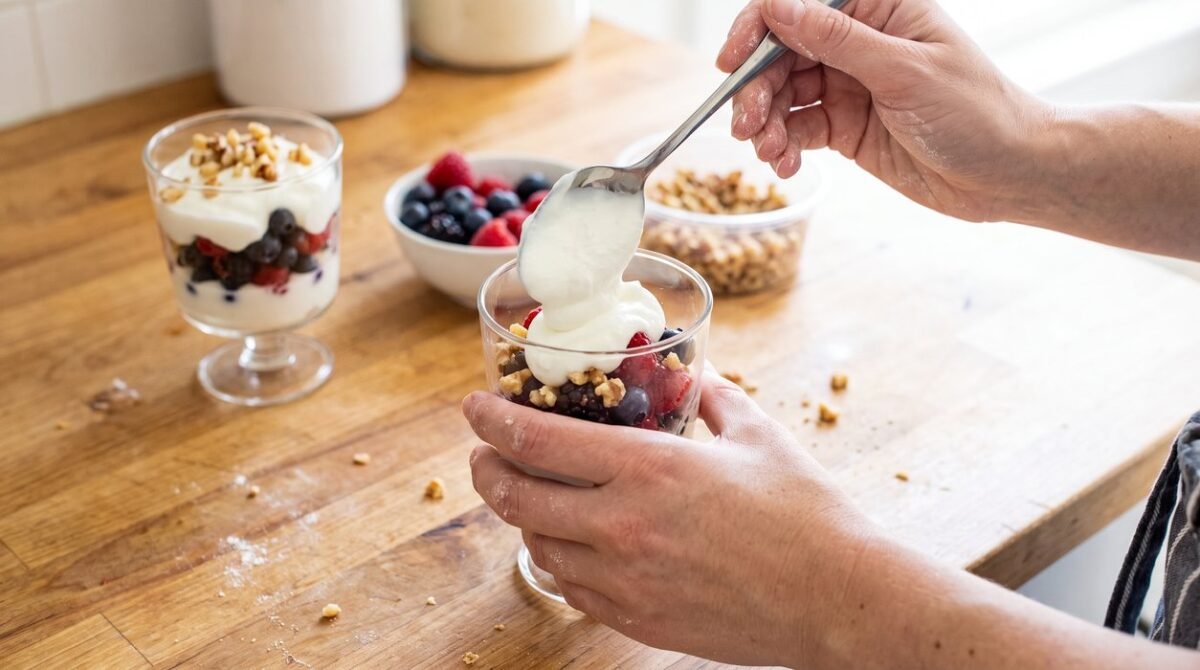
1. Berry Greek-yogurt crunch
Spoon plain Greek-style yogurt into a small bowl and top it with berries, chopped walnuts, and cinnamon. If you prefer sweetness, add a small amount and taste before adding more.
The yogurt provides protein, while berries and walnuts add texture and help the portion feel complete. Unsweetened fortified soy yogurt can work as a plant-based alternative.
2. Cocoa chia pudding
Mix chia seeds with milk or unsweetened soy milk, cocoa, vanilla, and your preferred small amount of sweetener. Refrigerate until thick, then serve in a ramekin with a few raspberries.
Chia creates a fiber-rich texture, but large amounts can cause digestive discomfort if your usual fiber intake is low. Start with a comfortable portion and drink normally through the day.
3. Baked pear with cottage-cheese cream
Bake half a pear with cinnamon until tender. Serve it with cottage cheese blended with vanilla, or use thick soy yogurt for a dairy-free version.
This keeps the fruit recognizable rather than turning it into juice or syrup. The creamy topping adds protein and makes a smaller fruit portion feel more dessert-like.
4. Dark-chocolate almond clusters
Melt dark chocolate and spoon a thin coating over small clusters of roasted almonds. Chill until firm and portion the batch into one- or two-cluster servings.
Nuts add texture and unsaturated fat, but they also make the dessert energy-dense. Pre-portioning is more useful than assuming dark chocolate has no effect on glucose.
5. Frozen yogurt bark with berries
Spread plain Greek-style or fortified soy yogurt on a lined tray, scatter berries and pistachios over it, then freeze. Break the bark into modest pieces and store them in a covered container.
Choose yogurt with enough body to freeze well and check added sugar on flavored versions. Let a piece soften briefly so it is easier on sensitive teeth.
6. Apple-oat crumble ramekin
Fill a small ramekin with chopped apple and cinnamon, then add a thin topping of oats, chopped pecans, and a little oil or butter. Bake until the fruit is soft and the topping is crisp.
A single-serve ramekin sets a natural boundary. Pair it with plain yogurt if you want more protein rather than doubling the crumble topping.
7. Chocolate tofu mousse
Blend silken tofu with cocoa, vanilla, a pinch of salt, and a modest amount of sweetener until smooth. Chill it and top with sliced strawberries or cacao nibs.
Tofu creates a creamy dessert with meaningful plant protein. Use pasteurized, refrigerated tofu as directed and keep the finished mousse cold.
8. Peanut-butter banana bites
Slice a small banana, spread a thin layer of unsweetened peanut butter between pairs of slices, and freeze. A light drizzle of dark chocolate can add contrast without coating every surface.
Banana still contributes carbohydrate, so portion size matters. The peanut butter adds flavor and texture; it does not cancel the banana’s glucose effect.
9. Ricotta citrus cup
Stir ricotta with lemon or orange zest, vanilla, and a small amount of sweetener. Serve it in a small cup with a few berries and chopped pistachios.
This option feels rich because of its creamy texture and aromatic zest. Choose pasteurized ricotta and keep it refrigerated.
10. Black-bean brownie square
Use a tested black-bean brownie recipe that lists the complete nutrition information, then cut the pan into defined squares. Beans can add fiber and moisture, but the finished brownie may still contain substantial carbohydrate and added sugar.
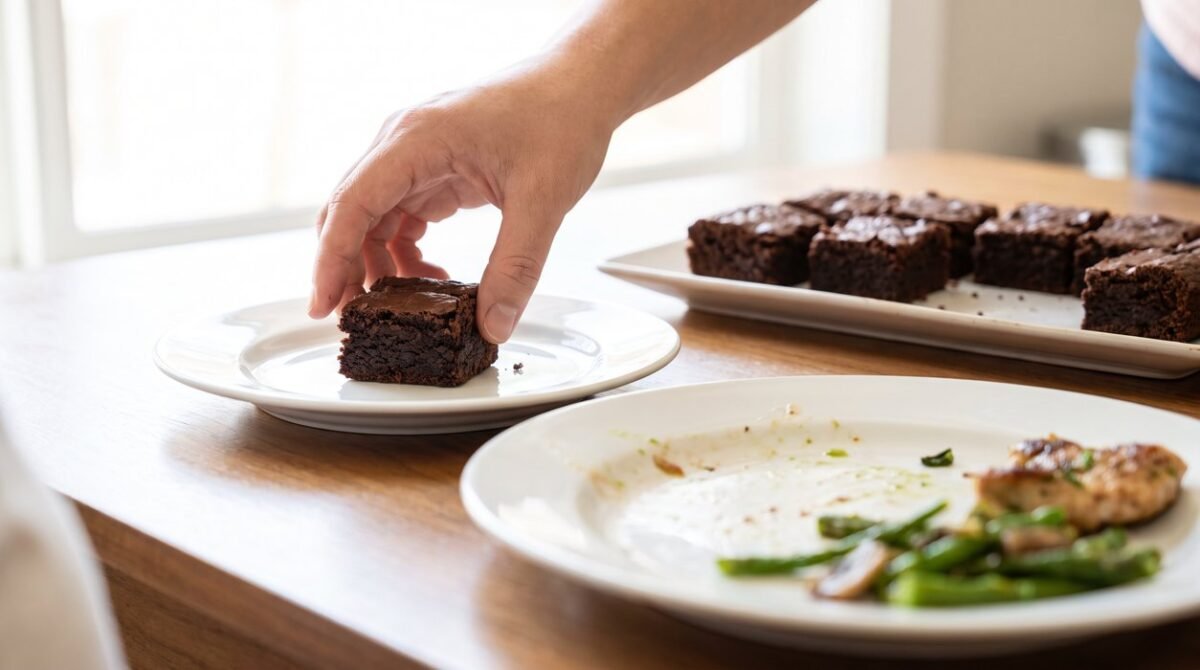
Do not rely on the hidden-bean label as permission for unlimited portions. Serve one square after a meal and evaluate the actual recipe, not its health halo.
Portion, Timing, and Individual Response
A dessert eaten after a meal containing vegetables and protein may produce a different acute response than the same dessert eaten alone. Small crossover studies in prediabetes and type 2 diabetes found lower early post-meal glucose when vegetables and protein came before carbohydrate, although these controlled meals were not dessert trials.[4]
This does not mean you need to wait a precise number of minutes. It supports a simpler habit: treat dessert as part of a meal rather than a separate, unplanned carbohydrate event.
- Serve one portion. Use a bowl, ramekin, or plate instead of eating from the pan or package.
- Keep the meal balanced. The ADA plate framework emphasizes non-starchy vegetables, protein, and quality carbohydrate at meals.[1]
- Eat slowly enough to notice satisfaction. Dessert does not need to disappear before you register its taste.
- Use your own data appropriately. If your clinician recommends glucose monitoring, compare similar portions and contexts rather than testing random foods obsessively.
If you use insulin, high-fat or high-protein desserts can cause a delayed glucose rise. Work with your diabetes team on dosing and monitoring; do not improvise a split dose based on a recipe list.[2]
Ingredients and Labels to Watch
Added sugars can appear as cane sugar, syrups, honey, agave, fruit-juice concentrate, and other names. The total carbohydrate line is usually more useful for glucose planning than focusing on one sweetener name.
Sugar alcohols and non-nutritive sweeteners affect people differently. Some products can cause bloating or diarrhea, and “no added sugar” does not mean carbohydrate-free.
If your main goal is a recipe collection with no added sugar, the existing guide to sugar-free dessert recipes offers a narrower approach. For between-meal options, use the formula for blood sugar-stabilizing snacks instead of automatically treating dessert as a snack.
Frequently Asked Questions
What are the best blood sugar friendly desserts?
The best choice is one with a defined portion, enjoyable flavor, and ingredients that fit your health needs and meal plan. Yogurt with berries and nuts, chia pudding, baked fruit with a protein-rich topping, or tofu mousse are useful starting points.
Is fruit too high in sugar for dessert?
Whole fruit can fit into many diabetes and prediabetes eating patterns. Portion, type, preparation, medication, and individual response matter; fruit juice and concentrated dried fruit are easier to consume in larger carbohydrate amounts.
Does adding nuts prevent a glucose spike?
No. Nuts add fat, fiber, texture, and some protein, but they do not erase the carbohydrate in a dessert. They may change the mixed-meal response and satisfaction, while portion still matters.
Can I eat dessert if I have prediabetes?
Many people with prediabetes can include dessert within an individualized eating pattern. Discuss frequency, portion, and monitoring with a registered dietitian or clinician if your results are rising or you are unsure how dessert fits.
Conclusion
Dessert does not need a moral label. A defined portion, balanced ingredients, and a sensible meal context can make it more predictable and satisfying without promising a perfectly flat glucose response.
Choose one idea you genuinely enjoy, prepare it in single portions, and notice how it fits your appetite and care plan. Consistency and individual context matter more than calling one ingredient “good” or “bad.”
Medical Disclaimer: This article is for educational purposes only and is not a substitute for individualized medical advice, diagnosis, or treatment. Speak with a qualified healthcare professional if you have a medical condition, take medication, are pregnant, or have persistent or concerning symptoms. Seek urgent medical care for severe or rapidly worsening symptoms.
References
- American Diabetes Association. Meal Planning and the Diabetes Plate. ADA meal-planning guidance
- Evert AB et al. Nutrition Therapy for Adults With Diabetes or Prediabetes: A Consensus Report. Diabetes Care. 2019. ADA consensus report
- Wolever TMS et al. The Effect of Adding Protein to a Carbohydrate Meal on Postprandial Glucose and Insulin Responses: A Systematic Review and Meta-Analysis of Acute Controlled Feeding Trials. The Journal of Nutrition. 2024. PMID: 39019167
- Shukla AP et al. The impact of food order on postprandial glycemic excursions in prediabetes. Diabetes, Obesity and Metabolism. 2019. Full text at PubMed Central