15 Portable Breakfasts for Women Who Never Have Time
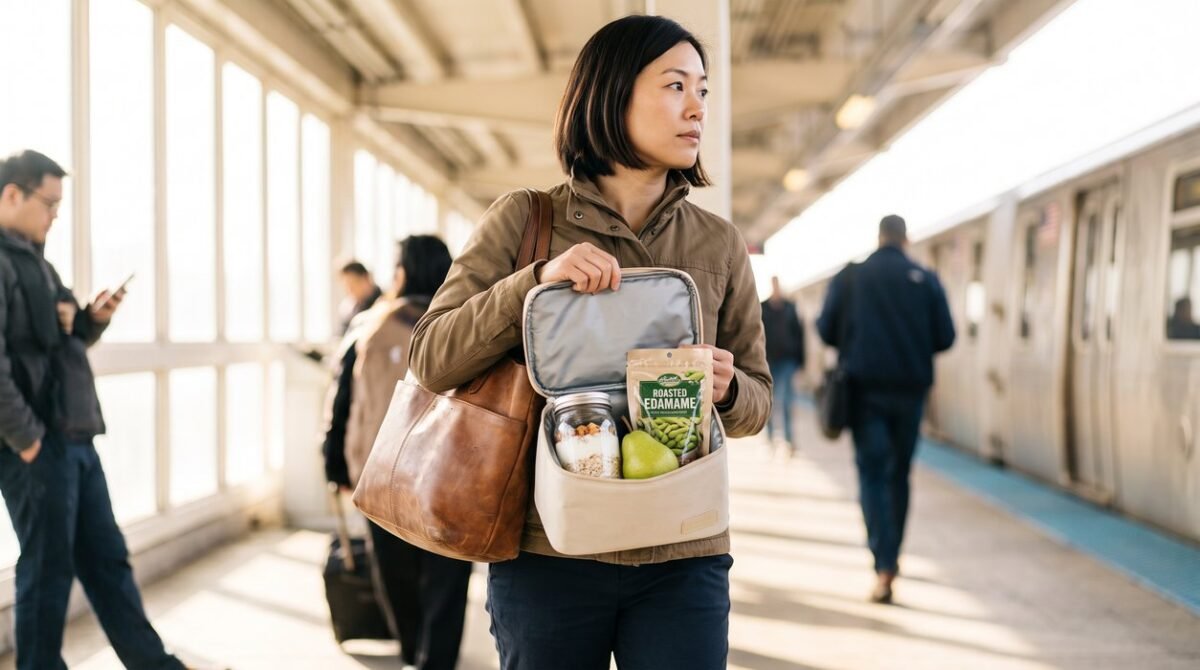
The morning can disappear between getting dressed, helping someone else, commuting, and opening the first message of the day. Breakfast often loses not because you do not care, but because the food was never designed to leave the house.
A portable high protein breakfast solves the logistics first: it is ready before you are hungry, easy to carry, and built around a recognizable protein source. Add fiber-rich carbohydrate, produce, or healthy fat when it improves satisfaction and fits your needs.
Quick Win: Pick one cold breakfast and one shelf-stable backup from this list. Prepare the cold option tonight and place the backup in your work bag, so tomorrow morning does not depend on motivation.
How to build a portable high protein breakfast
There is no universal gram target that makes breakfast “high protein” for every adult. Body size, age, activity, pregnancy, health conditions, total daily intake, and the rest of your meals all change what is appropriate.
Use the nutrition label when a precise amount matters, and compare realistic portions rather than marketing claims. The current Dietary Guidelines emphasize nutrient-dense foods, while USDA MyPlate includes eggs, seafood, poultry, beans, lentils, nuts, seeds, and soy among varied protein choices.[1], [2]
| Part | Examples | Portable role |
|---|---|---|
| Protein anchor | Greek yogurt, cottage cheese, eggs, tofu, tempeh, tuna, chicken, beans, or soy milk | Makes protein intentional rather than incidental |
| Fiber or produce | Whole fruit, oats, whole-grain wrap, beans, vegetables, or seeds | Adds texture, nutrients, and staying power |
| Transport plan | Insulated jar, leakproof box, wrap, thermos, or shelf-stable pack | Determines whether the meal survives the commute |
Protein can increase short-term fullness on average, but the response is not guaranteed. A meta-analysis in healthy adults found modest appetite effects, while a small crossover breakfast trial found that raising protein or fiber did not change appetite or lunch intake.[4], [5]
That mixed evidence is useful: build breakfast for nourishment and convenience, then notice your own hunger, energy, and comfort. Do not treat a protein number as proof that a meal must keep you full for a certain number of hours.
15 portable breakfasts for rushed mornings
1. Greek yogurt, berries, and roasted edamame
Pack plain Greek yogurt and berries in a leakproof jar, with dry-roasted edamame in a separate pouch for crunch. Choose lactose-free yogurt if needed, and keep the yogurt cold.
2. Cottage cheese, pear, and seeded crackers
Use a divided container so the crackers stay crisp. Cinnamon can add flavor without turning the meal into dessert, while the pear travels better whole and can be sliced when you eat.
3. Egg and white-bean breakfast wrap
Fill a whole-grain wrap with cooked egg, mashed white beans, spinach, and salsa drained of excess liquid. Wrap tightly, chill overnight, and carry in an insulated bag.
4. Tofu scramble pocket
Spoon cooked tofu scramble with peppers into a whole-grain pita. Let the filling cool before packing so steam does not make the bread soggy, then refrigerate promptly.
5. Overnight oats with yogurt
Combine oats, plain Greek or soy yogurt, milk, chia seeds, and frozen berries in a jar. The yogurt is the protein anchor; the oats and berries supply carbohydrate and fiber.
6. Mini frittatas and an orange
Bake eggs with chopped vegetables in a muffin pan, cool them, and refrigerate. Pack two or an amount that fits your needs with a whole orange and a few whole-grain crackers.
7. Turkey, cheese, and apple roll-ups
Roll lower-sodium turkey around cheese and pack with apple slices or a whole apple. Processed meat is best treated as a convenience option rather than the only protein you use every morning.
8. Tempeh breakfast sandwich
Layer cooked tempeh, tomato, and greens on a whole-grain English muffin. Mustard or a thick yogurt-based spread travels more cleanly than a runny sauce.
9. Tuna and chickpea pita
Mix tuna with mashed chickpeas, lemon, pepper, and a small amount of yogurt or olive-oil dressing. Stuff the mixture into a pita just before leaving and keep it cold.
10. Kefir smoothie in an insulated bottle
Blend plain kefir with berries, oats, and nut or seed butter. Use an insulated bottle, keep it chilled, and shake before drinking because separation is normal.
11. Peanut butter banana sandwich with milk
Spread peanut or sunflower-seed butter on whole-grain bread and add banana shortly before leaving. Pair it with a refrigerated or shelf-stable single-serving milk or fortified soy beverage for a stronger protein anchor.
12. Savory yogurt cucumber jar
Layer thick plain yogurt with cucumber, herbs, black pepper, and chickpeas, then pack whole-grain flatbread separately. This option borrows from savory breakfast ideas without requiring morning cooking.
13. Salmon and egg snack box
Pack a hard-cooked egg, a small portion of cooked or smoked salmon, cucumber, and rye crispbread. Keep the entire box cold and check sodium if that is relevant to your care plan.
14. Lentil breakfast thermos
Reheat lentil soup or dal until steaming and transfer it to a preheated insulated food container. A savory leftover can be breakfast even if it does not resemble traditional breakfast food.
15. Shelf-stable emergency trio
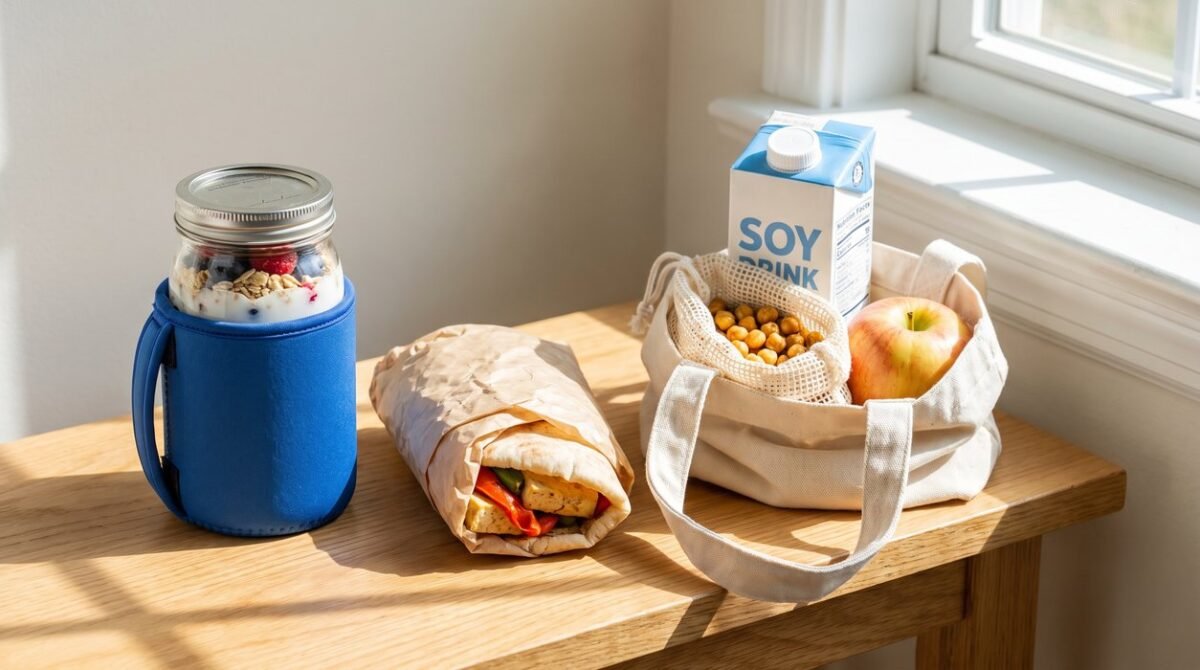
Keep an unopened shelf-stable milk or soy drink, dry-roasted chickpeas, and a sturdy whole fruit available. Check the package directions, because shelf-stable before opening does not mean it can stay unrefrigerated afterward.
Meal-Ideas Box: Pick one jar, one wrap, one snack box, and one shelf-stable backup. Rotating four formats is often easier than preparing fifteen different recipes.
If you need more ways to strengthen a meal you already enjoy, the guide to adding more protein to breakfast offers upgrades without changing the entire format.
Choose the format that matches your morning
Convenience is personal. A jar works on a train when you can sit, a wrap works between appointments, and a thermos works when you have a brief break but no refrigerator.
- No time to eat before leaving: choose a wrap, sandwich, or sealed smoothie.
- No refrigerator at work: use an insulated bag with cold sources or select an unopened shelf-stable combination.
- Breakfast happens in two stages: eat the yogurt or sandwich first and save fruit or roasted legumes for later.
- Morning appetite is small: pack a compact portion and a planned second component rather than forcing a large meal.
- You prefer savory food: use the tofu pocket, lentil thermos, tuna pita, or savory yogurt jar.
This is not a personal failure if you cannot sit down to a styled breakfast every day. The useful plan is the one that respects your actual commute, appetite, budget, culture, and access to cold storage.
Keep portable breakfast food safe
Perishable food needs a temperature plan. USDA advises keeping refrigerated items cold and not leaving them at room temperature for more than two hours, or one hour when the temperature is above 90°F (32.2°C).[3]
For a bag without reliable refrigeration, USDA recommends an insulated container and at least two cold sources around perishable food. A workplace refrigerator is useful, but the commute still counts.[3]
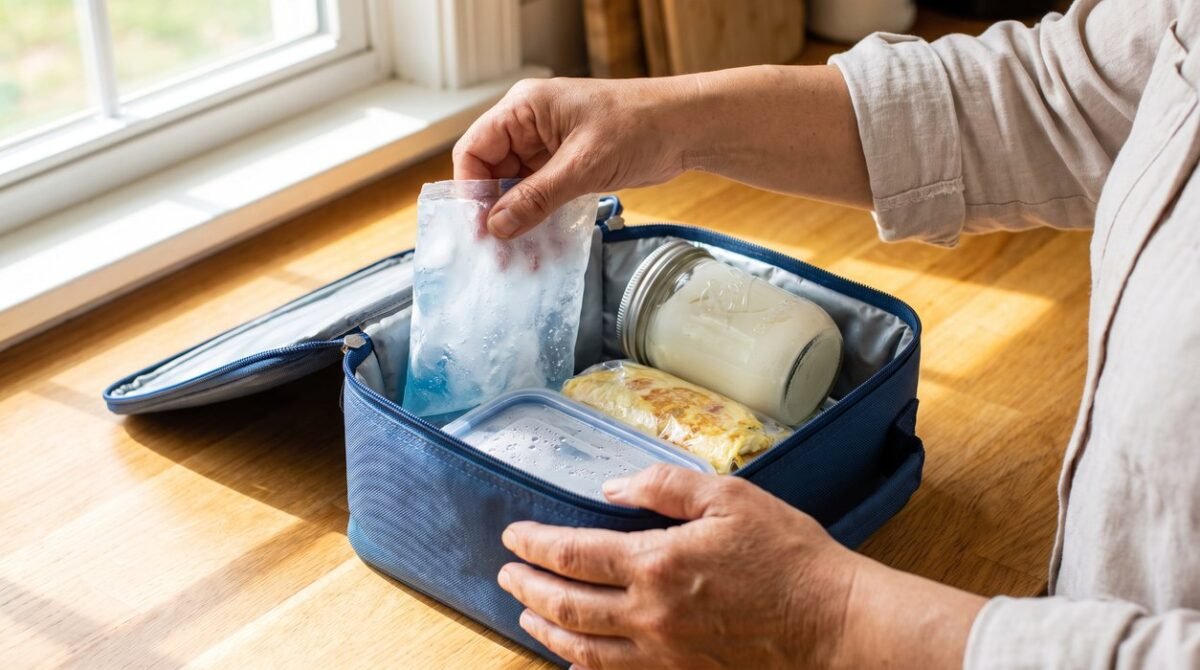
- Chill cooked food before packing rather than placing it warm beside cold items.
- Use leakproof containers and wash hands, utensils, and surfaces before assembly.
- Keep cold food at 40°F (4.4°C) or below when possible.
- Follow package instructions after opening shelf-stable milk, fish, or other products.
- When safety is uncertain, discard the food instead of relying on smell or appearance.
A low-effort shopping and prep plan
Buy two protein anchors, two produce options, two portable carbohydrates, and the containers needed to carry them. That small matrix creates several breakfasts without a complicated recipe schedule.
- Cook one batch item, such as frittatas, tofu scramble, or lentils.
- Assemble two jars or wraps for the next forty-eight hours.
- Place shelf-stable backups where you will actually need them.
- Freeze cold packs immediately after unpacking the groceries.
- Restock based on what you ate, not what looked ambitious on Sunday.
A scoping review found that adult research on breakfast protein and muscle outcomes remains limited and inconsistent.[6] This supports a practical approach: distribute protein in a way you can repeat, without claiming that breakfast timing alone guarantees a body-composition result.
What to avoid when convenience takes over
Avoid choosing solely by a large “protein” claim on the front of a package. Check the serving size, protein, fiber, added sugars, saturated fat, and sodium in the context of your overall diet and medical needs.
- Do not let a protein bar become the automatic answer every day if ordinary food is available and enjoyable.
- Do not pack perishable dairy, eggs, fish, poultry, tofu, or cooked leftovers without reliable temperature control.
- Do not force breakfast if eating early worsens nausea or conflicts with individualized medical instructions.
- Do not assume more protein is always better, especially with kidney disease or a clinician-directed protein limit.
- Do not turn a rushed morning into a moral judgment; solve the container, timing, and shopping problem instead.
Frequently Asked Questions
What is the easiest portable high protein breakfast?
The easiest option is one you can buy repeatedly, pack in under two minutes, and store safely. Greek yogurt with fruit, a nut-butter sandwich plus milk, or a shelf-stable milk with roasted chickpeas are useful starting formats.
How much protein should breakfast contain?
There is no single breakfast target for everyone. Consider your total daily needs, body size, age, activity, health conditions, and the amounts you eat at other meals; a dietitian can personalize this when needed.
Can a portable breakfast be dairy-free?
Yes. Tofu, tempeh, beans, lentils, nut or seed butter, roasted edamame, and fortified soy beverages can build dairy-free options. Check labels because plant-based products vary widely in protein and fortification.
Will a high-protein breakfast prevent a blood sugar spike?
No breakfast can guarantee a specific glucose response. Protein, fiber, carbohydrate type, portion, sleep, activity, medicines, and individual physiology can all matter, so use clinician-guided monitoring when medically appropriate.
Conclusion
A useful portable breakfast begins with a protein anchor and a transport plan, then adds the foods that make it satisfying for you. You do not need a perfect recipe or a leisurely morning.
Choose one cold option, one shelf-stable backup, and the right container tonight. That small preparation step can turn breakfast from another rushed decision into food that is already ready to move with you.
Medical Disclaimer: This article is for general educational purposes only and is not a substitute for personalized medical advice, diagnosis, or treatment. Speak with a qualified healthcare professional if you have symptoms, take medication, are pregnant or breastfeeding, or are considering major changes to your diet, supplements, or treatment plan.
References
- U.S. Department of Health and Human Services and U.S. Department of Agriculture. Dietary Guidelines for Americans, 2025–2030. Current Dietary Guidelines.
- U.S. Department of Agriculture. MyPlate Protein Foods Group. USDA MyPlate protein foods.
- U.S. Department of Agriculture Food Safety and Inspection Service. Keeping “Bag” Lunches Safe. USDA FSIS food-safety guidance.
- Kohanmoo A, Faghih S, Akhlaghi M. Effect of short- and long-term protein consumption on appetite and appetite-regulating gastrointestinal hormones: a systematic review and meta-analysis of randomized controlled trials. Physiology & Behavior. 2020;226:113123. PMID: 32768415.
- Sayer RD, et al. Effects of Dietary Protein and Fiber at Breakfast on Appetite, Ad Libitum Energy Intake at Lunch, and Neural Responses to Visual Food Stimuli in Overweight Adults. Nutrients. 2016;8(1):21. PMID: 26742068.
- Khaing IK, et al. Effect of breakfast protein intake on muscle mass and strength in adults: a scoping review. Nutrition Reviews. 2025;83(1):175-199. PMID: 38219154.