PCOS Nutrition Without the Hype: What May Help and What to Question

Search for PCOS nutrition and you may be told to quit gluten, dairy, sugar, fruit, seed oils, caffeine, and nearly every carbohydrate—then buy a shelf of powders to “balance your hormones.” That is not what current evidence-based guidance requires. PCOS is a complex endocrine and metabolic condition, and no single food caused it. No single diet cures it.
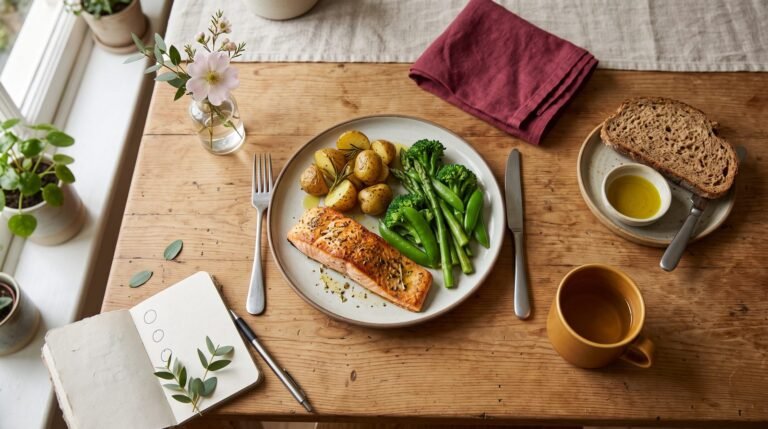
Quick win: build one repeatable meal with a protein source, a high-fiber carbohydrate, colorful plants, and a satisfying fat or flavor. That combination is not a special PCOS formula. It is a flexible way to support fullness, nutrient intake, and steadier energy without turning food into a test of discipline.
What current PCOS guidance actually says
The 2023 International Evidence-based Guideline for PCOS recommends healthy eating and physical activity for all women with PCOS to support general health, quality of life, body composition, and metabolic health. It also says there is no evidence that one diet composition is superior to another for PCOS outcomes. Dietary changes should be sustainable, nutritionally adequate, and tailored to preferences, goals, culture, and other health needs.
That distinction matters. “Lifestyle is recommended” does not mean “follow the strictest plan you can tolerate.” It means everyday behaviors can be part of care, alongside appropriate screening, medication, fertility treatment, mental-health support, sleep care, and other individualized treatment.
PCOS also looks different from person to person. Some people have insulin resistance, higher glucose, or abnormal lipids; others do not. Symptoms may include irregular ovulation or periods, acne, excess facial or body hair, scalp hair thinning, and difficulty becoming pregnant, but none of these can be diagnosed from social-media checklists. In 2026, some international materials began using the name polyendocrine metabolic ovarian syndrome, or PMOS; PCOS remains the widely recognized term and the 2023 guideline’s terminology.
A practical PCOS food framework
A useful eating pattern should be flexible enough for breakfast at home, lunch at work, dinner with family, and a week when energy is low. Start with four parts rather than a list of forbidden foods:
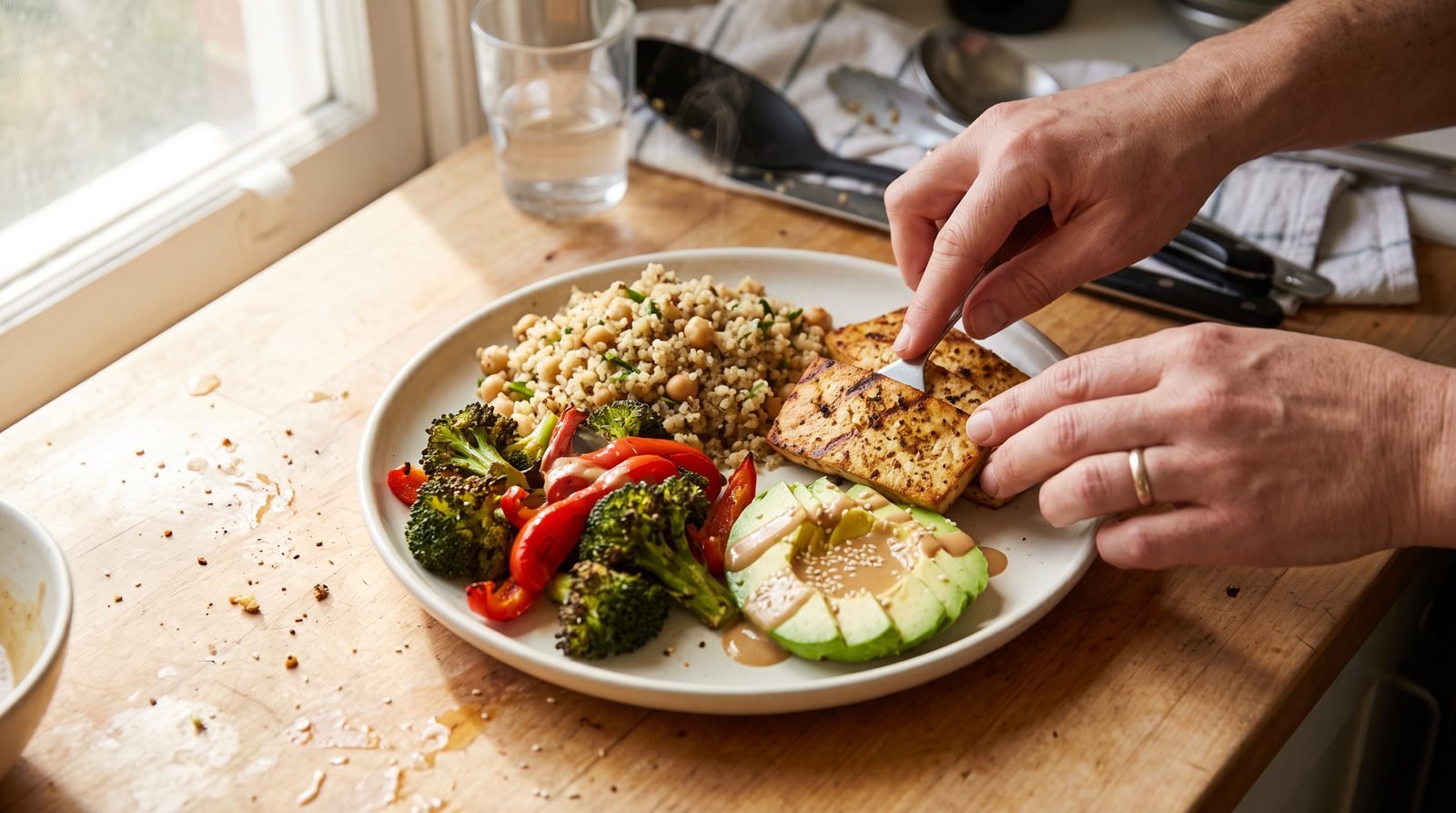
- Protein: eggs, fish, poultry, Greek yogurt, cottage cheese, tofu, tempeh, edamame, beans, lentils, or another food that fits your preferences.
- High-fiber carbohydrate: oats, beans, lentils, fruit, corn, potatoes with skin, brown rice, quinoa, barley, or whole-grain bread or pasta.
- Plants: vegetables or fruit in a form you will actually eat—fresh, frozen, canned, cooked, or raw.
- Satisfying fat or flavor: avocado, nuts, seeds, olive oil, cheese, tahini, pesto, herbs, salsa, or a favorite dressing in an amount that makes the meal enjoyable.
Examples include yogurt with berries, oats, and walnuts; eggs with whole-grain toast and fruit; a chicken, bean, and avocado burrito bowl; or tofu with rice and frozen stir-fry vegetables. These are meal ideas, not treatments. For a visual approach that works with many cuisines, see how to build a balanced plate.
Do you need to cut carbohydrates for PCOS?
No. Some lower-carbohydrate or lower-glycemic approaches may improve selected metabolic markers for some people, especially when they replace refined grains and added sugars with fiber-rich foods. But “lower” is not the same as “none,” and the international guideline does not name a ketogenic diet—or any other diet—as universally best.
A 2024 network meta-analysis compared randomized dietary interventions in PCOS and found that different approaches ranked differently depending on the outcome. The studies varied in duration, calorie targets, adherence, and participant characteristics. A ranking for one marker does not prove that the top-ranked diet is the safest, most sustainable, or most effective long-term choice for every person.
Instead of fearing the word carbohydrate, look at the food and the meal. Beans, fruit, oats, and sweet potatoes supply carbohydrates plus fiber and micronutrients. Pairing them with protein, fat, or other fiber-rich foods can make meals more satisfying. If glucose regulation is a concern, a clinician can assess it directly rather than assuming every person with PCOS needs the same restriction. Our guide to PCOS and insulin resistance explains that narrower metabolic question.
Nutrition can help even when weight does not change
PCOS care often becomes a conversation about weight before a person’s symptoms, labs, food access, mental health, or goals are heard. The 2023 guideline explicitly recognizes weight stigma and recommends respectful, shared decision-making. Healthy behaviors can provide benefits even without weight loss.
If intentional weight loss is personally appropriate and desired, a modest energy deficit may improve some metabolic or reproductive outcomes for some people with higher weight. It is not the only legitimate goal. Weight change is influenced by biology, medication, sleep, stress, environment, socioeconomic factors, and more—not simply willpower. Aggressive restriction can worsen preoccupation with food, trigger binge-restrict cycles, reduce nutrient intake, and be unsafe for anyone with an eating-disorder history.
Other valid nutrition goals include eating breakfast more consistently, adding fiber gradually, obtaining enough protein, lowering unusually high saturated-fat intake, improving iron or vitamin D status when deficient, reducing food anxiety, or finding meals that are affordable and repeatable.
Six PCOS nutrition claims worth questioning
1. “Everyone with PCOS must avoid gluten”
A gluten-free diet is necessary for celiac disease and may be advised for another diagnosed reason. PCOS alone is not evidence of gluten intolerance. Removing gluten without a clinical need can add cost and make it harder to obtain fiber and whole grains.
2. “Dairy disrupts PCOS hormones”
There is no guideline-level rule that everyone with PCOS must eliminate dairy. Lactose intolerance, milk allergy, acne patterns, preference, and cultural eating habits may shape an individual choice. If you remove dairy, replace important nutrients such as protein, calcium, iodine, or vitamin D where relevant.
3. “Sugar must be completely eliminated”
Frequently drinking sugar-sweetened beverages or eating large amounts of added sugar can make it harder to meet nutrient and metabolic goals. That does not make a dessert medically forbidden. Frequency, portion, the whole meal, and the overall pattern matter.
4. “Seed cycling balances hormones”
Seeds are nutritious sources of fiber, fats, and minerals. Rotating particular seeds by menstrual phase has not been established as a PCOS treatment. Eat seeds because you enjoy them, not because a calendar promises to control hormone levels.
5. “Detoxes remove excess hormones”
Your liver, kidneys, gut, lungs, and skin already perform elimination functions. Juice cleanses, teas, and restrictive detox plans do not “flush out” PCOS. Some products contain laxatives, diuretics, concentrated herbs, or undisclosed ingredients that can cause harm or interact with medication.
6. “A continuous glucose monitor tells you the perfect diet”
A CGM can be useful for people with diabetes and in selected clinical situations. In someone without diabetes, isolated rises after carbohydrate-containing food are expected physiology. A sensor cannot diagnose PCOS, food intolerance, or insulin resistance on its own, and chasing a flat line can encourage unnecessary restriction.
What about inositol and other PCOS supplements?
Inositol is widely marketed for ovulation, insulin sensitivity, fertility, and weight. The systematic review conducted for the 2023 guideline found potential benefits for some metabolic measures but limited and inconclusive clinical evidence overall. The guideline states that specific types, doses, or combinations cannot currently be recommended because quality evidence is lacking. It also notes limited, uncertain evidence for ovulation, pregnancy, and live-birth outcomes.
“Natural” does not mean risk-free or quality-controlled. Supplements can cause side effects, interact with medication, vary from the label, and create extra risk during pregnancy or fertility treatment. Bring the exact product and dose to a clinician or pharmacist. The same caution applies to berberine, chromium, “hormone balance” blends, spearmint capsules, and high-dose vitamin products.
Vitamin D, iron, vitamin B12, or another nutrient may be appropriate when a deficiency, medication effect, dietary pattern, or life stage creates a need. Testing and context are more useful than assuming every person with PCOS shares the same deficiency.
What food cannot replace
Nutrition cannot substitute for evaluation of very infrequent periods, heavy bleeding, fertility concerns, significant hair changes, severe acne, sleep apnea symptoms, depression, anxiety, or possible diabetes. The guideline recommends assessing cardiometabolic risks and recognizes higher risks of impaired glucose tolerance and type 2 diabetes. The timing and type of testing should be individualized.
Do not start, stop, or change metformin, hormonal contraception, anti-androgen medication, fertility medication, or a GLP-1 medicine based on a food article. Medication decisions depend on symptoms, pregnancy intentions, contraindications, monitoring, and personal priorities. If pregnancy is possible, discuss medicines and supplements before trying to conceive.
Frequently asked questions
Is a Mediterranean-style diet good for PCOS?
It can be a useful flexible pattern because it emphasizes vegetables, fruit, legumes, whole grains, nuts, olive oil, and varied protein sources. It is an option, not a requirement, and it can be adapted to many cuisines. PCOS evidence does not establish it as the one superior diet for everyone.
How often should someone with PCOS eat?
There is no universal meal frequency. Some people feel better with three meals; others prefer meals plus snacks. Choose a rhythm that supports adequate nutrition, comfortable hunger, medication timing, sleep, and your schedule. Persistent dizziness, extreme hunger, binge eating, or fear of eating warrants professional support.
Can nutrition make periods regular?
Some people experience cycle changes alongside broader treatment or metabolic changes, but food cannot guarantee ovulation or regular periods. Very infrequent bleeding needs medical attention because the uterine lining may require protection, and pregnancy can still occur unpredictably.
A useful PCOS diet is one you can live with
Start with addition, structure, and evidence: add a dependable protein, choose fiber-rich carbohydrates you enjoy, include plants, and make meals satisfying. Question any plan that demands a long forbidden-food list, guarantees hormone balance, or sells the supplement required to complete it. The goal is not dietary perfection. It is a flexible pattern that supports your health while leaving room for culture, pleasure, budget, and real life.
Medical Disclaimer This article is for general educational purposes only and is not a substitute for personalized medical advice, diagnosis, or treatment. Speak with a qualified healthcare professional if you have symptoms, take medication, are pregnant or breastfeeding, or are considering major changes to your diet, supplements, or treatment plan.
Sources
- Teede HJ, Tay CT, Laven JJE, et al. Recommendations from the 2023 International Evidence-based Guideline for the Assessment and Management of Polycystic Ovary Syndrome. Human Reproduction. 2023;38(9):1655–1679. PMID: 37580037. DOI: 10.1093/humrep/dead156.
- American Society for Reproductive Medicine. Recommendations from the 2023 International Evidence-based Guideline for PCOS.
- Monash Centre for Health Research and Implementation. International evidence-based PCOS/PMOS guideline resources.
- American College of Obstetricians and Gynecologists. Polycystic Ovary Syndrome (PCOS).
- Juhász AE, Stubnya MP, Teutsch B, et al. Ranking the dietary interventions by their effectiveness in the management of polycystic ovary syndrome: a systematic review and network meta-analysis. Reproductive Health. 2024;21:28. PMID: 38388374. DOI: 10.1186/s12978-024-01758-5.
- Fitz V, Graca S, Mahalingaiah S, et al. Inositol for Polycystic Ovary Syndrome: A Systematic Review and Meta-analysis to Inform the 2023 Guideline Update. Journal of Clinical Endocrinology & Metabolism. 2024;109(6):1630–1655. DOI: 10.1210/clinem/dgad762.