30 High-Fiber Foods You’ll Actually Want to Eat—and Easy Ways to Use Them
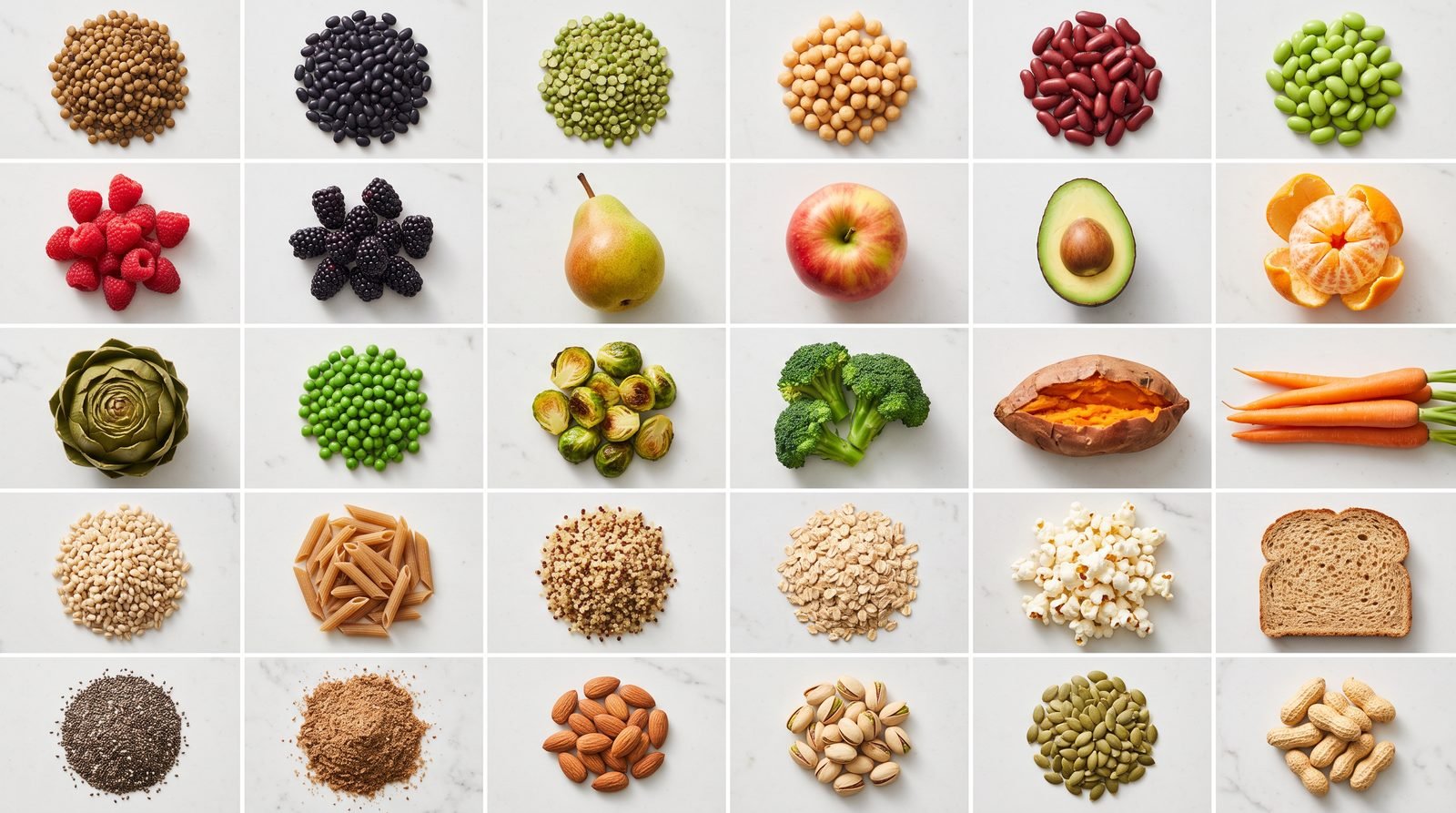
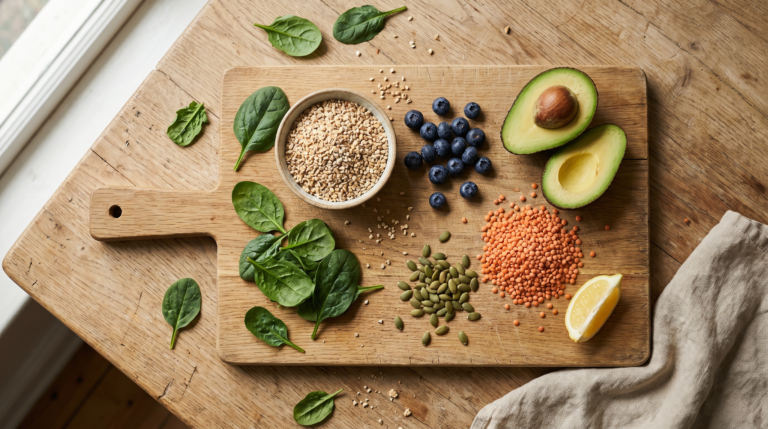
If “eat more fiber” sounds like a prescription for bran cereal and sad salads, your options are much better than that. High-fiber foods include creamy beans, sweet berries, crisp popcorn, chewy whole grains, avocado, nuts, seeds, and plenty of vegetables. The useful question is not which single food has the most fiber. It is which foods you will buy, enjoy, and use often enough to make a difference.
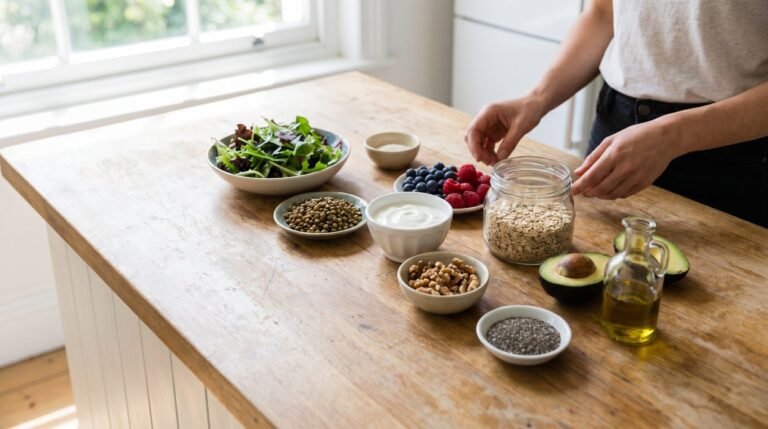
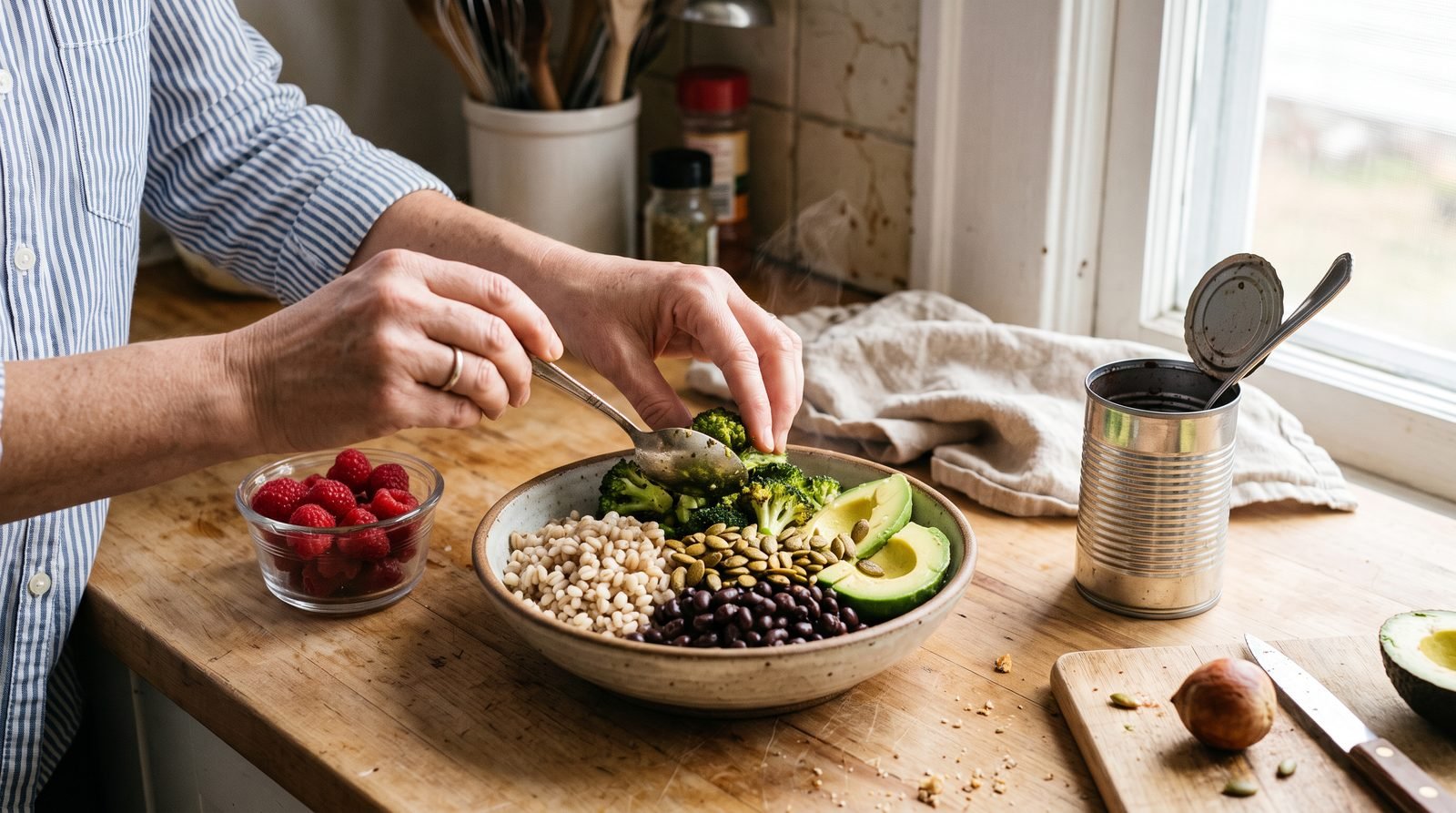
Quick win: choose one food from two different groups below and add them to something you already eat. Stir berries and chia into yogurt, add chickpeas and avocado to a grain bowl, or pair popcorn with almonds. Small additions are usually easier on digestion—and easier to repeat—than rebuilding your diet overnight.
30 High-Fiber Foods at a Glance
Here is a quick comparison of all 30 foods in this guide. Fiber amounts are approximate and use the same serving estimates discussed below. Actual values can vary by variety, preparation, drained weight, and brand.
| High-fiber food | Serving size | Fiber |
|---|---|---|
| Lentils | 1 cup, cooked | about 15–16 g |
| Black beans | 1 cup, cooked | about 15 g |
| Split peas | 1 cup, cooked | about 16 g |
| Chickpeas | 1 cup, cooked | about 12–13 g |
| Kidney beans | 1 cup, cooked | about 11–13 g |
| Edamame | 1 cup, cooked | about 8 g |
| Raspberries | 1 cup | about 8 g |
| Blackberries | 1 cup | about 7–8 g |
| Pear with skin | 1 medium pear | about 5–6 g |
| Apple with skin | 1 medium apple | about 4–5 g |
| Avocado | 1/2 avocado | about 5 g |
| Orange | 1 medium orange | about 3 g |
| Artichoke | 1 medium, cooked | about 7 g |
| Green peas | 1 cup, cooked | about 8–9 g |
| Brussels sprouts | 1 cup, cooked | about 6 g |
| Broccoli | 1 cup, cooked | about 5 g |
| Sweet potato with skin | 1 medium potato | about 4 g |
| Carrots | 1 cup | about 3–4 g |
| Pearled barley | 1 cup, cooked | about 6 g |
| Whole-wheat pasta | 1 cup, cooked | often about 6 g |
| Quinoa | 1 cup, cooked | about 5 g |
| Oatmeal | 1 cup, cooked | about 4 g |
| Popcorn | 3 cups, air-popped | about 3–4 g |
| Whole-grain bread | 1 slice | commonly 2–4 g |
| Chia seeds | 1 oz | about 9–10 g |
| Ground flaxseed | 1 tbsp | about 2 g |
| Almonds | 1 oz | about 3–4 g |
| Pistachios | 1 oz | about 3 g |
| Pumpkin seeds | 1 oz | about 2 g |
| Peanuts | 1 oz | about 2–3 g |
How much fiber do you need?
The FDA Daily Value for dietary fiber is 28 grams on a 2,000-calorie diet. Individual needs vary with age, sex, energy intake, medical history, and pregnancy or breastfeeding. NIDDK notes a general adult range of 22 to 34 grams per day, depending on age and sex. Those figures are useful reference points, not a test you pass or fail on a single day.
Fiber is the part of plant foods that is not fully digested in the small intestine. Different fibers behave differently: some add bulk, some form gels, and some are fermented by gut microbes. That is one reason variety matters. A large systematic review and meta-analysis in The Lancet linked higher fiber and whole-grain intake with better health outcomes across multiple study types, but it did not prove that one “superfood” creates those benefits on its own.
The serving estimates below are rounded from USDA food-composition data and common household portions. Freshness, variety, cooking method, drained weight, and brand can change the number. For packaged foods, the Nutrition Facts label is the best source for the product in your hand.
Beans, peas, and lentils: the biggest practical fiber anchors
Legumes bring fiber and plant protein together, making them especially useful when you want a meal to feel substantial. Canned versions count. Drain and rinse them if you want to reduce some of the sodium.
- Lentils — about 15–16 grams per cooked cup. Fold them into jarred tomato sauce, soup, or a warm grain bowl. Brown and green lentils hold their shape; red lentils soften into sauces.
- Black beans — about 15 grams per cooked cup. Add half a cup to tacos, scrambled eggs, salad, or a microwaved rice bowl.
- Split peas — about 16 grams per cooked cup. Use them in a thick soup with carrots and herbs; they cook down without blending.
- Chickpeas — about 12–13 grams per cooked cup. Toss them into chopped salad, mash them for a sandwich filling, or roast them until crisp.
- Kidney beans — about 11–13 grams per cooked cup. Stir them into chili, minestrone, or a corn-and-tomato salad.
- Edamame — about 8 grams per cooked cup. Keep shelled frozen edamame for noodles, rice bowls, or a fast snack with lemon.
If beans tend to cause discomfort, a smaller portion may be more useful than avoiding them completely. Start with a few tablespoons, try canned and well-rinsed beans, and increase according to your tolerance. For a slower step-up plan, see these practical ways to add fiber without bloating.
Fruit: sweet, portable, and more useful with the skin
Whole fruit supplies fiber that juice largely loses. Peels are not mandatory, but edible skins often raise the fiber content. Frozen fruit is a convenient option and can be nutritionally comparable to fresh fruit without the pressure to use it immediately.
- Raspberries — about 8 grams per cup. Spoon fresh or frozen berries over oatmeal, yogurt, or cottage cheese.
- Blackberries — about 7–8 grams per cup. Eat them with nuts, add them to overnight oats, or thaw them into a quick compote.
- Pear with skin — about 5–6 grams per medium fruit. Slice it onto toast with nut butter or pair it with cheese.
- Apple with skin — about 4–5 grams per medium fruit. Dice it into oats or slaw, or keep it whole for a portable snack.
- Avocado — about 5 grams per half. Spread it on toast, cube it over beans, or mash it into a wrap.
- Orange — about 3 grams per medium fruit. Choose the whole orange rather than juice and add segments to a spinach or grain salad.
Vegetables: go beyond lettuce
Salad greens are valuable, but they are not the only way to eat vegetables. Peas, artichokes, Brussels sprouts, broccoli, carrots, and sweet potatoes tend to contribute more fiber per familiar serving than a loose handful of lettuce.
- Artichoke — about 7 grams per medium cooked artichoke. Use thawed frozen hearts or rinsed canned hearts in pasta, omelets, or a snack plate.
- Green peas — about 8–9 grams per cooked cup. Stir frozen peas into rice, pasta, soup, or mashed potatoes during the final minutes of cooking.
- Brussels sprouts — about 6 grams per cooked cup. Roast halved sprouts until browned or shred them into slaw.
- Broccoli — about 5 grams per cooked cup. Use florets and peeled stems in a sheet-pan meal, stir-fry, or soup.
- Sweet potato with skin — about 4 grams per medium potato. Microwave it, split it, and top with black beans or yogurt.
- Carrots — about 3–4 grams per cup. Roast them, grate them into wraps, or snack on them with hummus.
Whole grains: check the product, not the package color
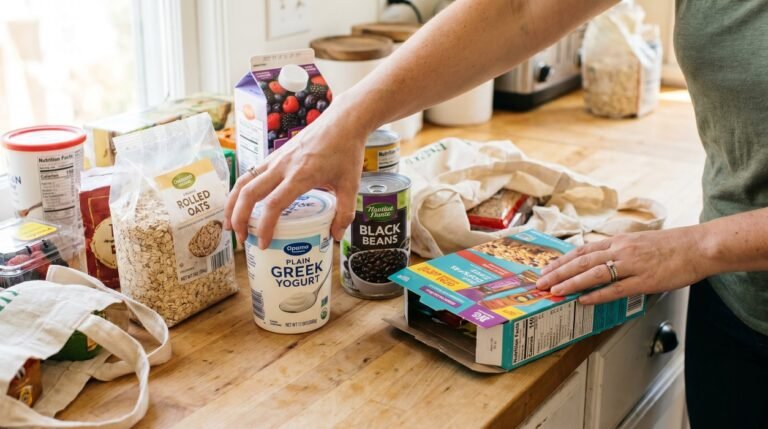
“Multigrain,” “wheat,” and a brown package do not guarantee a whole-grain product. Look for a whole grain near the beginning of the ingredient list and compare dietary fiber per serving on the label.
- Pearled barley — about 6 grams per cooked cup. Batch-cook it for soup, grain bowls, or a chewy alternative to rice.
- Whole-wheat pasta — often about 6 grams per cooked cup. Start with a half-and-half mix if the flavor or texture is new to you.
- Quinoa — about 5 grams per cooked cup. Use it under roasted vegetables, stir it into salad, or warm it with milk and cinnamon.
- Oatmeal — about 4 grams per cooked cup. Add berries, chia, flax, or nuts instead of expecting oats to carry the whole fiber goal.
- Popcorn — about 3–4 grams per 3 cups air-popped. Season it with herbs or nutritional yeast; packaged versions can vary widely in sodium and added fat.
- Whole-grain bread — commonly 2–4 grams per slice. Compare labels, then use it for avocado toast, bean toast, or a vegetable-heavy sandwich.
Nuts and seeds: compact additions with meaningful fiber
Nuts and seeds are energy-dense, so more is not automatically better. A tablespoon or ounce can still add texture, flavor, unsaturated fat, minerals, and fiber to a meal.
- Chia seeds — about 9–10 grams per ounce. Stir a tablespoon into oats or yogurt and allow time for it to absorb liquid.
- Ground flaxseed — about 2 grams per tablespoon. Add it to oatmeal, yogurt, pancake batter, or smoothies. Ground flax is easier to use than whole seeds.
- Almonds — about 3–4 grams per ounce. Pair a small handful with fruit or scatter chopped almonds over vegetables.
- Pistachios — about 3 grams per ounce. Use them on yogurt, grain bowls, or roasted carrots.
- Pumpkin seeds — about 2 grams per ounce. Add them to cereal, slaw, soup, or a snack mix.
- Peanuts — about 2–3 grams per ounce. Choose peanuts or peanut butter for toast, fruit, oatmeal, or a savory sauce; check the label because serving sizes differ.
How to build a higher-fiber day without constant tracking
You do not need all 30 foods, and you do not need to count every gram forever. A simple pattern is to include a fiber source at most eating occasions:
- Breakfast: oatmeal with raspberries and ground flax.
- Lunch: whole-grain toast or barley with chickpeas, artichoke hearts, and vegetables.
- Snack: a pear with almonds, or popcorn with peanuts.
- Dinner: lentils or black beans, broccoli or Brussels sprouts, and a whole grain.
Those are combinations, not rules. If breakfast is usually low in fiber, improve that meal first. If you rely on takeout, keep frozen peas, edamame, berries, and microwaveable grains available. If cost matters, dried or canned beans, oats, popcorn kernels, carrots, frozen peas, and seasonal fruit can form an affordable base. A structured high-fiber meal plan for beginners may help if you prefer a week of examples.
Increase fiber more comfortably
Going from a low-fiber pattern to a very high-fiber one overnight can cause gas, bloating, cramping, or a change in bowel habits. NIDDK advises increasing fiber a little at a time and drinking enough liquids to help it work. There is no universal schedule, but adding one modest serving for several days before adding another is a reasonable experiment.
More fiber is not appropriate in every situation. A clinician may recommend temporary restriction with a bowel obstruction, severe narrowing, before or after certain procedures, or during some digestive-disease flares. People with persistent pain, vomiting, rectal bleeding, unexplained weight loss, or a major lasting change in bowel habits need medical assessment rather than a bigger fiber challenge. If you have irritable bowel syndrome or inflammatory bowel disease, the type and amount of fiber may matter as much as the total.
Frequently asked questions
Are fiber supplements equal to high-fiber foods?
Supplements can be useful for a specific goal, but they do not provide the same mixture of protein, vitamins, minerals, and plant compounds as a varied diet. Different supplemental fibers also act differently. Ask a clinician or dietitian about timing if you take medication, because some fiber products can affect absorption.
Do smoothies still contain fiber?
Usually yes, if the whole fruit or vegetable remains in the drink. Blending changes texture but does not remove fiber the way straining juice does. A smoothie can still be easy to consume quickly, so portion and the rest of the ingredients matter.
Does cooking destroy fiber?
Cooking can change fiber structure and food volume, but it does not erase all fiber. Cooked vegetables, grains, and legumes remain important sources. Compare equal household portions carefully because raw and cooked foods contain different amounts of water.
The most useful high-fiber foods are the ones you repeat
A resilient high-fiber pattern is built from variety, not perfection. Pick a bean or lentil, a fruit, a vegetable, a whole grain, and a nut or seed that fit your taste and budget. Add one or two to meals you already know. Then let comfort, appetite, and consistency guide the next step.
Medical Disclaimer This article is for general educational purposes only and is not a substitute for personalized medical advice, diagnosis, or treatment. Speak with a qualified healthcare professional if you have symptoms, take medication, are pregnant or breastfeeding, or are considering major changes to your diet, supplements, or treatment plan.
Sources
- U.S. Department of Health and Human Services, Office of Disease Prevention and Health Promotion. Current Dietary Guidelines for Americans, 2025–2030.
- U.S. Food and Drug Administration. Daily Value on the Nutrition and Supplement Facts Labels.
- National Institute of Diabetes and Digestive and Kidney Diseases. Eating, Diet, & Nutrition for Constipation.
- Reynolds A, Mann J, Cummings J, et al. Carbohydrate quality and human health: a series of systematic reviews and meta-analyses. Lancet. 2019;393(10170):434–445. PMID: 30638909. DOI: 10.1016/S0140-6736(18)31809-9.
- U.S. Department of Agriculture, Agricultural Research Service. FoodData Central.
- USDA National Nutrient Database for Standard Reference Legacy. Total Dietary Fiber: Abridged List Ordered by Nutrient Content in Household Measure. 2018.