
Fatty Liver After Menopause: 7 Changes That May Help

A fatty liver diagnosis can feel especially unfair after menopause, when sleep, waist size, cholesterol, and blood sugar may already be changing. This is not a personal failure, and it does not mean that your liver is permanently damaged.
Fatty liver after menopause usually reflects several influences working together, including insulin resistance, body-fat distribution, activity, sleep, food patterns, genetics, medicines, and alcohol. Menopause may change that background, but practical and medical options still matter.
Key Takeaway: Start with confirmation and fibrosis-risk assessment, then build repeatable changes in food, movement, sleep, alcohol exposure, and cardiometabolic care. The right plan depends on disease stage and your overall health.
Why Fatty Liver After Menopause Can Become More Likely
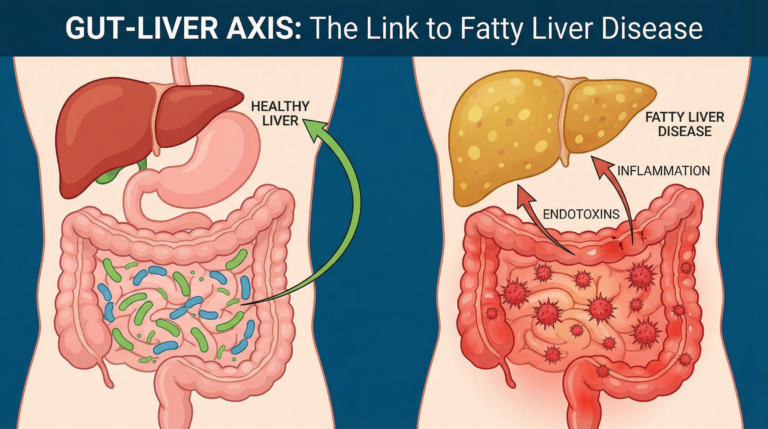
The current medical term for fatty liver linked to metabolic risk is metabolic dysfunction-associated steatotic liver disease, or MASLD. It replaces much of the older NAFLD terminology, although both names still appear in studies and medical records.
A 2023 meta-analysis of 12 cross-sectional studies found that postmenopausal status was associated with higher odds of NAFLD than premenopausal status. Because the included studies were observational, the result cannot prove that menopause itself caused liver fat.[1]
Estrogen changes are biologically plausible contributors, but age, visceral fat, insulin sensitivity, activity, sleep, and other health conditions also change around midlife. It is more accurate to view menopause as part of the risk context than as one switch that turns MASLD on.
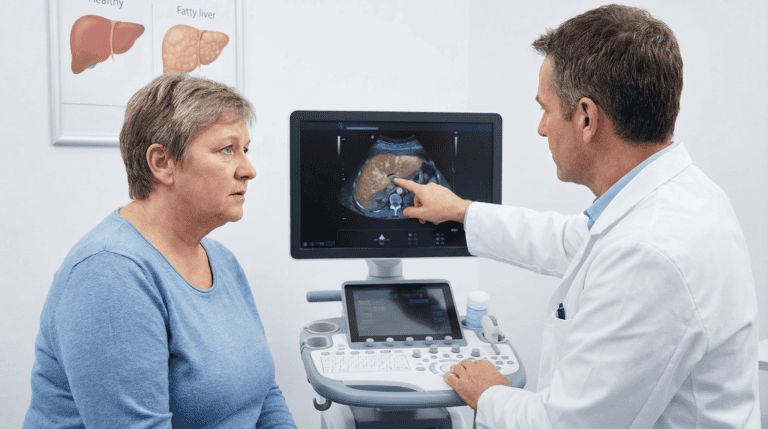
The liver often causes no obvious symptoms at first. Fatigue or right-sided discomfort is nonspecific, and normal liver enzymes do not reliably exclude steatosis or fibrosis. Diagnosis and staging need appropriate medical assessment.[2], [3]
1. Confirm the Diagnosis and Fibrosis Risk
“Fatty liver” describes fat accumulation, not the amount of inflammation or scarring. Ask what evidence established the diagnosis—imaging, blood tests, another procedure, or an incidental finding—and whether other causes have been considered.
Current guidelines recommend assessing the risk of advanced fibrosis, often beginning with routine clinical information and a noninvasive score. Age affects some scores, so interpretation belongs with a clinician rather than an online calculator used in isolation.[2], [3]
Bring a complete list of medicines, supplements, alcohol intake, metabolic conditions, and family history. A clinician may also review hepatitis risk, thyroid disease, sleep apnea, cholesterol, blood pressure, glucose, and other possible contributors.
| Question | Why it matters |
|---|---|
| How was liver fat identified? | Different tests answer different questions. |
| Has fibrosis risk been assessed? | Scarring risk guides follow-up and referral. |
| Which metabolic factors need treatment? | Glucose, lipids, blood pressure, and weight may share the same risk pathway. |
| When should testing be repeated? | Follow-up should match your risk, not a generic calendar. |

Seven Changes That May Support Liver Health
2. Build a Mediterranean-style eating pattern
MASLD guidelines support a dietary pattern rich in minimally processed plant foods, vegetables, legumes, whole grains, nuts, fish, and unsaturated fats. The emphasis is the overall pattern, not a single “liver-cleansing” food.[3]
A 2024 meta-analysis of randomized trials found that Mediterranean and low-fat approaches may improve some liver outcomes, but studies were small and varied.[4] Choose the pattern you can sustain and adapt to medical needs.
Begin with repeat exposures that matter: replace sugary drinks with unsweetened options, use beans or lentils regularly, choose whole fruit more often than juice, and swap some butter or processed meat for olive oil, nuts, fish, or other unsaturated-fat sources.
For a structured starting point, the existing seven-day fatty liver meal plan can help you turn the pattern into ordinary meals without treating food as medicine.
3. Add both aerobic activity and strength work
Exercise can reduce liver fat even when the scale changes little. A 2023 meta-analysis of 11 randomized trials found lower intrahepatic fat with exercise interventions, while certainty and protocols varied across studies.[5]
Aim to build toward guideline-based activity rather than forcing an intense first week. Brisk walking, cycling, swimming, dancing, and resistance training all count when they are safe for you.
A workable entry could be ten to fifteen minutes after one meal on most days plus two short strength sessions each week. Increase duration or challenge gradually, especially with joint pain, heart disease, balance problems, or a long period of inactivity.
4. Pursue weight change only when it is appropriate
For people with overweight or obesity, gradual weight loss can reduce liver fat and may improve inflammation or fibrosis. NIDDK warns that rapid weight loss and malnutrition can worsen liver disease.[6]
Not everyone with MASLD needs weight loss. People at a lower body weight can also develop the condition, and aggressive restriction may sacrifice muscle, nutrition, and quality of life.
If weight loss is appropriate, use a clinician-supported pace and protect food quality, protein, and strength training. The goal is not to chase the lowest number; it is to improve liver and cardiometabolic health without creating another health problem.
One thing worth pushing back on here: menopause does not mean your metabolism is “broken.” Familiar strategies may need adjustment, but liver fat can respond to activity, dietary quality, and management of metabolic risk after menopause.
5. Treat sleep and sleep apnea as liver-health issues
Hot flashes, insomnia, caregiving, and mood changes can disrupt sleep in midlife. Poor sleep can make appetite, activity, and glucose management harder, while obstructive sleep apnea is common and can coexist with MASLD.[2]
Tell a clinician about loud snoring, witnessed breathing pauses, morning headaches, or marked daytime sleepiness. Do not assume these symptoms are simply menopause, aging, or lack of discipline.
6. Review alcohol, medicines, and supplements honestly
Alcohol exposure matters when evaluating steatotic liver disease, and the safest amount may differ with fibrosis stage, medicines, and other conditions. Give your clinician an accurate weekly pattern, including heavier occasions, rather than an idealized average.
Do not start “liver detox” products. Supplements can interact with medicines or injure the liver, and a natural label does not prove safety. Review every product, including menopause and weight-loss supplements, with a pharmacist or clinician.[6]
7. Manage glucose, blood pressure, lipids, and menopause symptoms together
MASLD is closely connected with cardiometabolic risk. Treating diabetes, high triglycerides, high blood pressure, and obesity when present is part of liver care, not a distraction from it.[2], [3]
Do not stop a statin, diabetes medicine, or other prescription because of something you read about the liver. Medication decisions require individual risk, liver stage, laboratory results, and monitoring.
Menopausal hormone therapy is not a standard treatment for MASLD. If you are considering it for bothersome menopause symptoms, discuss benefits, risks, route, timing, and your liver and cardiovascular history with a qualified clinician.

What Progress Can Look Like
Progress is not limited to body weight. Useful markers may include a repeat liver assessment when recommended, waist trend, blood pressure, glucose, triglycerides, strength, walking tolerance, sleep, and the consistency of your core habits.
Do not expect one week of “clean eating” to prove that liver fat changed. Trials and clinical follow-up evaluate changes over longer periods, and the appropriate interval depends on your baseline risk and test.
Choose two changes for the next month: for example, replace sugary drinks and complete two strength sessions weekly. Record completion, not perfection, then review barriers before adding another target.
Use a three-part routine instead of a complete overhaul
Choose one food anchor, one movement anchor, and one medical anchor. A food anchor could be a legume-based lunch twice weekly; a movement anchor could be walking after dinner; a medical anchor could be booking the recommended fibrosis assessment.
Make each anchor observable. “Support my liver” is difficult to track, while “walk for 15 minutes after dinner on Monday, Wednesday, and Friday” gives you useful feedback about scheduling, symptoms, weather, and recovery.
If an anchor fails repeatedly, change its design before questioning your motivation. Shorten the walk, move it indoors, use frozen vegetables, or schedule the appointment while another routine cue is already happening.
Laboratory changes and imaging results can move at different speeds, and normal enzymes do not guarantee that fibrosis risk is low. Ask which outcome your clinician is following and why, rather than ordering frequent unsupervised panels.
Menopause symptoms also deserve direct care. Better treatment of hot flashes, mood, sleep, urinary symptoms, or joint pain may make the liver-health plan more workable even when that treatment does not target liver fat itself.
If you want a broader women-centered progression framework, use the realistic fatty liver journey for women and adapt it with your healthcare team.
Frequently Asked Questions
Can fatty liver after menopause improve?
Liver fat can respond to sustained lifestyle and medical management, but the result depends on fibrosis, metabolic conditions, medicines, alcohol exposure, and individual biology. Use follow-up testing rather than symptoms alone to judge change.
Does estrogen loss directly cause fatty liver?
Menopause is associated with higher fatty liver prevalence, and hormone changes are one plausible contributor. Observational evidence cannot separate estrogen from aging, body composition, sleep, activity, and metabolic factors completely.[1]
Should I take hormone therapy for my liver?
Hormone therapy should not be started solely as a fatty liver treatment. Discuss it for appropriate menopause indications with a clinician who can consider your symptoms, risks, liver status, and preferences.
Can I have MASLD at a normal weight?
Yes. Body weight alone does not rule out liver fat or metabolic risk. Evaluation should consider glucose, lipids, blood pressure, waist distribution, medicines, family history, and other causes.
Conclusion
Fatty liver after menopause deserves attention, not panic. Confirm the diagnosis and fibrosis risk, then focus on a sustainable food pattern, movement and strength, appropriate weight goals, sleep, alcohol and supplement safety, and coordinated cardiometabolic care.
Pick one medical question and two repeatable actions today. That is a more useful starting point than a restrictive detox, a supplement stack, or blaming your hormones for everything.
Medical Disclaimer: This article is for general educational purposes only and is not a substitute for personalized medical advice, diagnosis, or treatment. Speak with a qualified healthcare professional if you have symptoms, take medication, are pregnant or breastfeeding, or are considering major changes to your diet, supplements, or treatment plan.
References
- Jaroenlapnopparat A, et al. Menopause is associated with increased prevalence of nonalcoholic fatty liver disease: a systematic review and meta-analysis. Menopause. 2023. PMID: 36728528
- Rinella ME, et al. AASLD Practice Guidance on the clinical assessment and management of nonalcoholic fatty liver disease. Hepatology. 2023. PMID: 36727674
- EASL–EASD–EASO. Clinical Practice Guidelines on the management of metabolic dysfunction-associated steatotic liver disease. 2024. Guideline PDF
- Xiong Y, et al. Effects of Mediterranean diet and low-fat diet on liver enzymes and liver fat content of NAFLD: systematic review and meta-analysis of randomized trials. Food Function. 2024. PMID: 39076035
- Nam H, et al. Effect of exercise-based interventions in nonalcoholic fatty liver disease: a systematic review with meta-analysis. Digestive and Liver Disease. 2023. PMID: 36653265
- National Institute of Diabetes and Digestive and Kidney Diseases. Treatment for NAFLD & NASH. NIDDK guidance