Best Foods for Liver Health: What to Eat and Why It Works
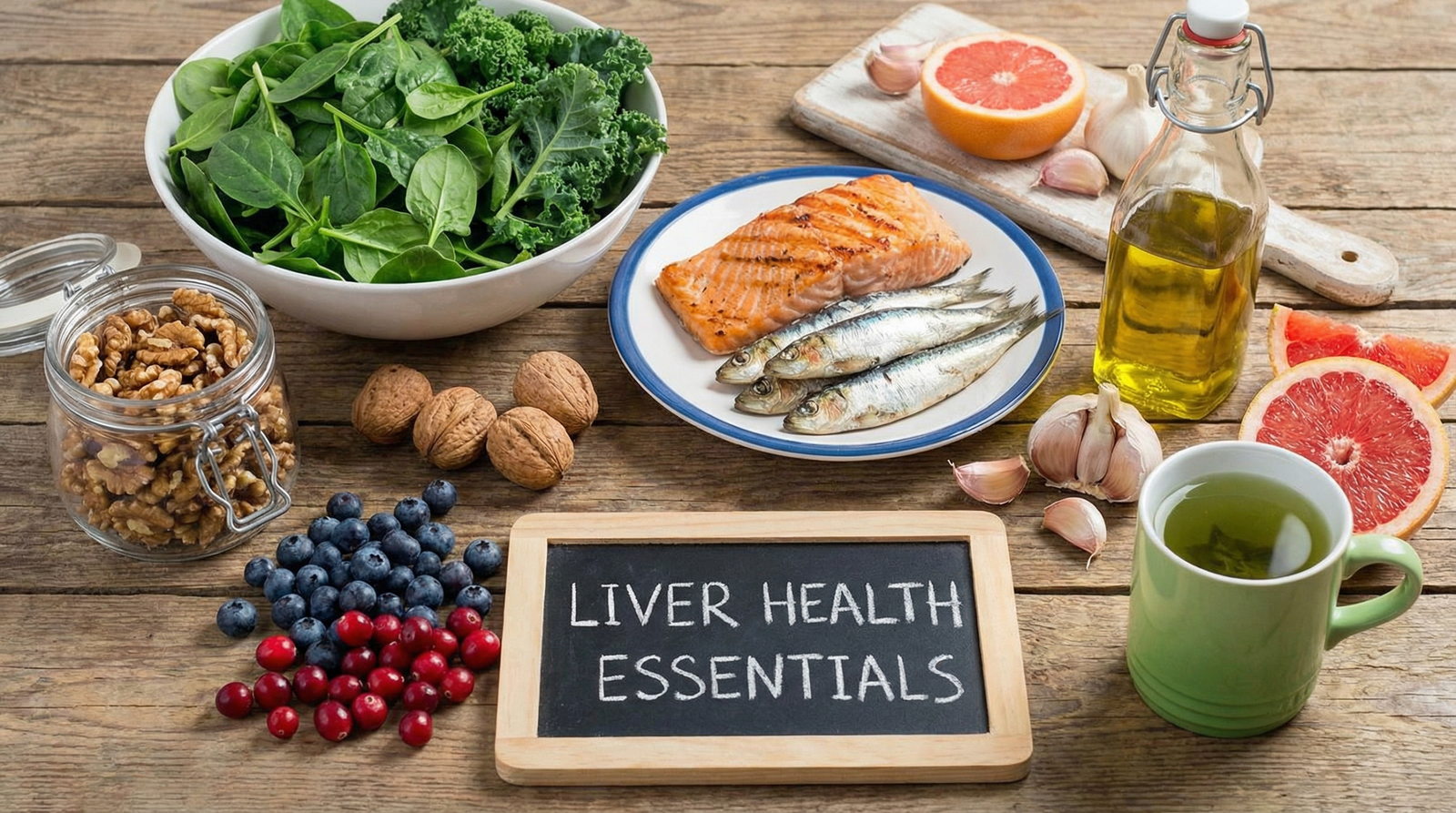
You eat well most of the time. You stay reasonably active. But something still feels off — energy that drains by midday, a belly that doesn’t budge, or blood work that comes back with numbers that concern your doctor.
When that happens, the liver often isn’t the first thing anyone mentions. It should be.
This organ quietly manages more than 500 functions — filtering blood, regulating blood sugar, processing fats, and breaking down hormones. When it’s under stress, the signals can be subtle for years.
The encouraging news: dietary changes are among the most evidence-supported ways to reduce that stress — and many of the foods involved are already in most kitchens.
What Are the Best Foods for Liver Health?
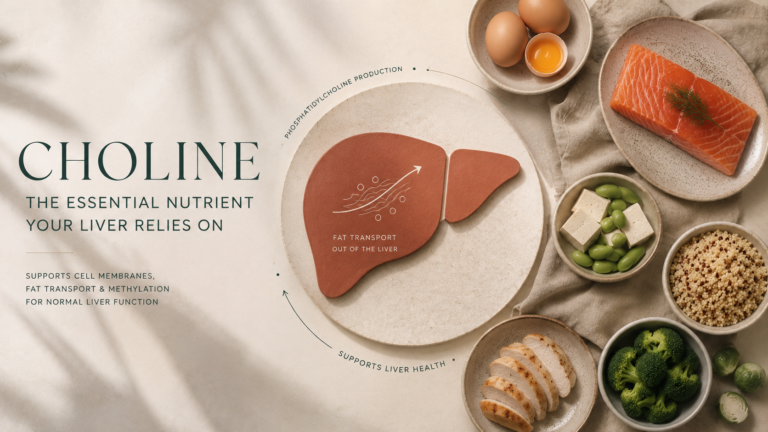
The foods most consistently linked to liver health in research include leafy greens, fatty fish, olive oil, coffee, berries, cruciferous vegetables, and whole grains.
These support the liver’s ability to manage inflammation, process fats, and protect cells from oxidative damage — without expensive supplements or cleanses.
Key Takeaways
- The liver performs over 500 daily functions — diet is one of the strongest levers for supporting it.
- Fatty fish, leafy greens, olive oil, and coffee have the most research backing for liver health.
- Metabolic dysfunction-associated steatotic liver disease (MASLD) — formerly called NAFLD — affects roughly 1 in 4 adults and is closely linked to diet and lifestyle.
- No cleanse or detox product does what consistent whole-food eating does.
- Even modest weight loss — around 5–7% of body weight — may meaningfully reduce fat stored in the liver.[4]
The Top Foods for Liver Health — and What Makes Them Work
| Food | Key Compound | What Research Suggests |
|---|---|---|
| Fatty fish (salmon, mackerel, sardines) | Omega-3 fatty acids | May reduce hepatic fat and inflammation[2] |
| Leafy greens (spinach, kale, arugula) | Nitrates, folate, antioxidants | May help neutralize compounds that contribute to fat accumulation |
| Extra-virgin olive oil | Oleic acid, polyphenols | Associated with improved liver enzyme levels and reduced fat deposits |
| Coffee (black, 2–3 cups/day) | Chlorogenic acids, caffeine | Consistently linked to lower liver disease risk across multiple studies[1] |
| Berries (blueberries, raspberries) | Anthocyanins, polyphenols | May protect liver cells from oxidative stress |
| Cruciferous vegetables (broccoli, Brussels sprouts) | Glucosinolates, fiber | May activate detoxification enzymes and reduce fat buildup[5] |
| Turmeric | Curcumin | Research suggests it may reduce elevated liver enzyme markers[6] |
| Whole grains (oats, barley, brown rice) | Beta-glucan, fiber | Help regulate blood sugar and reduce dietary fat absorption |
Why These Foods Matter: What the Liver Actually Does
The liver isn’t just a filter — it’s a metabolic hub.
Every day, it processes nutrients from digestion, regulates blood glucose, synthesizes proteins, manages cholesterol, and breaks down hormones including estrogen.
When fat begins to accumulate in liver cells — a condition now called MASLD — these processes become less efficient. Blood sugar regulation suffers. Inflammation increases. Hormones may not clear properly.
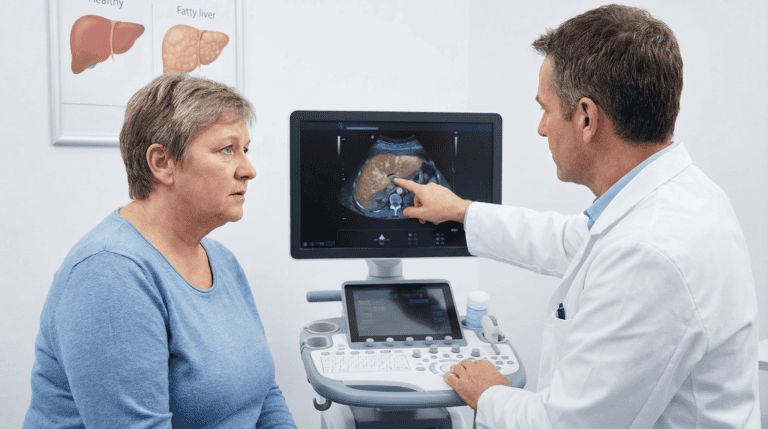
Because the liver has few pain receptors, most people have no symptoms in the early stages.
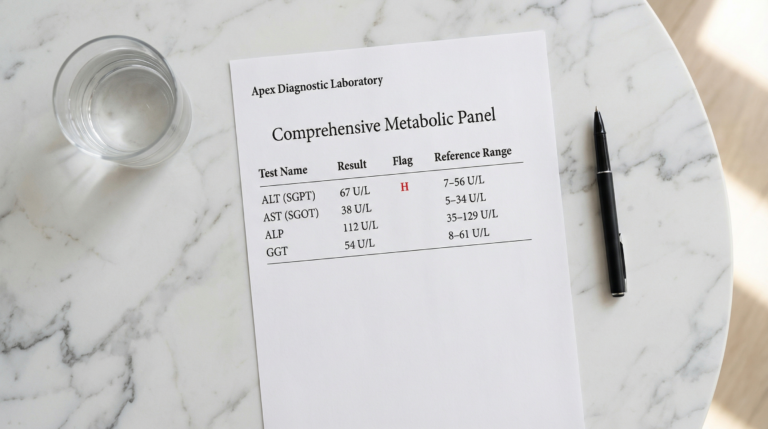
This is why so many women in their 40s and 50s are caught off guard when a doctor mentions abnormal liver enzymes. It is not a personal failure — it is a condition that develops quietly, often over years, closely tied to insulin resistance and diet patterns that are extremely common in the US.
| Liver Function | What It Does | How Diet Supports It |
|---|---|---|
| Fat metabolism | Processes and stores dietary fats | Omega-3s and olive oil may reduce fat accumulation |
| Blood sugar regulation | Stores and releases glucose as needed | Fiber slows glucose absorption; whole grains reduce spikes |
| Toxin processing | Converts harmful substances for excretion | Cruciferous vegetables may activate detox enzymes |
| Inflammation control | Manages immune response | Antioxidants from berries, coffee, and greens may reduce oxidative stress |
Meal Ideas That Put These Foods Together
Knowing which foods help is one thing. Fitting them into a real weekday is another.
These ideas are built around the liver-supportive foods above — nothing complicated, nothing that requires a specialty grocery store.
| Meal | What’s In It | Why It Works |
|---|---|---|
| Breakfast | Oatmeal with blueberries + black coffee | Beta-glucan fiber + antioxidants + coffee’s protective compounds |
| Lunch | Spinach salad with canned salmon, olive oil dressing, cherry tomatoes | Omega-3s + greens + anti-inflammatory fats in one bowl |
| Dinner | Baked salmon or mackerel, roasted broccoli, brown rice | Full complement of omega-3s, glucosinolates, and fiber |
| Snack | Greek yogurt with raspberries, or carrot sticks with hummus | Protein + polyphenols + fiber without added sugar |
Canned salmon and sardines count — often cheaper, just as nutritious, and easier to keep stocked. Wild-caught when available, but the omega-3 content holds up either way.
What to Limit or Avoid
Supporting liver health isn’t only about adding foods — it’s also about reducing the inputs that create the most metabolic stress.
Added sugar and sugary drinks are among the most studied dietary contributors to liver fat accumulation. Fructose — found in soda, juice, and many processed foods — is processed almost exclusively by the liver, and excess amounts are converted directly to fat.
Ultra-processed foods tend to combine refined carbohydrates, industrial seed oils, and additives in ways that promote inflammation. Daily reliance on these foods adds up over time.
Alcohol is processed through the liver before anything else. Even moderate amounts increase the metabolic workload, and current research suggests that for people with existing liver concerns, any amount adds stress.
A note on supplements: some marketed as “liver support” — including high doses of niacin, certain herbal extracts, and fat-soluble vitamins — have been linked to elevated liver enzymes or acute liver injury in susceptible individuals.
Whole-food sources of nutrients are almost always preferable to concentrated supplement forms. Always discuss supplements with a healthcare provider before adding them.
The Mediterranean Diet and Liver Health
The Mediterranean dietary pattern shows some of the strongest research support for metabolic liver health.[3]
It’s not a strict protocol — it’s more of a framework: abundant vegetables and legumes, fish several times a week, olive oil as the primary fat, moderate whole grains, and limited red meat and sweets.
It doesn’t require calorie counting or eliminating food groups. For someone managing or trying to prevent fatty liver, the Mediterranean pattern offers a sustainable, evidence-backed direction without the rigidity of a formal diet plan.
Weight, Exercise, and Liver Health
Diet is the foundation, but movement matters too.
Research consistently shows that even modest weight loss — around 5–7% of body weight — may meaningfully reduce fat stored in the liver, even before major dietary changes take full effect.[4]
For exercise, roughly 150 minutes of moderate activity per week — about 20–25 minutes daily — is associated with improved liver function markers. That can be a brisk walk after dinner, a bike ride, or anything that raises your heart rate without feeling like punishment.
Short post-meal walks, even 10 minutes, may also help reduce post-meal blood sugar spikes — which reduces the load on the liver over time.
The goal isn’t transformation. It’s consistency — small shifts that reduce metabolic stress week over week.
Conclusion
The liver does its work quietly, which means the habits that support it also tend to be quiet ones — a salmon dinner, a cup of black coffee, a handful of blueberries on oatmeal.
Nothing dramatic. Nothing that requires a cleanse or a cabinet full of supplements.
What the research points to, consistently, is that a diet rich in whole foods — fish, vegetables, healthy fats, fiber — combined with regular movement and reduced sugar gives the liver what it needs to do its job well.
You don’t need a perfect diet. You need a consistent one. And that’s something that’s very much within reach.
Medical Disclaimer: The information provided in this article is for educational purposes only and does not constitute medical advice. Always consult a qualified healthcare provider before making changes to your diet, lifestyle, or treatment plan. TheMetabolicHub.com does not replace professional medical guidance.
References
- Saab S, Mallam D, Cox GA 2nd, Tong MJ. Impact of coffee on liver diseases: a systematic review. Liver Int. 2014;34(4):495–504. PMID: 26404032
- Scorletti E, Byrne CD. Omega-3 fatty acids and non-alcoholic fatty liver disease: Evidence of efficacy and mechanism of action. Mol Aspects Med. 2018;64:135–146. PMID: 31336540
- Abenavoli L, Boccuto L, Federico A, et al. Diet and Non-Alcoholic Fatty Liver Disease: The Mediterranean Way. Int J Environ Res Public Health. 2019;16(17):3011. PMID: 30385536
- Vilar-Gomez E, Martinez-Perez Y, Calzadilla-Bertot L, et al. Weight Loss Through Lifestyle Modification Significantly Reduces Features of Nonalcoholic Steatohepatitis. Gastroenterology. 2015;149(2):367–378. PMID: 28416060
- Ma Y, Hu M, Zhou L, et al. Dietary fiber intake and risks of proximal and distal colon cancers. Medicine (Baltimore). 2018;97(36):e11678. PMID: 25838928
- Rahmani S, Asgary S, Askari G, et al. Treatment of Non-alcoholic Fatty Liver Disease with Curcumin: A Randomized Placebo-controlled Trial. Phytother Res. 2016;30(9):1540–1548. PMID: 31195755