Clothes Tighter but Scale Same? 7 Causes—and What to Do

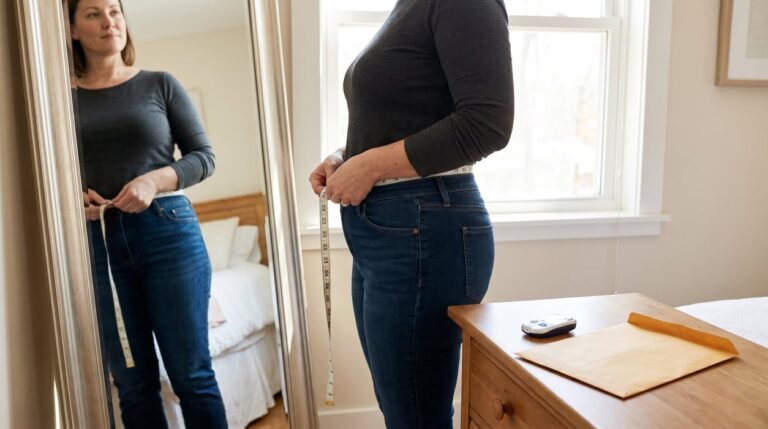
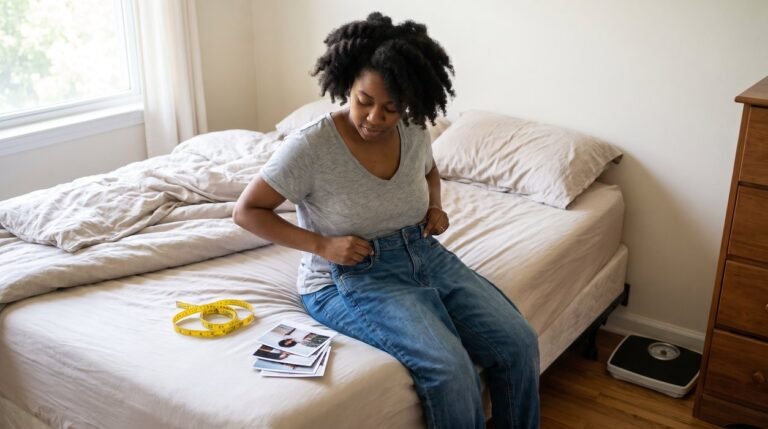
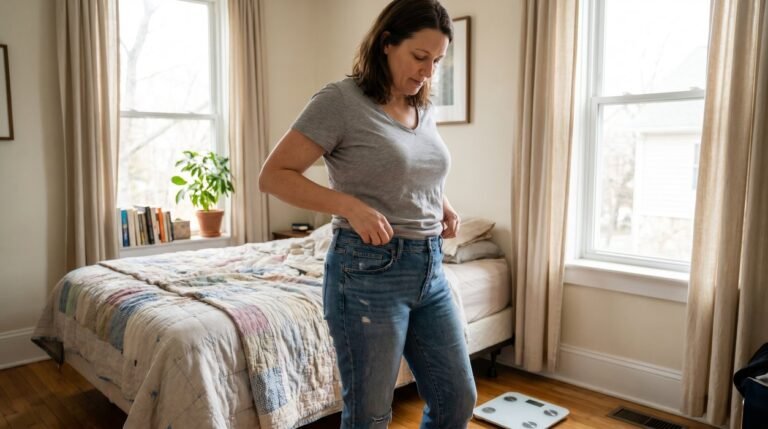
Clothes can feel tighter even when the scale stays the same because clothing fit reflects body shape, fluid retention, bloating, digestion, and body composition—not just total weight. If the change appeared suddenly, water retention or digestive pressure may be involved. If it persists for several weeks, your waist trend, habits, and body-composition changes deserve a closer look.
Your jeans may still close but suddenly feel less forgiving. That does not automatically mean you gained body fat or that your progress has failed. The timing, location, and persistence of the change can help you identify what is most likely happening.
Quick Win: For the next 7 days, measure your waist once each morning and briefly note digestion, sleep, training, salty meals, alcohol, and cycle timing. Look for a pattern instead of reacting to one tight outfit.
Why can clothes feel tighter when the scale stays the same?
The scale measures your total mass. It cannot show where that mass is located or whether a change comes from fat, muscle, water, glycogen, food volume, stool, or abdominal distension.
Clothing fit is more sensitive to changes around specific areas such as the waist, abdomen, hips, thighs, chest, and upper arms. A relatively small change in one area may therefore affect your clothes before it produces a noticeable difference on the scale.
Why fit can change before weight does
Your body weight combines fat, muscle, water, digestive contents, and stored carbohydrate. Clothing responds more strongly to where those components change than to the total number displayed on the scale.
The most useful clue is the pattern. Tightness that changes within a day or a few days is more likely to involve fluid, digestion, meals, or training. A waistline that continues to increase over several weeks may point more strongly toward a lasting body-composition change.
What can the timing of the change tell you?
| Pattern | Possible explanation | What to check |
|---|---|---|
| Changes during the day | Meals, gas, constipation, posture, or abdominal distension | Meal size, carbonated drinks, bowel habits, and symptom timing |
| Changes over several days | Water retention, hormonal shifts, travel, salty meals, alcohol, poor sleep, or harder workouts | Sodium, sleep, cycle timing, training, heat, travel, and hydration |
| Changes over several weeks | Fat distribution, reduced muscle tone, body recomposition, or persistent digestive issues | Waist trend, strength, activity, digestion, and meal patterns |
| Sudden swelling or rapid change | A medical cause may need to be ruled out | Pain, shortness of breath, one-sided swelling, and rapid unexplained weight gain |
This timing guide cannot diagnose the cause, but it can help you decide which patterns are worth observing before making unnecessary changes to your diet or exercise routine.
Clothes tighter but scale same: 7 possible causes
- Water retention: Salty meals, travel, alcohol, hot weather, long periods of sitting, poor sleep, certain medications, and hormonal shifts can temporarily increase fluid retention.
- Bloating: Gas, large meals, carbonated drinks, eating quickly, food intolerance, or a sudden increase in fiber can make the abdomen feel larger without meaningfully changing body weight.
- Constipation: Slower digestion and retained stool can create abdominal pressure and change how a waistband fits.
- Hormonal changes: Cycle timing, perimenopause, stress-related changes, and some medications may affect fluid balance, digestion, and abdominal comfort.
- Workout-related glycogen and water: New or harder training can increase glycogen storage, muscle water, soreness, and temporary fullness.
- Central fat changes: A relatively small increase around the abdomen may affect clothing fit before it becomes obvious on the scale.
- Body-composition changes: Losing some muscle while gaining a similar amount of fat can change firmness and shape even when total weight remains close to the same.
The most important distinction: A temporary change does not automatically mean fat gain. Look at how long the tightness lasts, whether it changes throughout the day, and whether your waist measurement is actually trending upward.
Why can the scale miss body-shape changes?
Two people can weigh the same and have very different body shapes because fat, muscle, water, and digestive contents are distributed differently. The same person can also change shape without showing a large change in total weight.
A small increase in abdominal fat may make a waistband feel tighter before the scale clearly moves. A loss of muscle tone combined with a small increase in fat mass can also make the body feel softer while total weight remains similar.
Body recomposition can move in either direction
Body recomposition means that lean mass and fat mass are changing at the same time. It can be positive, such as gaining muscle while losing fat, or less helpful, such as losing muscle while gaining fat.
That is why clothing fit should be interpreted alongside waist measurements, strength, activity, sleep, digestion, and longer-term trends. The scale alone cannot show which tissue has changed.
New workouts can temporarily change clothing fit
Starting strength training, increasing training volume, or eating more carbohydrates can increase muscle glycogen and water storage. Research on exercise recovery shows that changes in muscle glycogen can occur alongside changes in muscle water, which may make trained muscles feel fuller for a short time.[5]
Harder training can also cause temporary soreness and inflammation. This is not the same as suddenly gaining body fat and may settle as your body adapts.
| Possible change | How it may feel | Typical pattern |
|---|---|---|
| Water retention | Puffy hands, tighter rings, or general softness | Often fluctuates from day to day |
| Bloating or constipation | Abdominal pressure, tight waistband, or fullness after meals | May change throughout the day |
| Training adaptation | Fuller muscles, soreness, or tighter sleeves and thighs | Often follows a new or harder routine |
| Central fat gain | Waistband gradually becoming tighter | More likely to persist across several weeks |
| Reduced muscle tone | Softer shape or reduced firmness | Develops gradually rather than overnight |
Can water retention, bloating, or constipation make clothes tighter?
Yes. These are common reasons clothes can feel tighter quickly, especially when the scale barely changes.
Water retention
Edema is swelling caused by excess fluid trapped in body tissues. Occasional puffiness after travel, hot weather, or a salty meal may settle on its own, but persistent, painful, or unexplained swelling should be discussed with a healthcare provider.[4]
Short-term fluid shifts may follow higher-sodium meals, higher carbohydrate intake, intense training, alcohol, long periods of sitting, poor sleep, heat, hormonal changes, or certain medications.
Bloating and digestive pressure
Bloating can expand the abdomen without adding much weight. Possible contributors include gas, constipation, large meals, eating quickly, carbonated drinks, sudden fiber increases, food intolerance, and stress.
Evidence note: Bloating and abdominal distension can have many possible causes, including constipation, food intolerance, disorders of gut-brain interaction, and altered responses of the abdominal wall.[3]
A useful clue is whether your clothes fit more comfortably in the morning and become tighter after meals or later in the day. That pattern often points more toward digestive volume or bloating than a rapid change in body fat.
It is also worth challenging a common assumption: tighter clothes are not automatic proof of fat gain. Fluid, constipation, bloating, and training changes can feel similar. A restrictive crash diet is unlikely to solve a temporary digestive or fluid-related issue.
What can a tighter waist say about metabolic health?
Waist fit is not a diagnosis, but a waist measurement that consistently increases over weeks or months may provide useful context. It can reflect changes in abdominal fat, digestion, fluid retention, posture, or a combination of factors.
A major consensus statement argues that waist circumference provides information beyond BMI because it reflects abdominal adiposity more directly.[1] For a more detailed action plan, see how to reduce visceral fat.
Visceral fat is stored deeper in the abdomen around internal organs. Excess visceral fat is associated with insulin resistance and other cardiometabolic risk factors, although individual risk depends on the full health picture.[2]
Insulin resistance can provide additional context
Insulin resistance means the body has more difficulty responding to insulin’s signal. It is often considered alongside waist circumference, fasting glucose, A1C, triglycerides, blood pressure, fatty liver risk, activity, and family history.
Not everyone with tighter clothes or a larger waist has insulin resistance. However, people managing prediabetes, blood sugar changes, or a family history of type 2 diabetes may benefit from tracking waist measurements alongside relevant laboratory markers.
Sleep and stress can influence the pattern
Insufficient sleep can affect appetite, glucose regulation, recovery, and insulin sensitivity. A systematic review reported an association between sleep deprivation and insulin resistance.[6]
Stress can also change everyday behavior. You may move less, sleep less deeply, snack more often, crave salty or sweet foods, or drink more alcohol. These changes can affect digestion, fluid balance, and waist fit even when the scale does not move dramatically.
What should you track besides body weight?
When the scale and your clothing seem to disagree, use a broader tracking system for 2 to 4 weeks. You do not need to monitor everything permanently. The goal is to identify the variables that best explain your pattern.
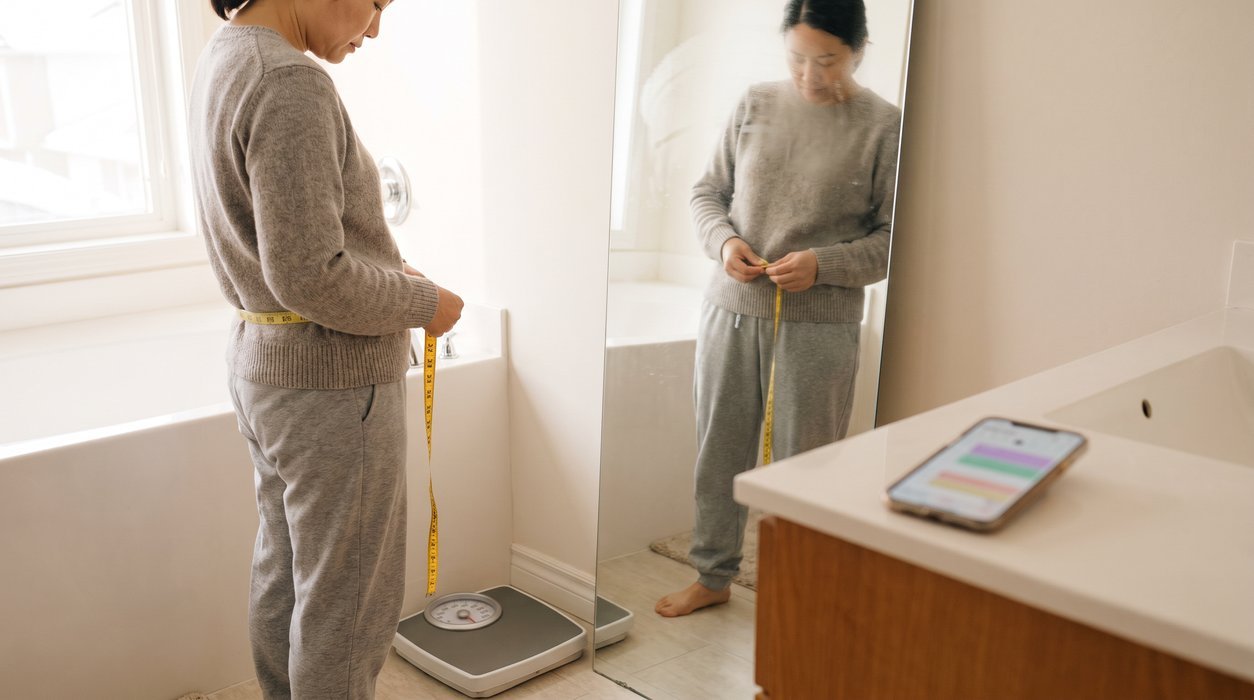
Use these five measures
- Waist measurement: Measure at the same location and time of day, ideally in the morning before eating.
- Clothing fit: Use the same pair of trousers or another consistent item rather than comparing different cuts and fabrics.
- Digestive symptoms: Note bloating, constipation, stool changes, meal size, and whether symptoms worsen later in the day.
- Training and movement: Record new workouts, muscle soreness, step count, and major changes in activity.
- Recovery and routine: Note sleep, stress, alcohol, travel, salty meals, hydration, and cycle timing where relevant.
Measure your waist with the tape snug but not compressing the skin. Repeated measurements throughout the same day are rarely helpful and may make normal fluctuations seem more important than they are.
Fluid-related tightness may change within a few days. Digestive patterns may take longer to understand, especially when constipation, food tolerance, meal timing, or stress are involved. Body-composition changes usually require a longer observation period.
How to interpret the result
If clothing fit improves while morning waist measurements stay stable, a temporary digestive or fluid-related cause becomes more likely. If the same waist measurement continues to rise over several weeks, it may be worth reviewing movement, meal structure, sleep, stress, and relevant health markers.
What can you do this week?
If your clothes feel tighter but the scale is almost unchanged, the next step is not panic or self-blame. Use a calm, structured approach that gives you more information.

- Take one morning waist measurement. Repeat it under similar conditions after 7 days.
- Keep meals relatively consistent. Large changes in food volume, sodium, carbohydrates, or fiber can temporarily affect fit.
- Walk after one meal. A gentle 10-minute walk may support digestion and glucose handling.
- Keep fiber steady. Add beans, oats, vegetables, seeds, or berries gradually rather than suddenly doubling your intake.
- Include protein in your meals. Options may include eggs, Greek yogurt, tofu, fish, poultry, legumes, or another source you enjoy.
- Hydrate normally. Drink consistently rather than attempting to compensate with extreme fluid restriction or excessive water intake.
- Continue appropriate resistance training. Strength training can support lean mass and body composition over time.
- Protect your sleep. Keep a reasonably consistent sleep window and reduce late-night alcohol, heavy meals, or prolonged scrolling where possible.
If poor sleep appears to be a recurring trigger, read more about the connection between sleep and insulin.
Give the pattern at least 7 to 14 days before drawing strong conclusions. For body-composition changes, a 2- to 4-week trend is usually more informative than a single day, outfit, or weigh-in.
When should tighter clothes be checked by a healthcare provider?
Most short-term changes in clothing fit are not emergencies. However, medical evaluation is important when the change is sudden, severe, persistent, or accompanied by other concerning symptoms.
Seek prompt medical care if you experience:
- sudden or rapidly worsening swelling,
- swelling that is painful or mainly affects one side,
- shortness of breath, chest discomfort, or difficulty breathing,
- rapid unexplained weight gain,
- severe or persistent abdominal pain,
- vomiting, loss of appetite, or blood in the stool,
- major or persistent changes in bowel habits, or
- progressive abdominal enlargement without a clear explanation.
A healthcare provider can help distinguish common fluctuations from medication effects, digestive conditions, hormonal changes, fluid-related problems, or other medical causes.
Frequently Asked Questions
Why are my clothes tighter but the scale is the same?
Clothes can feel tighter while the scale stays the same because the scale measures total weight, not body shape, fluid balance, digestion, or body composition. Water retention, bloating, constipation, hormonal shifts, training-related glycogen storage, abdominal fat changes, and reduced muscle tone may all affect clothing fit.
Can bloating make pants feel tighter without weight gain?
Yes. Gas, constipation, large meals, carbonated drinks, food intolerance, sudden fiber increases, and stress can expand the abdomen without causing a meaningful increase in body weight. A pattern that worsens after meals or later in the day often suggests a digestive component.
Does a tighter waistband mean I gained belly fat?
Not necessarily. A tighter waistband may reflect body fat, but it can also result from fluid retention, bloating, constipation, posture, meal timing, hormonal changes, or new training. A morning waist trend measured over several weeks is more useful than one day of tighter clothing.
Why do my clothes feel tighter after starting workouts?
New or harder workouts can temporarily increase muscle glycogen, water storage, soreness, and inflammation. This may make trained areas feel fuller or more snug in clothing. The effect often becomes easier to interpret after your body has adapted to the routine.
Why are my clothes tighter at night than in the morning?
Food volume, fluids, gas, slower digestion, constipation, posture, and normal abdominal expansion can make clothes feel tighter later in the day. This pattern is generally more suggestive of digestive volume or bloating than rapid fat gain.
How long should I track the change before worrying?
Temporary changes may settle within several days. A 2- to 4-week waist trend can provide better information about lasting change. Seek medical advice sooner if the tightness is accompanied by sudden swelling, severe pain, shortness of breath, rapid unexplained weight gain, or major digestive symptoms.
What should I track besides body weight?
Track waist measurement, clothing fit, bowel habits, bloating, sleep, stress, alcohol, salty meals, training changes, steps, and strength. When metabolic health is a concern, blood pressure and laboratory markers such as A1C, fasting glucose, lipids, and liver enzymes may provide additional context when reviewed with a healthcare provider.
The bottom line
When the scale barely moves but your clothes feel tighter, the change may reflect fluid shifts, bloating, constipation, training adaptation, fat distribution, reduced muscle tone, or a combination of factors.
The timing provides an important clue. Changes that appear and disappear within hours or days are more likely to involve digestion or fluid balance. A waist measurement that continues to rise over several weeks deserves a closer look at body composition, activity, sleep, stress, meal patterns, and overall metabolic health.
Use the change as information rather than a verdict. Track a small number of consistent signals, give the pattern enough time to become clear, and seek medical advice when symptoms are sudden, severe, persistent, or unexplained.
Medical Disclaimer: The information provided in this article is for educational purposes only and does not constitute medical advice. Always consult a qualified healthcare provider before making changes to your diet, lifestyle, or treatment plan. TheMetabolicHub.com does not replace professional medical guidance.
References
- Ross R, Neeland IJ, Yamashita S, et al. Waist circumference as a vital sign in clinical practice: a Consensus Statement from the IAS and ICCR Working Group on Visceral Obesity. Nat Rev Endocrinol. 2020;16(3):177-189. PMID: 32020062
- Klein S. The case of visceral fat: argument for the defense. J Clin Invest. 2004;113(11):1530-1532. PMID: 15173878
- Lacy BE, Cangemi DJ, Vazquez-Roque MI. Management of chronic abdominal distension and bloating. Clin Gastroenterol Hepatol. 2021;19(2):219-231.e1. PMID: 32246999
- Mayo Clinic. Edema: Symptoms and causes. Updated 2026. Mayo Clinic
- Fernández-Elías VE, Ortega JF, Nelson RK, Mora-Rodriguez R. Relationship between muscle water and glycogen recovery after prolonged exercise in the heat in humans. Eur J Appl Physiol. 2015;115(9):1919-1926. PMID: 25911631
- Singh T, Ahmed TH, Mohamed N, et al. Does insufficient sleep increase the risk of developing insulin resistance: a systematic review. Cureus. 2022;14(3):e23501. PMCID: PMC9036496